Source RF Hard Wine Bottle Tags for Supermarkets and Retail Stores
Compare 30 RF Hard Wine Bottle Tag options from verified Chinese suppliers. These EAS hard tags feature 8.2 MHz frequency and CE certification for effective anti-shoplifting in garment stores, supermarkets, and shopping arcades.
Key considerations
Products List






Comprehensive Sourcing Guide
Strategic Sourcing Guide for RF Hard Wine Bottle Tags
Understanding the Technical Architecture of RF Hard Tags
When sourcing RF hard wine bottle tags, the primary technical consideration is the frequency and detection mechanism. The supplied product data indicates a dominant frequency of 8.2 MHz, which is a standard for Radio Frequency (RF) Electronic Article Surveillance (EAS) systems. This specific frequency band is engineered to provide a reliable detection signal for high-value items like wine bottles, ensuring that the tag remains secure until professionally removed at the point of sale. The detection signal is explicitly identified as Radio Frequency RF, which distinguishes these tags from Microwave (MW) or Acoustic-Magnetic (AM) systems that operate on different physical principles.
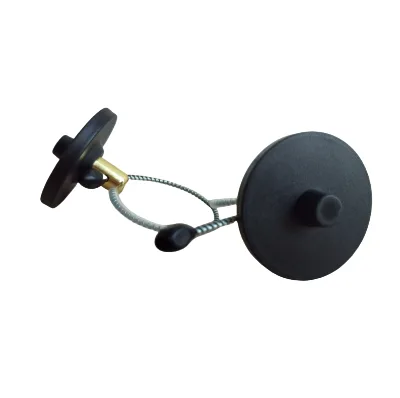
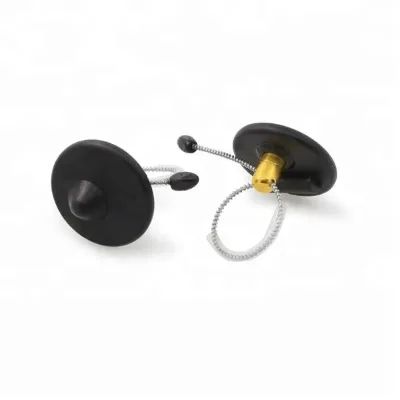
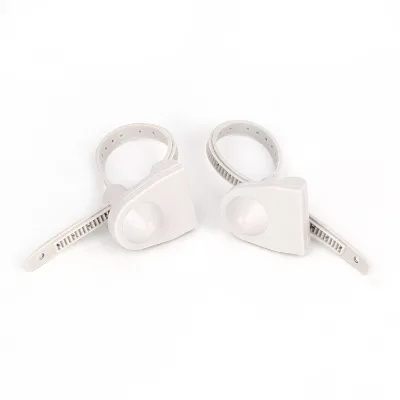
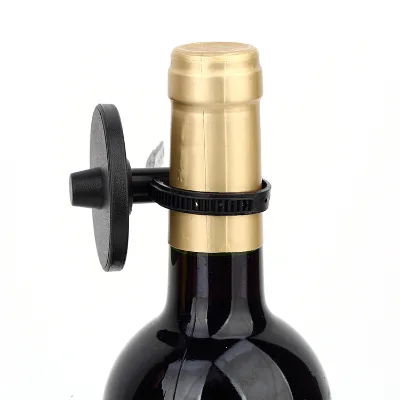
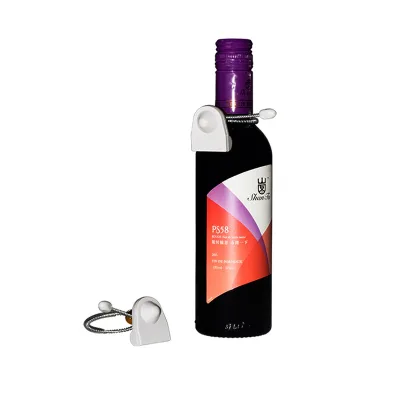
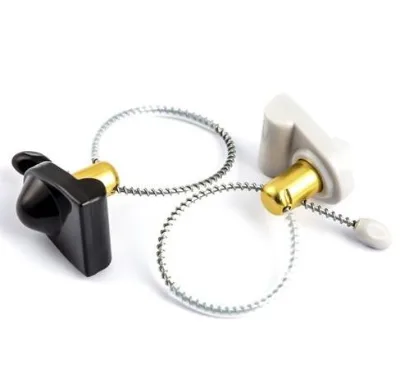
The physical construction of these tags is critical for their application on wine bottles. The material composition is consistently listed as ABS Plastic, often combined with an internal coil. This combination of ABS plastic and a coil provides the necessary durability to withstand handling while housing the resonant circuit required for the 8.2 MHz operation. The dimensions observed in the product specifications vary slightly, with specific models noting dimensions around 50mm to 55mm. This compact size is essential for fitting the tag onto the neck or body of a wine bottle without obstructing the label or the aesthetic appeal of the product. The color options typically include Black and White, with customization available to match specific brand requirements or store aesthetics.
The detection distance is another vital technical parameter. The observed data suggests a detection range of 1.2 to 2.0 meters. This range is sufficient for standard retail exit gate configurations, ensuring that the alarm triggers reliably when a tagged item passes through the detection zone. However, buyers must verify that their specific EAS system hardware is calibrated to match this detection range, as variations in antenna sensitivity can affect performance. The system design is explicitly noted as RF, which dictates the type of antennas and decoders required for the security infrastructure.
Compliance and Certification Verification
In the global B2B market, compliance with international safety and environmental standards is non-negotiable. The product data confirms that the tags in this category frequently carry CE certification, indicating conformity with health, safety, and environmental protection standards for products sold within the European Economic Area. Some listings also reference RoHS and GS certifications, which address restrictions on hazardous substances and general product safety, respectively. Additionally, SGS certification is mentioned in specific contexts, suggesting third-party verification of quality and safety standards.
The Harmonized System (HS) Code for these products is consistently identified as 85319010. This code is crucial for importers to determine accurate duty rates and to ensure that the classification aligns with customs regulations in their destination country. The presence of this code confirms that the product falls under electrical signaling or sound or visual signaling apparatus, which is the correct classification for EAS tags.
Buyers must treat these certifications as observations of specific listings rather than universal guarantees for all suppliers. While the data shows CE, RoHS, GS, and SGS as available certifications, it is imperative to request current, valid certificates for the specific batch being purchased. The origin of the products is primarily listed as Zhejiang, China, and Guangdong, China. While these regions are known manufacturing hubs, the specific factory location does not inherently guarantee compliance. Therefore, procurement teams should verify that the supplier can provide up-to-date documentation for every shipment, ensuring that the CE marking is supported by a valid Declaration of Conformity and that RoHS testing reports are current.
Cost Drivers and Pricing Dynamics
The pricing for RF hard wine bottle tags is influenced by several variables, including material costs, customization requirements, and order volume. The observed price range in the market spans from $0.03 to $111.65. This wide disparity is not indicative of a single product type but rather reflects the difference between basic hard tags and specialized, customized, or bulk-packaged solutions. The lower end of the spectrum likely represents standard, non-customized tags purchased in high volumes, while the higher end may include premium packaging, custom branding, or smaller, specialized orders.
The Minimum Order Quantity (MOQ) is a significant factor in the total cost of ownership. The data indicates an MOQ range from 1 to 10,000 units. For buyers seeking to test the market or fulfill small-scale needs, suppliers offering an MOQ of 1 or low hundreds are available. However, to achieve the most competitive unit price, buyers should aim for higher volume orders, potentially approaching the 10,000-unit threshold. The packaging specifications also impact logistics costs. Common packing configurations include 250 pieces per carton or 500 pieces per carton, with carton weights ranging from 6 kg to 11 kg and volumes between 0.032 and 0.057 cubic meters. These variations in packaging density directly affect shipping costs and warehouse storage efficiency.
Payment terms are another cost consideration. The standard payment methods observed include T/T (Telegraphic Transfer), PayPal, and Western Union. T/T is generally the preferred method for large B2B transactions due to lower transaction fees and better cash flow management, while PayPal and Western Union may incur higher fees and are more suitable for smaller sample orders or immediate transactions. Buyers should negotiate payment terms that align with their financial policies, potentially seeking credit terms for repeat orders to improve working capital efficiency.
Typical Applications and Usage Scenarios
The versatility of RF hard wine bottle tags makes them suitable for a wide array of retail environments. The primary application is listed as "Retail Loss Prevention," with specific mentions of garment stores, supermarkets, shopping arcades, and warehouses. While the core keyword focuses on wine bottles, the technology is adaptable to various high-value items. The tags are designed to function effectively in environments where theft prevention is a priority, such as liquor stores, specialty wine shops, and large-scale grocery retailers.
The application environment dictates the specific requirements for the tag. In a supermarket setting, the tags must withstand high traffic and frequent handling, requiring robust ABS plastic construction. In a garment store or shopping arcade, the aesthetic aspect of the tag becomes more important, making the availability of black, white, or customized colors a valuable feature. The tags are also suitable for warehouse applications, where they can be used to secure inventory before it is shipped to retail locations.
The function of the tag is explicitly defined as "Antishoplifting," which aligns with the broader goal of reducing shrinkage and inventory loss. The detection signal ensures that unauthorized removal of the product triggers an alarm, providing a deterrent effect. The system design, being RF-based, integrates seamlessly with existing EAS infrastructure found in most modern retail stores. This compatibility allows retailers to upgrade their security systems without replacing their entire detection network, making the tags a cost-effective solution for loss prevention.
Supplier Evaluation and Sourcing Strategy
Evaluating suppliers for RF hard wine bottle tags requires a focus on reliability, certification validity, and production capacity. The data indicates that suppliers are located in key manufacturing regions of China, specifically Zhejiang and Guangdong. These regions have established supply chains for electronic components and plastic molding, which suggests a mature manufacturing ecosystem. However, buyers should not assume that all suppliers in these regions offer the same quality standards.
Key evaluation criteria should include the supplier's ability to provide samples. The product data explicitly states that samples are available, which is a positive indicator of supplier confidence and flexibility. Buyers should request samples to verify the physical quality of the ABS plastic, the integrity of the internal coil, and the accuracy of the 8.2 MHz frequency. Additionally, the availability of customization is a critical factor. The data confirms that customization is available, allowing buyers to tailor the tag's color, branding, or dimensions to their specific needs.
When assessing suppliers, buyers should also consider the payment terms and logistics capabilities. The observed payment methods (T/T, PayPal, Western Union) offer flexibility, but buyers should prioritize suppliers who offer secure and traceable payment channels. Furthermore, the packing specifications, such as 250 or 500 pieces per carton, should be evaluated for their impact on shipping and storage. A supplier who can optimize packaging to reduce cubic meter usage can significantly lower logistics costs.
Quality Control and Long-Term Procurement Considerations
Maintaining consistent quality is essential for the effectiveness of RF hard wine bottle tags. The production standards observed include CE and other certifications, but buyers must implement their own quality control measures. This includes verifying the dimensions of the tags, ensuring the color consistency matches the ordered specifications, and testing the detection signal strength. The detection distance of 1.2 to 2.0 meters should be validated through on-site testing to ensure compatibility with the retailer's specific gate systems.
Long-term procurement considerations involve building a sustainable relationship with a reliable supplier. The availability of customization and the range of models (such as B008, B013, B009, B002, B012, BT024) suggest that suppliers can adapt to changing needs. Buyers should aim to establish a long-term contract that guarantees consistent supply, pricing stability, and quality assurance. This approach reduces the risk of supply chain disruptions and ensures that the security measures remain effective over time.
The HS Code 85319010 should be consistently used in all documentation to facilitate smooth customs clearance. Buyers should also monitor changes in trade regulations that might affect the import of electronic components. By maintaining a proactive approach to compliance and quality control, buyers can ensure that their RF hard wine bottle tags continue to provide reliable protection against theft while meeting all regulatory requirements.
Comparative Analysis of Product Specifications
To assist buyers in making informed decisions, the following table summarizes the key specifications observed in the product data. This comparison highlights the variations in models, materials, and packaging that buyers should consider during the sourcing process.
| Specification | Observation 1 | Observation 2 | Observation 3 |
|---|---|---|---|
| Frequency | 8.2 MHz | 8.2 MHz | 8.2 MHz |
| Material | ABS Plastic | ABS + Coil | ABS |
| Dimensions | 50mm | 55mm | 5745.518cm (Pack) |
| Color Options | Black | Black, White, Custom | Black, White, Custom |
| Packaging | 250 PCS/CTN | 500 PCS/CTN | 250 PCS/Carton |
| Carton Weight | 6.45 kg | 11 kg | 6 kg |
| Certifications | CE | CE, RoHS, GS | CE, SGS |
| Detection Range | 1.2-2.0m | 1.2-2.0m | 1.2-2.0m |
| Origin | Zhejiang, China | Guangdong, China | China |
| Application | Supermarket, Garment Store | Supermarket, Shopping Arcade | Retail Loss Prevention |
This table illustrates that while the core technology (8.2 MHz RF) remains consistent, there are variations in packaging, dimensions, and certification levels. Buyers should use this data to align their specific requirements with the available product options, ensuring that the selected tags meet both functional and logistical needs. By carefully evaluating these specifications, buyers can optimize their procurement strategy and secure high-quality RF hard wine bottle tags for their retail operations.
FAQs
What certifications do these tags typically have?
These tags frequently carry CE certification, indicating conformity with European safety standards. Some listings also reference RoHS, GS, and SGS certifications for hazardous substance restrictions and quality verification, though buyers should request valid certificates for specific batches.
How is the detection signal generated for these tags?
The detection signal is generated using Radio Frequency RF technology operating at 8.2 MHz. This specific frequency band ensures reliable detection for high-value items like wine bottles, distinguishing the tags from Microwave or Acoustic-Magnetic systems.
Can I customize the color and packaging of these tags?
Customization is available for color options such as black, white, or specific brand colors. Packaging can be tailored, with common configurations including 250 or 500 pieces per carton, allowing buyers to match specific store aesthetics and logistics needs.
What is the typical detection distance for these hard tags?
The observed detection range for these tags is typically between 1.2 and 2.0 meters. This range is sufficient for standard retail exit gate configurations, but buyers must verify that their specific EAS system hardware is calibrated to match this distance.
Which materials are used to construct these anti-theft tags?
These tags are constructed using ABS Plastic, often combined with an internal coil. This combination provides the necessary durability to withstand handling while housing the resonant circuit required for the 8.2 MHz operation and reliable alarm triggering.
Where are these products typically manufactured?
The products are primarily manufactured in Zhejiang, China, and Guangdong, China. These regions are known manufacturing hubs with established supply chains for electronic components and plastic molding, though specific factory locations vary by supplier.
What is the minimum order quantity for these tags?
The minimum order quantity ranges from 1 to 10,000 units depending on the supplier. Buyers seeking competitive unit prices should aim for higher volume orders, while those testing the market can find suppliers offering low MOQs or sample availability.