Source Ribbon Garland for Christmas trees, wreaths, and gift wrapping
Compare 30 Ribbon Garland options from Chinese manufacturers for holiday decoration and gift wrapping. Find wired, fabric, and resin styles with customizable sizes and packaging to suit your sourcing needs.
Key considerations
Products List
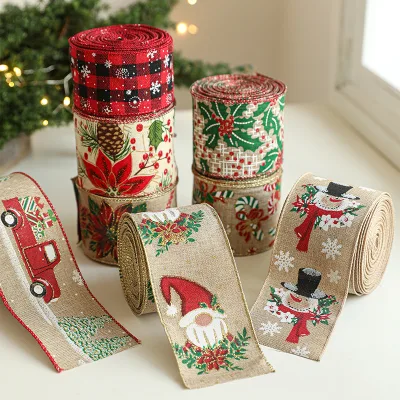
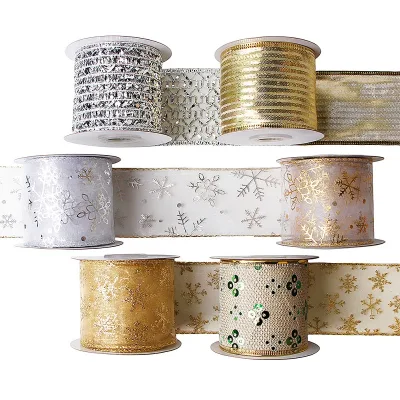
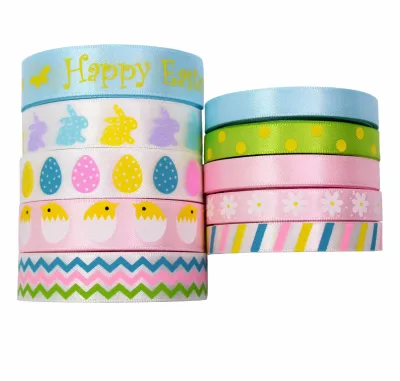


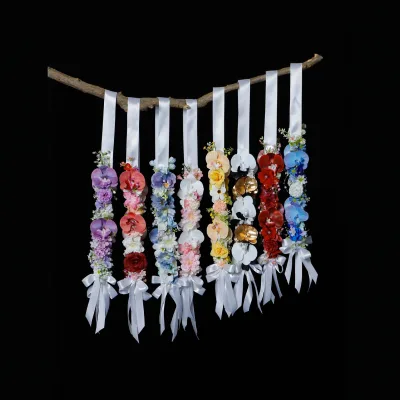


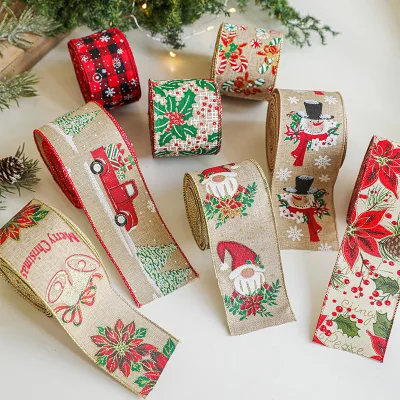




Christmas Ribbon Platinum Glitter Wire Edge Ribbon Christmas Tree Ribbon
$0.50 - $3.00
MOQ: 480 Pieces




Comprehensive Sourcing Guide
Strategic Sourcing Guide for Ribbon Garland Procurement
Navigating the global market for ribbon garlands requires a precise understanding of material composition, dimensional specifications, and supply chain logistics. For procurement professionals, the distinction between a standard decorative ribbon and a specialized wired garland is critical, as it dictates the structural integrity, application suitability, and final cost of the product. The current market landscape presents a diverse array of options ranging from fabric-based Christmas decorations to specialized wired ribbons made from jute, polyester, and resin composites. This guide synthesizes available product data to provide a structured approach for sourcing high-quality ribbon garlands that meet specific commercial and aesthetic requirements.
Material Composition and Structural Integrity
The foundation of any successful Ribbon Garland procurement lies in the selection of appropriate materials. The supply data indicates a clear segmentation based on material type, with options including fabric, jute, polyester, and resin. Fabric-based products are often marketed as "Christmas Decoration" items, typically featuring a round shape and a single package size of 20x40x30 cm. These items are generally sourced from regions like Shaanxi, China, and are designed for general home decoration. In contrast, wired ribbon variants offer a different structural profile. These are frequently composed of a blend of jute and polyester, or pure polyester, and are engineered to hold shape. The presence of wire within the ribbon edges allows for customization of the garland's form, making them ideal for wreaths and intricate holiday displays.
When evaluating material specifications, buyers must distinguish between the base fabric and the reinforcement elements. For instance, a specific product listing identifies the material as "Jute/Polyester" with a width of 63mm. This dimension is crucial for determining the visual weight of the garland when draped. Furthermore, the material choice impacts the weight per unit; while a fabric-based Christmas decoration may have a single gross weight of 3.000 kg, a wired ribbon roll might weigh only 0.020 kg. This significant variance affects shipping costs and inventory handling. Procurement teams should verify whether the material is treated for durability, especially for applications requiring outdoor use, as some resin-based or treated fabric options are explicitly listed for both indoor and outdoor applications.
Dimensional Specifications and Packaging Standards
Precision in dimensions is a primary driver of product compatibility. The market offers ribbon garlands in varying lengths and widths, with specific listings noting a length of 2 meters for certain fabric decorations and a width of 63mm for wired ribbons. The packaging configuration is equally vital for logistics planning. Standard packaging for wired ribbons often involves rolls of 6 meters, though suppliers indicate flexibility to customize this to 5 yards, 25 yards, or 50 yards per roll. This customization capability is a significant factor for buyers with specific inventory constraints or display requirements.
Packaging details extend beyond the roll length to include the protective outer layer. Common practices include OPP (Oriented Polypropylene) bags for individual items, often accompanied by a head card for retail presentation. For larger orders, the single package size for fabric decorations is noted as 20x40x30 cm, while wired ribbon rolls are typically packed in dimensions of 63x10x10 cm. Buyers must calculate the total volume of these packages to optimize container loading. The "Single gross weight" varies drastically, from 0.020 kg for a single roll of ribbon to 3.000 kg for a larger fabric decoration unit. Understanding these metrics is essential for accurate freight cost estimation and warehouse space allocation.
Application Scenarios and Functional Versatility
The intended application of the Ribbon Garland dictates the necessary technical specifications. The data highlights two primary usage categories: general holiday decoration and specific gift wrapping. Fabric-based items are frequently categorized under "Christmas Home Decoration" and "Christmas Deco," suggesting their primary role is in static display settings such as mantels, staircases, or tree adornments. These items often feature a "Round" shape and are described as "Fashionable" and "Popular Christmas Gift" items.
Conversely, wired ribbons are explicitly marketed for "Holiday decoration, gift wrapping," and as "Wired ribbon for wreaths." The inclusion of wire allows the garland to be shaped, twisted, and secured, making it a functional tool for crafters and event planners. Some products are designed for both indoor and outdoor use, a critical distinction for buyers sourcing for commercial venues or outdoor holiday displays. The "Power Source" is listed as "Non Power," confirming that these are passive decorative elements. Buyers should verify the specific application environment with the supplier, as the material's resistance to UV light, moisture, and temperature fluctuations varies significantly between fabric, jute, and resin compositions.
Cost Drivers and Minimum Order Quantities
Understanding the cost structure of ribbon garlands requires an analysis of Minimum Order Quantities (MOQ) and supply capabilities. The market exhibits a wide range of MOQs, from as low as 1 piece to as high as 10,000 pieces, depending on the product type and supplier. Specific listings indicate an MOQ of 50 pieces for certain fabric decorations, while wired ribbon suppliers may require a minimum of 300 meters per color. This disparity suggests that buyers purchasing in bulk for large-scale events may need to consolidate orders to meet the 300-meter threshold, whereas small retailers might focus on the lower MOQ fabric options.
The observed price range in the market spans from $0.01 to $9.90 USD, reflecting the vast difference between a single roll of ribbon and a complete decorative set. Supply ability is another key cost driver, with some suppliers offering a capacity of 100,000 meters per week. This high-volume capability suggests that larger orders can be fulfilled quickly, potentially reducing lead times. However, buyers must balance the desire for low unit costs with the need for customization. Customization options, such as specific colors or logo acceptance, are available but may impact the MOQ and unit price. The "Factory" designation for some suppliers indicates a direct manufacturing relationship, which often translates to better pricing for bulk orders compared to trading companies.
Supplier Evaluation and Origin Verification
When selecting a supplier, verification of the place of origin is a critical step in the due diligence process. The data points to two primary manufacturing hubs: Shaanxi, China, and Fujian, China. Shaanxi appears to be a source for fabric-based Christmas decorations, while Fujian is associated with wired ribbon production. Buyers should confirm the specific origin of their target product, as regional differences can influence labor costs, material sourcing, and logistical efficiency. For instance, products dispatched from Xiamen port suggest a specific logistical route that may offer faster transit times to certain international markets.
Supplier evaluation should also focus on their customization capabilities and sample availability. Many suppliers offer free stocked samples, allowing buyers to physically inspect the material quality, wire tension, and color accuracy before committing to a large order. The ability to accept customized logos and packaging details is a strong indicator of a supplier's flexibility and readiness to support private label initiatives. Buyers should verify the "Delivery time," which is noted as 5-10 days for some items, to ensure it aligns with their project timelines. Additionally, the "Selling Units" being listed as "Single item" for some products suggests a modular approach to ordering, which can be beneficial for testing different styles before scaling up.
Quality Control and Compliance Considerations
Ensuring product quality and compliance is paramount for B2B procurement. While specific certification standards are not explicitly detailed in the provided product data, buyers must proactively request documentation regarding material safety and fire resistance, particularly for products intended for indoor public spaces or commercial use. The material composition, whether fabric, jute, polyester, or resin, must meet relevant safety standards for the destination market. For example, resin-based decorations and fabric items used in holiday settings often require compliance with flammability regulations.
Quality control should also encompass dimensional accuracy and finish. Buyers should verify that the 63mm width and 2-meter lengths are consistent across the production batch. The "Color" attribute is listed as "as picture" or "customized," which necessitates a rigorous color matching process. Since the color can be customized, suppliers must provide a color proof or physical sample that matches the buyer's Pantone or brand standards. The "Packing" details, such as the OPP bag and head card, should be inspected for durability to prevent damage during transit. Furthermore, the "Single gross weight" and "Single package size" should be verified against the supplier's shipping documents to ensure accuracy in freight calculations and inventory management.
Long-Term Procurement and Supply Chain Resilience
For long-term procurement strategies, buyers should prioritize suppliers with stable supply abilities and flexible customization options. The observed supply ability of 100,000 meters per week indicates that the market has the capacity to handle large, recurring orders. However, buyers should assess the supplier's ability to maintain quality consistency over time, especially when dealing with customized colors or materials. The availability of "Free (stocked)" samples is a positive indicator of a supplier's confidence in their product and their willingness to support the buyer's evaluation process.
Sourcing from multiple origins, such as both Shaanxi and Fujian, can mitigate supply chain risks. If one region faces logistical disruptions or raw material shortages, the other may remain operational. Buyers should also consider the "Port of dispatch" when planning their logistics; Xiamen port is a major hub, but the specific port location can impact shipping costs and transit times. Finally, maintaining a clear understanding of the MOQ requirements, such as the 300-meter/color threshold for wired ribbons, is essential for inventory planning. By aligning order volumes with these thresholds, buyers can optimize costs while ensuring a steady supply of high-quality ribbon garlands for their holiday and decorative needs.
FAQs
What materials are used for ribbon garlands?
Ribbon garlands are made from fabric, jute, polyester, or resin. Specific listings show options like Jute/Polyester blends for wired ribbons and fabric for general decorations, with some resin items suitable for both indoor and outdoor use.
How long is the delivery time for orders?
The delivery time is typically 5 to 10 days for available items. This lead time applies to suppliers with a supply ability of 100,000 meters per week, ensuring quick fulfillment for standard orders.
What is the minimum order quantity for wired ribbons?
The minimum order quantity for wired ribbons is 300 meters per color. Some fabric decorations have a lower MOQ of 50 pieces, while others may start at 1 piece depending on the specific product listing.
Can the Ribbon Garland be customized?
Yes, customization is available for colors, logos, and packaging. Suppliers can adjust roll lengths to 5, 25, or 50 yards and accept customized logos, though this may affect the minimum order requirements.
Where are these products manufactured?
Products originate from Shaanxi and Fujian in China. Shaanxi is associated with fabric-based Christmas decorations, while Fujian is the source for wired ribbon production, with dispatch often from Xiamen port.
What is the price range for ribbon garlands?
The observed price range is between 0.01 and 9.9 USD. This wide range reflects the difference between single rolls of ribbon and larger decorative sets, influenced by material and customization options.