Source Robotic Arm for Loading, Picking, and Assembly
Compare 30 Robotic Arm models from Wuhan, China, featuring electric and mechanical drive modes with load capacities from 1kg to 20kg. Buyers can evaluate specifications like arm span, accuracy, and certifications including ISO and CE for industrial loading applications.
Key considerations
Products List

$16000.00 - $17000.00
MOQ: 1 Pieces


$6000.00 - $7300.00
MOQ: 1 Sets


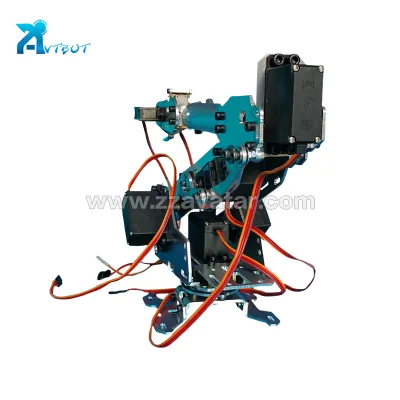


Fast-paced Wear resistant lightweight flexible automatic robotic arm
$7000.00 - $8000.00
MOQ: 1 Pieces

Advanced High Precision Robotic Arm for Efficient Automation Solutions
$3000.00 - $4550.00
MOQ: 1 Sets


Comprehensive Sourcing Guide
Robotic Arm Sourcing Guide
The global market for robotic arms has expanded significantly to meet the demands of automated loading and material handling across diverse manufacturing sectors. Based on current listing data, these units are predominantly sourced from Wuhan, China, and are available in both new and customized configurations. Buyers should note that the observed product range includes models with varying degrees of freedom, with six-axis configurations being a standard offering for complex manipulation tasks. The availability of customization options allows procurement teams to tailor end-effectors and control parameters to specific production line requirements without needing to develop proprietary hardware from scratch.
When initiating a search, buyers must navigate a wide spectrum of technical capabilities and commercial terms. The observed listings indicate a price range spanning from approximately $102 to $70,000, reflecting the disparity between compact, low-load units and heavy-duty industrial systems. Minimum Order Quantities (MOQ) are generally flexible, often starting at a single unit, which facilitates pilot testing and small-batch deployments. However, the variation in specifications, such as arm spans ranging from 400mm to 1850mm and load capacities from 1kg to 20kg, necessitates a rigorous initial screening process to ensure the selected hardware aligns with the intended operational load and reach requirements.
Product Scope and Observed Listing Signals
Buyers must first distinguish between the different drive modes and control architectures presented in the market, as these define the fundamental operation of the system. The available data indicates a mix of electric and mechanical drive modes, alongside continuous path control capabilities which are essential for smooth, coordinated movements in automated environments. While electric drive systems are prevalent for their precision and ease of integration, the presence of mechanical options suggests specific applications where robustness or specific kinematic chains are prioritized. Understanding this distinction is critical before evaluating specific models, as the drive mode directly influences maintenance cycles and energy consumption profiles.
The physical scope of these robotic arms varies significantly in terms of reach and payload, requiring a clear definition of the application envelope before selection. Listings show models with maximum arm spans as short as 400mm for delicate tasks and extending up to 1850mm for heavy industrial loading. Correspondingly, the loading ability ranges from 1kg for precision assembly to 20kg for general material handling. Buyers should verify that the specific model's arm span and loading ability match the exact geometry of their work cell, as a mismatch can lead to inefficient cycle times or mechanical stress. The standard packaging for these units varies from boxes to wooden cases and sea transport containers, indicating that logistics planning must be integrated early in the procurement process.
Technical Specifications to Verify
Precision and repeatability are paramount when selecting a Robotic Arm for automated tasks, and buyers should prioritize models with verified positioning accuracy. The observed data highlights a repeated positioning accuracy of 0.05mm for certain high-precision models, a specification that is vital for applications requiring tight tolerances in assembly or placement. When evaluating potential suppliers, procurement teams must request detailed technical sheets that confirm the repeatability figures under load, as performance can degrade when the arm is operating near its maximum capacity. It is essential to verify that the stated accuracy applies to the specific configuration and payload the buyer intends to use, rather than just the base unit specifications.
The structural dimensions and power requirements of the Robotic Arm must be compatible with the existing facility infrastructure and workspace constraints. Listings indicate standard dimensions such as 478380120mm for compact units and larger footprints like 1000800900mm for more substantial systems. Power supply requirements are typically listed as 220V, but buyers must confirm the specific voltage and frequency compatibility with their local grid to avoid the need for expensive transformers or electrical upgrades. Additionally, the axes configuration, consistently noted as 6-axis in the observed data, offers the flexibility to orient the end-effector in any direction, but the buyer must ensure the control system supports the specific motion profiles required for their unique loading or handling tasks.
Compliance and Safety Documentation
Safety and regulatory compliance are non-negotiable aspects of sourcing industrial robotics, and buyers must verify that all units carry recognized certifications. The observed listings frequently cite CE and ISO certifications, which are critical for ensuring the equipment meets European safety standards and international quality management systems. While some listings mention RoHS compliance, indicating adherence to restrictions on hazardous substances, buyers should explicitly request the full certification documentation for the specific model number to ensure validity. Relying on general claims without verifying the specific certificate numbers can expose the buyer to regulatory risks, particularly if the equipment is intended for export to markets with strict safety mandates.
Beyond initial certifications, the documentation package must include comprehensive safety manuals and operational guidelines to ensure safe deployment. The presence of "After-sales Service" and "Warranty" provisions, typically listed as one year, indicates a commitment to support, but the scope of this service must be clearly defined in the contract. Buyers should verify whether the warranty covers the entire system or only specific components, and whether the service includes on-site technical support or remote troubleshooting. The availability of customizable grab hands and replaceable end-effectors also requires specific safety data sheets to ensure that any third-party accessories do not compromise the overall safety rating of the robotic cell.
Cost Drivers and Commercial Terms
The total cost of ownership for a Robotic Arm is influenced by a complex interplay of technical specifications, customization levels, and logistical requirements. The observed price range of $102 to $70,000 suggests that factors such as payload capacity, arm span, and control complexity are the primary drivers of cost. A unit with a 20kg load capacity and a 1850mm span will naturally command a higher price than a 1kg, 400mm unit, but buyers must also account for the cost of customization, which is listed as available but likely incurs additional fees. Understanding the breakdown of these costs helps in budgeting for the project and prevents unexpected expenses during the final negotiation phase.
Commercial terms regarding shipping and packaging play a significant role in the final landed cost and delivery timeline. The data indicates that products are shipped via sea freight, with packaging options ranging from standard boxes to wooden cases, depending on the size and fragility of the unit. Buyers should clarify who bears the responsibility for freight costs and insurance, as well as the specific Incoterms agreed upon for the transaction. The mention of "Logistics" and "Sea Transport" as standard methods implies that lead times may be extended for international shipments, and buyers must factor in potential delays when planning their production schedules.
Supplier Qualification and Quality Control
Verifying the origin and manufacturing standards of the supplier is a critical step in mitigating supply chain risks. The observed data consistently points to Wuhan, China, as the primary origin for these robotic arms, a region known for its manufacturing capabilities. However, buyers should not assume that all products from this location meet the same quality standards; instead, they must request evidence of the supplier's quality control processes and production history. The presence of ISO certification is a positive indicator, but it should be cross-referenced with the supplier's specific facility audits to ensure that the quality management system is actively applied to the production of the robotic arms.
Quality control extends beyond the initial manufacturing phase to include the condition and testing of the units before shipment. All observed listings specify that the products are "New," but buyers must insist on pre-shipment inspection reports that verify the functional integrity of the drive modes and control systems. The availability of a one-year warranty is a standard offering, but the terms of this warranty should be scrutinized to ensure it covers defects in materials and workmanship. Additionally, the supplier's ability to provide "After-sales Service" should be validated through references or case studies, ensuring that technical support is responsive and capable of resolving issues that may arise during the initial deployment phase.
Long-Term Procurement Checks
Sourcing a Robotic Arm is not a one-time transaction but the beginning of a long-term partnership that requires ongoing performance monitoring. Buyers should establish clear metrics for evaluating the robot's performance over time, including uptime, maintenance frequency, and adherence to the specified repeated positioning accuracy. The initial warranty period of one year provides a baseline for reliability, but the long-term viability of the system depends on the availability of spare parts and the supplier's commitment to continued support. Procurement teams must ensure that the contract includes provisions for extended warranty options or service level agreements that cover the expected lifespan of the equipment.
Finally, the adaptability of the Robotic Arm to future production needs is a key consideration for long-term procurement success. The observed data highlights that customization is available, including options for different colors and replaceable grab hands, which suggests that the system can be modified as production requirements evolve. Buyers should verify that the control software and hardware architecture support future upgrades, such as the integration of new sensors or the implementation of advanced continuous path control algorithms. By selecting a system with a flexible design and a supplier committed to long-term support, organizations can ensure that their investment in robotic automation remains relevant and efficient for years to come.
FAQs
What is the load capacity of the BRTIRWD1506A Robotic Arm?
The BRTIRWD1506A model features a loading ability of 6kg. This capacity supports standard industrial loading tasks while maintaining stability. The arm operates with electric drive mode and offers six degrees of freedom for precise movement. It is designed for new condition applications with continuous path control capabilities.
Can the Robotic Arm be customized for specific applications?
Yes, customization is available for these robotic arms. Buyers can request specific configurations to match their operational needs. The grab hand is customizable and replaceable, allowing for versatile end-effector integration. This flexibility ensures the equipment adapts to unique production environments and specific handling requirements.
What certifications do the robotic arms hold?
The robotic arms hold ISO, CE, and RoHS certifications. These credentials verify compliance with international safety and quality standards. The CE mark indicates conformity with health, safety, and environmental protection standards for products sold within the European Economic Area. ISO certification ensures robust quality management processes are in place.
What is the warranty period for the Robotic Arm?
The standard warranty period is one year. This coverage provides assurance for the initial operational phase. After-sales service is available to support maintenance and troubleshooting needs. Buyers receive dedicated support to ensure long-term reliability and minimal downtime during the warranty term.
What is the maximum arm span of the BRTIRUS1820A model?
The BRTIRUS1820A model has a maximum arm span of 1850mm. This reach allows for extensive coverage in loading and handling tasks. With a loading ability of 20kg, it handles heavier payloads over longer distances. The design supports efficient workspace utilization for large-scale industrial operations.
How is the Robotic Arm packaged for shipping?
Packaging options include wooden cases, boxes, and sea transport containers. The choice depends on the specific model and shipping requirements. Wooden cases provide robust protection for international logistics. This secure packaging ensures the equipment arrives in new condition, ready for immediate installation and operation.