Source Robotic Commercial Massage Chair for Home SPA Office
Compare 30 Robotic Commercial Massage Chair options from verified Chinese suppliers. Evaluate models with features like shiatsu, heating, and voice control for home, spa, and office applications.
Key considerations
Products List


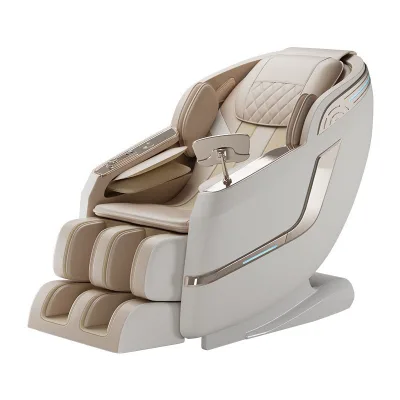
Deluxe Robotic Adjustable Stretch Function Commercial Massage Chair 6D
$195.00 - $205.00
MOQ: 30 Boxes


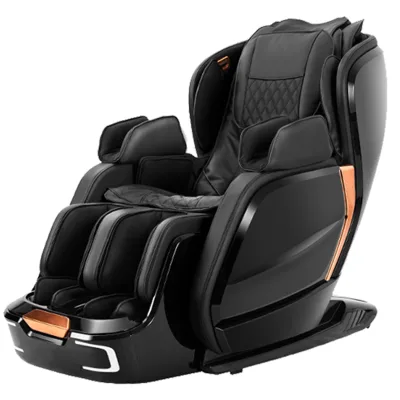
Gravity Full Body 4D Robot Electric Massage Chair Luxury Massage Chair
$150.00 - $900.00
MOQ: 1 Pieces

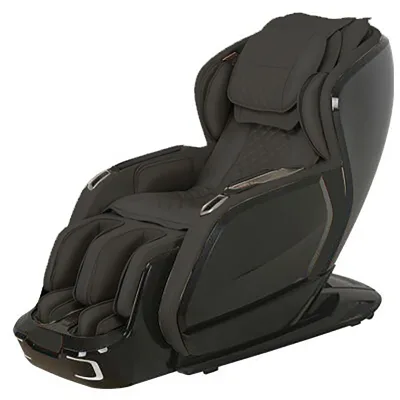
Hot Selling Electric Full Body Price Ai 4D Robot Exhibition Massage Chair
$150.00 - $900.00
MOQ: 1 Pieces

Comprehensive Sourcing Guide
Strategic Sourcing Guide for Robotic Commercial Massage Chairs
Understanding the Product Category and Core Specifications
The market for robotic commercial massage chairs encompasses a diverse range of electric seating solutions designed to deliver therapeutic benefits through automated mechanical systems. When sourcing these units, buyers must first distinguish between specific design philosophies, as the terminology often overlaps. The product landscape includes units explicitly categorized as "Robotic Massagers" alongside those labeled as "Traditional Massagers," indicating different mechanical approaches to delivering therapy. The core functionality relies on electric motors driving mechanisms that simulate human hand movements. Key operational modes observed in this category include kneading, tapping, vibration, and shiatsu techniques, often augmented by heating elements for enhanced muscle relaxation. Some advanced models integrate air pressure technology to provide compression therapy, while others focus on specific body healthcare functions.
The physical construction of these chairs is critical for commercial durability. The primary material observed is PU leather, chosen for its resistance to wear and ease of cleaning in high-traffic environments. The internal structure typically utilizes a combination of motors, sponge padding, and structural frames. Dimensions vary significantly based on the intended user profile and feature set. For instance, specific models have been documented with standard dimensions around 172x76x85 cm, while others may extend to 152x77x116 cm or 124x76x116 cm. Buyers must verify that the chair's footprint aligns with the spatial constraints of their intended installation site, whether it be a hotel spa, a corporate office, or a dedicated wellness center. The maximum load capacity is another vital specification; while some units support up to 100 kg, others are engineered to handle loads up to 150 kg, ensuring safety and longevity for a broad demographic of users.
Technical Variations and Electrical Requirements
Technical compatibility is a primary concern for international procurement, particularly regarding electrical standards. The rated voltage for these devices varies by manufacturer and target market. Some units are designed specifically for 220V-50Hz systems, which is common in many regions, while others offer broader compatibility with 110V, 220V, or 240V inputs. This flexibility is essential for buyers operating in mixed-voltage environments or planning to export units to different countries. The rated power consumption is another factor to consider for energy efficiency and electrical load planning. Typical units in this category operate at approximately 135W, though specific power ratings should always be confirmed against the technical datasheet of the selected model.
Control mechanisms have evolved from simple wired remotes to more sophisticated interfaces. While some models feature a wireless remote control for user convenience, others incorporate voice control capabilities, allowing for hands-free operation. The running time for a typical session is often capped at 30 minutes to prevent motor overheating and ensure user comfort. Applicable height ranges are also standardized to ensure ergonomic alignment; a common specification supports users between 145 cm and 200 cm. When evaluating the robotic nature of the chair, buyers should look for specific design types that promise a "luxury" experience, often characterized by the complexity of the massage algorithms and the smoothness of the robotic movement. The distinction between a "Robotic Massager" and a "Traditional Massager" may imply differences in the precision of the movement and the range of motion available to the user.
Compliance, Certification, and Safety Standards
Navigating the regulatory landscape is a critical step in the sourcing process. While the product listings often mention specific standards such as UL 1647, IEC 55014-1, IEC 61000-3-2, and various ISO certifications like ISO 9001 and ISO 13485, buyers must exercise caution. These references often appear in background contexts or as general industry benchmarks rather than guaranteed attributes of every listed product. It is imperative to verify the actual certification status of the specific unit being purchased. For commercial applications, compliance with local electrical safety codes and electromagnetic compatibility (EMC) regulations is non-negotiable.
Buyers should request current certification documents directly from the supplier rather than relying on general marketing claims. The presence of a CE mark or specific ISO standards should be validated through third-party testing reports. The warranty period is another indicator of manufacturer confidence; a standard warranty of one year is commonly observed in this sector. However, for commercial use, buyers should negotiate extended warranty terms or service level agreements that cover the higher frequency of use typical in business settings. The origin of the product, often listed as China or specific provinces like Fujian, can influence the regulatory compliance framework, as manufacturing facilities in different regions may adhere to varying levels of quality control and safety protocols.
Cost Drivers and Procurement Economics
The pricing structure for robotic commercial massage chairs is influenced by several variables, including the complexity of the robotic mechanism, the quality of materials, and the level of customization. The observed price range in the market spans from approximately $1 to $950, though this wide variance often reflects differences in model tier, feature set, and order volume. High-end models with advanced features like voice control, inversion capabilities, or extensive air pressure systems will command prices at the upper end of this spectrum. Conversely, basic models with fewer massage modes and simpler construction will be found at the lower end.
Minimum Order Quantity (MOQ) is a significant factor in total cost of ownership. The observed MOQ range varies from 1 unit to 50 units. For buyers looking to equip a single location, suppliers with low MOQs are essential. However, for large-scale deployments, negotiating a lower unit price through higher volume orders can yield substantial savings. Packaging and logistics also contribute to the final cost. Units are typically packed individually in cartons, with some utilizing split packing and five layers of corrugated packaging to ensure safety during transit. The weight of the units, ranging from 75 kg to 98 kg net and gross, directly impacts shipping costs. Buyers must calculate the freight charges based on the loading quantity, which is often optimized for 20-foot or 40-foot high cube containers, with specific capacities such as 25 pieces per 20-foot container or 58 pieces per 40-foot high cube container.
Supplier Evaluation and Customization Capabilities
Selecting the right supplier requires a thorough evaluation of their manufacturing capabilities and flexibility. Many suppliers in this sector offer OEM (Original Equipment Manufacturer) and ODM (Original Design Manufacturer) services, allowing buyers to customize the product to their brand identity. Customization options often include color selection, with available palettes ranging from standard shades like beige, grey, and black to fully custom color requests. The ability to customize the product extends to branding and potentially modifying the control interface or massage algorithms to suit specific commercial needs.
When evaluating suppliers, buyers should assess their production capacity and lead times. The origin of the product, whether from general Chinese manufacturing hubs or specific regions like Fu'an, can provide insights into the supply chain maturity. A supplier with a proven track record in producing electric chair massagers for commercial applications is preferable. Buyers should also verify the supplier's ability to handle the specific packaging requirements, such as the split packing or heavy-duty corrugated packaging needed for long-distance shipping. The weight and dimensions of the product, such as the 75kg/93kg net/gross weight ratio, should be factored into the supplier's logistics capabilities to ensure safe delivery.
Quality Control and Long-Term Procurement Strategy
Ensuring consistent quality is paramount for commercial equipment that will undergo daily use. Quality control processes should focus on the durability of the PU leather, the reliability of the motors, and the precision of the robotic mechanisms. Buyers should implement a rigorous inspection protocol before accepting shipments, checking for structural integrity, electrical safety, and functional performance of all massage modes. The running time and maximum load weight specifications must be tested to ensure they meet the advertised standards.
For long-term procurement, establishing a relationship with a supplier that offers reliable after-sales support is crucial. This includes access to spare parts, technical support for troubleshooting, and potential repair services. The warranty terms should be clearly defined, covering defects in materials and workmanship. Buyers should also consider the scalability of the procurement strategy, ensuring that the supplier can meet future demand as the business expands. By focusing on these strategic elements, buyers can secure a supply chain that supports the operational needs of their commercial massage chair fleet while maintaining high standards of quality and safety.
Application Scenarios and User Experience
The versatility of robotic commercial massage chairs allows them to be deployed in a wide array of settings. The primary applications include home use, spa facilities, and office environments. In a spa setting, the luxury design and advanced massage modes like shiatsu and heating provide a premium experience for clients. In office environments, these chairs serve as wellness amenities to reduce employee stress and improve productivity. The specific design type, whether robotic or traditional, influences the user experience; robotic models often offer more precise and consistent movements, while traditional models may provide a more classic massage feel.
The user experience is further enhanced by features such as wireless remote control and voice control, which add convenience and accessibility. The ability to customize the color and design allows businesses to integrate the chairs seamlessly into their existing decor. The maximum load weight and applicable height ranges ensure that the chairs are accessible to a diverse range of users. By understanding these application scenarios, buyers can select the right models that align with their specific business goals and user needs, ensuring high satisfaction and repeat usage.
FAQs
What customization options are available for these chairs?
Customization is available for color and potentially design. Buyers can select from beige, grey, dark grey, or black, or request custom colors. The product attributes confirm that customization is a standard offering for this category.
Which voltage standards do these electric chairs support?
Supported voltages vary by model, with options for 220V-50Hz or 110V/220V/240V. Specific models like the CF-588 use 220V-50Hz, while others offer broader compatibility to suit different regional electrical standards.
How much weight can the massage chairs support?
Maximum load weights range from 100 kg to 150 kg depending on the specific model. Some units are rated for 100 kg, while heavier-duty models like the JT-SL400 support up to 150 kg for diverse user needs.
Can buyers find chairs with voice control functionality?
Yes, certain models feature voice control capabilities alongside wireless remote options. This advanced function allows for hands-free operation, enhancing user convenience in home, spa, or office environments.
What is the typical minimum order quantity for these units?
The minimum order quantity ranges from 1 to 50 units depending on the supplier. This flexibility allows buyers to purchase single units for testing or larger batches for commercial deployment without excessive barriers.
Which materials are used to construct these massage chairs?
The primary materials include PU leather, motors, and sponge padding. PU leather is chosen for durability and ease of cleaning, making it suitable for high-traffic commercial applications like spas and offices.