Source Roll Up Shutter Belt Winder for Grain, Mining, Power Plants
Compare 30 verified Roll Up Shutter Belt Winder options for grain transport, mining operations, and power plant applications. Review specifications including motor power, belt width, and delivery times from Chinese manufacturers.
Key considerations
Products List


Winder PP Material Roller Shutter Belt Strap for Roller Shutter Accessories
$0.01 - $0.10
MOQ: 50000 Meters


Take-up Reel and Carriage Lifting Rewinder Rope Reel Coil Winder Machine
$1100.00 - $1500.00
MOQ: 1 Sets


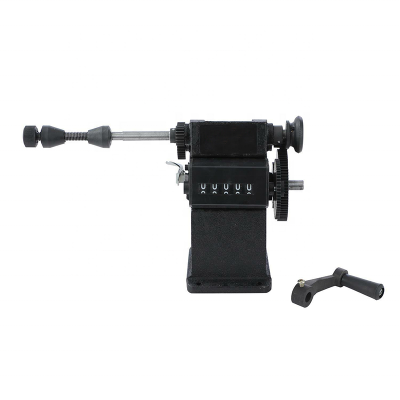

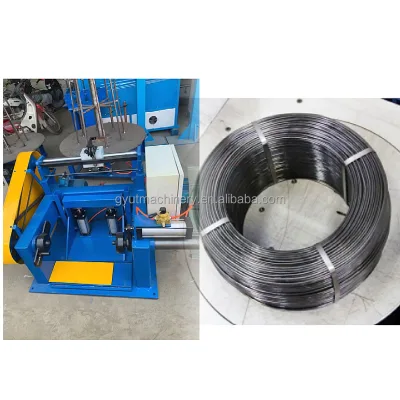
Automatic Coil Winder Wire Rope Spooling Machine Electric Coil Winding Machine
$4120.00 - $4150.00
MOQ: 1 acres



Comprehensive Sourcing Guide
Strategic Sourcing Guide for Roll Up Shutter Belt Winders
The global market for industrial automation and security hardware has seen a steady increase in demand for reliable roll-up shutter systems, particularly within commercial, industrial, and logistics sectors. For procurement professionals, the core keyword "Roll Up Shutter Belt Winder" represents a critical component that bridges the gap between manual operation and automated efficiency. Sourcing this specific equipment requires a nuanced understanding of mechanical specifications, material durability, and supply chain reliability. Unlike general hardware, belt winders are often custom-engineered to fit specific shutter dimensions and load requirements. This guide provides a comprehensive framework for evaluating potential suppliers, analyzing technical attributes, and ensuring long-term operational success without relying on unverified market claims.
Technical Specifications and Mechanical Architecture
When evaluating roll up shutter belt winders, the primary focus must be on the mechanical architecture and the specific attributes that define the product's functionality. Based on available market data, the structure of these units is predominantly vertical, a design choice that optimizes space and aligns with the gravity-assisted movement of heavy shutters. The open type is frequently manual, allowing for direct human intervention during power outages or maintenance, which is a crucial safety feature in many jurisdictions.
The material composition of the winder and its associated components is a decisive factor in longevity. Observations indicate that while some units utilize cotton for specific belt applications, the structural integrity often relies on carbon steel, particularly for the core shafts and load-bearing frames. A critical specification to verify is the conveyor belt core shaft dimension, which in verified listings appears as 160mm by 160mm, supplied in pairs (2PC). This dimension ensures the winder can handle the torque required for heavy-duty shutters without structural deformation.
Furthermore, the operational speed and load capacity are non-negotiable metrics. High-performance units in the current market offer a maximum speed of 200rpm, supporting both clockwise and counterclockwise rotation to accommodate various installation orientations. The maximum dead load capacity for heavy-duty models can reach up to 20 tons, a figure that must be matched against the actual weight of the shutter assembly. The safety factor is typically rated at 1.3, ensuring a margin of error that prevents catastrophic failure under unexpected stress. Buyers must also verify the power input, which is commonly standardized at 380V and 50Hz, aligning with industrial power grids in many regions.
Material Durability and Environmental Resistance
The environment in which a Roll Up Shutter Belt Winder operates dictates the necessary material features. In industrial settings such as power plants, mining transport, and chemical industries, the equipment is exposed to harsh conditions. Consequently, the material features of the winder and its belts must include resistance to oil, fire, and heat. A product listing may specify "Oil Resistant" or "Fire Resistant" as key attributes, but these should be treated as observations of specific high-end models rather than universal standards for all units.
Opacity is another consideration, particularly for security applications where light leakage is a concern. Some units are designed with blackout properties, ensuring total light blockage when the shutter is closed. The color of the components, often white for visibility and aesthetic consistency, should be verified against the buyer's facility standards. The condition of the product upon delivery is typically "New," but buyers must ensure that the packaging protects these new components from transit damage. The standard packing for these units often involves 50 rolls per carton or 60 pieces per carton, depending on the specific model and manufacturer configuration.
Compliance, Certification, and Quality Verification
Navigating the compliance landscape for industrial machinery requires a rigorous approach to verification. While specific certification names are not universally mandated for every listing, the presence of a Machinery Test Report is a strong indicator of quality assurance. Buyers should explicitly request this report to confirm that the unit has undergone stress testing and meets the stated performance metrics. The core components, such as the motor, must be verified for their origin and quality, as these are the most critical points of failure.
The standard for these products is often labeled as "Roller Shutter Accessories," but this is a broad category. Buyers must look for specific model numbers, such as WP, GD127, or RP001, to ensure they are sourcing the correct variant for their application. The production origin is predominantly China, with specific manufacturing hubs in Jiangsu. While this location is a common source for these goods, it necessitates a thorough supplier evaluation to ensure that the "Place of Origin" matches the actual manufacturing facility and not just a trading office.
Compliance also extends to the packaging standards. The use of wooden cases for heavy-duty units is observed, providing superior protection compared to standard cartons. Buyers should verify that the packing standard matches the weight and fragility of the unit, ensuring that the 20,000kg weight capacity of the transport system is not compromised by inadequate packaging.
Cost Drivers and Procurement Economics
The cost of sourcing a Roll Up Shutter Belt Winder is influenced by several variables, including customization, material quality, and order volume. The observed price range in the market is extremely broad, spanning from $0.01 to $11,111. This wide disparity indicates that the price is not a direct indicator of quality but rather a reflection of the unit's scale, complexity, and customization level. A basic manual winder will sit at the lower end, while a fully automated, high-torque system with fire-resistant features will command a premium.
Minimum Order Quantity (MOQ) is another significant cost driver. The observed MOQ ranges from 1 to 50,000 units. For small businesses or specific retrofit projects, an MOQ of 1 is ideal, whereas large-scale infrastructure projects may benefit from bulk purchasing at higher MOQs. The payment terms are typically structured as 30% in advance, a standard practice that balances risk for both the buyer and the supplier.
Lead time is a critical factor in the total cost of ownership. A delivery time of 20 days is observed for standard orders, but this can vary based on the level of customization. Customized units, which are widely available, may require additional time for manufacturing and testing. Buyers should factor in this lead time when planning their installation schedules to avoid project delays. The weight of the unit, often around 20,000kg for large systems, also impacts shipping costs, making the choice of freight forwarder and packaging method a significant economic consideration.
Typical Applications and Operational Context
Roll up shutter belt winders are versatile components used across a diverse range of industries. The primary application is in grain transport, where the winders facilitate the movement of heavy grain storage shutters. However, their utility extends to power plants, mining transport, and the chemical industry, where reliability and safety are paramount. In these environments, the winder must operate continuously under high stress, making the selection of a unit with a high safety factor and robust motor input essential.
The style of the winder, often described as "Day and Night," suggests versatility in operation, allowing for different modes of engagement depending on the time of day or security requirements. The application of these units in chemical industries requires special attention to material features, specifically oil and fire resistance, to prevent catastrophic failures in hazardous environments. The ability to handle a maximum dead load of 20 tons makes these winders suitable for the heaviest industrial shutters, ensuring that the shutter can be operated safely even under extreme conditions.
Supplier Evaluation and Quality Control Protocols
Evaluating a supplier for roll up shutter belt winders requires a multi-faceted approach. The availability of customization is a key differentiator, allowing buyers to tailor the winder to their specific shutter dimensions and operational needs. Buyers should verify the supplier's ability to provide OEM services, as this indicates a capacity for custom manufacturing rather than just off-the-shelf sales.
Quality control should be a central part of the procurement process. The provision of a Machinery Test Report is a baseline requirement, but buyers should also request detailed specifications regarding the speed ratio, which is observed as 1:71 in some models, and the allowable radial load, which can be up to 73,400nm. These figures must be cross-referenced with the actual operational requirements of the facility. The core components, particularly the motor, should be inspected for quality and origin to ensure they meet international standards.
Long-Term Procurement and Maintenance Considerations
Long-term procurement success depends on the durability and maintainability of the Roll Up Shutter Belt Winder. The use of carbon steel and oil-resistant materials ensures that the unit can withstand the rigors of industrial use over many years. Buyers should consider the availability of spare parts and the supplier's support infrastructure. The standard packing of 50 rolls per carton or 60 pieces per carton should be maintained throughout the supply chain to ensure that the components arrive in perfect condition.
The delivery time of 20 days is a benchmark, but buyers should establish clear communication channels with the supplier to manage expectations regarding potential delays. The payment term of 30% in advance is standard, but buyers should negotiate terms that protect their interests, such as milestone payments tied to production progress. Ultimately, the goal is to secure a reliable supply chain that provides high-quality, customized winders capable of meeting the demanding requirements of modern industrial operations.
Comparative Analysis of Product Attributes
To assist buyers in making informed decisions, the following table summarizes the key attributes observed in the market for roll up shutter belt winders. This comparison highlights the variability in specifications and helps identify the features that are most critical for specific applications.
| Attribute | Observation / Range | Relevance to Procurement |
|---|---|---|
| Structure | Vertical | Optimizes space; standard for most installations. |
| Open Type | Manual | Essential for emergency operation and safety. |
| Material | Cotton, Carbon Steel | Cotton for belts; Carbon Steel for structural integrity. |
| Max Speed | 200rpm (Bi-directional) | Determines operational efficiency and speed. |
| Max Dead Load | 20 Ton | Critical for heavy-duty industrial applications. |
| Safety Factor | 1.3 | Ensures a margin of safety against structural failure. |
| Material Feature | Oil, Fire, Heat Resistant | Mandatory for chemical and power plant environments. |
| Packing | 50-60 Rolls/Carton, Wooden Case | Affects shipping costs and product protection. |
| Delivery Time | 20 Days | Standard lead time; impacts project scheduling. |
| Payment Term | 30% in Advance | Standard industry practice; balances risk. |
By adhering to these guidelines and focusing on verified attributes, procurement professionals can navigate the complex market for roll up shutter belt winders with confidence, ensuring that the selected equipment meets the rigorous demands of their specific industrial applications.
FAQs
How is the Roll Up Shutter Belt Winder structure designed?
The structure is predominantly vertical to optimize space and align with gravity-assisted movement. This design ensures efficient operation while maintaining stability for heavy-duty applications in various industrial settings.
What material features are available for industrial environments?
Material features include oil resistance, fire resistance, and heat resistance for harsh conditions. These attributes ensure durability in sectors like mining and chemical industries where exposure to extreme elements is common.
Can the winder handle heavy loads with specific speed requirements?
Yes, the unit supports a maximum dead load of 20 tons with a max speed of 200rpm. It operates in both clockwise and counterclockwise directions to accommodate diverse installation orientations and operational needs.
Which customization options are available for specific shutter needs?
Customization is available to tailor the winder to specific shutter dimensions and load requirements. Buyers can request OEM services to ensure the equipment matches their facility standards and operational specifications precisely.
How long is the typical delivery time for standard orders?
The standard delivery time is 20 days for regular orders. Customized units may require additional time for manufacturing and testing, so buyers should factor this into their installation schedules to avoid delays.
What is the standard packing configuration for these units?
Standard packing configurations include 50 rolls per carton or 60 pieces per carton. Heavy-duty units may also be shipped in wooden cases to ensure superior protection during transit and prevent damage.
Which payment terms are typically required for procurement?
The typical payment term is 30% in advance to balance risk for both parties. This standard practice helps secure the order while allowing the supplier to initiate manufacturing and quality control processes immediately.