Source Rollator Walker for Elderly, Patients, and Home Care
Compare 30 Rollator Walker options from verified suppliers. These aluminum walking aids feature adjustable heights, durable frames, and certifications like CE and ISO for safe use in hospitals, homes, and outdoors.
Key considerations
Products List
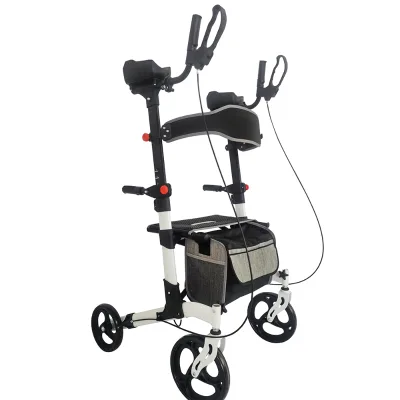

Foldable Rehabilitation Steel Walking Frame Rollator Walker for Patients
$15.00 - $30.00
MOQ: 100 Pieces


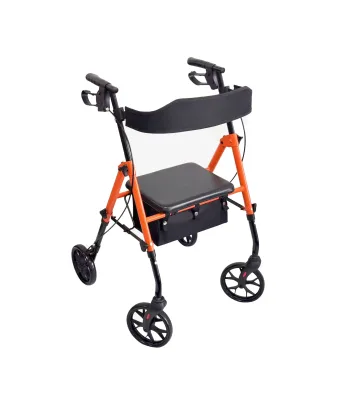


Medical Rollator Walker for Elderly Rehabilitation and Mobility Support
$10.00 - $15.00
MOQ: 100 Pieces


Comprehensive Sourcing Guide
Strategic Sourcing Guide for Rollator Walker Procurement
Navigating the global market for mobility assistance devices requires a disciplined approach that balances technical specifications with regulatory compliance and supply chain reliability. The Rollator Walker, a critical category within walking aids, serves diverse user groups ranging from the elderly to patients requiring post-operative support. For procurement professionals, understanding the granular details of product attributes, material composition, and certification frameworks is essential to mitigate risk and ensure the delivery of safe, durable equipment. This guide synthesizes observed market data and technical parameters to provide a structured framework for sourcing rollator walkers effectively.
Technical Specifications and Structural Variations
The technical landscape of rollator walkers is defined by a wide array of structural configurations, each tailored to specific user needs and environmental conditions. Observations from current product listings reveal significant variation in structural design, with some units classified as having a "Without Wheels" structure, while others are explicitly defined as "Two Wheels" or utilizing a "Wheel Drive" principle. This distinction is critical for buyers, as the presence and type of wheels directly influence the device's maneuverability and stability. For instance, models described with a "Two Wheels" structure often imply a specific type of folding mechanism or stability aid, whereas "Wheel Drive" suggests a propulsion system integrated into the frame.
Material composition is another primary technical differentiator. The predominant material observed in high-volume listings is aluminum, with specific references to "Aluminum Alloy" and "Grey Matt Oxidation" finishes. These materials are selected for their high strength-to-weight ratio, ensuring the device remains lightweight for the user while maintaining structural integrity under load. The weight capacity for many observed models is rated at 136 kgs, a standard threshold that accommodates a broad demographic of adult users.
Dimensions and adjustability are equally vital. The standard product dimensions frequently cited include a width of 46 cm and a length of 47 cm, with a height range spanning from 80 cm to 98 cm. This variability is often managed through adjustable mechanisms, with some models offering "8 Levels" of height adjustment and others providing "5 Gears" covering a range of 75 cm to 85 cm. The range between handrails is typically standardized at 52 cm, ensuring ergonomic compatibility for users of varying statures. Hand grips are commonly constructed from PVC, a material chosen for its durability and comfort. Buyers must verify these specific dimensions against the intended user base, as a mismatch in height or width can render a device unusable.
Compliance and Certification Verification
In the medical and assistive device sector, regulatory compliance is not merely a formality but a prerequisite for market entry and user safety. The supply chain data indicates that reputable rollator walkers often carry certifications such as CE, RoHS, and ISO. Specifically, the product classification is noted as "Class I," which generally implies a lower risk category but still requires rigorous adherence to quality management systems. The presence of "CE ISO" and "CE, RoHS, ISO" on product listings suggests that manufacturers are aligning with European conformity standards and environmental restrictions on hazardous substances.
However, buyers must exercise caution when interpreting these certifications. While the data lists "CE" and "ISO" as observed attributes, it does not explicitly confirm compliance with specific international standards like EN 12183 or ISO 13485 in every instance. These standards are often cited in background knowledge regarding medical devices, but procurement decisions should rely on verified documentation provided by the supplier. The "Instrument classification" of Class I further underscores the need for a Quality Management System (QMS) that aligns with ISO 13485, even if the specific certificate is not always displayed in the initial product summary.
When evaluating a potential supplier, procurement teams should request valid, up-to-date certificates that correspond to the specific model number, such as "6007A" or "KJT935B." Relying on generic claims without verifying the certificate against the specific batch or model can lead to compliance gaps. The "Condition" of the product is listed as "New," which is a standard expectation, but the "Warranty" period of 12 months serves as a tangible indicator of the manufacturer's confidence in their product's longevity and compliance with safety standards.
Cost Drivers and Pricing Dynamics
The pricing structure for rollator walkers is influenced by a complex interplay of material costs, customization requirements, and order volume. The observed price range in the market spans from 0.01 USD to 120 USD, a variance that reflects the spectrum from basic, unbranded units to fully customized, premium models. The lower end of this spectrum typically corresponds to standard, non-customized units with minimal packaging, while the upper end includes models with OEM branding, specialized finishes, and enhanced features.
Material costs play a significant role in pricing. The use of "Aluminum Alloy" and specific surface treatments like "Grey Matt Oxidation" adds to the base cost compared to standard aluminum or steel alternatives. Furthermore, the "Single package size" of 91x29.5x38 cm and the "Single gross weight" of 12.700 kg indicate substantial packaging requirements, which directly impact logistics costs. Buyers should note that the "Packing" is often described as a "standard carton box," but some listings specify "Paper Carton" or "Carton" with a quantity of "4PCS/Carton," which affects the efficiency of shipping and the final landed cost per unit.
Minimum Order Quantities (MOQ) also serve as a primary cost driver. The observed MOQ range is between 1 and 500 units. For small-scale buyers or those testing the market, an MOQ of 1 is highly advantageous, allowing for low-risk procurement. However, larger orders typically unlock better unit pricing. The "Selling Units" are often listed as "Single item," but bulk purchasing is facilitated by the "Packing" configuration of 4 pieces per carton. Buyers must calculate the total cost of ownership, including shipping and potential customs duties, rather than focusing solely on the unit price. The "Customization" availability, including logo options like "HW/OEM," can introduce additional costs that must be factored into the budget.
Typical Applications and User Demographics
The application scope of rollator walkers is broad, catering to various environments and user needs. The primary application categories identified include "Elderly," "disable," and "patient," indicating that these devices are designed for a wide range of mobility impairments. The "Using Ambient" is frequently listed as both "Outdoor" and "Indoor," suggesting that the design prioritizes versatility. This dual-environment capability is crucial for users who require mobility assistance in both home settings and public spaces.
Specific usage scenarios include "Hospital," "Home Care," and "Outdoor" environments. In hospital settings, the durability and ease of operation are paramount, while home care applications may prioritize compactness and storage ease. The "Feature" set, which includes "Convenient," "Comfortable," "Light Weight," "Durable," "Easy Operation," and "Height Adjustable," directly supports these diverse applications. The "Principle" of operation varies, with some models utilizing a "Fixed Type" principle and others an "Alternate Type," which may refer to the locking mechanism or the way the device supports the user's weight.
The "Structure" of the device also dictates its application. Models with "Two Wheels" or "Wheel Drive" principles are better suited for outdoor use where terrain may be uneven, while "Without Wheels" structures might be intended for specific indoor rehabilitation exercises or as a stationary support aid. Understanding these distinctions helps buyers select the right product for their specific client base, ensuring that the device meets the functional requirements of the intended environment.
Supplier Evaluation and Customization Capabilities
Selecting the right supplier is a critical step in the procurement process. The market data indicates that many suppliers offer "OEM&ODM" services, allowing buyers to customize the product with their own branding. The "Logo" options often include "HW/OEM," and "Customization" is listed as "Available" for some models, while others are "Non-Customized." This flexibility is a key differentiator for buyers looking to establish a private label or adapt the product to specific regional standards.
When evaluating suppliers, buyers should assess their capacity for customization, including the ability to modify the "Frame Color," "Hand Grip" material, or specific dimensions. The "prod_model" identifiers, such as "shuangwan72" or "301," suggest a diverse portfolio of designs. A robust supplier will provide clear documentation on their "prod_standard," such as "L47W46H80-98cm," ensuring that the final product matches the agreed-upon specifications.
The "Condition" of the product being "New" is a baseline expectation, but the "Warranty" of 12 months is a strong indicator of supplier confidence. Buyers should also verify the "prod_origin," which is consistently listed as "China," to understand the supply chain geography and potential logistics implications. A supplier with a history of "Accept" for OEM orders and a track record of delivering "New" condition products with proper "Packing" is preferable.
Quality Control and Long-Term Procurement Considerations
Ensuring consistent quality requires a proactive approach to quality control (QC). Given the "Class I" classification and the "CE" certification requirements, buyers should implement a QC protocol that includes pre-shipment inspections. These inspections should verify the "Weight Capacity" of 136 kgs, the structural integrity of the "Aluminum Alloy" frame, and the functionality of the "Height Adjustable" mechanisms. The "Single gross weight" of 12.700 kg and the "Single package size" of 91x29.5x38 cm must be verified to ensure that the packaging protects the product during transit and meets the logistical requirements of the destination.
Long-term procurement considerations involve building a sustainable relationship with suppliers who can maintain consistent quality over time. The "Warranty" period of 12 months provides a safety net, but buyers should also inquire about the availability of spare parts and the supplier's response time to warranty claims. The "Customized" nature of some products means that long-term supply chain stability is crucial to avoid disruptions in branding and product availability.
Furthermore, buyers should monitor the "Using Ambient" performance of the devices over time. Whether used in "Outdoor" or "Indoor" settings, the "Durable" and "Light Weight" features must be maintained. Regular audits of the supplier's production processes, particularly regarding the "Grey Matt Oxidation" finish and "PVC" hand grips, can help ensure that the product continues to meet the high standards expected by end-users. By focusing on these long-term factors, procurement professionals can secure a reliable supply of high-quality rollator walkers that meet the evolving needs of the healthcare and mobility assistance markets.
FAQs
What certifications do rollator walkers typically hold?
Most observed rollator walkers carry CE, RoHS, and ISO certifications. These ensure compliance with European safety standards and environmental restrictions, though specific model verification is required for each batch.
How much weight can a standard aluminum rollator support?
Standard models support a weight capacity of 136 kgs. This threshold accommodates a broad demographic of adult users while maintaining structural integrity under load.
Can I customize the logo and brand on these walkers?
Customization is available for many models with OEM and ODM services. Buyers can often select specific logos like HW/OEM, though some units are sold as non-customized standard items.
What is the typical height adjustment range for these devices?
Height adjustment ranges vary from 75 cm to 98 cm depending on the model. Some units offer 5 gears or 8 levels of adjustment to fit different user statures.
Which materials are used to construct the frame of these walkers?
Frames are predominantly constructed from aluminum or aluminum alloy. These materials provide a high strength-to-weight ratio, often finished with grey matt oxidation for durability.
How many wheels do the different Rollator Walker structures have?
Structures vary significantly, with some models having two wheels and others listed as having no wheels. Wheel drive principles are also observed, influencing maneuverability and stability.
What is the warranty period for new rollator walkers?
The standard warranty period for new units is 12 months. This coverage indicates manufacturer confidence in the product's longevity and compliance with safety standards.