Source Roll Off Garbage Truck for Municipal Waste Collection
Compare 30 Roll Off Garbage Truck models from Chinese manufacturers. Options include Dongfeng and HOWO chassis with automatic or manual transmissions. View specifications for volumes over 15000L and various drive configurations to find the right vehicle for your waste management needs.
Key considerations
Products List

Garbage Cleaning Compressed Garbage Truck Garbage Disposal Compressed Garbage Truck
$15000.00 - $17000.00
MOQ: 1 pieces


Heavy Duty Roll off Garbage Truck for Refuse Collection and Waste Transportation
$8500.00 - $9500.00
MOQ: 1 Pieces

Shacman Roll off Garbage Truck for Municipal Sanitation Applications
$8500.00 - $9500.00
MOQ: 1 Pieces

Hook Arm Waste Lifting Garbage Truck 1-2tons Roll on Roll off Garbage Truck
$28000.00 - $30000.00
MOQ: 1 Pieces

Dongfeng Durable Roll off Garbage Truck with Exceptional Load Capacity
$22000.00 - $24000.00
MOQ: 1 Pieces


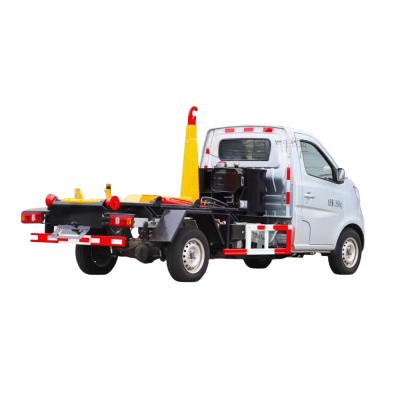


$3200.00 - $3300.00
MOQ: 1 unit


Waste Disposal Roll off Dumpsters Roll-off Dumpsters Roll off Dumpster
$1200.00 - $2200.00
MOQ: 1 Pieces

Roll off Dumpster Product Roll off Trailer Dumpster Roll off Dumpsters
$1200.00 - $2200.00
MOQ: 1 Pieces


Roll off Dumpster Trailer Roll off Trailer Dumpster Roll off Dumpsters
$1200.00 - $2200.00
MOQ: 1 Pieces


Comprehensive Sourcing Guide
Roll Off Garbage Truck Sourcing Guide
Buyers must first distinguish between the specific mechanical configurations observed in the market, as the supply chain offers distinct variants ranging from small 4x2 gasoline units to large 6x4 diesel models. The observed product data indicates a clear segmentation where smaller units, such as the Hook Lift Truck5, feature a gross vehicle weight of 3495 kg and a rated payload of 1665 kg, while larger commercial units like the XZL5256GZZZ model support volumes exceeding 15,000 liters. This distinction is critical because the drive wheel configuration and fuel type directly dictate the operational environment, with gasoline engines typically suited for lighter municipal duties and diesel powertrains required for heavy-duty refuse collection.
Procurement decisions should also account for the variability in chassis origins and customization capabilities, which are frequently listed as available options. The market data reveals that suppliers often source from major Chinese manufacturers including Dongfeng, HOWO, Isuzu, JAC, and Shacman, allowing buyers to select a base platform that matches their local regulatory requirements. Since tank capacities are often customized and packing methods vary between carton, wooden box, or nude shipping, buyers must explicitly define their logistical constraints before finalizing an order to ensure the vehicle arrives in a condition suitable for immediate deployment without costly rework.
Product Scope and Observed Listing Signals
The observed product listings reveal a wide spectrum of operational types, primarily focusing on the Roll Off mechanism and Arm Type configurations used for waste container handling. Buyers should note that specific models like the Hook Lift Garbage Truck are designed with distinct dimensions, such as the 4180×1690×2010 mm footprint for smaller units, while larger models may feature complex dimension sets like 5360 mm or 5550 mm lengths. These physical constraints are not merely descriptive but serve as hard limits for facility access, requiring buyers to verify that the vehicle's overall dimensions and turning radius align with their specific waste collection routes and depot infrastructure.
Listing signals also highlight significant variations in occupancy and load utilization factors, which directly impact the efficiency of the waste collection crew. Data points indicate that some units are rated for two occupants with a load utilization factor of 1.05, while others may accommodate three persons, suggesting a need to match the vehicle's interior capacity with the standard operating procedures of the local waste management team. Furthermore, the presence of different drive wheel configurations, such as 4x2 versus 6x4, serves as a primary indicator of the vehicle's intended load class, ensuring that buyers do not inadvertently select a chassis that lacks the necessary traction or stability for the expected waste volume.
Technical Specifications to Verify
Verification of the chassis model and engine specifications is the first technical step, as the supply chain offers diverse platforms like the EQ1035sj16QC or various Dongfeng and Isuzu variants. Buyers must confirm that the selected chassis model supports the required gross vehicle weight and rated payload, noting that observed listings show payloads ranging from 515 kg to 1665 kg depending on the specific configuration. It is essential to cross-reference the listed curb weight, which can vary between 1700 kg and 3850 kg, against the actual operational weight to ensure the vehicle does not exceed legal road limits when fully loaded with waste containers.
The mechanical and structural specifications, including tire specifications and suspension systems, require rigorous validation to ensure durability under heavy load conditions. Listings indicate tire specifications such as 195r14c 8pr and leaf spring configurations ranging from 3/5 to 9/8+4, which directly influence the vehicle's ability to handle rough terrain and heavy refuse loads. Buyers should also verify the approach and departure angles, observed as 26/21 degrees in some models, to confirm that the vehicle can navigate steep ramps and uneven surfaces commonly found in waste transfer stations without risking undercarriage damage.
Compliance and Safety Documentation
Compliance verification must begin with the certification status, as the market data explicitly lists ISOCCC, TSEEC, and CCC certifications for various units. Buyers should request current certification documents to confirm that the vehicle meets the specific safety and environmental standards required for operation in their target region, as these certifications often dictate the legality of the vehicle's import and registration. The presence of these marks suggests adherence to specific manufacturing protocols, but buyers must ensure that the documentation is valid and corresponds to the exact model number and chassis configuration being purchased.
Safety documentation also extends to the vehicle's operational limits and structural integrity, which are often detailed in the product specifications. Buyers need to review the rated payload and gross vehicle weight data to ensure the vehicle is not being operated beyond its design limits, which could lead to mechanical failure or regulatory penalties. Additionally, the standardization of dimensions and the availability of customization options should be documented to ensure that any modifications made to the vehicle do not void existing safety certifications or compromise the structural integrity of the roll-off mechanism.
Cost Drivers and Commercial Terms
The pricing structure for roll-off garbage trucks is influenced by the complexity of the chassis, the engine type, and the level of customization required. Observed listing prices range from 1,200 to 50,000 USD, a wide variance that reflects differences in vehicle size, payload capacity, and the specific brand of the chassis used. Buyers must understand that the lower end of this range typically corresponds to smaller, gasoline-powered units with standard configurations, while the higher end reflects large diesel models with custom tank capacities and advanced hydraulic systems.
Commercial terms regarding minimum order quantities and packaging are equally critical, as the data indicates an MOQ of 1 unit with flexible packing options including cartons, wooden boxes, or nude shipping. Buyers should negotiate clear terms regarding the delivery method, as the choice between wooden box and nude shipping can significantly impact the final landed cost and the risk of damage during transit. Furthermore, the availability of customization should be factored into the total cost, as bespoke tank capacities and specific chassis modifications often incur additional charges that are not reflected in the base listing price.
Supplier Qualification and Quality Control
Supplier qualification should focus on the origin and manufacturing capabilities, with the majority of observed listings originating from Hubei, China, a known hub for commercial vehicle production. Buyers must verify that the supplier has a proven track record of assembling vehicles on recognized chassis platforms like Dongfeng, HOWO, or Isuzu, as the quality of the final assembly is heavily dependent on the integration of these components. The presence of multiple chassis options in the listings suggests that suppliers have established supply chains, but buyers should still request evidence of their assembly quality control processes to ensure consistency across different models.
Quality control measures must also address the specific attributes of the vehicle, such as the condition of the product and the reliability of the hydraulic systems. The observed data lists all products as "New," but buyers should insist on pre-shipment inspection reports that verify the functionality of the roll-off mechanism and the integrity of the chassis. Additionally, the variation in packing methods, from carton to nude, requires a clear agreement on protective measures to prevent damage during shipping, ensuring that the vehicle arrives in the condition specified in the purchase order without cosmetic or structural defects.
Long-Term Procurement Checks
Long-term procurement success depends on the availability of spare parts and the standardization of components across the fleet. Buyers should prioritize models that utilize widely available chassis parts from manufacturers like Dongfeng or JAC, as this ensures that maintenance and repairs can be performed locally without significant delays. The observation of various chassis models in the listings highlights the importance of selecting a platform with a robust aftermarket support network, which is essential for minimizing downtime and maintaining operational efficiency over the vehicle's lifespan.
Finally, buyers must establish a protocol for monitoring the vehicle's performance against the initial specifications, particularly regarding the volume capacity and payload limits. The data indicates that tank capacities are often customized, which means that long-term usage may reveal discrepancies between the designed capacity and actual performance under load. Regular audits of the vehicle's condition, including the wear on leaf springs and tires, will help identify potential issues early and ensure that the fleet continues to meet the operational demands of the waste management service without unexpected failures.
FAQs
What is the typical volume capacity for large roll off garbage trucks?
Large roll off garbage trucks typically feature a volume exceeding 15000 liters. This high capacity supports heavy-duty municipal waste collection and industrial dumping operations. Buyers should verify specific tank customization options to match their daily waste volume requirements and ensure the chassis can support the additional weight.
Which chassis brands are commonly used for these hook lift trucks?
Common chassis brands include Dongfeng, HOWO, Isuzu, JAC, JMC, and Shacman. These platforms provide reliable structural support for the hook lift mechanism. Selecting the appropriate chassis depends on local road regulations, payload requirements, and preferred fuel type, whether diesel or gasoline powered.
Can roll off garbage trucks be customized for specific needs?
Yes, customization is available for tank capacity, dimensions, and drive configurations. Manufacturers offer options for automatic or manual transmissions and various drive wheel setups. Buyers can specify unique packaging requirements and request specific certifications to ensure the vehicle meets local regulatory standards and operational demands.
What are the standard certifications for these garbage trucks?
Standard certifications often include ISOCCC, TSEEC, and CCC. These documents verify compliance with manufacturing quality and safety standards. Buyers should request valid certification copies from suppliers to ensure the vehicles meet import regulations and operational safety requirements in their target market.
How is the packaging handled for shipping these trucks?
Packaging options typically include carton boxes, wooden crates, or nude shipping. The method depends on the truck size and shipping route. Large units are often shipped nude to save space, while smaller components or specific models may require protective wooden or carton packaging to prevent damage during transit.
What is the minimum order quantity for these vehicles?
The minimum order quantity is typically one unit. This allows buyers to test the vehicle performance or fulfill small-scale municipal contracts. Suppliers generally accept single-unit orders, making it accessible for smaller municipalities or private waste management companies to procure specialized roll off trucks without bulk commitments.