Source Rollator for Indoor, Outdoor, and Mobility Needs
Compare 30 Rollator options featuring aluminum frames, wheel drive principles, and varying weight capacities. Buyers can evaluate models like SC-805 and SC-RL01 for indoor or outdoor use with customization available; compare the available evidence and request quotations based on your requirements.
Key considerations
Products List


Aluminum Rollator, Walking Aid, Disabled People, (AL-4600) Elderly Rollator
$20.00 - $40.00
MOQ: 100 Pieces


Steel Rollator for Elderly, Durable Mobility Aid for Nursing Home Use
$170.00 - $180.00
MOQ: 100 Pieces

Steel Rollator for Elderly, Stable Walker with Seat for Senior Care Buyers
$170.00 - $180.00
MOQ: 100 Pieces





Four Wheel Rollator Rolling Walker with Fold up Removable Back Support
$43.00 - $45.00
MOQ: 100 Pieces

Rollator Rolling Walker with Wheels Fold up Removable Back Support, Padded Seat
$35.00 - $37.00
MOQ: 100 Pieces
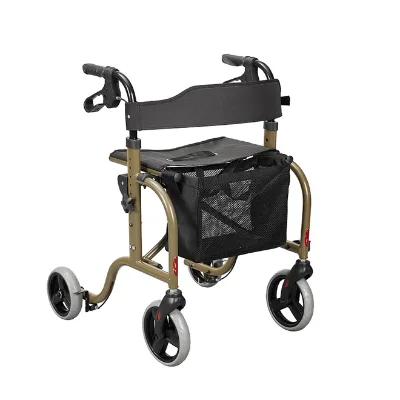
Comprehensive Sourcing Guide
Rollator Sourcing Guide
Procuring rollators requires a precise understanding of the structural and functional variations available in the current market. The observed product landscape reveals a diverse range of models, including the SC-805, SC-801, SC-800, SC-RL01(A), SC-RL01(S), SC-9102, JX203, and JX969H. These identifiers suggest distinct design philosophies, ranging from manual wheel-drive mechanisms to specialized configurations. Buyers must recognize that these models are not interchangeable; each serves specific user needs based on weight capacity, mobility assistance type, and portability requirements.
The supply chain data indicates a strong presence of manufacturers originating from China, with specific hubs like Foshan, Guangdong, playing a significant role in production. This geographic concentration often correlates with established supply chains for aluminum frames and PVC components. However, the variation in model numbers and packing specifications implies that buyers cannot assume uniformity across suppliers. A thorough vetting process is essential to match the correct model to the end-user’s physical requirements, ensuring that the selected Rollator provides adequate support without compromising on comfort or durability.
Product Scope and Observed Listing Signals
The current market listings for rollators exhibit a wide price range, observed between $0.01 and $240 USD, which reflects significant disparities in material quality, component complexity, and brand positioning. This broad spectrum necessitates careful evaluation of what is included in the base price, such as whether accessories like bags, cup holders, or specific seat types are bundled. The minimum order quantities (MOQ) vary from 1 to 300 units, indicating that suppliers cater to both individual procurement needs and large-scale institutional contracts. Buyers should align their order volume with the supplier’s flexibility to avoid excessive inventory costs or stockouts.
Condition and customization options are critical signals in these listings. Most observed products are listed as "New," with customization available for specific client requirements. However, some models are marked as "Non-Customized," suggesting standardized production runs that may offer faster lead times but less flexibility. The use of aluminum for frames and PVC for soft seats is a common material choice, balancing lightweight portability with user comfort. Buyers must verify if the "Customized" label applies to color, branding, or structural modifications, as this impacts production timelines and unit costs significantly.
Technical Specifications to Verify
Wheel size and structure are primary technical differentiators for rollators. Observed specifications include wheel sizes of 8 inches and 9 inches, with a four-wheel structure being the standard configuration. The principle of operation is noted as "Wheel Drive," which implies a specific mechanism for stability and movement. Buyers must verify the exact wheel diameter and material composition, as larger wheels may offer better terrain adaptability, while smaller wheels might enhance maneuverability in tight indoor spaces. The weight capacity is another critical specification, with observed limits ranging from 100 kg to 110 kg, ensuring the device can safely support the user’s weight.
Frame dimensions and adjustability are equally important for user comfort and safety. Hand pad heights are observed to range from 74 cm to 108 cm, allowing for customization to the user’s arm length. Package sizes vary, with dimensions such as 59x32x84 cm and 63x25x70 cm indicating different packing efficiencies. Buyers should verify the total height range, such as 82-97 cm for certain models, to ensure proper ergonomic alignment. Additionally, the net weight of the units, observed between 6.8 kg and 8.0 kg, affects portability, especially for users who need to lift the Rollator into vehicles or store it in small spaces.
Compliance and Safety Documentation
Certification status is a non-negotiable aspect of Rollator procurement. The observed products frequently list CE and ISO certifications, which are essential for market access in many regions. Buyers must verify the specific ISO standards applicable to the product, such as ISO 13485 for medical device quality management, although this is noted as low-confidence background information. The presence of CE marking indicates conformity with health, safety, and environmental protection standards for products sold within the European Economic Area. It is crucial to request valid certification documents from the supplier to ensure they are current and not expired.
Safety standards also include specific regulatory frameworks like EN 12183, which pertains to the safety requirements for mobility aids. While this standard is mentioned in the background data, buyers should confirm its applicability to the specific model they intend to purchase. Documentation should include test reports that validate the structural integrity of the aluminum frame and the durability of the PVC seat material. Buyers must ensure that the supplier can provide these documents upon request, as they are vital for liability protection and regulatory compliance in the destination market.
Cost Drivers and Commercial Terms
The cost of rollators is influenced by several factors, including material selection, manufacturing complexity, and packaging efficiency. Aluminum frames are preferred for their lightweight and corrosion-resistant properties, but the grade of aluminum can affect cost. The inclusion of soft PVC seats adds to the comfort but also to the material cost. Buyers should analyze the cost breakdown to understand how much is attributed to materials versus labor and overhead. The observed price range suggests that significant savings can be achieved by selecting models with simpler structures or standard configurations.
Commercial terms such as MOQ, lead time, and shipping logistics play a crucial role in the total cost of ownership. The observed MOQs range from 1 to 300 units, allowing for flexible ordering strategies. Buyers should negotiate terms that align with their inventory management capabilities. Shipping costs are impacted by the package dimensions, with some models packing more efficiently than others. For instance, the Qty/20FT and Qty/40hq figures indicate packing density, which can reduce per-unit shipping costs. Buyers should consider these factors when calculating the landed cost of the product.
Supplier Qualification and Quality Control
Supplier qualification is essential to ensure consistent product quality and reliable delivery. Buyers should verify the supplier’s production capabilities, including their factory size, equipment, and workforce expertise. The observed origin of products from Foshan, Guangdong, suggests a concentration of manufacturing expertise in this region. Buyers should conduct site audits or request virtual tours to assess the production environment. Additionally, verifying the supplier’s history and reputation in the market can provide insights into their reliability and commitment to quality.
Quality control measures should be clearly defined and enforced. Buyers should establish clear quality standards for materials, such as the grade of aluminum and the type of PVC used. Inspection protocols should include checks for structural integrity, wheel functionality, and finish quality. The observed warranty period of 12 months for some models indicates a level of confidence in product durability. Buyers should ensure that the warranty terms are clearly stated in the contract and that the supplier has a robust process for handling defects and returns.
Long-Term Procurement Checks
Long-term procurement success depends on continuous monitoring of supplier performance and product quality. Buyers should establish key performance indicators (KPIs) to track delivery times, defect rates, and customer feedback. Regular audits and quality checks should be conducted to ensure that the products continue to meet the specified standards. The observed customization options suggest that suppliers may offer ongoing support for product improvements. Buyers should leverage this to request updates or modifications based on user feedback and market trends.
Market dynamics and regulatory changes can impact the procurement strategy. Buyers should stay informed about changes in safety standards and certification requirements in their target markets. The observed product models and specifications provide a baseline for comparison, but buyers should remain flexible to adapt to new technologies or materials. Building a strong relationship with the supplier can facilitate better communication and collaboration, leading to improved product quality and service. Regular reviews of the procurement process help identify areas for improvement and ensure long-term sustainability.
FAQs
What is the weight capacity of the Rollator models?
The Rollator models support weight capacities of 100kgs and 110kgs. These limits ensure safe usage for various user body types. The aluminum frame construction contributes to durability while maintaining a lightweight profile for easy handling during daily mobility tasks.
Can the Rollator be customized for specific needs?
Customization is available for these Rollator units. Buyers can request specific modifications to meet individual mobility requirements. The product line includes both non-customized and customized options, allowing flexibility for different user preferences and functional demands in daily use scenarios.
What materials are used in the Rollator construction?
The Rollator is constructed primarily from aluminum material. This choice ensures a lightweight yet durable structure. The seat features a PVC soft material for comfort. These material selections balance strength and portability, making the device suitable for both indoor and outdoor ambient conditions.
What are the wheel sizes available for the Rollator?
The Rollator models feature wheel sizes of 8 inches and 9 inches. These dimensions provide stable rolling performance on various surfaces. The four-wheel structure with wheel drive principle ensures smooth maneuverability. Users can select the appropriate size based on their terrain and mobility needs.
What certifications do the Rollator products hold?
The Rollator products hold CE and ISO certifications. These standards verify compliance with safety and quality requirements. The certifications indicate that the manufacturing processes meet established regulatory benchmarks. Buyers can rely on these documented standards for procurement decisions and regulatory compliance in their respective markets.
How is the Rollator packaged for shipping?
The Rollator is packaged in standard export brown carton boxes. Specific packing dimensions vary by model, such as 59x32x84cm or 63x25x70cm. This packaging ensures safe transit and protection during logistics. The carton method is efficient for container loading, supporting quantities of 360 pieces in a 20FT container.