Source Rotating Penetrating Hand Crank Handle for industrial, agricultural, and construction equipment
Explore 30 verified listings for the Rotating Penetrating Hand Crank Handle, comparing specifications like material, hole type, and certification. Buyers can evaluate options from suppliers in Hebei and Shenzhen to find suitable models for various machinery applications.
Key considerations
Products List


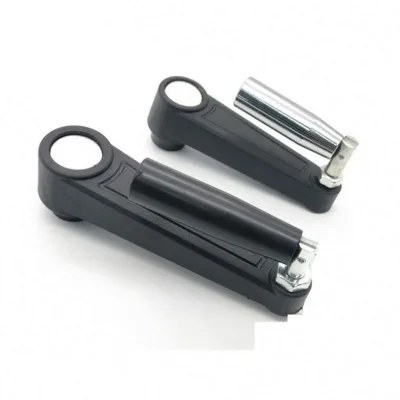


Manual Mobile Heavy Duty Rack Hand Crank for Steel Structure Factory
$110.00 - $180.00
MOQ: 1 Square Meters


$1734.00 - $2362.00
MOQ: 1 Sets
Comprehensive Sourcing Guide
Strategic Sourcing Guide for Rotating Penetrating Hand Crank Handles
The global market for rotating penetrating hand crank handles presents a complex landscape for B2B procurement professionals. These mechanical components, essential for manual operation of valves, gates, and industrial machinery, require precise evaluation of material integrity, dimensional accuracy, and compliance with international standards. Sourcing decisions must be grounded in verified product attributes rather than marketing assertions. This guide synthesizes observed market data to provide a disciplined framework for evaluating suppliers, ensuring that procurement strategies align with technical requirements and quality assurance protocols.
Technical Specifications and Dimensional Standards
The fundamental engineering of a Rotating Penetrating Hand Crank Handle revolves around its mechanical interface and structural capacity. Buyers must first establish the specific dimensional requirements for their application. Observed product data indicates a wide variance in standard specifications, ranging from compact units like 1080 mm to larger configurations such as 16160 mm. Furthermore, the standard size classification often adheres to Metric or Inch systems, with some suppliers offering DIN-compliant dimensions. The hole configuration is a critical interface point; available options include round or square apertures, with some listings specifying both types to accommodate diverse mounting hardware.
Material selection directly influences the handle's durability and environmental resistance. The market currently features handles constructed from stainless steel, plastic, and bakelite. Stainless steel variants are typically selected for applications requiring high corrosion resistance and structural strength, while plastic and bakelite options may be preferred for lighter-duty tasks or specific electrical insulation needs. The "Style" attribute observed in the market includes "Spoked" designs, which offer a balance between weight reduction and torque transmission. Buyers should verify the exact material grade and the specific standard (e.g., 16016 or 12512) against their engineering drawings, as these dimensions are not universal across all suppliers.
| Attribute Category | Observed Market Variations | Verification Requirement |
|---|---|---|
| Material | Stainless Steel, Plastic, Bakelite | Confirm material grade and suitability for operating environment. |
| Hole Type | Round, Square, Round and Square | Match mounting shaft geometry and locking mechanism. |
| Dimensions | 1080-16160, 10010, 12512 | Validate against specific machine interface requirements. |
| Standard | Metric, Inch, DIN, OEM | Ensure compatibility with existing assembly lines. |
| Color | Black, Fixed | Verify aesthetic or identification requirements. |
Compliance and Certification Verification
In the industrial sector, compliance is not merely a formality but a prerequisite for liability protection and operational safety. The observed market data highlights a diverse array of certifications, including ISO, SGS, ISO 9001, CE, RoHS, and CCC. However, the presence of these certifications in a product listing does not guarantee that every unit in a specific order possesses them. Buyers must treat certification status as a variable attribute that requires explicit confirmation for the specific batch being procured.
The "Certification" field often lists multiple standards simultaneously, such as "SGS, ISO 9001" or "CE, ISO9001, RoHS, CCC." This suggests that suppliers may hold these certifications for their manufacturing facilities rather than for every individual product SKU. A critical distinction must be made between facility-level accreditation and product-specific testing. For instance, while "machinery test reports" are noted as "Not Available" in some listings, other products may offer specific quality assurances. Procurement teams should request valid, current certificates of conformity that explicitly reference the product model number, such as "BT. 100111" or "BT. 100113," to ensure the certification applies to the specific hardware being purchased.
Cost Drivers and Pricing Structures
Understanding the cost structure of rotating hand crank handles requires analyzing the interplay between material costs, customization levels, and order volume. The observed price range in the market spans from $0.01 to $3,665 USD, a disparity that reflects the vast difference between a single plastic component and a large, custom-engineered stainless steel assembly. This wide range indicates that price is not a linear function of size but is heavily influenced by material grade and the degree of customization.
Customization is a primary cost driver. The market data confirms that "Customization" is available, with options ranging from "Customized" to "Non-Customized" configurations. Suppliers offering logo printing, specific color finishes, or unique dimensional modifications will command a premium over standard off-the-shelf items. Additionally, the "Selling Units" attribute often defaults to "Single item," suggesting that bulk pricing structures may need to be negotiated separately. The Minimum Order Quantity (MOQ) ranges from 1 to 1,000 units, allowing for flexibility in procurement but potentially impacting unit costs for smaller orders. Buyers should anticipate that higher customization levels and stricter material specifications will increase the base unit price, while larger order volumes may mitigate these costs through economies of scale.
Typical Applications and Operational Context
Rotating penetrating hand crank handles are integral to safety manual operating equipment, serving as the primary interface for human operators to control mechanical systems. The "Purpose" attribute explicitly identifies these components as essential for safety-critical operations. Common applications include industrial valves, gate mechanisms, and heavy machinery where automated control is either unavailable or requires a manual override for emergency situations.
The "Service Life" attribute, noted as "Ageing resistance," underscores the importance of long-term reliability in these applications. Handles used in outdoor environments or harsh industrial settings must withstand exposure to weather, chemicals, and physical stress without degradation. The "Condition" of the product is typically listed as "New," but the underlying material quality determines the actual service life. For example, stainless steel handles are often preferred for marine or chemical processing environments due to their resistance to corrosion, whereas bakelite handles might be utilized in electrical applications due to their insulating properties. Understanding the specific operational context is vital for selecting the correct material and design to ensure the handle performs reliably over its intended lifespan.
Supplier Evaluation and Geographic Considerations
When evaluating potential suppliers, geographic origin and logistical capabilities are significant factors. The observed data indicates that the majority of these products originate from China, with specific mentions of Hebei and Shenzhen as key production hubs. Hebei is often associated with heavy manufacturing and steel processing, while Shenzhen is a major center for electronics and precision engineering. This geographic concentration suggests a mature supply chain with established logistics networks, but it also necessitates careful vetting of individual supplier capabilities.
Supplier reliability can be assessed through their warranty offerings and service terms. The market shows a range of warranty periods, from 1 year to 5 years, which serves as a proxy for the supplier's confidence in their product quality. A 5-year warranty on a mechanical component like a hand crank handle is a strong indicator of robust manufacturing standards. Additionally, the availability of samples is a critical evaluation tool; the data confirms that "Sample" acceptance is a common practice, allowing buyers to physically inspect the product before committing to a larger order. Buyers should prioritize suppliers who provide clear documentation on their production standards, including "International" and "National" standard adherence, and who are transparent about their "prod_packing" methods, such as PE Bag + Cartons or Blister Packing, to ensure safe transit.
Quality Control and Long-Term Procurement Strategy
Effective quality control for rotating hand crank handles extends beyond the initial inspection of the product. It involves a comprehensive strategy that encompasses material verification, dimensional accuracy, and long-term performance monitoring. The "Quality" attribute is often described as "Good," but this subjective term must be backed by objective testing data. Buyers should request detailed inspection reports that verify the hole dimensions, material composition, and surface finish against the agreed-upon specifications.
Long-term procurement considerations include the availability of spare parts and the consistency of the supply chain. The "Single package size" of 10X10X10 cm and a "Single gross weight" of 0.100 kg suggest that these items are relatively compact, which can simplify inventory management and shipping. However, the "weight (kg)" of 0.5 for some items indicates variability in density and size, requiring careful planning for logistics. To mitigate risks, buyers should establish a relationship with suppliers who offer consistent quality over time, evidenced by their warranty terms and certification status. Regular audits of the supplier's manufacturing process and adherence to standards like ISO 9001 can help ensure that the quality of the hand crank handles remains consistent across multiple production runs.
In conclusion, sourcing rotating penetrating hand crank handles requires a meticulous approach that balances technical specifications, compliance requirements, and cost considerations. By leveraging the observed market data and applying rigorous evaluation criteria, procurement professionals can identify suppliers that deliver high-quality, reliable components suitable for their specific industrial applications. The key lies in verifying every claim, from material composition to certification status, ensuring that the final product meets the stringent demands of modern industrial safety and operational efficiency.
FAQs
What certifications are available for rotating penetrating hand crank handles?
Certifications such as ISO, SGS, CE, RoHS, and CCC are available for these handles. Buyers must verify that specific certificates apply to the batch ordered, as facility accreditation does not guarantee every unit is tested.
Which materials are used to make rotating penetrating hand crank handles?
These handles are constructed from stainless steel, plastic, or bakelite. Stainless steel offers high corrosion resistance, while plastic and bakelite are suitable for lighter-duty tasks or specific electrical insulation needs.
Can I request custom dimensions for rotating penetrating hand crank handles?
Customization is available for these handles to meet specific engineering drawings. Suppliers offer options ranging from standard sizes like 10*80 mm to custom configurations, though this may increase the unit price.
How long is the warranty period for rotating penetrating hand crank handles?
Warranty periods range from one year to five years depending on the supplier. A five-year warranty indicates strong manufacturing confidence, while one-year terms are common for standard off-the-shelf items.
What hole types are available for rotating penetrating hand crank handles?
Available hole configurations include round, square, or a combination of both. Buyers must match the aperture type to their mounting shaft geometry and locking mechanism to ensure proper fit.
Where are rotating penetrating hand crank handles typically manufactured?
Most products originate from China, specifically from Hebei and Shenzhen regions. Hebei is known for steel processing, while Shenzhen focuses on precision engineering and electronics components.
What is the minimum order quantity for rotating penetrating hand crank handles?
Minimum order quantities range from one unit to one thousand units. Smaller orders allow for sampling, but larger volumes may reduce unit costs through economies of scale.