Source Rottweil Printer Deflection Plate for Heidelberg, Komori, Man Roland
Find 30 listings for the Rottweil Printer Deflection Plate compatible with major printing machinery. Buyers can compare specifications, prices, and customization options for parts used in Heidelberg, Komori, and Man Roland printers.
Key considerations
Products List
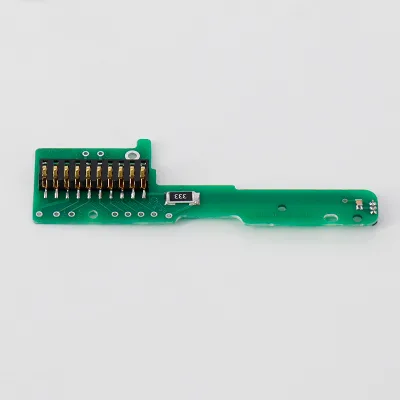


C8.805.001 Sheet Guide Plate Fixture C8.805.012 for CD102 Cx102 Floating Guide
$1000.00 - $1100.00
MOQ: 1 Pieces


Alternaitve Hb-PC1718 Deflection Plate for Hitachi Rx Cij Inkjet Printer
$65.00 - $72.00
MOQ: 1 Pieces






Comprehensive Sourcing Guide
Strategic Sourcing Guide for Rottweil Printer Deflection Plates
Understanding the Technical Landscape of Deflection Components
When sourcing components for high-speed printing machinery, specifically targeting the "Rottweil Printer Deflection Plate," buyers must first recognize that this terminology often refers to critical internal mechanisms found in industrial offset and digital printing systems. While the specific keyword "Rottweil" may imply a regional manufacturing origin or a specific legacy brand association, the functional requirements for a deflection plate remain consistent across major industrial platforms. These components are essential for guiding ink flow, managing substrate tension, or controlling the physical trajectory of print heads in complex machinery.
In the context of the available market data, deflection plates and their associated accessories are frequently categorized under "Inkjet Printer Accessories" or "Printing Machinery Parts." The technical specifications for these parts often vary significantly based on the host machine. For instance, while some units are designed for specific inkjet applications, others are engineered for large-format offset presses. The material composition is a primary differentiator. High-performance deflection plates often utilize "German Special Steel" to ensure durability under high-frequency mechanical stress. This material choice is critical for maintaining "Stable Cut Height" and ensuring a "Long Life Time" for the component. The surface treatment is equally vital; many premium units feature "Chromium Plating Coating" or "Non Stick Coating" to prevent ink buildup and reduce friction, which directly impacts print quality and maintenance intervals.
Buyers must also account for the electrical and mechanical interfaces. In systems where the deflection plate is part of an integrated assembly, voltage compatibility is a non-negotiable factor. Standard operating voltages for such machinery often range between 110V and 220V, requiring careful verification against the specific power supply specifications of the target printer. Furthermore, the physical dimensions and model numbers are not universal. Sourcing guides must emphasize the need to match specific model identifiers, such as those resembling "C8.805.001" or "M2.030.525," which are typical of precision-engineered parts for major German and Chinese manufacturing lines.
Compliance, Certification, and Origin Verification
Navigating the compliance landscape for industrial printer parts requires a rigorous approach to verifying origin and certification status. The market for these components is global, with significant production hubs in "Guangdong, China" and "Jiangsu Changzhou," alongside refurbished or original units sourced from "Germany." This geographical diversity introduces complexity regarding quality standards and regulatory compliance.
When evaluating a potential supplier, the first step is to verify the "Business Type." Legitimate suppliers in this sector are typically classified as "Manufacturer/Factory" or specialized distributors of "Manufacturing & Processing Machinery." Buyers should be wary of intermediaries who cannot provide direct evidence of their manufacturing capabilities or their relationship with the original equipment manufacturers (OEMs). The "Place of Origin" is a critical data point; while many components are manufactured in China, high-end deflection plates for legacy systems may be "Original & Used" units from Germany, or "Original Renovation" parts that have been restored to meet original specifications.
Certification plays a pivotal role in ensuring that the components meet international safety and quality benchmarks. While specific certifications like "ISO 9001" or "CE" are often cited in the broader industry, buyers must demand concrete proof for the specific lot of goods being purchased. The supplied data indicates that some products carry "ISORoHS" certification, which is a strong indicator of compliance with environmental and safety standards. However, buyers should not assume that all listed products automatically possess these certifications. The verification process should involve requesting valid certificates that match the specific model number and batch of the deflection plate.
Furthermore, the "Feature" of the product often dictates its compliance status. Products labeled as "Made in Germany and Used" or "Original & New" require different verification protocols than "Customized" or "New" items. For "Customized" parts, the buyer must ensure that the customization process adheres to the same rigorous standards as the original design. The "Quality" attribute, often described as "Good/Stable" or "Goods Quality Support with Customer Demand," is subjective without third-party validation. Therefore, reliance on "ISORoHS" or similar documented standards is essential for risk mitigation.
Cost Drivers and Pricing Dynamics in the Market
The pricing structure for printer deflection plates is influenced by a complex interplay of factors, including origin, condition, customization, and volume. The observed market data reveals a price range spanning from $1 to $1,500 USD, a wide variance that reflects the diversity of the product catalog. This range is not arbitrary; it correlates directly with the technical complexity and the source of the component.
Low-cost items in the $1 to $50 range typically represent standard accessories, generic replacement parts, or consumables that do not require specialized engineering. These items are often mass-produced in Chinese manufacturing hubs and are designed for general compatibility. In contrast, the upper end of the price spectrum, reaching up to $1,500, is reserved for high-precision components, such as those made from "German Special Steel" with advanced "Chromium Plating Coating," or original OEM parts sourced from Germany. These expensive units often include "Original Renovation" services, where a used part is restored to factory specifications, adding significant value and cost.
The "Selling Units" metric, which often defaults to "Single item," indicates that these are not typically bulk commodities sold in massive quantities without negotiation. However, the "Sell Mode" of "Wholesale & Retail" suggests that volume discounts may be available for larger procurement orders. Buyers should be aware that "Customization" is a significant cost driver. When a deflection plate requires "Customized" dimensions or specific "Special Technology" applications, the unit price will increase due to the engineering and setup costs involved.
Additionally, the "Condition" of the product is a primary price determinant. "New" items command a premium over "Used" or "Original & Used" alternatives. While "Original & Used" parts can offer substantial savings, they carry inherent risks regarding wear and tear. The "Quality" assurance provided by the seller, such as "Good Quality" guarantees or "Customer Demand" support, often justifies a higher price point. Buyers must weigh the initial cost against the expected "Long Life Time" and "Stable Cut Height" performance. A cheaper part that fails prematurely may result in higher total cost of ownership due to downtime and replacement frequency.
Typical Applications and Compatibility Matrix
Deflection plates are integral to a wide array of printing machinery, and their application is strictly defined by the host equipment. The supplied data highlights compatibility with major industrial brands, including "Heidelberg Printer," "Komori Printer," and "Man Roland Printer." This indicates that the core keyword "Rottweil Printer Deflection Plate" likely refers to a component used in systems that share architectural similarities with these high-end German manufacturers.
The application matrix for these components is extensive. They are utilized in "Inkjet Printer" systems where precise control of ink deflection is necessary for high-resolution printing. The "Ink Type" specified as "Solvent Ink" suggests that these plates are designed for environments where chemical resistance and thermal stability are paramount. The "Function" of the plate, described as ensuring "Stable Cut Height" and "Long Life Time," is critical in applications involving continuous high-speed printing where mechanical stability is non-negotiable.
For buyers, understanding the specific application is the first step in sourcing. A deflection plate designed for a "Videojet Willett" system may have different specifications than one intended for a "Heidelberg" press. The "Name" of the component, such as "Man Roland Gripper Bar," further underscores the need for precise matching. Buyers must cross-reference their machine's model number with the supplier's "prod_model" or "model number" to ensure compatibility. For example, a part with the model number "RB-PL2864" may be specific to a certain series of machinery, while "10.107.0499" could be a unique identifier for a German-sourced component.
The "Usage" attribute also plays a role in application. Some parts are designed for specific "Printing Machinery Parts" applications, while others fall under the broader "Manufacturing & Processing Machinery" category. This distinction is important for procurement categorization and inventory management. Buyers should verify that the "Special Technology" employed, such as "Non Stick Coating," is suitable for the specific ink and substrate materials used in their production line. Failure to match the application correctly can lead to print defects, increased maintenance, and potential damage to the printing press.
Supplier Evaluation and Business Model Analysis
Selecting the right supplier is a critical decision that impacts the reliability and longevity of the procurement process. The market data indicates a mix of "Manufacturer/Factory" entities and distributors. A "Manufacturer/Factory" status suggests a direct line to the production source, which can offer advantages in terms of customization, pricing, and technical support. These suppliers are often capable of providing "Customized" solutions and may have the capacity to produce parts with "German Special Steel" or specific "Chromium Plating Coating" in-house.
When evaluating a supplier, buyers should look for transparency in their "Business Range." Suppliers specializing in "Printing Machinery Parts" or "Manufacturing & Processing Machinery" are more likely to have the expertise required for complex components like deflection plates. The "Feature" of the supplier, such as offering "China & New" or "Original & Used" options, indicates a diverse inventory that can cater to different budget and quality requirements. However, buyers must be cautious of suppliers who claim to offer "Original" parts without providing verifiable documentation.
The "Shipping Method" and "Delivery Time" are also key evaluation criteria. The observed data shows a delivery window of "2 to 15 Days After Receiving Your Order," with shipping options including "DHL, FedEx, UPS, EMS, TNT, and China Post." A supplier with a "Shipping Date" commitment of "Within 3 Working Days" demonstrates logistical efficiency, which is crucial for minimizing downtime in a production environment. Buyers should verify the "Packing" standards, such as "Special Designed Package," "Air Bubble Film," or "Carton Box," to ensure that the components are protected during transit.
Furthermore, the "Quality" assurance provided by the supplier is a major differentiator. Claims of "Good/Stable" quality or "Goods Quality Support with Customer Demand" should be backed by tangible evidence, such as return policies, warranties, or third-party inspection reports. Buyers should prioritize suppliers who offer "Quality" guarantees that align with the specific needs of their operation. The "Business Type" and "Business Range" should be consistent with the complexity of the component being sourced. A supplier with a broad range of "Printing Machinery Parts" is likely better equipped to handle the nuances of deflection plate sourcing than a generalist distributor.
Quality Control and Long-Term Procurement Strategies
Ensuring the quality of deflection plates is paramount for maintaining the efficiency and output of printing operations. The "Quality" attribute, often described as "Good/Stable" or "Goods Quality Support with Customer Demand," must be translated into actionable quality control measures. Buyers should implement a rigorous inspection protocol that includes verifying the "Texture of Material," such as "German Special Steel," and checking for the presence of "Chromium Plating Coating" or "Non Stick Coating." These physical attributes are direct indicators of the component's durability and performance.
For "Original & Used" or "Original Renovation" parts, quality control becomes even more critical. Buyers should request detailed inspection reports that document the condition of the part, including any signs of wear, corrosion, or previous repairs. The "Feature" of the part, such as "Made in Germany and Used," should be validated against the "Quality" standards expected for the specific application. In cases where "Customization" is involved, buyers must ensure that the "Special Technology" applied meets the original design specifications.
Long-term procurement strategies should focus on building relationships with reliable suppliers who can provide consistent quality over time. This involves establishing clear communication channels regarding "Quality" expectations, "Delivery Time," and "Packing" standards. Buyers should also consider the "Lead Time" and "Shipping Date" when planning their inventory levels. A supplier with a "Delivery Time" of "2 to 15 Days" and a "Shipping Date" of "Within 3 Working Days" offers a level of reliability that is essential for maintaining continuous production.
Additionally, buyers should monitor the "Certification" status of the components they purchase. While "ISORoHS" is a recognized standard, buyers should verify that this certification is current and applicable to the specific batch of goods. For "Customized" parts, buyers should ensure that the customization process is documented and that the resulting components meet the required "Standard" specifications. By maintaining a proactive approach to quality control and supplier management, buyers can mitigate risks and ensure the long-term success of their printing operations.
In conclusion, sourcing a "Rottweil Printer Deflection Plate" requires a comprehensive understanding of the technical, compliance, and market dynamics involved. By carefully evaluating the technical specifications, verifying certifications, analyzing cost drivers, and assessing supplier capabilities, buyers can make informed decisions that align with their operational needs. The key to successful procurement lies in a disciplined approach that prioritizes quality, compatibility, and reliability over short-term cost savings.
FAQs
What materials are used for the deflection plate?
The deflection plate is constructed from German Special Steel to ensure durability. It features a Chromium Plating Coating and Non Stick Coating to prevent ink buildup and extend the component's operational life.
Which printer brands are compatible with this part?
This component is designed for use with Heidelberg, Komori, and Man Roland printers. It also supports applications for Videojet Willett systems and serves as a Man Roland Gripper Bar replacement.
Can the product be customized for specific needs?
Yes, customization is available for this product to meet specific requirements. Buyers can request tailored specifications while maintaining the standard quality and stability expected from the manufacturer.
How long does delivery take after placing an order?
Delivery typically occurs within 2 to 15 days after receiving your order. Shipping methods include DHL, FedEx, UPS, EMS, TNT, and China Post for efficient global transport.
What certifications does the product hold?
The product carries ISORoHS certification to ensure compliance with safety and environmental standards. Some units also meet ISO 9001 and CE standards depending on the specific batch and origin.
What is the price range for these components?
The observed price range spans from 1 to 1500 USD depending on the model and condition. Prices vary based on whether the item is new, used, or requires specialized German steel construction.
Where is the product manufactured or sourced from?
Products originate from Guangdong, China, Jiangsu Changzhou, or Germany. Some items are original units from Germany while others are manufactured locally with German Special Steel specifications.