Source Rubber Free Weight Plate for Gym, Lifting, and Training
Explore 30 listings for the Rubber Free Weight Plate, comparing specifications like weight tolerance, coating, and diameter. Buyers can evaluate options for gymnasium use, strength training, and universal weightlifting exercises with varying MOQs and customization features.
Key considerations
Products List




Comprehensive Sourcing Guide
Strategic Sourcing Guide for Rubber Free Weight Plates
Understanding Product Specifications and Core Attributes
When sourcing rubber free weight plates, buyers must first distinguish between the various technical configurations available in the global market. The primary observation from current product listings indicates a strong prevalence of "Rubber Weight Plate" and "Bumper plate" classifications. These items are fundamentally designed for strength training and weightlifting exercises, specifically tailored for use in gymnasium environments. The core material composition is a critical differentiator; while some products are described as being made from "Solid Natural Rubber," others utilize a "Rubber Coated and Cast Iron Core" construction. This distinction impacts the durability, sound dampening, and floor protection capabilities of the equipment.
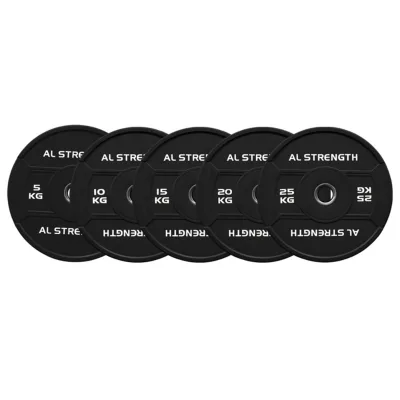
The physical dimensions and tolerances are equally vital for procurement planning. Observed specifications reveal a wide range of weight options, including 5 kg, 10 kg, 15 kg, 20 kg, 25 kg, and imperial equivalents such as 10 lb, 25 lb, 35 lb, 45 lb, and 55 lb. The diameter of these plates varies significantly based on the weight class and intended use. For instance, specific models list a plate diameter of 450mm (approximately 17.72 inches), while other technical data points mention a diameter of 50mm, which likely refers to the central collar opening rather than the plate face. The collar opening diameter is standardized in some listings to 50.4mm (2 inches), ensuring compatibility with standard Olympic bars.
Buyers should note that the "Form" of the product can vary, with some listings specifying a "Serpentine Lever" shape, which may indicate a specific design feature for gripping or stacking, though the standard circular bumper plate remains the industry norm for general weightlifting. The weight tolerance is a crucial quality metric; observed data suggests a tolerance of 1%, which is a reasonable benchmark for precision lifting equipment. However, buyers must verify this metric on a per-supplier basis, as manufacturing variances can occur. The condition of the products is consistently listed as "New," and they are generally designed for adult users with a unisex application profile.
Compliance, Certification, and Safety Standards
In the realm of B2B procurement for fitness equipment, compliance and certification serve as the bedrock of risk management. While the supplied data includes a low-confidence reference to "CE" certification, it is imperative that buyers do not treat this as a guaranteed attribute for all listed products. Instead, procurement teams must actively verify that any supplier claims adherence to relevant international safety standards, such as CE marking for the European market or ASTM standards for the United States. The absence of explicit certification data in the initial product descriptions necessitates a rigorous due diligence process.
Buyers should request valid test reports and certification documents directly from the supplier before finalizing any order. The "CE" mark, if present, indicates conformity with health, safety, and environmental protection standards for products sold within the European Economic Area. However, relying on a single mention of this certification without supporting documentation is insufficient. The supplier must provide proof of testing for the specific rubber compounds used, ensuring they are free from harmful substances like phthalates or heavy metals that could degrade over time or pose health risks to gym users.
Furthermore, the "Surface Treatment" and "Craft" of the rubber coating are essential for compliance with fire safety and durability regulations. The rubber coating process must be consistent to prevent delamination, which could create tripping hazards or expose the internal cast iron core to moisture and rust. Buyers should verify that the rubber material meets specific flammability ratings if the equipment is intended for commercial gymnasiums or public facilities. The "Place of Origin" is frequently listed as China, specifically Shandong, which is a major manufacturing hub. While this location offers competitive pricing, it also requires heightened scrutiny of the supplier's quality control systems to ensure that the products meet the safety standards of the destination market.
Cost Drivers and Pricing Structure Analysis
The pricing landscape for rubber free weight plates is influenced by a complex interplay of material costs, manufacturing complexity, and logistical factors. The observed price range in the market spans from $0.48 to $4.20 USD per unit. This wide variance suggests that the cost is heavily dependent on the specific weight of the plate, the thickness of the rubber coating, and the brand positioning. Heavier plates naturally require more raw material, which drives up the base cost, but the price per kilogram may decrease as the weight increases due to economies of scale in production.
Material selection is a primary cost driver. Plates made from "Solid Natural Rubber" typically command a higher price point compared to those with a "Rubber Coated and Cast Iron Core." The natural rubber offers superior elasticity and noise reduction, which are premium features desired by high-end fitness facilities. Conversely, the coated iron core offers a more traditional feel and potentially lower manufacturing costs. The "Customization" factor also plays a significant role in pricing. Suppliers offering "Logo/graphic design" options, such as "Embroidered" or "Silk Screen Printing," or "Printing logo or raised logo" services, will incur additional setup and production costs. These customizations are marked as "Acceptable" and "Customized" in the product data, indicating that they are available but likely at a premium.
Packaging requirements further influence the final landed cost. The observed packaging methods include "Plywood Case" and "Carton+Plywood Box." Plywood cases are more robust and expensive, suitable for heavy-duty shipping or international export where damage is a concern. Standard cartons are more cost-effective but may require additional protection for heavy items. The "Single gross weight" of a package can reach 10.000 kg, which impacts freight charges. Buyers must consider that the "MOQ" (Minimum Order Quantity) ranges from 5 to 5000 units. A lower MOQ allows for smaller initial investments but often results in a higher unit price, whereas larger orders can leverage volume discounts to bring the cost closer to the lower end of the observed range.
Typical Applications and Usage Scenarios
Rubber free weight plates are versatile tools designed for a broad spectrum of applications, primarily centered around "Strength Training" and "Weight Lifting." The "Application" field in the product data is listed as both "Gymnasium" and "Universal," indicating their suitability for commercial fitness centers, private home gyms, and cross-training facilities. The "Selling Units" are typically listed as "Single item," allowing for flexible purchasing for individual athletes or small studios, though bulk orders are common for larger facilities.
The specific design features of these plates make them ideal for Olympic weightlifting, where dropping the weights is a frequent occurrence. The rubber coating absorbs the impact, protecting both the floor and the barbell, which is a critical requirement in high-intensity training environments. The "Folded" status is listed as "Unfolded," suggesting these are rigid, non-collapsible plates, which is standard for bumper plates used in lifting. The "Gender" is specified as "Unisex," confirming their broad appeal and utility for all users regardless of demographic.
In addition to general lifting, the "Function" of these plates extends to various training modalities, including powerlifting, bodybuilding, and functional fitness. The "Color" is predominantly "Black," which is the industry standard for bumper plates, though "Color" is listed as a general attribute, implying that custom color options might be available upon request. The "Product Name" variations, such as "Three Grip Rubber Weight Plate," suggest specialized designs that may offer enhanced handling or specific training benefits. These variations cater to niche markets or specific training methodologies that require unique grip configurations or weight distributions.
Supplier Evaluation and Capacity Assessment
Evaluating potential suppliers for rubber free weight plates requires a deep dive into their production capacity, customization capabilities, and logistical reliability. The "Capacity" of suppliers is a critical metric, with observed data indicating a production capability of "100 Tons Per Month." This figure provides a baseline for understanding the scale of operations; a supplier with this capacity can likely handle large orders from commercial gyms or distributors without significant delays. However, buyers should verify if this capacity is consistent year-round or subject to seasonal fluctuations.
The "Customization" options available are a key differentiator among suppliers. The data confirms that "Customization" is "Available" and "Acceptable," with specific mentions of "Customized" products. Suppliers should be able to accommodate requests for specific "prod_model" numbers, such as "SPL410," "SPL422," or "CRB-B04," and "plate-12." The ability to apply "Logo/graphic design" via "Silk Screen Printing" or "Embroidered" methods is also a significant factor for brands looking to white-label products. Buyers should assess the supplier's flexibility in handling these custom requests and the associated lead times.
Logistical factors, such as the "Place of Origin" and "prod_packing," are essential for supply chain planning. Most products originate from "Shandong, China," a region known for its manufacturing infrastructure. The "prod_packing" options, ranging from "Plywood Case" to "Carton+Plywood Box," indicate that suppliers are equipped to handle various shipping requirements. The "Sample" availability is noted as "Within 7 Days," which is a positive indicator for the speed of the prototyping and approval process. Buyers should leverage this to request samples of different models to verify quality before committing to a large order.
Quality Control and Long-Term Procurement Considerations
Ensuring consistent quality is paramount in the procurement of rubber free weight plates. The "Weight Tolerance" of 1% is a specific metric observed in the data, but buyers must insist on this standard being met across all units in an order. Quality control should extend beyond weight accuracy to include the integrity of the rubber coating. The "Surface Treatment" and "Craft" of "Rubber Coating" must be uniform, with no visible defects such as bubbles, cracks, or uneven thickness. The "Material" composition, whether "Solid Natural Rubber" or "Rubber Coated and Cast Iron Core," must be verified to ensure it matches the supplier's specifications and promises.
Long-term procurement considerations involve the durability and maintenance of the equipment. The "Condition" is listed as "New," but the longevity of the product depends on the quality of the rubber compound and the bonding process. Buyers should inquire about the supplier's quality assurance protocols, including random sampling and stress testing. The "Payment Term" of "T/T" (Telegraphic Transfer) is standard, but buyers should negotiate terms that protect their interests, such as partial payments upon shipment or inspection.
The "Single package size" of 45X45X10 cm and the "Single gross weight" of 10.000 kg are critical for calculating shipping costs and storage requirements. Buyers should plan their logistics accordingly, ensuring that their facilities can accommodate the dimensions and weight of the packaged goods. The "Brand Name" "ALSTRENGTH" is mentioned in the data, but buyers should not assume that all products carry this brand; many may be generic or white-label. Therefore, establishing a strong relationship with the supplier for branding and quality consistency is essential for long-term success.
Comparison of Key Product Attributes
To facilitate a clearer understanding of the variations in the market, the following table summarizes the key attributes observed in the product data. This comparison highlights the diversity in models, materials, and specifications that buyers must navigate.
| Attribute | Observation A | Observation B | Observation C |
|---|---|---|---|
| Product Name | Rubber Weight Plate | Rubber Weight Plates Free Weights | Three Grip Rubber Weight Plate |
| Material | Rubber | Solid Natural Rubber | Rubber Coated and Cast Iron Core |
| Type | Weight Plate | Bumper plate | Weight Plate |
| Weight Options | 5kg to 55lb | 5kg to 55lb | Not Specified |
| Plate Diameter | 450mm / 17.72 inch | Not Specified | Not Specified |
| Collar Opening | 50.4mm / 2 Inch | 50mm | Not Specified |
| Customization | Acceptable | Customized | Available |
| Logo/Design | Printing or Raised | Embroidered, Silk Screen | Not Specified |
| Packing | Plywood Case | Carton+Plywood Box | Not Specified |
| Origin | China (Shandong) | China | China |
| Model Number | SPL410, SPL422 | CRB-B04 | plate-12 |
This table underscores the importance of specifying exact requirements when sourcing. The variation in model numbers, materials, and packaging options means that a "one-size-fits-all" approach is ineffective. Buyers must clearly define their needs regarding weight, diameter, customization, and packaging to ensure they receive products that meet their specific operational and aesthetic requirements. By carefully evaluating these attributes against the supplier's capabilities, buyers can make informed decisions that align with their strategic procurement goals.
FAQs
What materials are used for rubber free weight plates?
Rubber free weight plates are primarily made from solid natural rubber or a rubber-coated cast iron core. This construction ensures durability and floor protection during heavy lifting exercises in gymnasium environments.
How can I customize the logo on these plates?
Customization is available with options for printing logos or raised logos. Suppliers can apply designs using silk screen printing or embroidery, allowing for branded equipment tailored to specific gym requirements.
What is the typical weight tolerance for these plates?
The observed weight tolerance for these rubber free weight plates is 1%. This precision ensures accuracy for strength training and weightlifting exercises, though buyers should verify specific tolerances with individual suppliers.
Can I get samples within a week?
Yes, samples are typically available within 7 days. This allows buyers to verify product quality and specifications before committing to larger orders, supporting efficient procurement planning for gym equipment.
Which payment terms are standard for these orders?
The standard payment term for these rubber free weight plates is T/T. Buyers should confirm specific payment schedules with manufacturers, as terms may vary based on order volume and customization requirements.
What is the minimum order quantity for these plates?
The minimum order quantity ranges from 5 to 5000 units depending on the supplier. Lower MOQs allow for smaller initial investments, while larger orders may leverage volume discounts for better pricing.
How are these plates packaged for shipping?
Packaging options include plywood cases or carton plus plywood boxes. These robust methods protect the plates during transit, with single gross weights reaching up to 10 kg per package.
What is the production capacity of these manufacturers?
Suppliers typically have a production capacity of 100 tons per month. This capacity supports large orders for commercial gyms, ensuring consistent supply without significant delays in the global market.