Source Rubber Glue Kraft Paper Tape for Labeling, Repair, and Packaging
Find 30 options for Rubber Glue Kraft Paper Tape suitable for labeling, repair, and industrial packaging. Compare specifications including width, thickness, and adhesive types from verified suppliers in China.
Key considerations
Products List
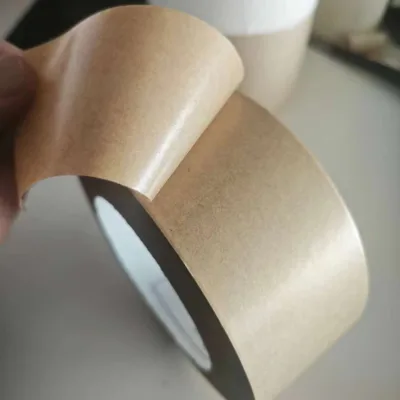


Cute Kraft Paper Tape Uncoated Kraft Tape Self Adhesive Kraft Paper Tape
$0.65 - $1.45
MOQ: 1000 Square Meters

Kraft Paper Shipping Tape Kraft Paper Tape Kraft Paper Tape Self Adhesive
$0.65 - $1.68
MOQ: 1000 Square Meters

Kraft Paper Tape Custom Self Adhesive Kraft Paper Tape Preadhesive Brown Kraft Paper Tape
$0.58 - $1.32
MOQ: 1000 Square Meters

Kraft Paper Tape Logo Kraft Paper Packaging Logo Tape Custom Printed Kraft Paper Tape
$0.65 - $1.68
MOQ: 1000 Square Meters

Factory Direct Sale Kraft Paper Tape Self Adhesive High Quality Kraft Paper Tape
$0.65 - $1.68
MOQ: 1000 Square Meters


Comprehensive Sourcing Guide
Strategic Sourcing Guide for Rubber Glue Kraft Paper Tape
Understanding Product Composition and Technical Specifications
When sourcing Rubber Glue Kraft Paper Tape, buyers must first distinguish between the core material properties and the adhesive chemistry. The primary substrate for this product is Kraft Paper, a material selected for its high tensile strength and natural brown appearance. In the observed market data, this material is often graded as "A" grade, indicating a high-quality pulp source suitable for demanding industrial applications. The physical form of the product is consistently a roll, with specific dimensions that vary based on customer requirements. Observed width specifications include a diverse range of sizes such as 10mm, 12mm, 18mm, 19mm, 20mm, 25mm, 30mm, 45mm, 48mm, and 50mm, with a maximum width constraint often noted as less than 1.3 meters. The length of these rolls typically ranges from 50 meters to 100 meters, while a specific model designation, JY-KPT01, is associated with a size specification of 50mm by 5000mm.
The adhesive component is the defining characteristic of this product category. The core keyword "rubber glue" aligns with the observed "Rubber" adhesive type and "Hot Melt Adhesive" classification. While the primary adhesive is rubber-based, the market data indicates a broader spectrum of adhesive options available for similar kraft paper tapes, including Water Activated, Pressure Sensitive, Acrylic, and Solvent Adhesives. The rubber adhesive is noted for its strong peeling force and high viscosity, making it ideal for heavy-duty applications. The tape is generally single-sided, meaning the adhesive is applied to only one face of the kraft paper core. The paper core itself is available in various diameters, specifically 25mm, 38mm, and 50mm, which influences the roll's structural integrity and compatibility with dispensing equipment.
The physical properties of the tape are further defined by its thickness and surface treatment. An observed thickness of 0.14μm suggests a specific film or coating application, though the primary substrate remains the paper. The tape is coated and appears without stripes, ensuring a uniform surface for printing or sealing. The product is designed to be water-resistant and moisture-proof, with additional features such as being anti-curl, anti-rust, and greaseproof. These characteristics make the tape suitable for environments where humidity or liquid exposure is a concern. The color profile typically includes the natural Brown Kraft Paper, though variations like Chocolate, Orange, and Transparent options exist for specific branding or identification needs.
Compliance, Certification, and Regulatory Standards
Navigating the compliance landscape is critical for B2B procurement, especially when the tape is intended for use in food, cosmetic, or medical sectors. The observed market data lists a comprehensive set of certifications, including CE, SGS, FDA, ISO, Reach, and FSC. These certifications indicate that suppliers may offer products that meet international safety and environmental standards. The FDA certification is particularly relevant if the tape is used for food wrapping or kitchenware packaging, as it ensures the materials do not leach harmful substances into food products. Similarly, the FSC (Forest Stewardship Council) certification points to sustainable sourcing of the kraft paper, which is increasingly important for companies with environmental, social, and governance (ESG) goals.
However, buyers must exercise caution when interpreting these certifications. The presence of a certification in a product listing does not guarantee that every SKU or batch possesses that specific status. For instance, while "ISO" is listed, specific standards like ISO 9001 (Quality Management), ISO 14001 (Environmental Management), and ISO 45001 (Occupational Health and Safety) are mentioned in background data but should be verified on a case-by-case basis. The product standard is often described as "customized according to buyer requirements," which implies that compliance is not always a fixed attribute but a negotiated specification. Buyers should request valid, up-to-date certification documents directly from the supplier for the specific batch they intend to purchase.
The origin of the product also plays a role in regulatory compliance. The primary place of origin observed is Shandong, China, with some listings indicating Jiangsu. Both regions are major manufacturing hubs in China, known for their paper and adhesive industries. When sourcing from these locations, buyers should ensure that the supplier adheres to the import regulations of their own country, including any specific labeling requirements or chemical restrictions under regulations like Reach in the European Union. The "Standard Export Carton" packing mentioned in the data suggests that the packaging itself is designed to meet international shipping standards, but the contents must still be verified for compliance with destination-specific laws.
Cost Drivers and Pricing Dynamics
The pricing structure for Rubber Glue Kraft Paper Tape is influenced by several variables, including material costs, customization levels, and order volume. The observed price range in the market is quite broad, spanning from $0.01 to $5.00 USD. This wide variance is likely driven by the differences in roll dimensions, adhesive types, and the extent of customization. A standard 50mm x 50m roll of plain kraft paper tape will naturally cost significantly less than a custom-printed, high-performance variant with specific adhesive properties or special certifications.
Minimum Order Quantity (MOQ) is another critical cost driver. The observed MOQ range is extensive, from 1 unit to 5,000 units. For small businesses or those testing a new product line, an MOQ of 1 or 1,000 pieces allows for lower upfront capital expenditure. However, larger orders often benefit from economies of scale, reducing the unit cost. The "Selling Units" are listed as "Single item," which may refer to individual rolls or packs, but the actual transaction volume is usually negotiated based on the MOQ. Buyers should be aware that while some suppliers offer free samples, the cost of shipping and the MOQ for the full production run can significantly impact the total landed cost.
Customization is a major factor in pricing. The data indicates that "Design Printing" and "ODM/OEM" services are available. Custom printing, whether through offset, flexographic, or digital printing, adds to the production cost. The complexity of the design, the number of colors, and the setup time for printing plates all contribute to the final price. Additionally, the choice of adhesive type affects cost; rubber adhesive is standard, but specialized formulations like high-temperature resistant or anti-static variants may command a premium. Buyers should request detailed quotes that break down the base material cost, printing fees, and any additional charges for certifications or special packaging to ensure accurate budgeting.
Typical Applications and Usage Scenarios
The versatility of Rubber Glue Kraft Paper Tape makes it suitable for a vast array of applications across multiple industries. The observed usage categories include Labeling, Repair, Supermarket, Industrial, Electronics, Painting, Exhibition, Insulation, Automotive, Grocery, Furniture, DIY, Package, Stick, Household, Ramps, Decorating, Fixings, Carpet Seaming, and Entrances. This breadth of application highlights the tape's adaptability to different surface types and environmental conditions.
In the industrial and manufacturing sectors, the tape is frequently used for sealing packages, bundling items, and temporary holding during assembly processes. Its high tensile strength and strong peeling force make it ideal for heavy-duty packaging where standard plastic tapes might fail. The "Water Activated" option mentioned in the adhesive types is particularly useful for secure sealing of cardboard boxes, as the adhesive bonds chemically with the paper fibers, creating a tamper-evident seal. In the electronics industry, the tape's ability to be anti-static and its clean removal properties (no residue) are valuable for protecting sensitive components during shipping and storage.
For retail and grocery sectors, the tape is used for price labeling, product bundling, and securing goods on shelves. The "Brown Kraft Paper" color provides a natural, eco-friendly aesthetic that aligns with consumer preferences for sustainable packaging. In the automotive and construction industries, the tape's high-temperature resistance and durability make it suitable for masking during painting, securing insulation materials, and temporary repairs on site. The "Easy-Tear" feature observed in the product types enhances usability for workers who need to quickly dispense and cut the tape without tools.
The medical and cosmetic sectors also utilize this tape, particularly for its "Medical Adhesive" properties and compliance with FDA standards. In these applications, the tape must be hypoallergenic and safe for skin contact, which is why the specific certification checks discussed earlier are vital. The "Gift Wrapping" and "Food Wrapping" uses further demonstrate the tape's role in consumer-facing applications where appearance and safety are paramount.
Supplier Evaluation and Sourcing Strategy
Evaluating suppliers for Rubber Glue Kraft Paper Tape requires a multi-faceted approach that goes beyond price comparison. Buyers should prioritize suppliers who demonstrate transparency in their manufacturing processes and provide clear documentation for their certifications. The "Customer" field in the data mentions "Farah," which may indicate a specific client reference or a generic placeholder; regardless, buyers should seek suppliers with a proven track record of serving similar industries. The "Brand Name" GSF is observed, but buyers should not rely on brand recognition alone and should instead verify the supplier's production capacity and quality control systems.
Key evaluation criteria include the supplier's ability to handle customization, their response time for samples, and their logistics capabilities. The "Design" capability of ODM/OEM suggests that the supplier can work with buyers to develop unique products, which is essential for brands looking to differentiate their packaging. Buyers should assess the supplier's printing capabilities, as the data lists various modes including Offset, Flexographic, Silk Screen, Digital, and Heat Transfer Printing. The choice of printing method affects the quality of the final product and the lead time for production.
Logistics and location are also critical factors. With the primary origin in Shandong and Jiangsu, China, buyers should consider the lead times associated with shipping from these regions. The "Standard Export Carton" packing indicates that the supplier is experienced in international shipping, but buyers should confirm the packaging details to ensure the tape arrives in good condition. The "Sample: Free" offering is a positive indicator of supplier confidence, allowing buyers to test the product quality before committing to a large order. However, buyers should clarify any potential shipping costs for samples and ensure that the sample matches the specifications of the bulk order.
Quality Control and Long-Term Procurement Considerations
Implementing a robust quality control (QC) process is essential for maintaining product consistency. Buyers should establish clear acceptance criteria based on the observed specifications, such as width tolerances, adhesive strength, and visual appearance. The "Feature" list includes attributes like "Durable," "Washable," "Heavy Duty," and "No Residue," which should be verified through physical testing. For instance, the "Strong Peeling Force" and "Strong Tensile Force" should be measured to ensure the tape meets the required performance standards for the intended application.
Long-term procurement considerations involve building a sustainable supply chain. The availability of "Customization" and "Eco-Friendly" features suggests that buyers should look for suppliers who are committed to environmental responsibility. The use of Kraft Paper, a biodegradable material, aligns with global trends toward reducing plastic waste. Buyers should inquire about the supplier's sourcing of raw materials and their waste management practices. Additionally, the "Low Noise" feature mentioned in the product types indicates a focus on user experience, which can be a differentiator in competitive markets.
To mitigate risks, buyers should diversify their supplier base and avoid over-reliance on a single source. The wide range of observed MOQs and price points allows for flexibility in sourcing strategies. Regular audits and performance reviews of suppliers can help identify potential issues before they impact production. Finally, maintaining open communication with suppliers regarding market trends and regulatory changes ensures that the procurement strategy remains aligned with business goals and external requirements. By focusing on these areas, buyers can secure a reliable supply of high-quality Rubber Glue Kraft Paper Tape that meets their specific operational needs.
FAQs
What adhesive types are available for Rubber Glue Kraft Paper Tape?
Rubber Glue Kraft Paper Tape is primarily available with rubber adhesive, though options include hot melt, water activated, pressure sensitive, acrylic, and solvent adhesives. The specific type depends on the application requirements such as sealing, bonding, or high-temperature resistance.
Which certifications are commonly listed for this tape product?
Common certifications include CE, SGS, FDA, ISO, Reach, and FSC. These indicate compliance with safety and environmental standards, but buyers should verify specific batch documentation as certifications may vary by supplier and product model.
How is the product customized regarding printing and dimensions?
Customization is available for design printing using offset, flexographic, or digital methods. Dimensions like width and length can be tailored, with standard widths ranging from 10mm to 50mm and lengths up to 100 meters or 5000mm.
Can the tape be used for food wrapping and medical applications?
Yes, the tape can be used for food wrapping and medical applications if it holds FDA certification. It is also suitable for cosmetic and kitchenware packaging, provided the specific batch meets the required safety and hygiene standards.
What is the typical minimum order quantity for this product?
The minimum order quantity ranges from 1 unit to 5000 units depending on the supplier and customization level. Some suppliers may offer free samples, but full production runs typically require an MOQ of at least 1000 pieces.
Where are the main manufacturing locations for this tape?
The primary places of origin are Shandong and Jiangsu in China. These regions are major manufacturing hubs for paper and adhesive products, offering a wide range of suppliers for sourcing Rubber Glue Kraft Paper Tape.
What are the key physical features of the kraft paper tape?
Key features include water resistance, moisture proofing, anti-curl, and greaseproof properties. The tape is single-sided, coated, and available in brown kraft paper or other colors like chocolate and orange, with thickness around 0.14 micrometers.