Source Safe TPR Stress Relief Toy for Party Favors, DIY, and Decompression
Compare 30 listings for Safe TPR Stress Relief Toy options including squishy toys, stress balls, and funny toys. Buyers can review customization, materials like TPR and PU, and packaging details from suppliers in Zhejiang and Yiwu.
Key considerations
Products List


Stress Relief Toys Decompression Toy Creative Toy Use for Adult or Children
$1.30 - $1.35
MOQ: 100 Pieces


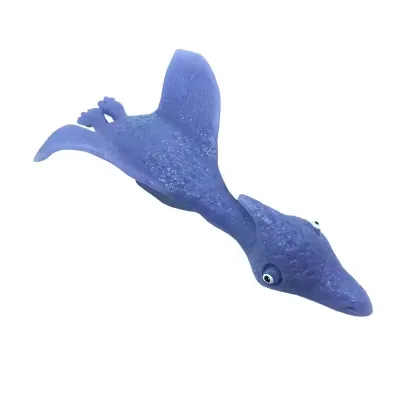

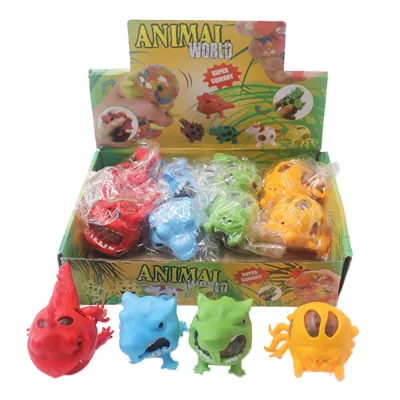


Super Stretchy String Fidget TPR Pull Flexible Sticky Double Hand Anti Stress Toy for Kids
$0.10 - $0.12
MOQ: 10000 Pieces
Comprehensive Sourcing Guide
Strategic Sourcing Guide for Safe TPR Stress Relief Toys
Understanding Material Composition and Safety Profiles
When sourcing stress relief toys, the material selection is the primary determinant of safety, durability, and user experience. The core keyword "Safe TPR Stress Relief Toy" points directly to Thermoplastic Rubber (TPR) as a preferred material class. TPR is widely recognized in the B2B market for its unique balance of elasticity, softness, and non-toxic properties. Unlike traditional PVC or hard plastics, TPR offers a rubber-like feel that is essential for the "decompression" and "squishy" product categories observed in current market listings.
In the context of the available product data, TPR is explicitly listed as a material attribute for specific models. This material choice supports the functional requirement of "reducing some pressure" through physical manipulation. The safety profile of TPR generally aligns with requirements for items intended for close human contact, including stress balls and squishy toys. However, buyers must verify that the specific TPR formulation used by a supplier does not contain harmful plasticizers or heavy metals, even though the material itself is inherently safer than rigid alternatives. The "safe" designation in the keyword implies a need for rigorous verification of the raw material source, ensuring it meets international safety thresholds for consumer goods.
Technical Specifications and Functional Attributes
Technical specifications for TPR stress relief toys vary significantly based on the intended application, whether for party favors, office decompression, or promotional giveaways. The product data indicates a diverse range of attributes that buyers should consider when defining their procurement requirements.
Key technical observations from the market include:
- Dimensions and Weight: Specifications range from compact units like 6.13*11.27cm weighing 76.13g to larger items with a standard of 14cm. The weight and size directly influence the tactile feedback and the "squish" factor.
- Design and Style: Products are categorized under styles such as "Funny Toys," "Cartontoy," "Decompression Toy," and "Natural." The design can range from "New Fashion" to specific character representations.
- Functionality: The primary function is consistently noted as "Reduce Some Pressure" or "Decompression." Some models are also designed for "Bouncing" or "Promotion," indicating versatility in usage.
- Color and Customization: While "Yellow" and "Black" are observed colors, many listings specify "as Pic" or "Full Color" imprint options. Customization is a critical feature, with some models marked as "Customized" and others as "Non-Customized."
Buyers must align these technical specs with their target demographic. For instance, a product intended for "Adults" may require a different density and size compared to a "Party Favor" or "DIY Toy" for children. The data shows a "Large" scale option, which suggests that size is a variable parameter that should be negotiated based on the specific use case.
Compliance, Certification, and Regulatory Verification
Ensuring that TPR stress relief toys meet regulatory standards is a non-negotiable aspect of B2B procurement. While the provided data includes a low-confidence mention of "CE" certification, buyers should not assume this status applies to all listed products without explicit verification. The presence of "CE" in the background data indicates that such certification is a possibility in the market, but it is not a guaranteed attribute for every unit.
Buyers must actively verify compliance with the following standards:
- Material Safety: Verify that the TPR and any associated materials (such as Silicone accessories or Rubber components) comply with REACH, RoHS, and CPSIA regulations. These regulations govern the presence of phthalates, lead, and other hazardous substances.
- Physical Safety: For toys intended for younger demographics, testing for small parts, choking hazards, and flammability is essential. The data mentions "Suitable for: Unisex" and "Suitable for: All," which implies a broad target audience. If the product is marketed to children, strict adherence to toy safety standards (such as ASTM F963 in the US or EN71 in Europe) is required.
- Labeling and Documentation: Ensure that the supplier provides a Certificate of Compliance (CoC) and test reports from accredited third-party laboratories. The data notes "Without Logo Printing" for some items, but others allow "Logo Sticker" or "Full Color" imprint. Buyers must ensure that the inks and adhesives used for these imprints are also non-toxic and compliant with safety standards.
Cost Drivers and Pricing Structures
The pricing of TPR stress relief toys is influenced by several dynamic factors, including material costs, customization levels, and order volume. The observed price range in the market spans from $0.07 to $4.00 USD. This wide variance indicates that the final unit cost is highly dependent on the specific configuration of the product.
| Cost Factor | Impact on Price | Verification Requirement |
|---|---|---|
| Material Grade | Higher grade, non-toxic TPR increases cost. | Request Material Safety Data Sheets (MSDS). |
| Customization | Custom molds, colors, and logos add significant cost. | Confirm if "Customized" status applies to your order. |
| Order Quantity (MOQ) | MOQ ranges from 10 to 10,000 units. | Negotiate tiered pricing based on volume. |
| Packaging | Box, Carton, or OPP Bag packaging affects cost. | Specify "OPP Box" or "Polybag" requirements. |
| Origin Location | Shipping from Zhejiang or Yiwu affects logistics. | Calculate landed cost including freight. |
The Minimum Order Quantity (MOQ) is a critical cost driver. The data shows an observed MOQ range of 10 to 10,000 units. Suppliers with lower MOQs (e.g., 10 units) may charge a premium per unit due to setup costs, while high-volume orders (e.g., 10,000 units) typically benefit from economies of scale. Buyers should evaluate their inventory needs against these thresholds to optimize the total cost of ownership. Additionally, the "Factory: Yes" attribute suggests that direct manufacturing relationships may offer better pricing than trading companies, though this must be verified during the supplier selection process.
Supplier Evaluation and Manufacturing Capabilities
Selecting the right supplier is paramount for ensuring product quality and supply chain reliability. The data indicates that suppliers are located primarily in Zhejiang and Yiwu, China, which are major hubs for toy manufacturing. When evaluating potential partners, buyers should focus on the following criteria:
- Manufacturing Capability: Look for suppliers who explicitly state "Factory: Yes" and possess "High Quality Low Price" capabilities. This suggests an in-house production facility rather than a trading intermediary.
- Customization Services: The data highlights "Customization: Available" and "OEM & ODM: Welcome." This indicates that suppliers are equipped to handle private labeling, custom molds, and design modifications. Buyers should assess the supplier's ability to execute "Full Color" printing and "Logo Sticker" applications accurately.
- Process Control: Some products are noted as "Hand-Made," which can impact consistency and lead times. Buyers must determine if the desired product requires hand-crafting or if automated production is available for higher volume and consistency.
- Product Range: A supplier offering a diverse range of styles (e.g., "Funny," "Natural," "Cartontoy") and types (e.g., "Stress Ball," "Squishy Toys," "Party Favor") is better positioned to meet varied market demands.
Buyers should request samples to verify the "High Quality" claim and inspect the "Processing" methods. For instance, verifying the "Hand-Made" aspect ensures that the tactile quality matches the brand's expectations, while automated production might be preferred for uniformity in large promotional runs.
Quality Control and Long-Term Procurement Strategy
Implementing a robust quality control (QC) strategy is essential for maintaining brand reputation and ensuring customer satisfaction. Given the tactile nature of stress relief toys, QC should focus on both physical integrity and sensory experience.
Key QC Checkpoints:
- Tactile Consistency: Test the "squish" and rebound properties. The product should return to its original shape without permanent deformation after repeated compression.
- Visual Inspection: Check for color consistency, especially for "Full Color" imprints. Ensure there are no mold lines, bubbles, or discoloration that could indicate poor manufacturing.
- Durability Testing: Perform stress tests to ensure the TPR material does not tear or crack under normal usage conditions.
- Packaging Integrity: Verify that the "Box," "Carton," or "OPP Bag" packaging protects the product during transit. The data mentions specific packing standards like "12PCS/OPP Bag," which must be adhered to for bulk shipments.
For long-term procurement, buyers should establish a clear communication channel with the supplier regarding "Lead Times" and "Production Capacity." While specific lead times are not provided in the data, the "Factory: Yes" attribute suggests that production schedules can be managed directly. Buyers should also consider the "Standard" attributes, such as the 100g weight or specific dimensions, to ensure consistency across multiple production batches.
Finally, maintaining a relationship with a supplier who offers "OEM & ODM" services allows for continuous product improvement. As market trends shift, the ability to update designs, colors, or materials ensures that the product line remains competitive. By focusing on these strategic elements, buyers can secure a reliable supply of safe, high-quality TPR stress relief toys that meet both functional and regulatory requirements.
FAQs
What materials are used for safe tpr stress relief toys?
These toys primarily use Thermoplastic Rubber (TPR) for a soft, rubber-like feel. Some models also incorporate Silicone accessories or Rubber components. Buyers must verify that the specific formulation is non-toxic and free from harmful plasticizers to ensure safety.
Can I customize the logo and color on these toys?
Customization is available for many models, including full-color logo printing and logo stickers. However, some specific listings are marked as non-customized or without logo printing. Buyers should confirm the customization status of the specific product model before ordering.
What are the typical dimensions and weights for these items?
Specifications vary, with sizes ranging from 6.13 by 11.27 cm to larger units up to 14 cm. Weights can be as low as 100 grams or around 76 grams depending on the model. These dimensions directly influence the tactile feedback and squish factor of the product.
How do I verify safety compliance for these stress relief toys?
Buyers must actively verify compliance with regulations like REACH, RoHS, and CPSIA for material safety. While CE certification is mentioned in background data, it is not guaranteed for all units. Requesting a Certificate of Compliance and third-party test reports is essential for verification.
What is the minimum order quantity for purchasing these toys?
The observed minimum order quantity ranges from 10 to 10,000 units depending on the supplier. Lower MOQs may carry a higher per-unit cost due to setup fees, while larger orders benefit from economies of scale. Buyers should negotiate tiered pricing based on their volume needs.
Where are the manufacturers of these toys located?
Suppliers are primarily located in Zhejiang and Yiwu, China, which are major manufacturing hubs. The origin is explicitly listed as Zhejiang or Yiwu China for various models. Buyers should factor in shipping costs from these specific locations when calculating the total landed cost.
Are these toys suitable for adults and children?
Some products are explicitly suitable for adults, while others are marked for all ages or unisex use. The scale can be large, and designs range from funny toys to natural styles. Buyers must check the specific suitability label to ensure the product matches the intended demographic.