Source Seamless High Elastic Yoga Bra for Yoga, Pilates, Gym Training
Compare 30 listings for Seamless High Elastic Yoga Bra options featuring quick-drying and breathable fabrics. Buyers can evaluate materials, sizes, and customization services from suppliers in China and Anhui.
Key considerations
Products List


Fashion Gym Wear High Impact Sports Seamless Bra Top Fitness Women Yoga Bra
$7.00 - $13.00
MOQ: 500 Pieces


Eco-Friendly High Impact Sports Seamless Bra Top Fitness Women Yoga Bras
$10.50 - $18.00
MOQ: 500 Pieces

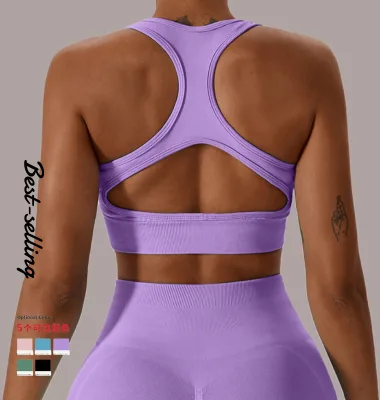
High Impact Sports Seamless Hollow out Bra Top Fitness Women Yoga Bras
$10.50 - $18.00
MOQ: 500 Pieces

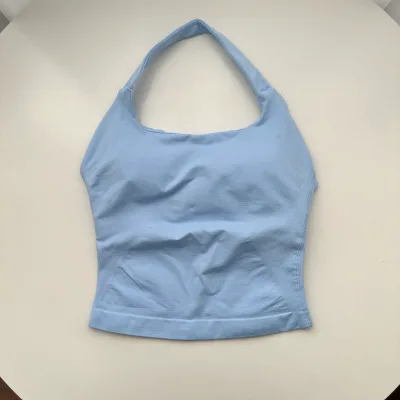
Female Fitness Sports Bra Yoga Sportswear Padded Seamless Women Underwear
$8.50 - $9.00
MOQ: 500 Pieces






Comprehensive Sourcing Guide
Strategic Sourcing Guide for Seamless High Elastic Yoga Bras
The global demand for high-performance activewear has elevated the Seamless High Elastic Yoga Bra from a niche fitness item to a staple in the athletic apparel market. For B2B procurement professionals, sourcing this specific category requires a nuanced understanding of material science, manufacturing capabilities, and supply chain logistics. The core keyword "Seamless High Elastic Yoga Bra" implies a garment constructed using circular knitting technology that eliminates side seams, offering a second-skin fit with superior stretch recovery. This guide outlines the critical factors buyers must evaluate to ensure product quality, compliance, and commercial viability without relying on unverified supplier claims.
Material Composition and Fabric Performance
The foundation of a high-quality yoga bra lies in its fabric composition. Based on observed product attributes in the current market, the dominant material blend for this category is Polyester and Spandex, often supplemented by Nylon in specific high-end lines. The presence of Spandex is non-negotiable for the "high elastic" requirement, providing the necessary recovery and compression. Buyers should verify that the fabric specification explicitly lists a Spandex content percentage, as this directly correlates to the garment's ability to retain shape after repeated stretching.
In addition to the primary blend, some listings indicate a dual-fabric construction where the shell is Polyester and the lining utilizes Spandex or Nylon. This layering technique enhances moisture management and structural integrity. A critical observation from available data is the distinction between "Pure Colour" and "Tie-Dye Prints" or "Logo" patterns. The seamless knitting process allows for complex color integration, but buyers must confirm whether the desired aesthetic is achieved through dyeing the yarn before knitting or through sublimation printing post-construction. Thermal sublimation AOP (All Over Printing) is a verified method for full-page printing, which is essential for brands seeking custom graphic designs.
When evaluating fabric, the buyer must look for specific functional attributes. The supplied facts highlight features such as "Quick-Drying," "Moisture-Wicking," and "Breathable." These are not merely marketing terms but technical requirements for yoga and high-intensity interval training (HIIT). The fabric must also offer "Body Shape" support, implying a specific density and compression level. While some products list "Waterproof" as a feature, this is less common for standard yoga bras and may indicate a specific outdoor or cross-training variant; therefore, verification of the intended use case is necessary to avoid purchasing unsuitable materials.
Technical Specifications and Sizing Standards
Precision in sizing and model specification is paramount for minimizing return rates and ensuring inventory accuracy. The market data reveals a wide range of size specifications, from standard S, M, L, XL, XXL, up to XXXL. However, inconsistencies exist where some listings specify only "S" or "S M L XL," while others claim "Multiple sizes and customization." This variance suggests that not all manufacturers offer the same size grading. Buyers must explicitly request the full size chart and confirm the availability of extended sizes if their target demographic requires it.
The "Fit" attribute is generally described simply as "Fit," but in the context of seamless construction, this implies a compression fit that contours to the body without restricting movement. The product models observed, such as "Yoga wear-1," "115," "8," and specific alphanumeric codes like "PSA706102" or "EFZ04024," indicate that manufacturers often use internal SKUs that do not translate to consumer-facing branding. Procurement teams must map these internal model numbers to their own product lines to ensure consistency.
Furthermore, the "Standard" attribute varies significantly. Some products adhere to a standard "S to xxxl" range, while others offer "customized" standards. This flexibility is a key advantage for private label buyers who wish to create unique sizing profiles. However, it introduces complexity in quality control. Buyers should establish a fixed size tolerance matrix before production begins. The weight specifications, such as "0.25kg" or "0.3kg" per unit, provide a baseline for logistics planning, but these figures can fluctuate based on fabric density and the inclusion of additional features like underwire or molded cups.
Design Customization and Aesthetic Options
Customization is a primary driver in the yoga bra market, allowing brands to differentiate themselves through unique designs. The supplied facts confirm that "Customization" is available, including "Custom Pantone" color matching and "Customized Logo" placement. This is particularly relevant for brands seeking to align their products with specific corporate identities or seasonal color trends. The availability of "8 Solids + 5 Tie-Dye Prints" suggests a robust palette for standard orders, while the "Custom Pantone Accept" clause opens the door for bespoke color development.
Pattern options are equally diverse. While "Pure Colour" is a common baseline, the market also supports "Logo" patterns and "Thermal Sublimation AOP" for full-page graphics. The "Seamless" nature of the construction allows for the integration of these patterns directly into the knit, reducing the need for post-production sewing. However, buyers must be aware that complex designs may require higher minimum order quantities (MOQs) to justify the setup costs of the knitting machines.
The "OEM" (Original Equipment Manufacturer) and "ODM" (Original Design Manufacturer) capabilities are implied by the "Customized Accept" and "Customized Logo" attributes. This means suppliers can produce goods based on the buyer's designs or offer pre-existing designs that can be rebranded. For buyers with limited design resources, leveraging ODM capabilities can accelerate time-to-market. Conversely, for established brands, the ability to control every aspect of the design, from the stitch density to the colorway, is essential for maintaining brand integrity.
Packaging, Logistics, and Origin Considerations
Logistics efficiency is often overlooked in the early stages of sourcing but becomes critical as order volumes scale. The packaging data indicates a mix of individual and bulk options. Common practices include "1 Per Plastic Bag" or "1 PC Flat Into a Polybag," with bulk cartons containing "50 Sets Per Carton" or "40set/Carton." Some suppliers offer "Recyclable PE Zipper Bag" packaging, which aligns with sustainability goals. The "Batch Per Carton or as Required" flexibility allows buyers to negotiate packaging that optimizes container space and reduces shipping costs.
The origin of the products is a significant factor in lead times and tariff implications. The observed data points to origins in "Shanghai, China" and "Anhui China." These regions are established hubs for textile manufacturing, offering a mature supply chain for polyester and spandex production. However, the presence of multiple locations suggests that buyers should verify the specific factory address to ensure consistency in quality and to assess the logistical proximity to ports.
Lead times and MOQs are not explicitly defined in the provided facts, but the observed MOQ range of "1-5000" indicates a high degree of flexibility. This range accommodates both small batch testing and large-scale production runs. Buyers should note that while an MOQ of 1 is technically available, it may come with a premium price point. The "0.25kg" to "0.3kg" weight per unit is a useful metric for calculating freight costs, especially for air freight where weight is a primary cost driver.
Supplier Evaluation and Quality Assurance
Evaluating a supplier for seamless high elastic yoga bras requires a multi-faceted approach. The "Feature" list, including "Waterproof," "Quick-Drying," and "Body Shape," serves as a checklist for product capabilities, but these claims must be validated through physical testing. Buyers should request sample products that match the exact specifications of the intended order to verify the "High Elastic" claim. This involves testing the fabric's stretch recovery ratio to ensure it returns to its original shape after being stretched to 150% of its length.
Compliance and certification are critical, though the provided data mentions "OEKO-TEX" only as a low-confidence background item. Buyers should not assume any product is OEKO-TEX certified unless the supplier provides a valid certificate for the specific batch. Instead, the focus should be on verifying the "Standard" attributes, such as "Multiple sizes and customization" or "customized" standards. The buyer must establish a quality control protocol that includes checking for defects in the seamless knitting, such as uneven tension, color bleeding, or loose threads.
The "Product Name" and "Keywords" like "Beauty Back Underwear" and "Active Wear" highlight the marketing positioning of the product. While these terms are useful for categorization, they do not guarantee quality. A robust supplier evaluation should include a review of the supplier's production capacity, their ability to handle customization requests, and their track record for on-time delivery. The "Customized Logo" and "OEM" capabilities suggest that the supplier has the technical expertise to handle branding, but the buyer must confirm the quality of the printing or embroidery to ensure it does not compromise the fabric's breathability or elasticity.
Long-Term Procurement and Market Adaptability
Sourcing seamless high elastic yoga bras is not a one-time transaction but a strategic partnership that requires long-term planning. The "Suitable Seasons" of Summer, Spring, and Autumn indicate that these products are primarily seasonal, with potential for year-round sales in warmer climates. Buyers should plan their inventory cycles to align with these seasonal peaks, ensuring that stock levels are sufficient to meet demand during high-traffic periods.
The "Ideal Use" cases, including Yoga, Pilates, Gym Training, Running, and HIIT, suggest that the product has broad applicability. This versatility allows buyers to market the same product across different fitness segments, maximizing the return on investment. However, it also means that the product must meet the rigorous demands of high-intensity activities. Buyers should consider the durability of the fabric and the longevity of the elastic properties over time, as these factors influence customer retention and brand reputation.
As the market evolves, the demand for sustainable and eco-friendly materials is likely to increase. The observation of "Recyclable PE Zipper Bag" packaging is a positive indicator of a supplier's awareness of environmental trends. Buyers should proactively inquire about the sustainability of the raw materials, such as recycled polyester or organic cotton blends, to future-proof their product lines. Additionally, the ability to customize sizes and standards suggests that the supply chain is adaptable to changing consumer preferences, a crucial factor in a dynamic market.
In conclusion, sourcing seamless high elastic yoga bras requires a meticulous approach to material selection, technical specification, and supplier evaluation. By leveraging the available data on fabric composition, customization options, and packaging standards, buyers can make informed decisions that align with their brand values and market requirements. The key to success lies in maintaining clear communication with suppliers, establishing rigorous quality control measures, and adapting to the evolving needs of the fitness apparel market.
FAQs
What fabric blends are used for seamless high elastic yoga bras?
The dominant fabric blend is Polyester and Spandex, often with Nylon in high-end lines. Some products feature a Polyester shell with a Spandex or Nylon lining to enhance moisture management and structural integrity for activities like yoga and HIIT.
Which customization options are available for branding and colors?
Customization is available including Custom Pantone color matching and Customized Logo placement. Buyers can choose from 8 solid colors plus 5 tie-dye prints, or request thermal sublimation AOP for full-page graphic designs on the garment.
How are the products packaged for bulk shipping and logistics?
Individual items are packed in plastic bags, with options for recyclable PE zipper bags. Bulk shipments typically contain 40 to 50 sets per carton, though batch per carton or custom packaging requirements can be negotiated for specific orders.
Can buyers find suppliers in specific Chinese manufacturing regions?
Yes, observed product origins include Shanghai and Anhui, China, which are established textile hubs. Buyers should verify the specific factory address to ensure quality consistency and assess logistical proximity to ports for efficient shipping arrangements.
What size ranges and fit standards do manufacturers offer?
Standard sizes range from S to XXXL, with some listings offering customized sizing standards. While most products fit standard grading, buyers must explicitly request full size charts to confirm availability of extended sizes for their target demographic.
What are the typical minimum order quantities for these products?
The observed MOQ range spans from 1 to 5000 units, accommodating both small batch testing and large-scale production. While an MOQ of 1 is technically available, it may carry a premium price point compared to larger volume orders.