Source Seawater Resistant Steel Wire Rope for Construction, Netting, Rope
Find 30 listings for Seawater Resistant Steel Wire Rope with options in galvanized or ungalvanized finishes. Compare specifications including breaking loads, core types, and surface treatments for construction, netting, and rope applications.
Key considerations
Products List
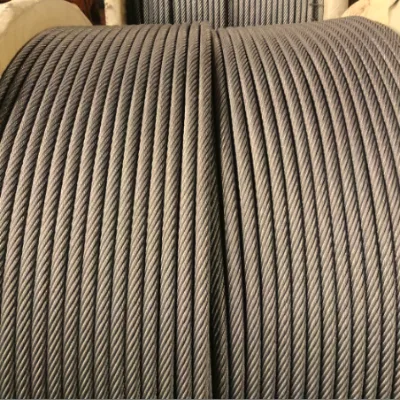


Durable Customizable Stainless Steel Wire Rope with Corrosion Resistant Properties
$6.00 - $12.00
MOQ: 100 Meters

Reliable Holding Customizable Stainless Steel Wire Rope for Rigging Applications
$6.00 - $12.00
MOQ: 100 Meters

Strong Customizable Stainless Steel Wire Rope for Securing and Towing Operations
$6.00 - $12.00
MOQ: 100 Meters


High Strength Customizable Stainless Steel Wire Rope for Industrial Applications
$6.00 - $12.00
MOQ: 100 Meters


Comprehensive Sourcing Guide
Strategic Sourcing Guide for Seawater Resistant Steel Wire Rope
Understanding Material Composition and Corrosion Resistance
When sourcing steel wire rope for marine environments, the primary objective is identifying materials that withstand the aggressive nature of seawater. The supplied product data indicates that the core material options include Carbon Steel and Galvanized Steel Wire. For applications involving direct exposure to saltwater, the galvanized variant is the critical selection. The surface treatment options listed explicitly include "Ungalvanized & Galvanized," suggesting that the galvanized finish is the specific attribute required to mitigate corrosion. Without this protective layer, standard carbon steel is susceptible to rapid degradation in saline conditions.
The raw material source is a significant factor in the consistency of the final product. The available data points to "Bao Steel" and "Sha Steel" as the raw material origins. These are established steel producers, implying a baseline of material quality, though buyers must verify that the specific batch intended for marine use has undergone the necessary galvanization process. The production technique is noted as "Cold Drawn" or "Annealed," which influences the tensile strength and flexibility of the wire. Cold drawing generally increases strength, while annealing improves ductility. For seawater applications, the balance between tensile strength and the ability to withstand dynamic loading without snapping is paramount.
Technical Specifications and Structural Integrity
The structural design of the wire rope dictates its performance under load and its resistance to fatigue. The product specifications reveal a wide range of configurations, including "6X41WS" and "Wire-Rope" models. The data distinguishes between "Rigid Type" (1X19) and "Soft Type" (7X19) constructions. In a marine context, the 7X19 configuration is often preferred for its flexibility, which is essential for applications involving sheaves and drums on vessels. The rope core is specified as "Fiber Core," which provides flexibility and some degree of lubrication retention, though in extreme seawater exposure, a wire core might be considered for superior heat and crush resistance, depending on the specific operational stress.
Tensile strength is a non-negotiable metric for safety. The observed technical specifications list a Tensile Strength (T/S) range of 1570/1670/1770/1860/1960 MPa. Buyers must ensure that the selected rope meets the minimum T/S requirement for their specific load calculations. The breaking load range is extensive, spanning from 74.6kN to 1230kN. This variability allows for customization based on the scale of the operation, from small boat rigging to heavy industrial lifting. The diameter specifications are also diverse, ranging from 1/8" to 6mm, and in metric sizes like 3mm, 4mm, 5mm, and 6mm. When sourcing for seawater resistance, the diameter must be sufficient to handle the expected load while maintaining a safety factor that accounts for potential corrosion-induced cross-sectional loss over time.
Compliance, Certification, and Standard Verification
Navigating the regulatory landscape is essential for procurement in the marine industry. The product data confirms that suppliers offer certifications including ISO, CCC, and CE. The ISO certification is particularly relevant, with a background note referencing ISO 9001:2015, which indicates a quality management system. However, buyers should not assume that ISO certification automatically covers marine-specific performance standards. The listed standards include BS, JIS, DIN, GB, AISI, and ASTM. For seawater applications, ASTM and BS standards often contain specific clauses regarding corrosion resistance and testing protocols that are more rigorous than general industrial standards.
The "Standard" field lists "carbon" as a product standard, which is a generic descriptor. Buyers must verify that the specific product adheres to a recognized marine standard, such as those from the American Bureau of Shipping (ABS) or Lloyd's Register, if the application is for commercial shipping. The presence of "CCC" (China Compulsory Certification) and "CE" (Conformité Européenne) suggests the product meets regional safety requirements, but these do not inherently guarantee seawater resistance. The verification process should involve requesting test reports that specifically address salt spray testing or immersion testing results, as the provided facts do not explicitly list these test outcomes. The "QC System" is noted as "100% Inspection Before Shipment," which is a positive indicator for quality assurance, but it should be complemented by third-party verification for critical marine components.
Cost Drivers and Procurement Economics
The pricing for steel wire rope is influenced by several variables, including the raw material cost, the complexity of the galvanization process, and the specific mechanical properties required. The observed price range in the market data is vast, spanning from $0.35 to $11,215.71. This wide disparity reflects the difference between small-diameter, low-load ropes and heavy-duty, large-diameter industrial cables. The Minimum Order Quantity (MOQ) ranges from 1 to 1000 units, offering flexibility for both small-scale repairs and large-scale fleet outfitting.
Lead times are another critical cost driver. The data indicates delivery times of 15-21 days and 2-15 days, depending on the supplier and order specifics. Expedited shipping or custom orders may incur additional costs. The "Free Sample" availability is a significant factor in the procurement process, allowing buyers to verify the physical quality and surface finish before committing to a large order. Packaging is also a cost consideration; options include "Reel," "Plywood Reels," "Solid Wooden Reels," "Plastic Reels," and "Rolls in Pallets." For seawater transport, robust packaging like plywood or solid wooden reels is essential to prevent damage during transit and to protect the galvanized surface from scratching, which could compromise corrosion resistance.
Typical Applications and Operational Context
The versatility of the wire rope is evident in the listed applications, which include Construction, Netting, Rope, Fencing, Manufacturing, and Packaging. However, for the specific keyword of "seawater resistant," the focus shifts to marine-specific uses. The data mentions "Marine Ropes" with attributes like "Wear-Resistant" and "Anchor Rope" with "Strong Pulling Force." These are direct indicators of suitability for maritime environments. The "Safety Ropes Material" is noted as Nylon and "Safety Belts Material" as Polypropylene, which are distinct from the steel wire rope but may be part of a broader safety system.
In a seawater context, the rope is likely to be used for anchoring, mooring, towing, and lifting on offshore platforms or vessels. The "Fixed Mode" is described as "Two-point," which is relevant for lifting operations where the rope is attached at two specific points. The "Lay Direction" (Right or Left) is a technical detail that must be matched to the drum or sheave configuration to prevent the rope from unlaying under load. The "Craft" of being "Cold Drawn or Annealed" affects the rope's behavior under tension; a cold-drawn rope will have higher strength but less flexibility, while an annealed rope offers better workability. Buyers must align these technical attributes with the specific operational demands of their marine application.
Supplier Evaluation and Quality Assurance Protocols
Selecting a reliable supplier is the most critical step in ensuring the longevity and safety of seawater-resistant wire rope. The product origin is listed as "China," with a specific location noted as "Xingtai, China." While this provides a geographical context, it does not guarantee quality on its own. Buyers should evaluate suppliers based on their ability to provide documentation that confirms the galvanization thickness and the uniformity of the coating. The "Surface" finish is described as "Smooth," "Black or Silver," and "Galvanized." A smooth, silver finish is typical of hot-dip galvanization, which is the preferred method for marine applications.
The "Processing Service" options include "Welding" and "Cutting," which are essential for customizing the rope to fit specific vessel requirements. However, buyers must be cautious, as welding on galvanized wire can destroy the protective coating at the joint, creating a point of failure. It is advisable to use mechanical fittings or swaged connections rather than welding for seawater applications. The "Useage" is listed as "Wire Rope Fittings," indicating that the supplier may offer a complete system. A comprehensive supplier should provide not just the rope but also compatible fittings that are also corrosion-resistant, such as stainless steel or hot-dip galvanized hardware.
Long-Term Procurement and Maintenance Considerations
Sourcing seawater-resistant wire rope is not a one-time transaction but part of a long-term maintenance strategy. The "Eight-Strand Polyester Rope" is noted as "Sturdy and Durable," and the "Nylon Rope" has "Good Acid Resistance," but these are synthetic alternatives. For steel wire rope, the long-term consideration revolves around the degradation of the galvanized layer. Buyers should plan for regular inspections to check for rust, broken wires, or coating wear. The "100% Inspection Before Shipment" ensures the product leaves the factory in good condition, but the in-service environment will dictate the replacement schedule.
The "Standard" of "carbon" and the "Material" of "Galvanized Steel Wire" suggest that the product is designed for durability, but the specific thickness of the zinc coating is not detailed in the provided facts. Buyers should request this information, as a thicker coating extends the service life in harsh marine environments. The "Free Sample" option allows for initial testing, but long-term procurement should involve establishing a relationship with a supplier who can provide consistent quality over multiple orders. The "Delivery Time" of 2-21 days allows for restocking, but lead times should be factored into inventory planning to avoid operational downtime. Ultimately, the success of the procurement depends on matching the technical specifications, such as the T/S range and breaking load, with the rigorous demands of the marine environment, ensuring that the rope performs safely and reliably for its intended lifespan.
FAQs
What materials are used for Seawater Resistant Steel Wire Rope?
The product uses Carbon Steel and Galvanized Steel Wire to ensure durability. For seawater resistance, the Galvanized Steel Wire with a Galvanized surface finish is the critical selection to mitigate corrosion from saltwater exposure.
Which certifications are available for these steel wire ropes?
Available certifications include ISO, CCC, and CE to verify quality and safety standards. Buyers should verify that specific batches meet marine requirements, as general ISO certification does not automatically guarantee seawater performance.
How long is the delivery time for custom orders?
Delivery times range from 2 to 21 days depending on the supplier and order specifics. Free samples are available for verification before committing to large orders, which may affect the final lead time calculation.
What is the minimum order quantity for these ropes?
The minimum order quantity ranges from 1 to 1000 units to accommodate various needs. This flexibility allows for small-scale repairs or large-scale fleet outfitting without requiring excessive initial inventory investment.
Can the ropes be customized for specific marine applications?
Customization is available for specifications like diameter, lay direction, and surface finish. Options include Right or Left lay direction and various diameters from 1/8 inch to 6mm to suit different vessel rigging needs.
What are the tensile strength options for heavy-duty use?
Tensile strength options range from 1570 to 1960 MPa to handle heavy loads. The breaking load spans from 74.6kN to 1230kN, allowing selection based on the specific load calculations required for marine lifting operations.
How are the ropes packaged for safe transport?
Packaging options include Plywood Reels, Solid Wooden Reels, Plastic Reels, and Rolls in Pallets. Robust packaging like plywood or solid wooden reels is essential to prevent damage and protect the galvanized surface during transit.