Source Seated Leg Kick Trainer for Gym, Home, and Rehab
Find 30 Seated Leg Kick Trainer options from China. Compare adjustable metal benches and leg press machines for commercial gyms, home fitness, and rehabilitation centers. Review specifications, certifications, and pricing to select the right equipment for your facility; compare the available evidence and request quotations based on your requirements.
Key considerations
Products List
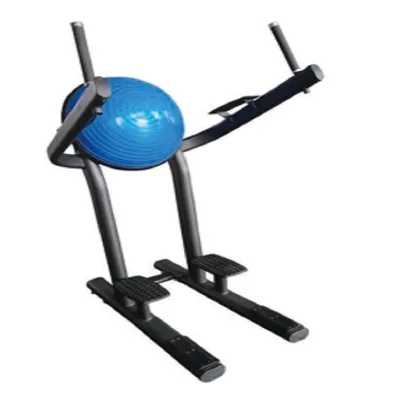


Customized Fitness Equipment Multifunction Seated Leg Press/Squat Trainer for Sell
$899.00 - $969.00
MOQ: 1 Pieces
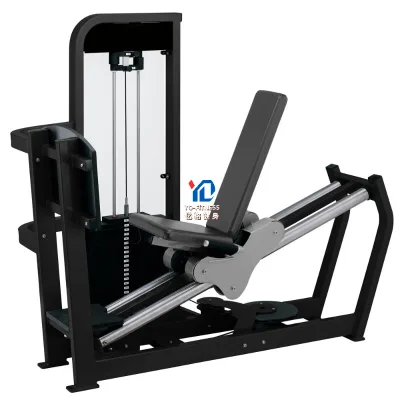


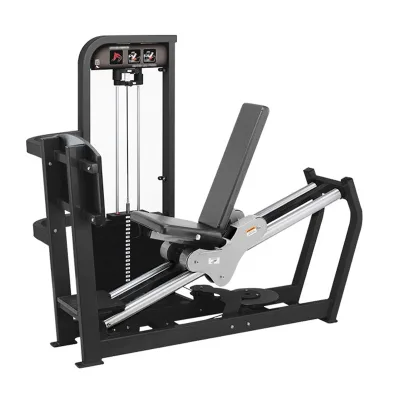
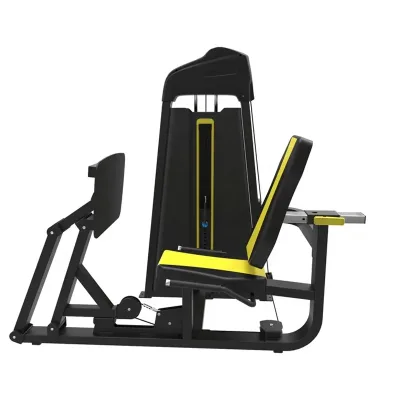
Commercial Steel Leg Press Machine Sit Kick Trainer for Gyms ISO9001/CE Certified
$460.69 - $592.31
MOQ: 2 pieces

Fitness Equipment Strength Machine Squat Stand Leg Press Trainer Practicing
$27.00 - $43.00
MOQ: 20 Pieces




Comprehensive Sourcing Guide
Seated Leg Kick Trainer Sourcing Guide
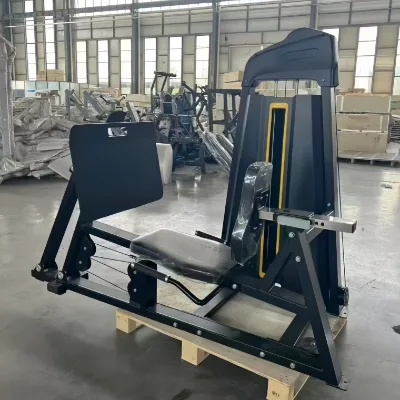
A Seated Leg Kick Trainer is a commercial-grade strength machine designed to target the leg muscles through controlled kicking or leg extension movements from a seated position. For fitness facility operators, distributors, and gym equipment resellers, these machines represent a core category within pin-select and plate-loaded strength lines, and they are frequently listed alongside related leg equipment such as seated leg extension units and horizontal leg press machines. Buyers sourcing this equipment typically encounter products from manufacturing clusters in Shandong, China, where a significant share of commercial gym equipment is produced, with brands offered under OEM/ODM arrangements or under distributor house labels.
This guide is structured around the practical decisions a B2B buyer must make: interpreting listing signals, verifying technical specifications, confirming compliance documentation, understanding cost drivers, qualifying suppliers, and planning for long-term procurement. Because listing data across marketplace products varies widely in completeness—some listings specify dimensions, model numbers, and certifications while others provide only basic attributes—buyers should treat every published attribute as a claim to be confirmed during sampling and contracting rather than as guaranteed product characteristics.
Product Scope and Observed Listing Signals
Listings for seated leg kick trainers and adjacent leg-training machines show a recognizable pattern of attributes that buyers can use to shortlist candidates. Common signals include a stated place of origin in Shandong, China; steel or metal construction; commercial application for gymnasium and home use; adult, unisex user positioning; and features such as eco-friendly finish, adjustability, and seating comfort. Model numbers appear in several formats (for example, SNX046, DG-1001, CN-118, CH-B33, and 8017), and packaging is generally described as plywood cases or wooden cases for single-item sales. Minimum order quantities in observed listings are low, with some products listed at an MOQ of one piece, which favors sampling before commitment.
Price dispersion in this category is substantial, with observed listed prices ranging from roughly 27 to 1,129 USD. That spread usually reflects differences between small accessories, mid-range machines, and heavy-duty commercial units—a horizontal leg press listing, for example, declares a machine weight of 355 kg and a footprint of 220012001850 mm, while a seated leg extension lists dimensions of 11708401630 mm and an 80011501600 mm specification elsewhere. Buyers should therefore normalize comparisons by machine type, weight stack (one listing shows 70 kg), frame mass, and stated footprint before comparing prices.
Technical Specifications to Verify
Frame construction and dimensional fit should anchor technical due diligence. Confirm the stated material—steel is the norm in this segment—and ask for tube gauge, weld quality standards, and powder-coating thickness rather than accepting "metal" or "steel" at face value. Verify overall machine dimensions against your floor plan; observed listings range from compact seated units near 11708401630 mm to large press machines exceeding 2200 mm in length, so ceiling height, doorway clearance, and inter-machine spacing all matter. Request the actual machine weight, since a 355 kg unit imposes very different freight and floor-loading demands than a lighter selectorized bench.
For selectorized versions, verify the weight stack configuration, increment size, maximum resistance, and whether stacks can be upgraded after installation. For adjustable units, test the adjustment mechanism travel, locking security, and seat pad durability during a sample inspection. Confirm the exercise biomechanics: pivot-point height relative to user knee position, range of motion, and whether the kick or extension path can be calibrated for different user heights. Because listings declare manual power source and foldable status ("No" in observed data), confirm these attributes if space planning or powered assistance is a requirement for your facility.
Compliance and Safety Documentation
Certification claims in this category commonly reference CE and ISO, and at least one listing combines them with an "ISOFolded:Unfolded" notation that suggests copy-paste listing errors. Buyers should never accept certification text from a listing page alone. Request copies of the actual certificates, verify the certificate number against the issuing body's database where possible, and confirm that the certified scope covers the specific model and product family you intend to order—certificates issued for one machine type do not automatically extend to a supplier's whole strength line.
Safety documentation should extend beyond certificates. Ask for the supplier's internal quality-control procedures, material test reports for steel and upholstery, and any user-weight and usage-intensity ratings applicable to commercial environments. If you resell into markets with additional requirements—such as labeling language, instruction manual content, or specific consumer-safety regulations—identify those obligations early and confirm the supplier can support compliant documentation. Where a listing references standards only through dimension fields (for example, "prod_standard: 149211861296mm"), treat that as a footprint spec, not a compliance standard, and clarify the distinction in writing before contracting.
Cost Drivers and Commercial Terms
Pricing for seated leg kick trainers is driven primarily by frame mass, stack weight, upholstery grade, guide-rod and bearing quality, and finish. Heavy plate-loaded or 355 kg-class machines carry high material and freight costs, while lighter selectorized units trade at lower ex-works prices but may require upgrades for high-traffic commercial use. Customization—which observed listings confirm is available—adds cost through tooling, color matching (silver, white, black, gray, and gold are common finish options), and logo application under OEM/ODM arrangements. Quantity tiers, even from an MOQ of one piece, typically unlock better unit pricing.
Commercial terms deserve equal attention. Clarify whether quoted prices are ex-works, FOB, or delivered, and budget for plywood or wooden case packing—both standard in observed listings—which protects welded frames but increases volumetric weight. Confirm payment structure, lead time for the first order versus repeat orders, and warranty coverage for frames, welds, guide rods, and upholstery separately, as these components fail at different rates. For customized units, agree on approval procedures for pre-production samples and specify who bears rework costs if delivered goods deviate from approved specifications.
Supplier Qualification and Quality Control
Qualify suppliers on manufacturing capability rather than listing polish. Because Shandong is a major production cluster for this equipment class, many suppliers operate at different tiers—from trading companies to full manufacturers with in-house cutting, welding, and coating lines. Request a factory audit or third-party inspection report covering production equipment, welding processes, and assembly-line controls. Verify OEM/ODM capacity directly: ask whether the supplier engineers its own tooling or assembles bought-in components, since this affects customization depth, spare-parts availability, and repair support over the machine's life.
Quality control should be contractual, not assumed. Define an inspection protocol covering frame weld integrity, powder-coat adhesion, cable and pulley function, selectorized pin fit, upholstery stitching, and packaging drop-test performance before shipment. For a first order, consider a pre-shipment inspection against an approved sample, and retain that sample as the reference standard for future batches. Given that observed MOQs start at one piece, use low-volume trial orders to validate real quality, communication responsiveness, and document accuracy—including whether stated dimensions, weights, and certifications match what actually ships—before scaling purchase volumes.
Long-Term Procurement Checks
Plan for the equipment lifecycle, not just the purchase. Strength machines in commercial gyms endure constant use, so establish spare-parts availability for wear items: upholstery pads, cables, pulleys, bearings, weight pins, and cosmetic touch-up paint. Confirm in writing how long the supplier commits to supplying parts for your specific model numbers, and request exploded diagrams or parts lists at order time. Since observed listings show model identifiers across varied numbering systems (SNX046, DG-1001, CN-118, CH-B33, 8017), maintain your own cross-reference records to avoid confusion when reordering across suppliers or product generations.
Build supplier relationships that support expansion. Facilities typically buy leg equipment in sets—seated leg extension, leg press, and kick trainers from one design language—so confirm the supplier can supply a visually and functionally coherent line under consistent OEM/ODM branding. Track reorder consistency: finish color batch variation, dimension drift, and certificate renewal status should be checked on every repeat order. Finally, review total cost of ownership annually, factoring freight, duty, maintenance labor, and downtime risk, so that the lowest unit price at procurement does not quietly become the most expensive machine on your gym floor over a multi-year horizon.
FAQs
What materials are used for Seated Leg Kick Trainer frames?
Frames are constructed from durable metal and steel to ensure stability during intense workouts. These materials provide the necessary strength for commercial gym environments. The equipment is designed to withstand heavy usage while maintaining structural integrity over time.
Can the Seated Leg Kick Trainer be customized for branding?
Yes, customization is available for OEM and ODM requirements. Buyers can request specific branding or design modifications to suit their facility needs. This flexibility allows businesses to align the equipment with their corporate identity and aesthetic preferences effectively.
What certifications do these fitness machines typically hold?
These machines typically hold CE and ISO certifications, ensuring compliance with international safety and quality standards. Such certifications verify that the equipment meets rigorous manufacturing requirements. This assurance is crucial for commercial buyers seeking reliable and safe fitness solutions for their clients.
How is the equipment packaged for international shipping?
The equipment is packaged in plywood cases or wooden boxes to protect against transit damage. This robust packaging ensures the machine arrives in perfect condition. Secure packing is essential for maintaining product quality during long-distance shipping to global destinations.
What is the minimum order quantity for these trainers?
The minimum order quantity is one piece, allowing for flexible purchasing options. This low MOQ supports both small gyms and large commercial chains. Buyers can start with a single unit to test quality before placing larger orders for their facilities.
Where are these fitness machines manufactured?
These machines are manufactured in Shandong, China, a major hub for fitness equipment production. This location ensures access to high-quality materials and skilled labor. Buyers benefit from established supply chains and efficient logistics networks originating from this region.