Source Seated Warehouse Electric Forklift for farms, construction, and food plants
Find 30 Seated Warehouse Electric Forklift models with varying load capacities and battery options. Buyers can compare specifications like lift height, turning radius, and motor types to select equipment suitable for cold storage, indoor warehouses, and construction sites.
Key considerations
Products List


Compact Electric Forklift for High Moisture Warehouse Handling Applications
$12000.00 - $17333.00
MOQ: 1 Pieces

Energy Efficient Electric Forklift for Multi-Zone Warehouse Facilities
$12000.00 - $17333.00
MOQ: 1 Pieces

Energy Saving Electric Forklift for Standard Warehouse Handling Tasks
$12000.00 - $17333.00
MOQ: 1 Pieces
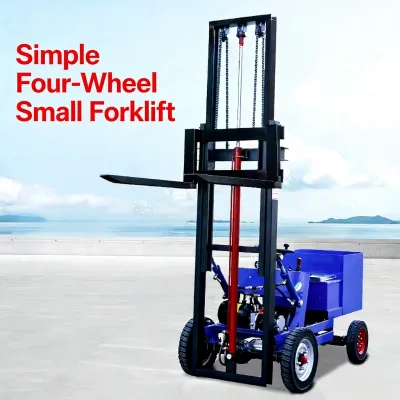


Compact Design Warehouse Electric Forklift for Easy Storage and Transport
$3800.00 - $4500.00
MOQ: 1 Pieces


High-Performance Mini Electric Forklift with Lithium Power for Warehouses
$5000.00 - $5300.00
MOQ: 1 Pieces

Comprehensive Sourcing Guide
Strategic Sourcing Guide for Seated Warehouse Electric Forklifts
The global demand for material handling equipment has intensified the need for precise procurement strategies, particularly for seated warehouse electric forklifts. These machines represent a critical investment for logistics centers, distribution hubs, and manufacturing facilities seeking to optimize throughput while maintaining operational safety. Unlike counterbalanced forklifts designed for outdoor rough terrain, seated electric models are engineered specifically for indoor environments where maneuverability, emission-free operation, and operator comfort are paramount. This guide synthesizes observed market data and technical attributes to provide a structured framework for buyers evaluating suppliers and specifications.
Technical Specifications and Operational Capabilities
When evaluating a Seated Warehouse Electric Forklift, the primary focus must be on the intersection of load capacity, lift height, and powertrain efficiency. Based on current market observations, these units typically feature a rated load capacity ranging from 1000kg to 1500kg, with specific models capable of handling up to 5 tons depending on the configuration. The load center is a critical metric for stability; standard configurations often cite a 500mm load center, which dictates the maximum weight the forklift can safely lift at that specific distance from the fork face.
Power systems in this category have evolved significantly. The observed data indicates a shift toward AC motor technology, which offers superior torque control and energy efficiency compared to older DC systems. The drive control is predominantly AC, ensuring smooth acceleration and deceleration essential for narrow aisle operations. Battery specifications vary widely, with voltage options including 24V and 76.8V systems. Capacitance ranges from 150Ah to 410Ah, with specific configurations offering 270Ah, 300Ah, or 350Ah options. Buyers must verify whether the battery chemistry is Lead-Acid or Lithium, as this impacts charging time, maintenance requirements, and total cost of ownership. Lithium Battery options are increasingly available, offering faster charging cycles and longer lifespans, though they may carry a higher upfront cost.
The physical dimensions of the forklift are equally vital for warehouse layout planning. The body width is typically standardized at 1000mm, while the bodywork length can extend to 1850mm. The turning radius is a key performance indicator for maneuverability in tight spaces; observed models often feature a turning radius of approximately 1550mm. Lift heights are another variable, with standard configurations reaching 3000mm, while specialized units can achieve heights exceeding 5000mm. Fork lengths generally range from 1070mm to 1520mm, allowing for compatibility with various pallet types.
Compliance, Certification, and Safety Standards
Ensuring that a Seated Warehouse Electric Forklift meets international safety and quality standards is a non-negotiable aspect of the procurement process. While specific certification statuses for individual listings may vary, buyers should prioritize suppliers who can demonstrate adherence to recognized industry standards. The ISO 3691 standard is widely regarded as the benchmark for safety requirements for industrial trucks, covering aspects such as stability, braking, and operator controls. Additionally, ISO 9001 certification indicates that the manufacturer has a robust quality management system in place, which is crucial for ensuring consistent build quality across production batches.
In the context of electrical safety and market access, CE certification is frequently observed as a requirement for products entering the European market. Buyers must verify that the forklift's electrical systems, including the battery and motor, comply with relevant voltage and insulation standards. The product standard designation "CPD20" suggests a specific model series that may have its own set of compliance criteria, but the overarching safety framework should always align with ISO guidelines.
Operational safety features are also embedded in the design. The "Three-Point" design mentioned in product attributes refers to the stability triangle, a fundamental concept in forklift engineering that ensures the center of gravity remains within safe limits during operation. Furthermore, features such as waterproofing are essential for environments where cleaning or humidity control is necessary. Buyers should request documentation confirming that the electrical components meet the necessary IP ratings for the intended operating environment.
Cost Drivers and Total Cost of Ownership
The price of a Seated Warehouse Electric Forklift is influenced by a complex array of factors, with observed market ranges spanning from $599 to $17,600. This wide variance reflects differences in capacity, battery technology, lift height, and brand positioning. The initial purchase price is only one component of the total cost of ownership (TCO). Buyers must consider the long-term costs associated with battery replacement, maintenance, and energy consumption.
Lithium Battery models, while potentially more expensive upfront, often result in lower TCO due to reduced maintenance needs and the ability to charge during breaks without degrading battery life. In contrast, Lead-Acid batteries may have a lower initial cost but require regular water top-ups and longer charging times, potentially impacting operational uptime. The condition of the equipment is another cost driver; the market predominantly offers "New" units, but buyers should be vigilant about the warranty terms and the availability of spare parts.
Packaging and shipping costs also play a significant role in the final landed cost. Observed packaging options include "Shipping," "Bare Packing," "Wooden Case Packing," and "Export-Standard Package." The choice of packaging affects the risk of damage during transit and the ease of unloading at the destination. For international procurement, the origin of the product, often cited as China or specifically Anhui, China, will influence logistics costs and lead times. Buyers should factor in the "Single package size" of 60x65x130 cm when calculating shipping volume and freight charges.
Typical Applications and Industry Suitability
Seated warehouse electric forklifts are designed for a diverse range of applications, primarily within indoor environments. The "Cold Storage / Indoor Warehouse" application is a primary use case, where the electric powertrain eliminates the risk of carbon monoxide poisoning and provides consistent performance in temperature-controlled environments. The "Applicable industry" data points to farms, construction sites, and food and beverage processing plants, indicating versatility across sectors. However, for construction sites, the specific terrain and load requirements must be carefully evaluated to ensure the forklift is suitable for the conditions.
The "Operation Type" is consistently listed as "Driving Cabin Operation," which implies a seated design that offers greater comfort and reduced operator fatigue compared to stand-up models. This is particularly beneficial for multi-shift operations where operators work long hours. The "Working Temperature" is noted as "other," suggesting that these units may have specific environmental limitations that need to be verified against the intended facility conditions.
In the food and beverage sector, the "Waterproof" feature is a critical attribute, as these facilities often require frequent washing to maintain hygiene standards. The "C shape steel" door frame and "Metal" material construction contribute to the durability and structural integrity of the machine, ensuring it can withstand the rigors of daily industrial use.
Supplier Evaluation and Verification
Selecting the right supplier requires a rigorous evaluation process that goes beyond the initial product listing. Buyers should verify the "Place of Origin" and the specific manufacturing capabilities of the supplier. While "Anhui, China" is a noted origin, the specific factory location and its production capacity are essential details to confirm. The "Customization" attribute being available suggests that suppliers may offer tailored solutions, such as specific battery capacities or lift heights, which can be a significant advantage for unique operational needs.
The "MOQ" (Minimum Order Quantity) range of 1-20 units indicates flexibility in purchasing, allowing buyers to acquire single units for pilot programs or larger quantities for fleet expansion. However, buyers should be cautious of suppliers who claim to offer customization without clear evidence of their engineering capabilities. The "Standard" attribute, such as "CPD20" or "1.6-2.0 tons," should be cross-referenced with the supplier's product catalog to ensure consistency.
Buyers must also assess the supplier's after-sales support network. The availability of spare parts, technical support, and maintenance services is crucial for minimizing downtime. The "prod_packing" and "prod_standard" details should be reviewed to ensure they align with the buyer's logistical and regulatory requirements.
Quality Control and Long-Term Procurement Considerations
Implementing a robust quality control (QC) protocol is essential for mitigating risks associated with the procurement of industrial equipment. Buyers should insist on pre-shipment inspections that verify critical attributes such as the "Battery Voltage/Capacitance," "Drive Control," and "Maximum Mast Height." The "Weight" of the forklift, observed at 1760kg or 2010kg, should be confirmed to ensure it matches the specifications required for the intended floor loading conditions.
Long-term procurement considerations include the scalability of the solution. As a business grows, the ability to add more units to the fleet with consistent specifications is vital. The "Lift height" range of 3000~5000mm and the availability of different battery capacities allow for future expansion. Buyers should also consider the "Speed" of the forklift, observed at 5.2km/H, and ensure it meets the throughput requirements of the facility.
Finally, the "Design" of the forklift, such as the "Three-Point" configuration, should be evaluated for its impact on safety and efficiency. The "Sling Type" and "Hoist type" (Chain Hoist) are relevant for maintenance and transport, ensuring that the equipment can be safely moved and serviced. By focusing on these detailed attributes and maintaining a disciplined approach to verification, buyers can secure high-quality seated warehouse electric forklifts that deliver reliable performance and value over the long term.
FAQs
What is the rated load capacity of these forklifts?
The rated load capacity ranges from 1000kg to 1500kg, with some models supporting up to 5 tons. This capacity depends on the specific configuration and the 500mm load center distance required for stability.
Which battery types are available for electric models?
Buyers can choose between Lead-Acid or Lithium battery options. Capacitance varies widely from 150Ah to 410Ah, with specific voltage options including 24V and 76.8V systems for different operational needs.
How high can the mast lift these forklifts?
Standard lift heights reach 3000mm, while specialized units can achieve heights exceeding 5000mm. The maximum mast height is typically 3 meters for standard configurations, ensuring suitability for various warehouse racking systems.
Can these forklifts be customized for specific needs?
Yes, customization is available for various product attributes and standards. Buyers can request tailored solutions such as specific battery capacities, lift heights, or packaging options to match unique operational requirements.
What is the typical turning radius for these units?
The turning radius is approximately 1550mm, facilitating maneuverability in tight indoor spaces. This dimension is critical for warehouse layout planning and ensures efficient operation in narrow aisles.
Which industries are these forklifts applicable to?
These units are suitable for cold storage, indoor warehouses, farms, and food processing plants. The waterproof design and electric powertrain make them ideal for environments requiring hygiene and emission-free operation.