Source Self-Lubricating Copper Graphite Bushing for Hydraulic Cylinders, Forging Machines, and Automation Equipment
Compare 30 listings for the self-lubricating copper graphite bushing, featuring single-row rolling elements and customizable sizes. Buyers can evaluate options for engineering hydraulic cylinders, forging machines, and automation equipment with varying lead times and packing methods.
Key considerations
Products List


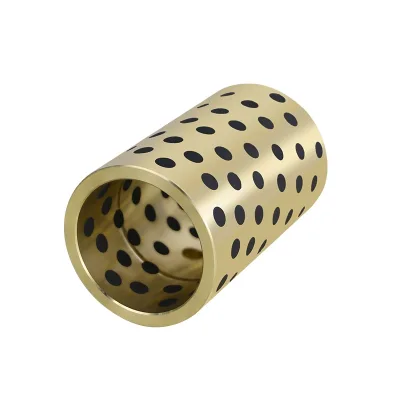
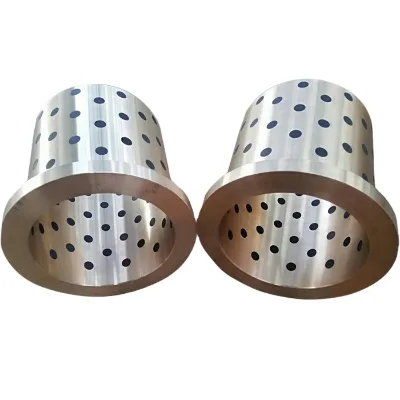
CNC Machining Bronze bushing Self Lubricating Brass Graphite bearing Bushing
$0.10 - $10.00
MOQ: 100 Pieces




Comprehensive Sourcing Guide
Strategic Sourcing Guide for Self-Lubricating Copper Graphite Bushings
Understanding Technical Specifications and Material Composition
When sourcing self-lubricating copper graphite bushings, the primary focus must be on the precise definition of the material composition and structural design. Based on available product data, the core material for these components is explicitly identified as brass, often described in broader contexts as copper alloy. The defining characteristic of this specific bushing type is the "Graphite Embedded" feature, which provides the self-lubricating capability essential for applications where external lubrication is impractical or impossible. The product name "Guide Bushing-Copper Alloy with Graphite Embedded" confirms that the graphite is integrated directly into the metal matrix, creating a solid lubricant layer that activates under friction.
The structural integrity of these bushings is critical for their performance in high-load environments. The observed specifications indicate a "Whole Outer Ring" structure, which suggests a robust design intended to maintain dimensional stability under radial loads. The product attributes list the shape as "Straight," which is the standard configuration for guide bushings used in linear motion applications. Furthermore, the tolerance range for these components is noted to be as tight as 5 micrometers (5μm), a precision level that is vital for high-speed machinery and automation equipment where minimal clearance is required to prevent vibration and ensure smooth operation.
Buyers must verify that the specific model they select aligns with the required load direction. While some data points reference "Radial Spherical Plain Bearing" characteristics, the primary application for these copper graphite bushings is often in guiding rods or pins where radial loads are predominant. The "Single Row" rolling element attribute found in related data suggests compatibility with systems requiring specific bearing arrangements, though the bushing itself functions as a sliding bearing. The customization options are extensive, with "Customized Size" and "Customized Colors" listed as available attributes, allowing procurement teams to tailor dimensions to unique machinery designs.
Compliance, Certification, and Standard Verification
In the industrial procurement of precision components like copper graphite bushings, verifying compliance with international standards and certifications is a non-negotiable step. The supplied data explicitly mentions "ISO" as a certification attribute, indicating that reputable suppliers in this sector typically adhere to ISO quality management systems. While specific standard numbers like ISO 9001:2015 are mentioned in background contexts, buyers should request current, valid certificates from the supplier to confirm that the manufacturing facility maintains a certified quality management system.
Standardization is another critical area. The product data references "Bearing Steel" as a standard material for related components and lists "HASCO" as a standard for mold parts, which implies that the industry often aligns with established European mold and component standards. For the bushings themselves, the "Standard" attribute is listed as "Various specifications," and the "prod_standard" field shows specific dimensional codes like "100 x110x120" or "352218." This indicates that while custom sizes are available, there are likely standard industrial dimensions that buyers should prioritize to reduce lead times and costs.
Buyers must also verify the HS code for import and export compliance. The data provides "8480719090" as the HS code, which generally covers molds for metal or metal carbides, though this specific code may apply to the mold parts associated with the bushing manufacturing process rather than the bushing itself. It is imperative for procurement teams to confirm the correct HS classification with their logistics providers to ensure accurate duty assessment. Additionally, the "Standard" attribute lists "Standard or Customized," suggesting that suppliers may offer both off-the-shelf items and bespoke solutions. Buyers should explicitly request documentation proving that the product meets the specific dimensional tolerances and material properties required for their application, rather than relying solely on generic standard claims.
Cost Drivers and Pricing Dynamics
The pricing of self-lubricating copper graphite bushings is influenced by a complex interplay of material costs, manufacturing complexity, and order volume. The observed price range in the market spans from $0.04 to $100 USD, a vast disparity that reflects the difference between small, standard-sized bushings and large, custom-engineered components. The lower end of this range likely corresponds to high-volume production of standard sizes, while the upper end reflects specialized applications requiring tight tolerances, custom shapes, or complex surface finishes.
Material costs are a significant driver, given that the primary component is brass or copper alloy. Fluctuations in the global price of copper and zinc will directly impact the unit cost of these bushings. Furthermore, the "Graphite Embedded" process adds a layer of manufacturing complexity that can increase costs compared to standard bronze bushings. The "Surface Finish Process" is listed as "Polishing," which is an additional step that can affect the final price, particularly if a mirror finish or specific roughness is required for the application.
Order volume plays a crucial role in determining the final price per unit. The observed Minimum Order Quantity (MOQ) ranges from 1 to 10,000,000 units. This wide range suggests that suppliers are flexible, catering to both prototyping needs and mass production runs. Buyers purchasing small quantities may face higher per-unit costs due to the setup time for custom molds or the inefficiency of small-batch production. Conversely, large orders can leverage economies of scale, significantly reducing the unit price. The "Customization" attribute being available means that any deviation from standard sizes or shapes will likely incur a premium, as it requires dedicated tooling and process adjustments.
Typical Applications and Operational Environments
Self-lubricating copper graphite bushings are engineered for a diverse array of heavy-duty and precision applications. The data identifies several key sectors where these components are essential. In the automotive industry, they are used in "Automobile Shock Absorbers," where the self-lubricating property is critical for maintaining performance in harsh environments without the need for frequent maintenance. In the construction and engineering sectors, these bushings are vital for "Engineering Hydraulic Cylinders" and "Construction Machinery," where high radial loads and continuous operation demand reliable sliding surfaces.
The manufacturing sector also relies heavily on these components. They are specified for use in "Forging Machines" and "Automation Equipment," where precision and durability are paramount. The "Mould Life" attribute, citing a range of 250,000 to 300,000 shots, highlights their suitability for high-cycle applications in die casting and stamping dies. Specifically, the "Vehicle Mould" and "Stamping Die Parts" categories indicate that these bushings are integral to the longevity of production molds. In the electronics and hardware industries, they serve in "Electronic" and "Hardware" applications, often in smaller, high-precision assemblies.
The "Add Lubricant: Self-lubricating" attribute is particularly relevant for "Water Conservancy Machinery" and "Furniture" applications, where access for regular greasing is difficult. The "Rod End: General" specification suggests versatility in connecting rods and linkages across various mechanical systems. Buyers should ensure that the selected bushing's load capacity and material properties match the specific operational demands of their machinery, particularly regarding speed, load, and environmental conditions.
Supplier Evaluation and Service Capabilities
Selecting the right supplier for self-lubricating copper graphite bushings requires a thorough evaluation of their technical capabilities, service offerings, and logistical reliability. The data indicates that "OEM\ODM" services are available, meaning suppliers can manufacture components to a buyer's specific design or develop new products based on the buyer's requirements. This flexibility is crucial for companies with unique machinery designs that cannot be met by standard catalog items.
The "Service" attribute also includes "Custom Made" and "Customized" options, reinforcing the supplier's ability to adapt to specific needs. Buyers should verify the supplier's capacity for "Die Casting" and "Extrusion Mould" processes, as these are listed as shaping modes for related products, suggesting a broad manufacturing base. The "Process Combination Type" is noted as "Single-Process Mode," which may imply a streamlined production workflow, though buyers should confirm if this applies to the specific bushing production or if multi-step processes are available for complex requirements.
Logistical capabilities are equally important. The "Delivery Time" is listed as 7-15 days, which is a competitive lead time for custom or semi-custom components. However, buyers must verify if this timeframe applies to stock items or if custom orders require longer production cycles. The "prod_packing" options, including "Pallet, Carton," "Plastics Bag/Cartons," and "Anti-Rust Packaging," indicate that suppliers offer various packaging solutions to protect the components during transit. For international shipments, "Shockpro" (shockproof) and "Dust-Proof Packaging" are essential to prevent damage and corrosion.
Payment terms are another factor in supplier evaluation. The data lists "L/C, T/T, D/P, Paypal" as accepted payment methods, offering flexibility for different transaction sizes and risk profiles. Buyers should assess the supplier's financial stability and reputation for honoring these terms. Additionally, the "Location" is specified as "China" and "Wenzhou," a region known for its manufacturing hubs. Buyers should consider the implications of sourcing from this region, including potential shipping times and import regulations, while ensuring the supplier has a robust quality control system in place.
Quality Control and Long-Term Procurement Considerations
Ensuring the long-term reliability of self-lubricating copper graphite bushings requires a rigorous approach to quality control and supplier relationship management. The "Tolerance Range" of 5μm is a key quality metric that buyers must verify through third-party inspection or supplier-provided test reports. Consistency in this tolerance across large production batches is essential for the proper functioning of automated machinery and precision equipment.
The "Certification" of "ISO" is a baseline requirement, but buyers should also inquire about specific material certifications, such as mill test reports for the brass or copper alloy used. These documents should confirm the chemical composition and mechanical properties of the material, ensuring that the graphite content is sufficient to provide the claimed self-lubricating performance. The "Surface Finish Process" of "Polishing" should be inspected to ensure it meets the required surface roughness specifications, as a poor finish can lead to premature wear and increased friction.
For long-term procurement, buyers should establish a partnership with suppliers who offer consistent quality and responsive service. The "Mould Life" data suggests that these components are designed for high-cycle applications, so the supplier's ability to maintain consistent quality over time is critical. Buyers should also consider the "Customization" aspect as a long-term strategy; working with a supplier who can adapt to design changes and evolving requirements can provide a competitive advantage.
Finally, buyers should monitor the supply chain for potential disruptions. The "Lead Time" of 7-15 days is a target, but external factors such as raw material shortages or logistical issues can impact delivery. Establishing a buffer stock or maintaining a relationship with multiple suppliers can mitigate these risks. By focusing on technical specifications, verifying certifications, and evaluating supplier capabilities, buyers can secure a reliable supply of high-quality self-lubricating copper graphite bushings that meet the demanding requirements of modern industrial applications.
Comparison of Key Product Attributes
To facilitate a clearer understanding of the available options and specifications, the following table summarizes the key attributes observed in the product data. This comparison helps buyers quickly identify which features are standard and which require specific verification or customization.
| Attribute Category | Standard/Observed Value | Notes for Verification |
|---|---|---|
| Material | Brass / Copper Alloy | Verify specific alloy grade and graphite content. |
| Structure | Whole Outer Ring | Confirm structural integrity for radial loads. |
| Shape | Straight | Check for custom shapes if required. |
| Tolerance | 5μm | Request proof of tolerance capability for batch. |
| Lubrication | Self-lubricating (Graphite Embedded) | Confirm activation conditions and lifespan. |
| Customization | Available (Size, Color, Shape) | Verify MOQ and lead time for custom orders. |
| Packaging | Pallet, Carton, Anti-Rust, Dust-Proof | Ensure packaging meets shipping requirements. |
| Origin | China (Wenzhou) | Check for specific factory certifications. |
| Certification | ISO | Request current valid certificate copy. |
| Delivery Time | 7-15 Days | Confirm if this applies to stock or custom. |
| Payment Terms | L/C, T/T, D/P, Paypal | Negotiate terms based on order volume. |
This structured approach to sourcing ensures that buyers can make informed decisions based on verified data, minimizing the risk of procurement errors and ensuring the successful integration of self-lubricating copper graphite bushings into their industrial applications.
FAQs
What material is used for self-lubricating copper graphite bushings?
The core material is brass or copper alloy with embedded graphite. This composition provides self-lubricating properties essential for high-load applications without external grease. The graphite activates under friction to ensure smooth operation in machinery and automotive systems.
Can I order custom sizes for these guide bushings?
Yes, customization is available for size and color to match specific machinery designs. Buyers can request tailored dimensions while maintaining the required tolerance range of 5 micrometers. This flexibility supports unique engineering hydraulic cylinder and forging machine requirements.
How long is the delivery time for these components?
The standard delivery time ranges from 7 to 15 days for most orders. This lead time applies to both standard and customized specifications depending on production capacity. Buyers should confirm exact timelines based on their specific order volume and customization needs.
Which certifications do the manufacturers typically hold?
Manufacturers typically hold ISO certification to ensure quality management system compliance. This standard verifies that production processes meet international requirements for precision components. Buyers should request valid certificates to confirm the facility maintains these quality standards.
What is the minimum order quantity for these bushings?
The minimum order quantity ranges from 1 to 10,000,000 units depending on the supplier. Small prototyping orders can start at one unit, while mass production runs may require higher volumes. Pricing varies significantly based on the selected quantity and customization level.
Where are these products manufactured and shipped from?
Products originate from China, with specific manufacturing hubs located in Wenzhou. This region is known for its robust industrial manufacturing capabilities. Buyers should account for shipping times and import regulations when sourcing from this location.
How are these bushings packaged for international shipping?
Items are packed in sealed bags, cartons, or on pallets with anti-rust and dust-proof protection. Some suppliers also offer shockproof packaging to prevent damage during transit. This ensures the components arrive in pristine condition for immediate installation in machinery.