Source Self-Lubricating Wear-Resistant Nylon Bushing for Printing, Woven, and Tobacco Machinery
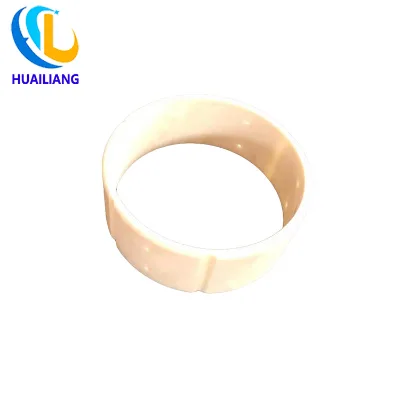
Compare 26 Self-Lubricating Wear-Resistant Nylon Bushing options from verified Chinese manufacturers. These components feature materials like PA6 and PTFE linings, suitable for printing, woven, and tobacco machinery applications with customizable dimensions and ISO certifications.
Key considerations
Products List


$0.20 - $2.00
MOQ: 800 Pieces



Comprehensive Sourcing Guide
Strategic Sourcing Guide for Self-Lubricating Wear-Resistant Nylon Bushings
Understanding Technical Specifications and Material Variants
When sourcing self-lubricating wear-resistant nylon bushings, the primary objective is to identify components that balance mechanical durability with low-friction performance. The market offers a diverse array of configurations, ranging from standard engineering plastics to specialized formulations designed for extreme environments. Buyers must first distinguish between the base polymer types. While the core keyword specifies nylon, the observed product landscape includes variants labeled as PA (Polyamide) and specific models such as TCB100, TCB101, TCB105, and TCB206. These model numbers often denote specific dimensional standards or internal lining configurations rather than generic descriptions.
A critical technical differentiator is the internal composition. High-performance units frequently feature a PTFE (Polytetrafluoroethylene) lining on the inside surface, which significantly reduces the coefficient of friction compared to solid nylon. This "inside PTFE" construction is essential for applications requiring continuous rotation or oscillation without external lubrication. Furthermore, the manufacturing process dictates the final mechanical properties. Data indicates that these components are produced via methods such as CNC machining, cold extrusion, and wrapping processes. Cold extrusion is particularly noted for enhancing grain structure and fatigue strength, while wrapping processes may be employed to create composite structures that combine the strength of a metal core with the self-lubricating properties of a polymer sleeve.
The physical dimensions and tolerances are equally vital. Sourcing guides must account for the fact that many suppliers offer "According to Drawing or Sample" specifications, allowing for custom geometries. However, standard offerings often adhere to recognized industry norms. For instance, specific sleeve and flange types may align with standards like DIN1494 or ISO3547, though buyers should verify if a specific lot adheres to these before finalizing orders. The color of the bushing can also serve as a quick visual indicator of material composition or additives; observed colors include Natural, White, Black, Green, and Blue. While color does not always guarantee a specific performance metric, it helps in inventory management and visual inspection of the final assembly.
Compliance, Certification, and Regulatory Standards
In the global B2B supply chain, verifying compliance is not merely a formality but a prerequisite for market access and liability protection. When evaluating potential suppliers for nylon bushings, buyers should prioritize those that demonstrate adherence to international quality management systems. The presence of ISO 9001:2015 certification is a strong indicator of a supplier's commitment to consistent quality control processes. Additionally, environmental compliance is increasingly critical. Many suppliers list RoHS (Restriction of Hazardous Substances) compliance, ensuring that the materials used do not contain restricted levels of lead, mercury, cadmium, or other hazardous substances.
Beyond general certifications, specific product attributes must be cross-referenced with regulatory requirements. For automotive applications, which are a significant segment for bushing procurement, the "Universal" attribute and compatibility with major brands such as Volvo, Audi, Toyota, BMW, and Benz suggest a high degree of standardization. However, buyers must not assume universal fitment without verifying specific part numbers against their own engineering drawings. The term "ISOOEM:Yes" found in some product listings implies that the manufacturer is capable of producing Original Equipment Manufacturer (OEM) specifications, but this should be confirmed through direct communication regarding the specific project requirements.
It is also important to note the origin of the products. A significant portion of the supply base originates from China, with specific manufacturing hubs noted in Guangzhou and Ningbo. While these regions are known for robust manufacturing capabilities, buyers must ensure that the "Made in China" origin does not conflict with any trade restrictions or specific sourcing policies of their organization. Furthermore, the "Customization" attribute is prevalent, meaning that while standard certifications apply to the base manufacturing process, custom orders may require re-verification of material safety data sheets (MSDS) and compliance documentation to ensure the custom additives or colors do not violate regulatory standards.
Cost Drivers and Pricing Structure Analysis
The pricing of self-lubricating nylon bushings is influenced by a complex interplay of factors, including material costs, manufacturing complexity, and order volume. The observed price range in the market spans from $0.01 to $220 per unit, a variance that reflects the vast difference between simple, mass-produced standard bushings and complex, custom-engineered components. The lower end of the price spectrum typically corresponds to standard sizes with minimal processing, often produced via high-volume extrusion or molding. Conversely, the higher price points are associated with custom designs requiring CNC machining, specific PTFE linings, or specialized packaging.
Minimum Order Quantity (MOQ) is a significant driver of unit cost. The market shows an MOQ range from 1 to 2000 units. For buyers with low-volume needs, the per-unit cost will be higher due to the setup costs associated with tooling and machine calibration. Suppliers offering an MOQ of 1 are likely catering to prototyping or maintenance, repair, and operations (MRO) markets, whereas an MOQ of 2000 suggests a focus on high-volume production runs where economies of scale drastically reduce the unit price. Buyers should be aware that "Customized" orders often carry a premium and may have a higher MOQ threshold to justify the tooling investment.
Packaging requirements also impact the final landed cost. Standard packaging might involve simple plastic cases or paper cartons, while more robust requirements such as wooden pallets, anti-rust paper, or specialized wooden cases add to the material and labor costs. The "Universal" nature of some products allows for bulk shipping efficiencies, whereas custom-sized bushings may require individual handling or specialized crating to prevent damage during transit. Additionally, the working temperature range of -200°C to 280°C indicates that these components are designed for extreme conditions, which may necessitate higher-grade raw materials and more rigorous quality control, thereby influencing the base price.
Typical Applications and Operational Environments
Self-lubricating nylon bushings are engineered for a wide spectrum of industrial applications where traditional lubrication is impractical or impossible. The observed usage categories include General Plastics, Engineering Plastics, and Specialty Plastics, indicating their versatility across different sectors. One of the primary application areas is in machinery that operates in harsh environments or requires maintenance-free operation. Specific industries identified include printing, weaving, tobacco processing, and gymnastic machinery. In these sectors, the bushings must withstand continuous vibration, dust, and potential exposure to chemicals without the need for frequent greasing.
The automotive industry represents another critical application domain. The compatibility with major car brands like Volvo, Audi, Toyota, BMW, and Benz suggests that these bushings are used in suspension systems, steering linkages, and engine mounts. The "Shock Absorber" and "Rear Position" attributes highlight their role in absorbing vibrations and maintaining structural integrity under dynamic loads. The "Good fatigue strength, load capacity, and impact strength" are essential characteristics for these applications, ensuring that the bushings do not fail under the repetitive stress cycles typical of vehicle operation.
Beyond automotive and heavy machinery, the "Universal" designation and the ability to be customized for specific drawings suggest use in a myriad of other mechanical assemblies. The "Thrust washer" and "Sleeve" types are particularly useful in applications involving axial loads, while "Flange" types provide additional support for radial loads. The working temperature range of -200°C to 280°C allows these components to function in cryogenic environments or high-heat processing units, making them suitable for specialized chemical processing or aerospace applications where temperature extremes are common. The "UV Resistant" attribute further extends their utility to outdoor applications where exposure to sunlight could degrade standard plastics.
Supplier Evaluation and Quality Assurance Protocols
Selecting the right supplier requires a rigorous evaluation process that goes beyond price comparisons. Buyers should prioritize suppliers that demonstrate a clear understanding of the specific technical requirements of their project. The availability of "CNC Lathe" and "CNC machining" capabilities is a strong indicator of a supplier's ability to produce high-precision components. When evaluating a potential partner, buyers should request samples that match the exact specifications of their application, paying close attention to the "Inside PTFE" lining quality and the overall dimensional accuracy.
Quality assurance should be a central component of the supplier selection criteria. The "Quality: Guaranteed" attribute is a common claim, but buyers must verify this through tangible evidence such as ISO 9001:2015 certification and a history of successful deliveries. It is advisable to conduct a factory audit or request detailed quality control reports that include test results for fatigue strength, load capacity, and impact resistance. The "Customization" aspect requires a supplier with a robust engineering team capable of interpreting drawings and samples to produce the final product without deviation.
Packaging and logistics are also indicators of a supplier's professionalism. The variety of packaging options, from "Plastic Case and Container" to "Wooden & Rubber Bushing" crates, suggests that suppliers are aware of the need to protect the product during transit. Buyers should ensure that the packaging method is suitable for the specific shipping conditions and that it prevents rust or damage, especially for components that may be exposed to moisture. The "Anti-Rust Paper" option is particularly relevant for metal-rubber composite bushings or those with metal cores.
Long-Term Procurement and Lifecycle Management
Sourcing self-lubricating nylon bushings is not a one-time transaction but a long-term partnership that requires ongoing management. Buyers should consider the lifecycle of the component, including its expected service life and the availability of replacement parts. The "Customized" nature of many orders means that finding a replacement from a different supplier later may be difficult, emphasizing the importance of establishing a reliable primary source. Buyers should also monitor the supply chain for potential disruptions, especially given that the origin is primarily China. Diversifying the supplier base or maintaining a strategic inventory of critical bushings can mitigate the risk of production stoppages.
Future-proofing the procurement strategy involves staying informed about material advancements and standard updates. As industries evolve, the standards for bushings, such as DIN1494 or ISO3547, may be revised. Buyers should maintain open communication with their suppliers to ensure that the components they receive remain compliant with the latest regulations. Additionally, the "Universal" aspect of some products offers flexibility, but as equipment ages or is upgraded, the need for specific customizations may arise. Establishing a relationship with a supplier that can adapt to these changing needs is crucial for long-term success.
Finally, buyers should consider the total cost of ownership, which includes not just the purchase price but also the cost of maintenance, downtime, and potential failures. The high fatigue strength and load capacity of these bushings contribute to a longer service life, reducing the frequency of replacements. However, this benefit is only realized if the bushings are installed correctly and maintained according to the manufacturer's guidelines. Regular inspections and monitoring of the bushing condition can help identify wear patterns early, allowing for proactive replacement before catastrophic failure occurs. By adopting a strategic approach to procurement, buyers can ensure a steady supply of high-quality, wear-resistant nylon bushings that meet the demanding requirements of modern industrial applications.
FAQs
What certifications do Self-Lubricating Wear-Resistant Nylon Bushing suppliers offer?
Suppliers often provide ISO 9001:2015 and RoHS certifications to ensure quality and environmental compliance. Some listings also indicate ISOOEM capabilities for original equipment manufacturing needs. Buyers should verify specific certification documents for custom orders to ensure regulatory adherence.
How are these bushings manufactured using different processing methods?
Manufacturing involves processes like CNC machining, cold extrusion, and wrapping to achieve specific mechanical properties. Cold extrusion enhances fatigue strength while wrapping creates composite structures. CNC machining allows for precise dimensions based on customer drawings or samples.
Which materials are used for the inside lining of these bushings?
High-performance units frequently feature a PTFE lining on the inside surface to reduce friction. Some models are made from PA or Nylon6 with natural, white, black, green, or blue colors. The internal composition is critical for applications requiring continuous rotation without external lubrication.
Can these bushings be customized for specific automotive applications?
Yes, customization is available for specific automotive brands like Volvo, Audi, Toyota, BMW, and Benz. Suppliers can produce parts according to drawings or samples with features like shock absorption or rear positioning. Universal fitment is not guaranteed without verifying specific part numbers against engineering requirements.
What is the typical price range and minimum order quantity for these bushings?
The price range spans from 0.01 to 220 USD depending on complexity and customization. Minimum order quantities vary from 1 unit for prototyping up to 2000 units for high-volume production. Customized orders often carry a premium and may require higher MOQs to justify tooling investments.
Where are these self lubricating wear resistant nylon bushings typically manufactured?
Products are primarily made in China with manufacturing hubs located in Guangzhou and Ningbo. The origin is explicitly stated as Made in China for most listings. Buyers should confirm specific factory locations to ensure they align with their sourcing policies and logistics requirements.