Source Self-Lubricating Mc Nylon Sheet for Gears, Bushings, and Wear Parts
Compare 30 listings for Self-Lubricating Mc Nylon Sheet featuring high strength, wear resistance, and custom dimensions. Buyers can evaluate tensile strength, thickness ranges, and OEM options from verified Chinese manufacturers.
Key considerations
Products List




Comprehensive Sourcing Guide
Strategic Sourcing Guide for Self-Lubricating MC Nylon Sheet Procurement
Understanding Material Properties and Technical Specifications
When sourcing self-lubricating MC (Melt Cast) Nylon sheets, buyers must first distinguish between the specific material grades and their corresponding mechanical behaviors. The market offers a variety of engineering plastic sheets, including PVC and general hard plastic variants, but MC Nylon is distinct due to its high-performance characteristics. The core value proposition of this material lies in its inherent self-lubricating nature, which reduces friction without the need for external grease, making it ideal for heavy-load applications.
Technical verification begins with the physical dimensions and mechanical strength. Available specifications indicate a thickness range that can extend from 1mm up to 100mm for standard offerings, with specialized engineering grades potentially reaching thicknesses between 6mm and 250mm. The standard sheet size often defaults to 1000mm by 2000mm, though the industry standard for MC Nylon heavily favors custom sizing based on specific drawing requirements or physical samples. Buyers should verify that the supplier can accommodate custom dimensions, as the "According to Drawing or Sample" specification is a critical capability for industrial applications.
Mechanical performance is equally critical. The tensile strength of these sheets varies significantly by grade. Data indicates ranges such as 5180MPa for certain engineering variants and 81130MPa for higher-strength formulations. This variance dictates the load-bearing capacity of the final component. Additionally, the contraction percentage is a vital factor for dimensional stability during manufacturing; observed values suggest a contraction rate of less than 0.4%, which is essential for maintaining tight tolerances in machined parts. Water absorption is another key parameter, typically observed between 1.5% and 3.5%. This hygroscopic nature means the material will absorb moisture from the environment, potentially affecting dimensions and mechanical properties over time, a factor that must be accounted for in design calculations.
Compliance, Certification, and Environmental Standards
In the global B2B market, compliance is not merely a formality but a prerequisite for market access and liability protection. When evaluating self-lubricating MC Nylon sheets, buyers must scrutinize the product standards and environmental certifications. The supplied data confirms that certain products adhere to RoHS (Restriction of Hazardous Substances) standards, which is a baseline requirement for many electronics and automotive supply chains. However, other listings indicate that standards can be "Customized" or based on "Non standard size drawings and samples," suggesting that compliance is often negotiated per order rather than being a universal fixed attribute.
Buyers should explicitly request documentation proving RoHS compliance for every batch, especially if the end application involves consumer goods or export to the European Union. The presence of an "Eco-Friendly" feature in some product descriptions warrants further investigation into what specific environmental claims are being made. Is the material recyclable? Does the manufacturing process minimize carbon emissions? Without specific third-party audit reports, these claims should be treated as observations rather than guaranteed facts.
Furthermore, the origin of the material plays a role in compliance. Many suppliers list their origin as Guangzhou, China, or generally as China. While this is a major manufacturing hub, it necessitates rigorous due diligence regarding the specific factory's quality management systems. Buyers should verify if the supplier holds ISO certifications or other relevant industry-specific accreditations that are not explicitly listed in the general product summary. The absence of a specific certification in a listing does not mean the product is non-compliant, but it does mean the buyer must initiate a verification process to ensure the material meets the required regulatory framework for their specific industry.
Cost Drivers and Pricing Variables
The pricing structure for MC Nylon sheets is influenced by a complex interplay of material costs, processing requirements, and order logistics. The observed price range in the market spans from $1 to $500 USD, but this wide variance is misleading without context. A $1 item likely represents a small sample or a very thin, low-volume piece, whereas the $500 range could encompass a large, custom-machined block or a high-volume palletized order.
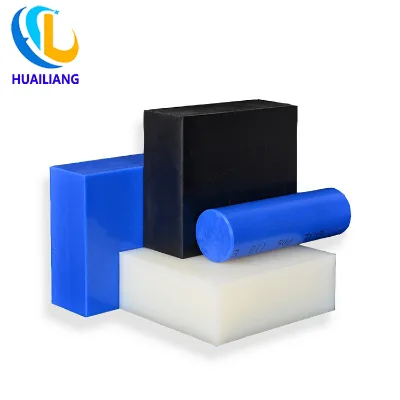
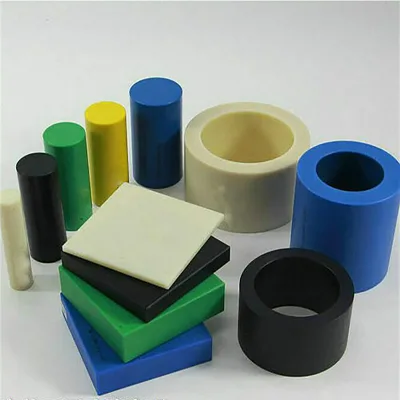
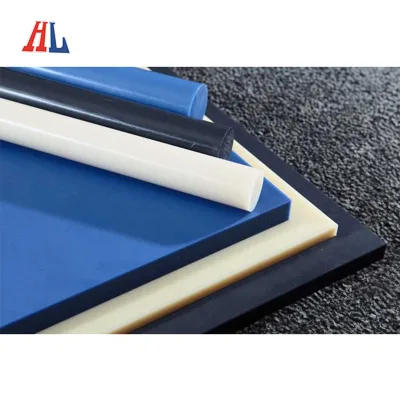
The primary cost drivers include the thickness of the sheet, the color, and the degree of customization. While standard colors like Natural, White, Black, Green, and Blue are common, specialized colors such as Orange or specific custom shades may incur a premium. The "Customized" attribute for color and size is a significant cost factor; producing a non-standard size requires a dedicated mold or cutting process, which increases the unit price. Additionally, the density of the material, observed at 1.15g/cm³ for certain grades, affects the weight-based shipping costs, which can be substantial for thick sheets.
Minimum Order Quantities (MOQ) also heavily influence the effective unit cost. The observed MOQ range is 1 to 200 units. Suppliers accepting small orders (MOQ of 1) often charge a higher premium per unit to cover setup costs. Conversely, bulk orders allow for economies of scale. The "Small Order: Accepted" attribute is beneficial for prototyping but may not be cost-effective for mass production. Buyers must calculate the total landed cost, including the FOB port fees (often Shanghai) and inland transportation, to determine the true cost per square meter or per kilogram.
Typical Applications and Performance Advantages
The self-lubricating property of MC Nylon makes it a preferred choice for applications where maintenance-free operation is critical. The material is characterized by excellent wear resistance, high strength, and toughness. These attributes allow it to replace metal components in scenarios where corrosion resistance and weight reduction are priorities. Common applications include gears, bearings, bushings, and wear strips in conveyor systems, food processing machinery, and textile equipment.
The "Self-Lubricating" characteristic is particularly valuable in environments where lubrication is difficult to apply or where oil contamination is unacceptable, such as in food and beverage processing. The material's ability to operate without external lubrication reduces the risk of product contamination and simplifies maintenance schedules. Furthermore, the "High Performance" advantage suggests that these sheets can withstand high loads and abrasive conditions better than standard thermoplastics.
The machining service availability is another critical factor for application suitability. With "Machining Service: Yes" and "Post-Processing: Support," suppliers can often provide finished parts rather than just raw sheets. This is achieved through CNC Lathe and other machining capabilities. The "Surface" finish is typically described as "Flat," which is essential for sliding surfaces. However, buyers should verify if the supplier can achieve specific surface roughness requirements, as the standard "Flat" description may not be sufficient for high-precision bearing applications.
Supplier Evaluation and Operational Capabilities
Selecting the right supplier requires a deep dive into their operational capabilities beyond the basic product listing. The lead time is a critical operational metric, with some suppliers offering delivery "Within 7 Working Days." This rapid turnaround is advantageous for urgent projects but may come at a cost or be limited to standard sizes. For custom orders, the lead time may extend significantly, and buyers must clarify the timeline for tooling, production, and shipping.
The packaging method is often overlooked but is vital for preventing damage during transit. Observed packaging options include "Packing in Wooden Pallet," "Packing in Paper Carton and Wooden Pallet," and "Woven Bag, Carton, Pallet." For heavy MC Nylon sheets, wooden pallets are essential to prevent warping or cracking. Buyers should confirm that the packaging is robust enough to handle the specific weight and dimensions of their order, especially for international shipping where the FOB port is often Shanghai.
Tooling capabilities are another differentiator. The presence of "CNC Lathe" indicates that the supplier has in-house machining capabilities, which reduces the need for third-party processing. This vertical integration can improve quality control and reduce lead times. However, buyers should verify the capacity of these machines to handle the specific thickness and size of their required sheets. The "Sample: Availble" attribute is a strong indicator of a supplier's willingness to engage in the pre-qualification process, allowing buyers to test the material before committing to a large order.
Quality Control and Long-Term Procurement Strategy
Establishing a robust quality control (QC) protocol is essential for long-term success with MC Nylon procurement. Given the variability in tensile strength and water absorption, buyers should implement incoming inspection protocols that verify these properties against the agreed specifications. The "Uniform" thickness specification is a key quality metric; buyers must ensure that the sheets do not have significant thickness variations that could affect machining or assembly.
For long-term procurement, establishing a relationship with a supplier who offers "OEM Color Size" customization is beneficial. This flexibility allows the buyer to adapt to changing design requirements without switching suppliers. The "Customized" standard attribute suggests that suppliers are willing to tailor their production to specific drawing requirements, which is crucial for specialized industrial applications.
Buyers should also consider the "Characteristic-1" through "Characteristic-3" list (Excellent Wear Resistance, High Strength and Toughness, Self-Lubricating) as a baseline for performance. However, these should be treated as observed attributes rather than guaranteed claims for every product. Regular audits and sample testing are necessary to ensure that the supplier maintains these standards over time. The "Fob Port: Shanghai" location provides a logistical advantage for international buyers, but it also requires coordination with freight forwarders to manage the shipping timeline effectively.
Comparative Analysis of Product Attributes
To facilitate decision-making, the following table summarizes the key attributes observed in the market for self-lubricating MC Nylon sheets, highlighting the variations that buyers must navigate.
| Attribute Category | Observed Range / Options | Critical Verification Point |
|---|---|---|
| Material Type | MC Nylon, Hard Plastic Sheet, Engineering Plastic Sheet | Confirm specific grade (MC vs. others) for self-lubrication. |
| Thickness | 1-100mm, 6-250mm, Uniform | Verify thickness tolerance and uniformity for machining. |
| Tensile Strength | 51 | Match strength to load requirements of the application. |
| Color Options | Natural, White, Black, Green, Blue, Orange, Custom | Confirm availability of specific colors for identification or branding. |
| Standard Compliance | RoHS, Customized, Non-standard drawings | Request specific certification documents for regulatory compliance. |
| Packaging | Wooden Pallet, Carton, Woven Bag, Custom | Ensure packaging prevents damage during transit and storage. |
| Lead Time | Within 7 Working Days (Standard), Custom for others | Clarify lead times for custom sizes and colors. |
| Origin | Guangzhou, China, General China | Verify factory location for logistics and audit purposes. |
| Machining | CNC Lathe, Post-Processing Support | Confirm in-house capabilities for finished parts vs. raw sheets. |
This comparative view underscores the importance of detailed specification matching. The diversity in thickness, strength, and customization options means that a "one-size-fits-all" approach is ineffective. Buyers must align their specific application requirements with the precise capabilities of the supplier, ensuring that the selected product meets the rigorous demands of industrial performance while adhering to all relevant safety and environmental standards. By focusing on these verified attributes and maintaining a disciplined approach to supplier evaluation, procurement teams can secure a reliable supply of high-quality self-lubricating MC Nylon sheets.
FAQs
What are the standard thickness options for Self-Lubricating Mc Nylon Sheet?
Standard thickness ranges from 1mm to 100mm, while specialized engineering grades can reach up to 250mm. Custom sizes are available according to specific drawings or samples to meet unique application requirements.
Can I order Self-Lubricating Mc Nylon Sheet with custom colors?
Yes, suppliers accept OEM requests for custom colors including natural, white, black, green, blue, and yellow. Specific color availability may vary by manufacturer, but customization is a standard service for this material.
How long does it take to receive Self-Lubricating Mc Nylon Sheet orders?
Lead times can be within 7 working days for standard items, though custom orders may take longer. The exact timeline depends on the complexity of the customization and the current production capacity of the factory.
Which certifications are available for Self-Lubricating Mc Nylon Sheet products?
Some products adhere to RoHS standards, while others offer customized standards based on specific drawing requirements. Buyers should verify compliance documentation for each batch to ensure it meets their regulatory needs.
What is the minimum order quantity for Self-Lubricating Mc Nylon Sheet?
Minimum order quantities range from 1 unit for samples to 200 units for bulk orders. Small orders are accepted, making it feasible for prototyping, though bulk purchases often yield better unit pricing.
How does the Self-Lubricating Mc Nylon Sheet perform under load?
The material offers excellent wear resistance and high strength with tensile strength ranging from 51 to 130MPa. Its self-lubricating nature reduces friction, making it ideal for heavy-load applications without external grease.
Can I get samples of Self-Lubricating Mc Nylon Sheet before buying?
Samples are available for evaluation to verify material properties and dimensions before committing to a large order. This allows buyers to test the material's performance in their specific application environment.