Source Self-Lubricating Heavy Duty Rod Ends for Hydraulic Cylinders
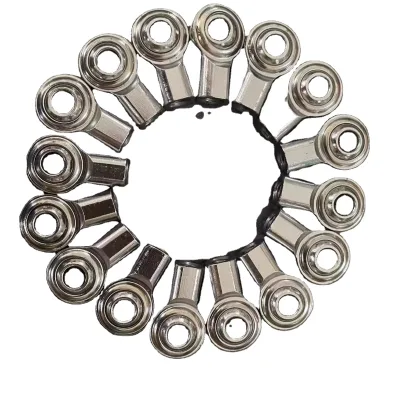
Find and compare 30 Self-Lubricating Heavy Duty Rod Ends designed for engineering hydraulic cylinders and automation equipment. These spherical plain bearings feature single-row rolling elements and are available in iron, stainless steel, and bearing steel materials with OEM customization options.
Key considerations
Products List


Comprehensive Sourcing Guide
Self-Lubricating Heavy Duty Rod Ends Sourcing Guide
Selecting the right self-lubricating heavy-duty rod ends requires a careful balance of mechanical performance, material durability, and supply chain reliability. These components are critical in engineering hydraulic cylinders and automation equipment, where they must withstand significant radial loads while maintaining smooth articulation. Buyers must navigate a market that offers various configurations, from single-slit outer rings to whole outer ring designs, each suited for different operational stresses. Understanding the specific structural requirements of your machinery is the first step in ensuring long-term operational efficiency and minimizing downtime.
The procurement process involves verifying technical specifications such as bearing precision, thread types, and lubrication methods against your application’s demands. While many suppliers offer OEM customization and support factory inspections, the quality of the final product depends heavily on the raw materials used, such as bearing steel or stainless steel, and the manufacturing standards applied. This guide provides a structured approach to evaluating suppliers, interpreting technical data, and establishing commercial terms that protect your investment in these essential mechanical components.
Product Scope and Observed Listing Signals
The market for rod end joint bearings includes a diverse range of products designed for replace and repair purposes, with a strong emphasis on heavy-duty applications. Observed listings indicate a wide variety of structural options, including single-row rolling elements and radial spherical plain bearings that cater to specific load directions. Buyers should note that products are often categorized by their outer structure, such as the outer ring of a single-slit design or a whole outer ring configuration, which directly impacts the bearing's ability to handle misalignment and shock loads.
Listing signals also reveal significant variation in material composition and finishing. While some products are constructed from iron or stainless steel, others utilize specialized bearing steel to enhance durability and fatigue resistance. The presence of self-lubricating features is a key differentiator, with some bearings designed to operate without additional lubricant, while others are non-self-lubricating and require regular maintenance. Additionally, the availability of both male and female threads, as well as nozzle options with or without, allows for greater flexibility in integrating these components into existing hydraulic or mechanical systems.
Technical Specifications to Verify
When evaluating rod ends, buyers must closely examine the precision ratings and dimensional tolerances to ensure compatibility with their equipment. Specifications such as ABEC1, ABEC4, and ABEC6 ratings, along with bearing precision classes like P0, P6, P5, and P4, indicate the level of manufacturing accuracy and rotational smoothness. It is essential to verify the thickness of the bearing, which can range from 5mm to 20mm depending on the load requirements, and to confirm the standard tolerances, such as g6, h6, or h7, which govern the fit between the bearing and its housing.
The structural design and material properties are equally critical for heavy-duty applications. Buyers should verify whether the sliding contact surfaces are composed of steel paired with PTFE fabric, which is common in self-lubricating models to reduce friction and wear. Additionally, the thread type, whether male or female, and the specific model series, such as GE, CS19, or various GIR and JF series, must match the existing hardware. Confirming the load direction, particularly for radial spherical plain bearings, ensures that the component can handle the expected forces without premature failure.
Compliance and Safety Documentation
Compliance with international quality management standards is a primary indicator of a supplier’s commitment to consistent product quality. Many manufacturers hold ISO9001:2008 and ISO14001:2004 certifications, which demonstrate adherence to rigorous quality control processes and environmental management practices. Buyers should request copies of these certificates to verify their validity and ensure that the supplier’s production facilities meet the necessary regulatory requirements for manufacturing mechanical components.
In addition to quality certifications, buyers should inquire about support for factory inspections and sample provision. The ability to conduct on-site audits allows procurement teams to verify production capabilities, quality control procedures, and working conditions directly. Furthermore, the availability of samples enables buyers to test the physical properties of the rod ends, such as their self-lubricating performance and load-bearing capacity, before committing to large-scale orders. This due diligence helps mitigate the risk of receiving substandard products that could compromise the integrity of the final assembly.
Cost Drivers and Commercial Terms
The cost of self-lubricating heavy-duty rod ends is influenced by several factors, including material quality, precision rating, and customization requirements. Products made from bearing steel or stainless steel typically command higher prices due to their superior durability and corrosion resistance. Additionally, higher precision ratings and specialized thread configurations can increase manufacturing complexity and cost. Buyers should also consider the impact of packaging, which ranges from simple single packing to more robust plastic bag, box, carton, and pallet combinations, as this affects shipping costs and product protection.
Commercial terms such as minimum order quantity (MOQ), lead times, and after-sales service policies play a significant role in the total cost of ownership. Observed MOQs can vary widely, from as low as one unit to 1000 units, allowing for flexibility in procurement strategies. Lead times, often cited around 20 days for standard orders, should be factored into production planning, especially for urgent replacement needs. Buyers should also evaluate the supplier’s after-sales service commitments, such as the promise to resolve problems immediately, and the availability of OEM and ODM customization services, which can add value but may impact pricing and delivery schedules.
Supplier Qualification and Quality Control
Supplier qualification begins with verifying the origin and manufacturing capabilities of the provider. Many rod end manufacturers are located in industrial hubs such as Zhejiang, Shandong, and Changzhou in China, regions known for their expertise in bearing production. Buyers should assess the supplier’s experience in serving applicable industries, such as manufacturing factories and machinery repair shops, to ensure they understand the specific demands of heavy-duty applications. A supplier’s ability to provide detailed product specifications and technical support is a strong indicator of their professionalism and reliability.
Quality control measures should be a central part of the supplier evaluation process. Buyers should inquire about the supplier’s internal testing procedures, including checks for dimensional accuracy, surface finish, and lubrication effectiveness. The availability of support for factory inspections is a positive sign, as it allows for direct verification of quality control practices. Additionally, buyers should confirm the supplier’s commitment to providing high-quality products, such as those with a one-year shelf life and features like long life and self-lubricating properties, which contribute to reduced maintenance costs and improved operational efficiency.
Long-Term Procurement Checks
Establishing a long-term procurement strategy for rod ends requires ongoing monitoring of product performance and supplier reliability. Buyers should track the lifespan of the components in service, paying attention to any issues related to wear, lubrication failure, or structural integrity. Regular feedback from maintenance teams can provide valuable insights into the real-world performance of the bearings, helping to identify potential quality issues early and allowing for timely adjustments to the procurement process.
Continuous engagement with suppliers is also essential for maintaining a stable supply chain. Buyers should maintain open lines of communication to discuss any changes in product specifications, pricing, or delivery schedules. Regular reviews of supplier performance, including adherence to quality standards and responsiveness to issues, can help identify potential risks and opportunities for improvement. By fostering strong relationships with qualified suppliers, buyers can ensure a consistent supply of high-quality self-lubricating heavy-duty rod ends that meet their evolving operational needs.
FAQs
What materials are used for Self-Lubricating Heavy Duty Rod Ends?
These bearings are typically manufactured from iron, stainless steel, or bearing steel to ensure durability under heavy loads. The sliding contact surfaces often combine steel with PTFE fabric to provide the necessary self-lubricating properties. This material selection supports long life and reliable performance in engineering hydraulic cylinder applications without requiring external grease.
Can these rod ends be customized for specific applications?
Yes, OEM and ODM customization is available for these components. Buyers can request specific thread types, such as male or female options, and outer structures like single-slit or whole outer rings. The manufacturer supports factory inspections and offers precision ratings including ABEC1, ABEC4, and ABEC6 to meet distinct engineering requirements.
What is the typical lead time for ordering these bearings?
The standard delivery time is approximately 20 days for production and shipment. This timeline applies to standard orders, though customized specifications may require additional processing time. Buyers can request samples to verify quality before placing bulk orders, ensuring the product meets their specific automation or machinery repair shop needs.
Which certifications do these rod end bearings hold?
The products are certified under ISO9001:2008 and ISO14001:2004 standards. These certifications indicate adherence to quality management and environmental management systems. The bearings are designed for applications in manufacturing factories and machinery repair shops, ensuring consistent quality and reliability for heavy-duty industrial use cases.
How are these bearings packaged for shipping?
Packaging options include single packing, plastic bag plus box, carton, and pallet configurations. Standard packaging is used to protect the bearings during transit. The choice of packaging depends on the order quantity and specific shipping requirements, ensuring the components arrive in good condition for immediate installation in hydraulic cylinders or automation equipment.
What load directions are supported by these spherical plain bearings?
These bearings are designed to support radial loads as spherical plain bearings. They are suitable for engineering hydraulic cylinders and automation equipment where radial movement is required. The self-lubricating feature ensures smooth operation under radial stress, reducing maintenance needs and extending the service life of the connected machinery components.