Source Self-Lubricating Wear Resisting Skateboard for Milling, Sliding, Downhill
Find 30 listings for Self-Lubricating Wear Resisting Skateboard designed for road milling machines, sliding, and downhill use. Buyers can compare deck materials like maple and PP, truck types, and customization options from verified suppliers.
Key considerations
Products List


Wood Skate Board Free Price Buy Skate Longboard Skateboard for Sale Skateboards
$20.00 - $25.00
MOQ: 100 Pieces


Four-Wheeled Double Rocker Adult Men and Women Beginners Standard Skateboards
$9.60 - $11.00
MOQ: 40 Pieces


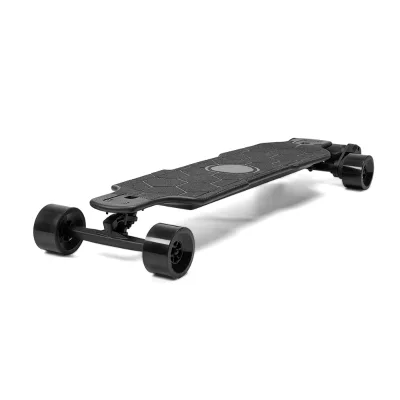
Factory Direct Sales Customized Carbon Fiber Skateboard with Good Quality
$1500.00 - $2000.00
MOQ: 1 Minimum


Comprehensive Sourcing Guide
Strategic Sourcing Guide for Wear-Resistant Skateboard Components
Understanding the Product Landscape and Technical Definitions
The search for a "self-lubricating wear-resistant skateboard" in a B2B procurement context requires a precise understanding of the terminology and the actual product attributes available in the current market. The core keyword suggests a focus on durability and reduced friction, yet the observed product data reveals a complex landscape where terminology often overlaps with general skateboarding components. The supplied facts indicate that the primary category for these items is "Chassis Basic Parts," specifically under the designation of "Chain Wear-Resistant Skateboard." This classification is critical for buyers, as it distinguishes the product from standard recreational skateboards by highlighting a focus on mechanical resilience, likely intended for high-friction environments or heavy-duty usage scenarios.
However, a direct contradiction exists in the provided data regarding the primary application. While the "Chain Wear-Resistant" descriptor and the "Suitable Models" field point toward "Road Milling Machine" applications, other attributes such as "Usage: Toy," "Kind: Skateboard," and "Wheel Kind: Downhill" suggest a recreational or sport-specific product. This duality implies that the "wear-resistant" attribute may refer to the durability of the skateboard's mechanical components (such as the deck or trucks) rather than a literal self-lubricating mechanism found in industrial machinery. Buyers must verify whether the "self-lubricating" claim refers to the wheel bearings, the axle assembly, or a specific coating on the deck material. The observed materials include "Nine Layers Maple," "Seven Layers Maple," "PP" (Polypropylene), and general "Wood," indicating that the wear resistance is likely derived from the structural integrity of the composite layers rather than a chemical lubrication system.
The term "self-lubricating" in the context of these specific listings may be a marketing interpretation of the "wear-resistant" nature of the materials used, such as the specific maple grades or the "Downhill" wheel configuration designed for high-speed stability. The "Chain Wear-Resistant" label is particularly notable, as it appears alongside "Road Milling Machine" specifications. This suggests that the product line may be a hybrid or that the supplier uses industrial-grade terminology for their skateboard components to emphasize longevity. Procurement teams must therefore treat the "self-lubricating" attribute as an observation of the product's performance characteristics rather than a guaranteed technical specification unless explicitly detailed in the supplier's engineering data sheets. The absence of explicit lubrication standards in the provided facts necessitates a rigorous verification process to ensure the product meets the specific friction-reduction requirements of the buyer's application.
Technical Specifications and Material Composition Analysis
When evaluating the technical specifications of wear-resistant skateboards, the material composition of the deck is the primary determinant of durability and performance. The supplied data highlights a clear distinction between different deck materials, ranging from "Nine Layers Maple" to "Seven Layers Maple," and in some instances, "PP" or generic "Wood." The "Nine Layers Maple" and "Seven Layers Maple" options suggest a focus on high-density construction, which is essential for wear resistance. The "Maple" attribute is further qualified by origin, with "Northeast" and "Canadian Maple" listed. Canadian maple is generally recognized in the industry for its superior grain density and shock absorption, which directly correlates to the "wear-resistant" claim. Buyers should prioritize suppliers who can substantiate the origin of the maple, as the grain structure significantly impacts the lifespan of the deck under stress.
The structural dimensions provided in the data offer further insight into the product's intended use. Specifications such as "1172720," "852145," and "383628" indicate a wide variance in product sizing, likely corresponding to different models like "SG-SK4109," "SG-SK3108," and "SG-SK4695." The "Standard" field lists "1172720" and "852145," which may refer to the packaging dimensions or the physical footprint of the assembled unit. The "Size" attribute explicitly mentions "31*8inch," a standard dimension for longboards or cruisers, which aligns with the "Downhill" and "Sliding" wheel kinds observed. The "Board Category" is listed as "Flat-Plate," suggesting a traditional concave or flat design rather than a specialized shape.
The wheel configuration is another critical technical factor. The data specifies "Wheel Kind" as both "Downhill" and "Sliding." Downhill wheels are typically larger and harder, designed for speed and stability, while sliding wheels are often softer and shaped for controlled drifts. The presence of "Indy Trucks" in the specifications indicates a specific brand of truck hardware, known for its durability and precision. The "Griptape" and "Griotape" attributes, listed as "80s" and "OS780," refer to the sandpaper-like surface on the deck. The "OS780" designation likely refers to a specific grit or brand, which is crucial for traction and wear resistance. Buyers must verify that the griptape material is compatible with the intended riding style, as high-wear environments require a grip that does not degrade quickly under foot friction.
The "Weight" attribute of "4.8kg" for a specific model provides a benchmark for the overall mass of the unit. This weight is significant for logistics and handling, particularly when calculating shipping costs for bulk orders. The "Board Material" being listed as "Wood" or "PP" in different entries suggests that the product line includes both traditional wooden decks and potentially plastic or composite alternatives. The "PP" material, being a thermoplastic, offers different wear characteristics compared to maple, potentially providing better resistance to moisture and impact, though it may lack the traditional flex and feel of wood.
Compliance, Certification, and Regulatory Standards
Navigating the compliance landscape for skateboard procurement requires a careful review of the certifications and standards listed in the product data. The only high-confidence certification explicitly mentioned in the supplied facts is "CE." This certification indicates that the product meets the health, safety, and environmental protection standards for products sold within the European Economic Area. For buyers targeting the European market, the presence of the CE mark is a mandatory requirement. However, the data does not provide details on the specific directive or standard under which the CE certification was granted (e.g., EN 14610 for skateboards). Buyers must request the specific test reports or the declaration of conformity to ensure the product complies with the relevant safety regulations for the intended market.
The "Standard" field in the data lists "Milling Machine Accessories" and numerical dimensions like "1172720." This creates a potential compliance ambiguity. If the product is marketed as a "Road Milling Machine" accessory, it may need to adhere to industrial machinery safety standards rather than consumer toy standards. Conversely, the "Usage: Toy" and "Age: All Ages" attributes suggest compliance with consumer product safety regulations, such as those enforced by the Consumer Product Safety Commission (CPSC) in the United States or similar bodies in other regions. The "Standard" value "1172720" appears to be a dimensional specification rather than a recognized safety standard code (like ISO or ASTM). Buyers should not assume that the numerical values in the "Standard" field represent a safety certification; instead, they should treat them as product dimensions and verify the actual safety standards applicable to the product's classification.
The "Customization: Available" and "Customized: Customized" attributes indicate that the supplier offers tailored solutions. This flexibility can be a double-edged sword regarding compliance. Customized products may require re-certification if the modifications alter the product's safety profile. For instance, changing the deck material from maple to PP or altering the truck configuration could impact the product's stability and safety rating. Buyers must ensure that any customized version of the product retains the original CE certification or obtains a new one if the modification is significant. The "Logo: Custom Logo" attribute further highlights the potential for branding changes, which must be done without compromising the structural integrity or safety markings of the product.
Cost Drivers and Pricing Structure Analysis
The pricing structure for wear-resistant skateboards is influenced by a complex interplay of material costs, customization levels, and order volumes. The observed price range in the data is extremely broad, spanning from $0.02 to $2000 USD. This wide variance suggests that the "product" encompasses a spectrum of items, from individual components (such as a single truck or a piece of griptape) to fully assembled, high-end custom skateboards. The lower end of the range, $0.02, likely corresponds to small accessories or bulk raw materials, while the upper end, $2000, may represent a fully customized, high-specification unit or a specialized industrial application.
The Minimum Order Quantity (MOQ) is a significant cost driver. The observed MOQ range is 1 to 3000 units, with specific listings showing MOQs of "200PCS" and "250set." These thresholds indicate that the supplier operates on a hybrid model, catering to both small-scale buyers and large-volume distributors. For buyers seeking to minimize unit costs, adhering to the higher MOQs (e.g., 200 or 250 units) is essential. The "Package" attributes, such as "6PCS/CTN" and "Shrink Wrapped," also impact the cost structure. Bulk packaging reduces shipping costs per unit, but the "Carton" packing for some items may require additional handling or palletization for larger orders.
Customization is another major factor in cost determination. The "Customization: Available" and "Customize: Yes" attributes suggest that buyers can request specific modifications, such as custom logos, deck materials, or dimensions. However, customization typically incurs additional costs, including setup fees for tooling, higher material costs for non-standard items (like "Canadian Maple" vs. generic "Wood"), and increased labor for assembly. The "Service: OEM" attribute confirms that the supplier offers Original Equipment Manufacturing services, which often come with a premium compared to off-the-shelf products. Buyers should anticipate that the unit price will increase as the level of customization rises, particularly if the request involves changing the core material from "PP" to "Nine Layers Maple" or altering the "Wheel Kind."
The "Brand: Anjikeda" and "prod_model" variations (e.g., "SG-SK4109," "skateboard-012") also influence pricing. Established models with consistent production runs may benefit from economies of scale, resulting in lower unit costs. Conversely, niche models or those with specific "Road Milling Machine" specifications may command higher prices due to lower production volumes and specialized manufacturing requirements. Buyers should analyze the total cost of ownership, including shipping, customs duties, and potential rework costs for non-compliant customized items, rather than focusing solely on the base unit price.
Typical Applications and Market Segmentation
The application of wear-resistant skateboards varies significantly based on the product specifications and the intended user profile. The data presents a dichotomy between industrial and recreational uses. On one hand, the "Suitable Models: Road Milling Machine" and "Used: Road Milling Machine" attributes suggest that these products are designed for industrial environments. In this context, the "wear-resistant" feature likely refers to the durability of the skateboard's components when used as a transport or support tool in a milling operation, or perhaps the product is a specialized component for the machine itself. The "Chain Wear-Resistant" descriptor reinforces this industrial interpretation, implying that the product is built to withstand the harsh conditions of a milling site, such as dust, debris, and heavy loads.
On the other hand, the "Usage: Toy," "Kind: Skateboard," "User: Adult," and "Age: All Ages" attributes point to a recreational market. The "Wheel Kind: Downhill" and "Sliding" specifications are typical of sport skateboarding, where riders seek high performance and durability for extreme sports. The "Board Material: Nine Layers Maple" and "Seven Layers Maple" are standard for high-performance recreational skateboards, offering the necessary flex and strength for tricks and high-speed riding. The "Griptape: 80s" and "Griotape: OS780" further support the recreational application, as these are specific types of sandpaper used for traction in skateboarding.
This dual nature requires buyers to clearly define their target market. If the procurement is for an industrial setting, the "Road Milling Machine" specifications take precedence, and the product should be evaluated for its ability to function in a heavy-duty environment. If the procurement is for retail or sporting goods, the "Toy" and "Skateboard" attributes are more relevant, and the focus should be on the quality of the maple, the performance of the wheels, and the overall design. The "Customization: Available" attribute allows suppliers to bridge this gap, potentially creating a product that meets both industrial durability standards and recreational performance requirements. Buyers must ensure that the product they select aligns with their specific use case to avoid purchasing a product that is either over-engineered for a toy application or under-engineered for an industrial task.
Supplier Evaluation and Quality Control Protocols
Evaluating suppliers for wear-resistant skateboards requires a rigorous assessment of their manufacturing capabilities, quality control processes, and adherence to the provided specifications. The "Brand: Anjikeda" and "prod_origin: China" indicate that the primary source of these products is China, a major manufacturing hub for skateboarding equipment. Buyers should verify the supplier's production capacity, particularly given the wide MOQ range of 1 to 3000 units. A supplier capable of handling both small and large orders demonstrates flexibility and scalability, which is crucial for managing inventory and meeting demand fluctuations.
Quality control is paramount, especially given the "wear-resistant" claims. Buyers should request detailed quality assurance reports that cover the material testing of the "Nine Layers Maple" and "Seven Layers Maple" decks. The "Maple: Northeast" and "Maple: Canadian Maple" attributes suggest that the supplier sources specific grades of wood, which should be verified through third-party testing to ensure the grain density and structural integrity meet the wear-resistant requirements. The "Weight: 4.8kg" specification should be checked for consistency across batches to ensure that the product meets the stated dimensions and material density.
The "Customization" aspect introduces additional quality control challenges. Buyers must establish clear specifications for any custom orders, including the "Custom Logo" and "Customized" attributes. The supplier should have a robust process for managing these customizations to prevent errors in branding or material selection. The "Service: OEM" attribute suggests that the supplier is experienced in handling custom orders, but buyers should still verify their track record and request samples of previous custom work.
The "Package: Shrink Wrapped" and "Package: 6PCS/CTN" attributes highlight the importance of packaging quality. Proper packaging is essential to prevent damage during transit, especially for products with delicate components like trucks and wheels. Buyers should inspect the packaging for durability and ensure that the "Carton" packing is sufficient to protect the product during shipping. The "Standard: Milling Machine Accessories" and "Standard: 1172720" fields should be cross-referenced with the actual product dimensions to ensure accuracy.
Long-Term Procurement Considerations and Strategic Sourcing
Long-term procurement of wear-resistant skateboards involves more than just securing a single order; it requires building a sustainable supply chain that can adapt to changing market demands and technological advancements. The "Customization: Available" and "Customized: Customized" attributes suggest that the supplier is open to long-term partnerships and product evolution. Buyers should leverage this flexibility to develop a product line that evolves with market trends, such as the shift towards more sustainable materials or the introduction of new wheel technologies.
The "MOQ: 200PCS" and "MOQ: 250set" thresholds indicate that the supplier expects a certain level of commitment from buyers. For long-term contracts, buyers should negotiate volume discounts and flexible MOQ terms to accommodate fluctuations in demand. The "Price: 0.02-2000" range suggests that the supplier offers a wide variety of products, allowing buyers to diversify their portfolio and mitigate risks associated with single-product dependency.
The "CE" certification is a critical factor for long-term market access, particularly in Europe. Buyers should ensure that the supplier maintains this certification and keeps it up to date with any regulatory changes. The "prod_origin: China" attribute highlights the importance of managing logistics and supply chain risks, such as geopolitical tensions or shipping delays. Buyers should develop contingency plans, such as sourcing from multiple suppliers or maintaining safety stock, to ensure continuity of supply.
Finally, the "Usage: Toy" and "Used: Road Milling Machine" duality suggests that the product line has potential for expansion into new markets. Buyers should monitor industry trends and explore opportunities to position the product in emerging sectors, such as urban mobility or industrial safety equipment. By maintaining a strategic approach to procurement, buyers can ensure that they remain competitive and responsive to the evolving needs of their customers.
FAQs
What certifications do the wear-resistant skateboards have?
The products carry CE certification for safety compliance. This indicates adherence to European health and environmental standards, though specific directive details require supplier verification.
Which deck materials are available for these skateboards?
Available materials include nine-layer maple, seven-layer maple, and PP plastic. Canadian and Northeast maple options exist, offering varying levels of durability and shock absorption for different riding styles.
Can buyers customize the logo and packaging for orders?
Yes, customization is available for logos and packaging configurations. Buyers can request custom logos, shrink-wrapped options, or carton packing, subject to specific minimum order quantity requirements.
What is the minimum order quantity for these items?
Minimum order quantities range from one unit to three thousand units depending on the model. Specific listings show thresholds of 200 pieces or 250 sets for certain skateboard configurations.
How are the skateboard wheels classified for different uses?
Wheels are classified as Downhill or Sliding types to suit specific riding needs. Downhill wheels offer stability for speed, while sliding wheels are designed for controlled drifts and maneuvers.
Where are these wear-resistant skateboards manufactured?
The products originate from China as indicated in the product specifications. This origin applies to the various models listed, including those with specific milling machine accessory standards.
What are the standard dimensions for the skateboard decks?
Dimensions vary by model, with sizes like 31 by 8 inches or 106 by 26 centimeters available. Other specifications include 117 by 27 by 20 units, reflecting diverse design requirements.