Source Self-Priming Electric Water Pump for Irrigation, Fire Fighting, and Drainage
Explore 30 listings of self-priming electric water pump options featuring horizontal shafts, magnetic drives, and capacities up to 400 L/min. Buyers can compare models like ZX and ZCQ with varying head heights and pressure ratings from manufacturers in Wenzhou.
Key considerations
Products List


Electric Motor Horizontal Self-Priming Centrifugal Water Pump for Water Supply
$3000.00 - $9000.00
MOQ: 1 Pieces


Electric Vertical Self Priming Water Pump with ISO45001 Certificate
$1000.00 - $10000.00
MOQ: 1 Pieces


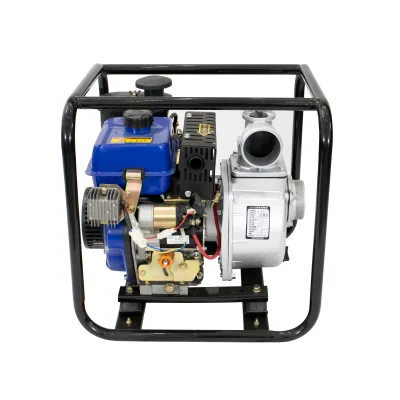
Self-priming 3-inch Electric diesel Water Pump with Strong Head and Stable Output
$110.00 - $150.00
MOQ: 1 pieces


Comprehensive Sourcing Guide
Strategic Sourcing Guide for Self-Priming Electric Water Pumps
Understanding Technical Specifications and Performance Metrics
When sourcing self-priming electric water pumps, buyers must first establish a clear understanding of the technical parameters that define operational capability. The core keyword implies a pump capable of removing air from the suction line to draw water without external priming, a critical feature for applications where the water source is below the pump level. Based on observed market data, these units frequently appear in configurations labeled as "Self-Priming Pump With Inner Recirculation," indicating a specific internal mechanism designed to enhance the priming cycle. The theoretical operation often relies on a "Jet-flow" or "Gas-hydraulic Hybrid Type" theory, which facilitates the separation of air and water within the casing to achieve suction.
The physical configuration of the pump is equally vital. The "Position of Pump Shaft" is predominantly observed as "Horizontal," which influences the mounting footprint and alignment requirements during installation. For many industrial and agricultural applications, the "Mounting Height" is described as "Suction Centrifugal," suggesting a design optimized for specific suction lift capabilities. The "Impeller" type is a key differentiator; the data indicates the prevalence of "Open" impellers and "Single Suction Pump" designs. These are typically paired with a "Single-Stage Pump" configuration, meaning the pump utilizes a single impeller to generate pressure, which is common for standard head requirements.
Performance ranges vary significantly across the product spectrum. The "Max.Head" observed in the market spans from 50-80 meters up to 80-110 meters. This variation dictates the suitability of the pump for different elevation challenges. Similarly, the "Max.Capacity" ranges from 100-200 L/min to over 400 L/min. Buyers must align these capacity metrics with their specific flow rate needs. The "Working Pressure" is categorized as "Middle Pressure Pump," which suggests these units are designed for applications requiring moderate pressure rather than ultra-high-pressure systems. The "Pressure Medium" is consistently identified as "Water," confirming their primary use case for clean water transfer, though some models are also designated for "Fire Fight" or "Sewage Pump" applications, indicating versatility in fluid handling.
Compliance, Certification, and Standard Verification
In the B2B procurement of industrial machinery, compliance is not merely a formality but a prerequisite for market access and operational safety. The supplied data highlights several standards and certifications that buyers should actively verify. The most frequently cited certification is "ISO," which appears in the context of both product properties and general standards. This suggests that many suppliers adhere to International Organization for Standardization guidelines, though the specific ISO standard (e.g., ISO 9001 for quality management or ISO 14001 for environmental management) requires explicit confirmation from the supplier.
Beyond ISO, the market data references "SGS" as a standard or certification factor. SGS is a leading inspection, verification, testing, and certification company. The presence of this designation implies that products may undergo third-party testing for quality and safety. However, the data also notes that the "prod_standard" can "depend on requirement," indicating that some manufacturers offer flexible compliance options based on the buyer's specific regional or industry needs. This variability necessitates a rigorous inquiry process where the buyer must explicitly request the certificate of conformity for the specific batch of equipment being ordered.
The "prod_origin" is identified as "China," with specific manufacturing hubs like "Wenzhou" mentioned. While this provides geographical context, it does not automatically guarantee quality. Buyers should treat the origin as a starting point for due diligence rather than a quality assurance metric. The "prod_packing" is listed as "Wood Case" or "Wood," which is a standard for heavy machinery to prevent damage during transit, but it does not reflect the internal quality of the pump. Therefore, the buyer's verification strategy must focus on obtaining valid, up-to-date certification documents that match the specific model number, such as "ZX," "ZCQ," or "ZBC," rather than relying on general market observations.
Cost Drivers and Pricing Structure Analysis
The pricing landscape for self-priming electric water pumps is characterized by a wide variance, reflecting differences in technology, materials, and performance capabilities. The observed listed price range in the market spans from 22 USD to 10,000 USD. This broad spectrum indicates that the cost is heavily influenced by the specific technical configuration and the scale of the order. The lower end of the price range likely corresponds to smaller, desktop-style units or basic models with lower capacity and head ratings. Conversely, the higher end of the range suggests industrial-grade units with advanced features, such as "Magnetic" driving types or specialized "Diesel Engine" configurations, although the core keyword focuses on electric pumps.
Several factors drive these costs. The "Driving Type" is a significant cost determinant; "Magnetic" drive pumps, which eliminate the need for a mechanical seal and reduce leakage risks, typically command a premium over direct connection models. The "Transmission" method, such as "Direct Connection Transmission," also affects the price, as does the complexity of the "Structure," which can range from "The Slide" to "Outer Slide." Additionally, the "Motor Pump" designation implies an integrated motor and pump assembly, which can be more expensive than separate components but offers easier installation.
The "MOQ" (Minimum Order Quantity) is another critical cost driver, with observed ranges from 1 to 50 units. Buyers purchasing single units or small batches may face higher per-unit costs due to the lack of economies of scale. In contrast, orders meeting the higher MOQ thresholds may benefit from volume discounts. The "Customization" attribute is marked as "Available," which introduces a variable cost element. Custom modifications to the pump model, such as altering the "Impeller Number" or specific "Air Engine Type" adaptations, will inevitably increase the final price. Buyers must balance their budget constraints against the necessity for customization, ensuring that the additional cost translates to tangible operational benefits.
Typical Applications and Operational Context
Self-priming electric water pumps serve a diverse array of applications, driven by their ability to handle air and water mixtures efficiently. The "Usage" is broadly defined as "Pump," but specific use cases are evident in the product attributes. The "Electric Pump" is frequently categorized as a "Clean Water Pump," making it ideal for agricultural irrigation, domestic water supply, and industrial cooling systems. The "Irrigation Pump" classification, specifically noted as a "Self-Priming Pump," highlights its utility in agricultural settings where water sources may be inconsistent or located below the pump inlet.
For emergency and safety applications, the data points to "Fire Fight" capabilities, suggesting that certain models are designed to meet the rigorous demands of fire suppression systems. These units often feature "Diesel Driven" options for reliability in power-outage scenarios, though the primary focus remains on electric variants. The "Sewage Pump" designation indicates that some models are robust enough to handle wastewater or fluids containing solids, expanding their utility to municipal and industrial waste management.
The "Type" of pump, often described as "Desktop," suggests suitability for compact installations in laboratories, small workshops, or residential settings. However, the "Max.Capacity" of over 400 L/min and "Max.Head" up to 110m also supports large-scale industrial applications. The "Working Pressure" being classified as "Middle Pressure" makes these pumps versatile for transferring water over moderate distances and elevations. Buyers should evaluate their specific operational environment, including the nature of the fluid (clean water vs. sewage) and the required flow rate, to select the most appropriate model from the available range of "ZX," "ZCQ," or "ZBC" series.
Supplier Evaluation and Selection Criteria
Selecting a reliable supplier for self-priming electric water pumps requires a multi-faceted evaluation process that goes beyond price comparison. The "Customization" availability is a strong indicator of a supplier's flexibility and technical capability. A supplier that offers customization is likely to have a more robust engineering team capable of adapting the "prod_model" to meet specific client needs. Buyers should assess the supplier's ability to provide detailed technical drawings and specifications for custom orders.
The "prod_origin" being "China" and specifically "Wenzhou" provides a geographical context, as Wenzhou is known for its manufacturing base in pumps and valves. However, buyers must verify the specific factory's reputation and production capacity. The "prod_packing" method, whether "Wood Case" or "Wood," can also serve as a proxy for the supplier's attention to detail; proper packaging indicates a commitment to protecting the product during logistics.
Furthermore, the "standard" compliance, whether "ISO," "SGS," or "depends on requirement," should be a primary filter. A reputable supplier will readily provide documentation proving compliance with the requested standards. The "Transmission" and "Structure" details should be scrutinized to ensure the supplier has a deep understanding of the mechanical design. Buyers should request references or case studies demonstrating the successful deployment of similar models, such as the "ZBCY" or "ZBC" series, in comparable applications.
Quality Control and Long-Term Procurement Considerations
Ensuring the long-term reliability of self-priming electric water pumps requires a proactive approach to quality control. The "Impeller" design, specifically the "Open" type, and the "Single-Stage Pump" configuration should be inspected for material quality and precision machining. The "Pump Casing Combined" being a "Verticaljoint Surface Pump" suggests a specific assembly method that must be checked for leaks and structural integrity.
Buyers should implement a quality control protocol that includes pre-shipment inspections. This involves verifying the "Max.Head" and "Max.Capacity" against the stated specifications to ensure the pump performs as advertised. The "Working Pressure" rating must be validated to prevent premature failure under operational stress. For electric pumps, the integration of the "Motor Pump" and the "Magnetic" drive system (if applicable) should be tested for efficiency and heat dissipation.
Long-term procurement considerations also involve the availability of spare parts and technical support. The "Customization" aspect implies that unique parts may be required, so buyers should confirm the supplier's ability to supply replacements for components like the "Impeller" or "Casing." The "prod_model" designation (e.g., "ZX," "ZCQ") should be consistent across all orders to simplify maintenance and inventory management. Finally, the "Air Engine Type" and "Diesel Engine" compatibility, if relevant for hybrid systems, should be verified to ensure seamless integration with existing power sources. By focusing on these technical and logistical details, buyers can secure a reliable supply chain for their self-priming electric water pump needs.
FAQs
What certifications are available for these pumps?
ISO certification is a high-confidence fact for these products, while SGS standards are also observed. Some suppliers offer standards that depend on specific buyer requirements, so verification is necessary before purchase.
Which pump models are available for self-priming applications?
The available product models include ZX, ZCQ, and ZBC series. These models cover various configurations such as magnetic drive pumps and diesel-driven options, catering to different operational needs and specifications.
Can I customize the pump specifications for my needs?
Customization is available for these self-priming electric water pumps. Buyers can request specific modifications, though this may affect the final price and lead time, requiring direct negotiation with the supplier for exact details.
What is the maximum head capacity for these pumps?
The maximum head ranges from 50-80 meters up to 80-110 meters depending on the specific model. This variation allows selection based on the required elevation lift for your specific application or installation site.
How much is the minimum order quantity for these pumps?
The minimum order quantity ranges from 1 to 50 units. This flexibility allows buyers to purchase single units or larger batches, with pricing likely varying based on the volume ordered and specific customization needs.
Where are these pumps manufactured and what is the origin?
The products originate from China, with specific manufacturing hubs identified in Wenzhou. This geographical origin provides context for logistics but does not guarantee quality without verifying specific factory certifications and production standards.
What is the maximum flow capacity for these pumps?
The maximum capacity ranges from 100-200 liters per minute to over 400 liters per minute. Buyers must select a model that matches their required flow rate for efficient water transfer in irrigation or industrial settings.