Source Self-Propelled Agricultural Boom Sprayer for Wheat Rice Corn
Compare 30 Self-Propelled Agricultural Boom Sprayer models with varying tank capacities, working widths, and power ratings. Buyers can evaluate specifications for crops like wheat, rice, corn, cotton, and vegetables from suppliers in Shandong and Weifang.
Key considerations
Products List


Agricultural Boom Sprayer Self Propelled Sprayer for Cotton Corn Paddy Field
$17000.00 - $20000.00
MOQ: 1 unit


Four-Wheel Spray Truck High Chassis Agricultural Self Propelled Boom Sprayer
$9000.00 - $15000.00
MOQ: 1 Pieces

Agriculture Self Propelled High Clearance Boom Sprayer Tractor Mounted Boom Sprayer
$14000.00 - $18000.00
MOQ: 1 Pieces

800hl Self Propelled Sprayer Different Capacities Agriculture Boom Sprayer
$14000.00 - $18000.00
MOQ: 1 Pieces

High Efficiency High Chassis 800L Agricultural Self Propelled Boom Sprayer
$8500.00 - $15000.00
MOQ: 1 Pieces

Factory Price Boom Agricultural Self-Propelled Sprayer for Dry Land and Paddy Field
$14000.00 - $20000.00
MOQ: 1 Pieces


High Capacity Self-Propelled Agricultural Boom Sprayer for Versatile Applications
$6500.00 - $7400.00
MOQ: 1 Units
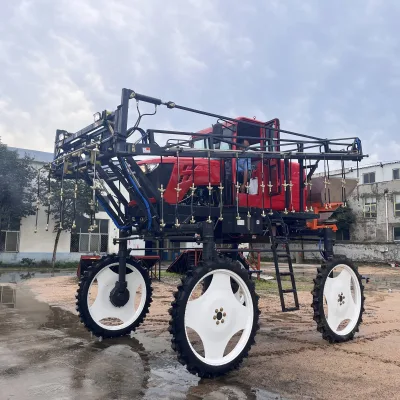

700L Agricultural Boom Sprayer Self Propelled Sprayer for Cotton Corn Field
$5355.00 - $5555.00
MOQ: 1 Pieces
Comprehensive Sourcing Guide
Strategic Sourcing Guide for Self-Propelled Agricultural Boom Sprayers
Understanding the Product Category and Core Specifications
The self-propelled agricultural boom sprayer represents a critical class of heavy machinery designed for the efficient application of liquid treatments across vast agricultural landscapes. Unlike manual or tractor-mounted alternatives, these units integrate propulsion, tank capacity, and spraying mechanisms into a single autonomous system. When evaluating the market, buyers must first distinguish between the various operational configurations observed in current listings. The product spectrum includes models with distinct structural forms, such as the Trifilar Suspension Type, which is engineered to maintain stability on uneven terrain, and others designed as Push Sprayers or Aligning Sprayers for specific field conditions.
A primary technical differentiator is the working pressure range, which typically spans from 1.0 to 4.0 MPa. This pressure variance directly influences the atomization quality and the effective reach of the spray. The spraying shape is another critical variable; some units are optimized for a Sector spray pattern, ideal for targeted application, while others utilize a Full Cone configuration to ensure uniform coverage over a broader area. The fan diameter, often observed at 500mm in specific high-capacity models, dictates the volume of air moved and the resulting droplet velocity. Furthermore, the spray pump flow rate is a vital metric, with observed ranges between 22 and 32 liters per minute, determining the throughput capacity of the machine during operation.
The physical dimensions and capacity of the liquid tank are equally significant. Buyers should note that rated capacities for liquid medicine tanks can vary widely, with specific models offering volumes ranging from 1200 liters up to 5000 liters. The structural dimensions of the machine, including the folding state size which may reach up to 2150mm in length, 2370mm in width, and 2900mm in height, are essential for logistics planning and storage. The machine weight is another factor to consider, with observed weights ranging from 1160kg to 2180kg depending on the model and tank size. The working width, which can extend from 6 meters to as much as 24 meters, defines the operational efficiency per pass.
Technical Performance and Operational Capabilities
When assessing the technical performance of these units, the power supply mechanism and engine matching are paramount. The power supply for the spraying system is often pressure-driven, requiring a robust engine to maintain consistent output. The matched power for these machines typically ranges from 15 to 100 horsepower, a broad spectrum that allows for selection based on the specific scale of the farm and the terrain difficulty. The ground clearance is another critical specification, with observed ranges between 920mm and 1750mm, ensuring that the sprayer can navigate through tall crops like sugarcane or corn without causing damage to the plants or the machinery itself.
The application of these sprayers is versatile, covering a wide array of crops including wheat, rice, corn, cotton, vegetables, sugarcane, and potatoes. The specific product usage is often dictated by the boom width and the spray pattern. For instance, a working width of 12 to 18 meters is suitable for large-scale grain production, while narrower widths may be preferred for row crops. The liquid contained within the tank is typically a disinfector or medicine, requiring the tank material to be chemically resistant. Polyethylene (PE) is a common material observed for these tanks, offering durability and resistance to corrosion from various agricultural chemicals.
The production techniques used in manufacturing these units also vary. Some components are produced using injection molding, which ensures high precision and consistency for plastic parts, while other elements may involve scrubbing techniques for surface preparation or assembly. The installation method for connections is another technical detail to verify; some models feature internal threaded connections, while others utilize external threaded connections. These details affect the ease of maintenance and the compatibility of replacement parts. The structural integrity of the frame is often reinforced with an iron frame, and the final packing may involve wooden boxes or loose packing for sea transport, depending on the supplier's logistics strategy.
Compliance, Certification, and Regulatory Verification
Navigating the regulatory landscape for agricultural machinery requires a rigorous approach to compliance verification. While specific certification statuses are not universally standardized across all listings, buyers must insist on documentation that proves adherence to relevant safety and environmental standards. The origin of the machinery is a key indicator of regulatory compliance, with major production hubs located in regions such as Linyi in Shandong, Qingzhou in Weifang, and other areas in China. These regions have established manufacturing ecosystems, but the specific standards applied to each unit must be confirmed by the buyer.
Buyers should verify that the machinery meets the local regulatory requirements of the destination country. This includes checking for emissions standards, noise levels, and safety features such as rollover protection structures (ROPS) and seat belts. The standard dimensions and specifications provided in product listings, such as the 1700x700x680mm footprint or the 700-5000 liter capacity range, should be cross-referenced with local agricultural machinery regulations. It is crucial to understand that "Made in China" or specific provincial origins do not automatically guarantee compliance with international standards; each unit must be evaluated against the specific legal framework of the importing country.
Furthermore, the materials used, such as the PE tanks, must be certified for food safety or agricultural chemical compatibility if the sprayer is intended for use on edible crops. The working pressure and flow rates must be tested to ensure they do not exceed safety limits that could lead to equipment failure or operator injury. Buyers should request test reports and certification documents from the supplier, ensuring that the claims regarding the machine's performance are backed by third-party verification. Without these documents, the risk of non-compliance and subsequent operational delays or legal penalties increases significantly.
Cost Drivers and Procurement Economics
The cost of a self-propelled agricultural boom sprayer is influenced by a complex interplay of factors, including the working width, tank capacity, engine power, and the level of customization available. The observed price range in the market spans from 90 USD to 30,000 USD, a vast disparity that reflects the difference between small-scale units and large, high-capacity industrial machines. The lower end of the price spectrum may correspond to smaller, less complex models with limited working widths and lower tank capacities, while the higher end represents machines with advanced features, larger booms, and higher horsepower engines.
The minimum order quantity (MOQ) is another economic factor to consider. Listings indicate an MOQ range of 1 to 2 units, suggesting that buyers can often procure single units for pilot testing or small-scale operations. However, bulk purchasing may offer significant cost advantages. The packing method, whether in an iron frame, wooden box, or loose packing for sea transport, also impacts the total landed cost. Customization options are available, which can increase the unit price but may provide a better fit for specific operational needs, potentially reducing long-term operational costs.
Buyers should also factor in the long-term costs associated with maintenance and parts availability. The technical specifications, such as the spray pump flow rate and working pressure, determine the wear and tear on the system. Machines with higher flow rates and pressures may require more frequent maintenance and higher-quality replacement parts. The weight of the machine, ranging from 120kg to 400kg for smaller components or up to 2180kg for the full unit, affects fuel consumption and tire wear. Therefore, the initial purchase price should be viewed in the context of the total cost of ownership, including fuel, maintenance, and potential downtime.
Supplier Evaluation and Quality Assurance
Evaluating suppliers for self-propelled agricultural boom sprayers requires a meticulous review of their production capabilities and quality control processes. The origin of the product, whether from Linyi, Shandong, Qingzhou, Weifang, or other locations in China, provides insight into the supplier's regional expertise. However, the specific location should not be the sole criterion; buyers must assess the supplier's track record, production capacity, and commitment to quality. The availability of customization is a strong indicator of a supplier's flexibility and ability to meet unique buyer requirements.
Quality control should be a central part of the procurement process. Buyers should verify the manufacturing techniques used, such as injection molding for plastic components and the structural integrity of the iron frames. The use of specific materials like PE for tanks must be confirmed to ensure durability and chemical resistance. The structural form of the machine, such as the Trifilar Suspension Type, should be inspected to ensure it meets the stability requirements for the intended terrain. The installation methods, whether internal or external threaded connections, should be checked for precision and ease of assembly.
Suppliers should be required to provide detailed specifications for each model, including the working pressure, flow rate, and dimensions. The consistency of these specifications across different batches is a key indicator of quality. Buyers should also inquire about the testing procedures used to validate the machine's performance, such as pressure testing and flow rate verification. The packing method, whether loose or in a wooden box, should be evaluated to ensure that the machine arrives in good condition. Finally, the supplier's ability to provide after-sales support and spare parts is crucial for maintaining the operational efficiency of the machinery over its lifespan.
Long-Term Procurement and Operational Strategy
Sourcing self-propelled agricultural boom sprayers is not merely a transactional activity but a strategic decision that impacts long-term operational efficiency. The selection of a machine with the appropriate working width, tank capacity, and engine power is critical for maximizing productivity. The ability to customize the machine to fit specific crop requirements, such as the varying needs of wheat, rice, corn, cotton, and vegetables, is a key advantage of modern self-propelled sprayers. The structural form and ground clearance must be matched to the terrain to prevent damage to crops and machinery.
Buyers should develop a long-term strategy that includes regular maintenance schedules and parts replacement plans. The technical specifications, such as the spray pump flow rate and working pressure, should be monitored to ensure they remain within optimal ranges. The use of high-quality materials and components will reduce the frequency of breakdowns and extend the lifespan of the machine. The supplier's commitment to providing technical support and training for operators is also essential for ensuring the safe and efficient use of the machinery.
Furthermore, the procurement strategy should account for the evolving needs of the agricultural sector. As farming practices become more sophisticated, the demand for more efficient and environmentally friendly sprayers will increase. Buyers should consider the potential for future upgrades and the availability of technology that can enhance the performance of the machine. The ability to adapt to changing regulations and standards is also crucial. By focusing on quality, compliance, and long-term value, buyers can ensure that their investment in self-propelled agricultural boom sprayers delivers sustained benefits for their agricultural operations.
FAQs
What is the working pressure range for these sprayers?
The working pressure typically ranges from 1.0 to 4.0 MPa. This variance influences atomization quality and spray reach, ensuring effective application across different crop types like wheat, rice, and corn.
Which tank capacities are available for self-propelled models?
Rated capacities for liquid medicine tanks vary from 700 to 5000 liters. Specific models offer volumes such as 1200 liters, allowing buyers to select based on farm size and operational needs.
How wide is the spraying width for these machines?
The working width can extend from 6 meters up to 24 meters. Wider booms like 12, 15, 18, or 24 meters are suitable for large-scale grain production, while narrower widths suit row crops.
Can the product be customized for specific needs?
Yes, customization is available for these agricultural sprayers. Buyers can request adjustments to fit unique operational requirements, potentially reducing long-term costs and improving efficiency on specific terrains.
What materials are used for the liquid tank?
The tank material is typically Polyethylene (PE). This material offers durability and resistance to corrosion from various agricultural chemicals like disinfectors and medicines used in crop treatment.
Which structural forms are used for stability?
Some units utilize a Trifilar Suspension Type for stability on uneven terrain. Other models may be designed as Push Sprayers or Aligning Sprayers depending on the specific field conditions and crop requirements.
What is the typical weight of these sprayers?
Machine weights range from 1160 kg to 2180 kg depending on the model. Smaller components may weigh between 120 and 400 kg, while the full unit weight affects fuel consumption and tire wear.