Source Self-Priming Sewage Water Jet Pump for Home, Farm, and Industry
Explore 30 verified listings for the Self-Priming Sewage Water Jet Pump suitable for residential, agricultural, and industrial applications. Buyers can compare specifications like head, flow rate, and material to find the right unit for boosting water pressure or handling sewage.
Key considerations
Products List


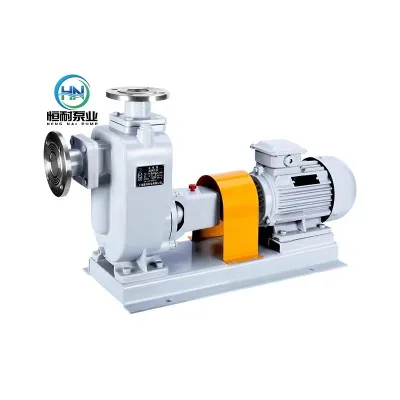


$500.00 - $1800.00
MOQ: 1 Pieces


Comprehensive Sourcing Guide
Self-Priming Sewage Water Jet Pump Sourcing Guide
Self priming sewage water jet pumps occupy a practical middle ground in the fluid handling market: they combine the self priming convenience that eliminates manual filling with jet-assisted hydraulics suitable for water transfer and light-duty drainage tasks. For B2B buyers—distributors, importers, and project procurement teams—this category offers a wide selection of models from manufacturers concentrated in eastern China, with product lines spanning compact domestic boosters to larger cast-iron units.
This guide is written to help procurement professionals move from a broad listing search to a defensible shortlist. It breaks down what observed listings actually reveal, which technical parameters must be verified against your duty point, what documentation to demand before sample approval, and how to structure commercial terms, supplier qualification, and long-term quality controls. The goal is not to name vendors but to equip your team with the questions and checks that separate repeatable suppliers from one-off listings.
Product Scope and Observed Listing Signals
Observed listings for this category consistently describe electrically powered, horizontal installation pumps with cast-iron pump bodies designed for clean-to-lightly-laden water rather than heavy sludge. Model families such as JET, JSW, STP, and M-series variants appear repeatedly, typically positioned for home use and boosting duty. Stated performance envelopes in the observed data include maximum heads in the 35–55 m range and maximum flows of 35–60 L/min, which frames this as a small-to-mid centrifugal jet segment rather than an industrial solids-handling one.
Listing attributes also reveal how suppliers package and differentiate product: carton packing (often one piece per carton), unit weights ranging roughly from 7 kg to 28 kg depending on the series, voltage options of 110/220 V, and frequency ratings of 50/60 Hz for export flexibility. Several listings note OEM color availability with a minimum order of 100 pieces, signaling genuine customization programs rather than stock-only sales. Buyers should treat these attributes as observations from individual listings, not guarantees across the category—confirm each attribute against the specific model, such as JET-102M, JET-100L, or STP-50, before comparing quotations.
Technical Specifications to Verify
Begin verification at the hydraulic duty point. Listings publish maximum head and maximum flow figures, but these are endpoints of the curve, not the operating point your application requires. Request full performance curves for each candidate model and confirm that your required flow and head intersect on a stable, efficient portion of the curve. Verify inlet/outlet port sizing (1" x 1" appears in observed data), suction lift expectations, and priming behavior, since self priming claims vary in refill time and dry-run tolerance between designs.
Electrical and mechanical construction deserves equal scrutiny. Confirm motor winding material—listings cite 100% copper wire, but wording such as "cooper wire" in some records shows why written confirmation matters. Verify impeller material options (brass, PPO, or plastic), because impeller choice affects wear life and cost. Confirm voltage and frequency match the destination market, thermal overload protection, insulation class, and bearing/seal specification. For sewage-adjacent duty, clarify exactly what solids or fiber content the pump tolerates; most jet-style units in this segment are water pumps, and overestimating solids capability is a common specification error.
Compliance and Safety Documentation
Observed listings reference a broad set of marks and standards, including CE, ISO, EMC, LVD, MD, GOST, and PCT, alongside ISO9001 quality-system references. Treat these as listing claims to be substantiated, not automatic entitlements. For pumps sold into the EU, ask each supplier to identify which directives the CE mark covers for the specific model—electrical safety (LVD), electromagnetic compatibility (EMC), and machinery safety (MD) are the typical scope items—and request the declaration of conformity naming the exact model number you intend to purchase.
Beyond declarations, request supporting evidence: test reports for electrical safety and EMC issued by a recognized body, certificates matching the model series rather than a generic family certificate, and where relevant, destination-market marks such as GOST or PCT for applicable markets. Verify that the certificate holder's name matches the exporting entity or that an authorization letter covers your use of the certificate. For markets with energy-efficiency or motor-efficiency rules, ask what motor efficiency class applies. Keeping a documentation file per model protects you during customs inspections, retailer audits, and any post-sale liability questions.
Cost Drivers and Commercial Terms
Price dispersion in observed listings is extreme—ranging from a few dollars to six-figure values—because the category mixes small pump components, complete domestic pumps, and industrial-scale equipment under similar search terms. Filter by model family and specification before comparing price at all. Within a comparable pump class, cost is driven mainly by copper winding content, impeller material (brass costs more than PPO or plastic), cast-iron versus lighter housings, motor brand and grade, and certification depth. Unit weights of 7–28 kg also foreshadow meaningful freight cost differences between series.
Commercial terms to settle early include MOQ (observed values span from single units to 300 pieces, and color customization typically requires 100 pieces), packing format (one piece per carton simplifies warehousing and mixed loads), and FOB versus CIF pricing with carton dimensions confirmed for container planning. For color or branding customization, request a pre-production sample and confirm whether tooling or labeling charges apply. Negotiate payment structures proportionate to supplier risk—smaller deposits for proven suppliers, escrow or inspection-gated payments for new ones—and define lead-time commitments in the purchase contract rather than in listing chat.
Supplier Qualification and Quality Control
Qualify suppliers as manufacturers or trading companies first, since the answer changes pricing, customization depth, and accountability. For manufacturers, verify business scope, years producing jet pump series specifically, and factory audit evidence such as an ISO9001 certificate (referenced in observed listings). Ask for production capability details—winding, casting, assembly, and testing lines—because a supplier that winds its own copper motors and pressure-tests every unit is structurally more reliable than one assembling bought-in parts.
Build a defined quality control protocol into the purchase process. A practical sequence includes: pre-shipment inspection against an agreed specification sheet covering hydraulic performance at defined duty points, electrical safety testing, priming time measurement, leak checks, and cosmetic/carton standards; golden-sample retention signed by both parties; and in-line checks during first production runs. For recurring orders, request batch-level test records and define AQL sampling levels for defects. Weight checks matter in this category—listed unit weights of 13–18 kg or 20–28 kg per series give you a fast, objective proxy for material content if copper or iron is downgraded.
Long-Term Procurement Checks
Sustained sourcing value comes from monitoring drift, not just approving the first order. Establish an annual re-verification cycle for certificates, since certifications expire or get reissued under different legal entities. Track consistency of critical materials—copper winding verification, impeller material confirmation, and casting quality—through periodic independent lab checks or teardown audits of production samples. Maintain a documented change-control rule: any change to motor supplier, impeller material, or pump body casting requires written notice and re-approval before shipment.
Plan logistics and after-sales structures as part of the long-term relationship. Standardize spare parts—mechanical seals, impellers, capacitor kits—so field service in your market does not depend on ad-hoc purchases, and negotiate a spares stocking agreement with defined lead times. Review performance feedback from your customers' installations to detect recurring failure modes, and bring warranty claim data to quarterly supplier reviews. Finally, keep at least one qualified alternative supplier per model family to protect against capacity shocks, price spikes, or regional disruption, rotating a small trial order through the backup each year to keep the relationship current.
Risk Management and Total Cost of Ownership
Procurement risk in this category concentrates in three areas: specification mismatch, certificate invalidity, and silent material substitution. Mitigate the first by writing application-specific acceptance criteria into contracts—defined flow, head, and priming performance measured at agreed test conditions—rather than relying on "max" figures from listings. Mitigate the second by verifying certificate authenticity directly with issuing bodies where possible and keeping copies in your compliance file. Mitigate the third by contractually fixing material specifications and retaining golden samples.
Total cost of ownership extends beyond unit price. Factor freight based on the 7–28 kg unit weight range, duty and customs treatment in your market, expected service life of copper-wound versus alternative motors, failure rates observed in your sales channel, and the cost of warranty replacements shipped internationally. A pump priced slightly higher with verified copper windings, brass impeller options, and complete documentation frequently delivers lower lifetime cost than the cheapest listing. Review landed cost per model annually, and renegotiate volume tiers as your order history accumulates, using consistent inspection data as leverage in pricing discussions.
FAQs
What certifications do these pumps hold?
These pumps hold ISO and CE certifications. Additional standards include EMC, LVD, and MD compliance. This ensures the equipment meets international safety and quality requirements for industrial and home use applications globally.
Can the pump body material be customized?
Yes, customization is available for these units. The pump body is typically made of cast iron for durability. Buyers can request specific configurations to meet unique operational needs or integrate the pump into existing systems effectively.
What is the maximum head height?
The maximum head height ranges from 35 to 55 meters. This performance level supports efficient water boosting for various applications. The specific height depends on the model selected, ensuring reliable pressure delivery for vertical water transport tasks.
How is the motor winding constructed?
The motor winding uses 100% copper wire. This construction ensures high efficiency and durability during operation. The electric power source operates at 110/220V with 50/60Hz frequency, providing stable performance for continuous water pumping duties.
What is the standard packaging method?
The standard packaging method uses cartons. Each unit is packed individually in a carton box. This ensures safe transport and protection during shipping. The packaging is designed to prevent damage and maintain product integrity upon arrival at the destination.
Where are these pumps manufactured?
These pumps are manufactured in Zhejiang, China. Some specific models originate from Taizhou. This location is a known hub for pump manufacturing, ensuring access to skilled labor and established supply chains for high-quality production standards.