Source Self-Priming Vortex Water Pump for Irrigation, HVAC, and Industrial Use
Source a Self-Priming Vortex Water Pump from 30 verified listings. Compare options featuring cast iron or stainless steel construction, horizontal installation, and electric or diesel power. Evaluate specifications like head height, flow capacity, and OEM customization for diverse industrial and commercial applications.
Key considerations
Products List




Comprehensive Sourcing Guide
Self-Priming Vortex Water Pump Sourcing Guide
Self priming vortex water pumps occupy a distinct niche in industrial and commercial fluid handling because they combine air-handling capability with the ability to pass solids and re-prime without external filling equipment. For procurement teams, this category demands a disciplined sourcing approach: the technology spans cast iron utility units, stainless steel hygienic variants, and horizontal centrifugal designs, each suited to different duty points and fluids.
This guide organizes the sourcing decision into the questions that most often determine project success: matching product scope to your application, verifying technical specifications against your duty requirements, securing credible compliance documentation, understanding the commercial cost structure, qualifying suppliers beyond their catalog claims, and establishing checks that protect the relationship over multi-year operation. The recommendations draw on observed listing attributes from active product pages—such as customization availability, ISO and CE claims, wooden crate packing, and China-based origins—while treating those attributes as signals to confirm rather than guarantees that apply to every listing in the category.
Product Scope and Observed Listing Signals
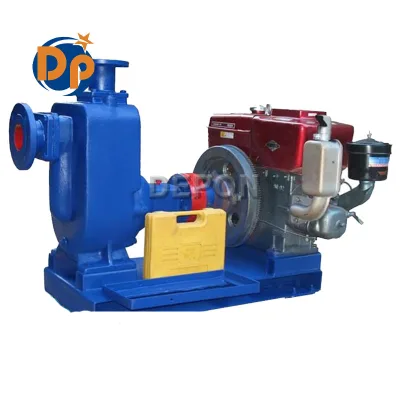
Listings in this category show meaningful diversity. Observed attributes include direct connection transmission, fitted motor air engine types, outer slide structures, and gas-hydraulic hybrid theory classifications, alongside horizontal pump shaft positions and closed impellers. Some listings describe self-priming pumps with outer recirculation, while others present single-stage centrifugal structures under the DP-ZX/ZW model family with capacities above 400 L/min and maximum head in the 110–150 m range. Model identifiers such as BLN and DP505 appear with different packing conventions—wooden box versus carton—suggesting different unit sizes and shipping classes.
Buyers should treat these signals as a screening layer rather than a selection basis. A listing advertising cast iron construction with water as the working fluid points toward general industrial utilities, while stainless steel and Cr27 material options suggest abrasive or corrosive media handling. OEM and ODM customization support, listed with a 1-year warranty and applications spanning drinking water treatment, irrigation, HVAC OEM, industrial boilers, and environmental protection, indicates suppliers positioned for project work. Confirm which attributes on any given page actually describe the model you intend to purchase, because multi-product pages can mix attributes across variants.
Technical Specifications to Verify
Begin with the hydraulic duty point. Verify rated flow, total head, and efficiency at your actual operating condition, not only at best efficiency point, because vortex and self-priming designs often trade peak efficiency for air-handling and solids passage. Observed listings cite capacities above 400 L/min and heads of 110–150 m for certain models, but you must confirm these figures against your own system curve. Also verify suction lift performance, priming time, and whether the pump can run dry briefly without damage—parameters that define genuine self-priming behavior.
Materials and mechanical details deserve equal scrutiny. Confirm wetted-end materials (cast iron, stainless steel, or Cr27 as listed options), impeller type, shaft seal arrangement, and connection type—flanged connections appear in the observed data. For motorized units, verify voltage, frequency, insulation class, and protection rating against your site's electrical supply. Liquid temperature tolerance is another checkpoint: one listing states compatibility up to 80°C, which should be validated against your process conditions. Ask for performance curves and dimensioned drawings, and note that some suppliers confirm pressure and cable length "as customer request," which signals configurability but requires written specification before ordering.
Compliance and Safety Documentation
Certification claims observed in this category include ISO and CE, but a listing attribute is not a certificate. Request the actual ISO 9001 quality management certificate from the certifying body and verify its validity and scope online, ensuring it covers pump manufacturing rather than an unrelated activity. For CE-marked units destined for the EU or comparable markets, request the Declaration of Conformity and identify which directives apply—typically the Machinery Directive, Low Voltage Directive for motorized units, and potentially the Pressure Equipment Directive depending on configuration.
Drinking water applications carry additional obligations. Since several listings cite drinking water treatment and family homes among applications, buyers in regulated markets should ask whether wetted materials have relevant contact approvals and request supporting documentation rather than accepting general material names. Electrical safety documentation—motor test reports, insulation resistance records, and grounding continuity checks—should accompany shipment. For export shipments from China, confirm packing standards match carrier requirements; observed packing ranges from single-piece cartons (1PCS/Carton for the DP505) to ply wooden cases and wooden boxes, and ISPM-compliant treatment of wooden packaging should be confirmed in writing for international freight.
Cost Drivers and Commercial Terms
Observed listing prices span from very low single-digit-dollar figures to $50,000, which reflects the category's breadth from small utility pumps to large engineered units rather than any single price benchmark. Understand what drives cost in your specific configuration: material selection (stainless steel and Cr27 command premiums over cast iron), motor power and efficiency grade, seal type, customization depth, and certification scope. A pump priced near the bottom of the range likely corresponds to a small, standardized unit; engineered high-head models with special materials justify the upper end.
Commercial terms shape total landed cost. Observed MOQ values range from 1 to 500 across the category, so negotiate minimum order quantities aligned with your trial or project volume—many suppliers accommodate single-unit evaluation orders. Clarify Incoterms, port of dispatch (one listing cites Tianjin Port or as customer required), and freight responsibility before comparing quotes. Payment structure typically involves deposits with balance before shipment; align milestones with inspection rights. Because supply capacity figures appear in listings (one cites 8,000 sets per year), ask how your volume fits within the supplier's production plan, particularly for peak-season delivery or framework agreements spanning multiple orders.
Supplier Qualification and Quality Control
Qualification should go beyond catalog claims. Prioritize suppliers whose listed attributes demonstrate engineering capability—OEM and ODM support, customization availability, and per-customer pressure and cable specifications all indicate in-house configuration rather than pure trading. Verify business licensing, manufacturing footprint, and whether the supplier is the actual producer. A factory with 8,000 sets annual capacity for a specific product line offers different depth than a generalist distributor; request a video or live factory audit covering machining, assembly, and test bench facilities.
Quality control terms should be contractual, not assumed. Agree on pre-shipment inspection: hydraulic performance testing at duty point, hydrostatic pressure checks, paint thickness, and dimensional verification against approved drawings. For first orders, consider third-party inspection at the supplier's cost center or your expense. Define acceptance criteria in the purchase contract—performance tolerances, material certificates for castings and stainless components, and witness testing for larger units. Establish clear non-conformance handling: replacement, rework, or credit, with timelines. Retain the signed test reports and material certificates with the shipment so future spare-part orders and warranty claims reference verified baseline data rather than catalog assumptions.
Long-Term Procurement Checks
Durability and serviceability determine lifetime cost more than purchase price. For a 1-year warranty—the standard term observed in listings—clarify exactly what it covers: motor, seals, impeller, and labor versus parts-only, and whether warranty service requires returning the unit or receiving replacement parts. Negotiate extended warranty for demanding duties such as continuous industrial operation. Confirm spare parts availability: wear components like mechanical seals, impellers, and O-rings should be orderable as kits, with part numbers documented at commissioning so replacements arrive without reverse engineering.
Plan the operational relationship deliberately. Record commissioning data—actual flow, head, current draw, and priming time—as your baseline for condition monitoring; drift in priming time or current often signals seal or impeller wear before failure. Standardize on one model family across sites where duty points allow, consolidating spare inventory and simplifying training. Reassess suppliers annually: verify certification renewals, review delivery performance and defect rates, and confirm that customization capabilities remain current. For multi-year frameworks, build in periodic sample testing and retain the right to audit manufacturing, ensuring that initial quality standards persist through volume production rather than eroding after the first approval shipment.
FAQs
What is the maximum head pressure for this pump?
The maximum head pressure ranges from 110 to 150 meters. This high-performance capability is achieved through a closed impeller design and gas-hydraulic hybrid theory, ensuring efficient water movement for demanding industrial applications.
Can the pump handle high flow rates effectively?
Yes, the pump capacity exceeds 400 liters per minute. This high flow rate is supported by a direct connection transmission and horizontal shaft position, making it suitable for large-scale water treatment and irrigation projects.
Which certifications does the pump manufacturer hold?
The pump holds ISO and CE certifications. These standards ensure the product meets international safety and quality requirements, providing buyers with confidence in the reliability and compliance of the equipment for various global applications.
How is the pump customized for specific needs?
Customization is available for cable length, pressure, and color. Buyers can request specific configurations to match their operational requirements, supported by OEM and ODM services from the manufacturer in China.
What material is used for the pump construction?
The pump is constructed from cast iron, Cr27, or stainless steel. These durable materials ensure longevity and resistance to corrosion, making the unit ideal for harsh environments and continuous industrial water handling operations.
What is the warranty period for this equipment?
The equipment comes with a one-year warranty. This coverage protects buyers against manufacturing defects, ensuring peace of mind while the pump operates reliably in applications ranging from drinking water treatment to industrial utilities.
Can the pump be used for drinking water treatment?
Yes, the pump is explicitly designed for drinking water treatment applications. Its self-priming vortex design and non-leak performance make it a reliable choice for ensuring safe water supply in commercial buildings and family homes.