Source Semi-Automatic PLC Disc Feeder for Tea, Rice, Flour
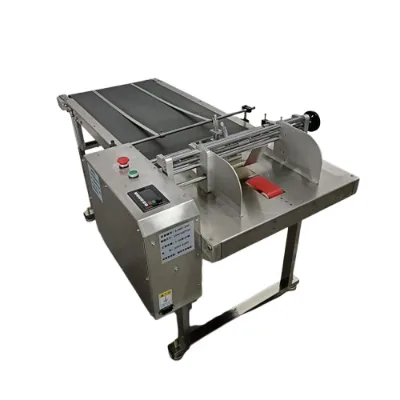
Find 30 listings for the Semi-Automatic PLC Disc Feeder suitable for tea, rice, and flour processing. Buyers can compare specifications, prices, and customization options from verified suppliers in China; compare the available evidence and request quotations based on your requirements.
Key considerations
Products List


Automatic Feeder Automatic Feeder Electric Vacuum Conveyor Feeding Machine
$2592.00 - $2900.00
MOQ: 1 Pieces


Powder Feeder Automatic Feeder Pneumatic Feeding Machine Vacuum Conveyor
$1123.00 - $1400.00
MOQ: 1 Pieces


Low Consumption Automatic Screw Feeder Machine for Screw Feeding Solutions
$12857.00 - $13214.00
MOQ: 1 Sets

Advanced Dust-Free Bulk Material Handling with PLC-Controlled Feeder
$1000.00 - $1500.00
MOQ: 1 Pieces


Comprehensive Sourcing Guide
Semi-Automatic PLC Disc Feeder Sourcing Guide
A Semi-Automatic PLC Disc Feeder sits at the intersection of dosing accuracy and operator-controlled flexibility, making it a common candidate for buyers who need repeatable material feed without committing to a fully automated line. Because listings for this equipment family vary widely in stated capacity, control depth, and build standard, disciplined sourcing starts with separating what a listing actually confirms from what a supplier must still verify in writing. This guide walks through that process in seven practical stages, from decoding listing signals to building long-term procurement checks.
Before contacting vendors, define your duty cycle, material characteristics, and integration boundary. A feeder specified for free-flowing powder behaves very differently from one handling granules or mixed media, and a PLC platform that must exchange data with upstream or downstream equipment imposes requirements that standalone units avoid. Buyers who fix these parameters first can compare quotations on substance rather than on marketing language, and can reject listings that omit the specifications their process cannot tolerate.
Product Scope and Observed Listing Signals
The observed product pages in this category show a spread of configurations worth noting. Some listings describe automatic machines with PLC among the core components, packaged for bottles and applied across tea, rice, flour, seasoning, drinks, dairy, hair care, skin care, cosmetics, oil, cleaning, and detergent products. Others describe electromagnetic vibrating feeders with linear movement, double-motor drives, stainless steel hoppers, and screwing-feeder structures intended for ore-dressing, metallurgy, chemical, and building-materials duty. Model identifiers such as GHLP-1200, GH-1000, and FX-300M appear, alongside claimed origins in Guangzhou and Zhejiang, China.
These signals tell you the category is broad: packaging-line dosing equipment and industrial bulk feeders share search space under this keyword. Use listing attributes as screening observations, not as guarantees. A listing stating customization is available, melt molding forming, or a specific chute size tells you what that supplier can discuss, but you should confirm in writing that the exact configuration you need exists and has been built before. Treat mixed listings as a prompt to narrow your inquiry with precise duty descriptions.
Technical Specifications to Verify
Start with the material path. Ask for the feeder disc diameter and material of construction, hopper capacity and structure (the observed listings cite stainless steel hoppers), and whether the contact surfaces suit your product. Confirm drive configuration — the category includes double-motor and mechanical drive types — and match it to your torque and speed-modulation needs. Request maximum feeding dimensions in millimetres where applicable, since one observed listing cites a 630 mm maximum feeding figure, and overall dimensions such as 1000×800×900 mm for footprint planning.
Then verify controls and integration. A genuine semi automatic PLC unit should be documented with the PLC brand and model, the human-machine interface type, and the available I/O for level sensors, interlocks, and downstream handshake. Ask for voltage compatibility — observed listings cite 380 V and 415 V — and confirm which your facility uses. Request capacity figures in units relevant to your process, with the operating range rather than a single peak number. For vibrating variants, ask about installation slope, movement mode, and chute dimensions, as one listing cites a 3800×960 mm chute and a 10-degree slope.
Compliance and Safety Documentation
Certification claims in this category vary: some observed listings state GMP, CE, and ISO standards; others state CE alone; one claims only a CE certification entry. Never accept a badge on a product page as evidence. Request the actual certificate numbers, issuing bodies, validity dates, and scope, and check whether the certificate covers the machine family and model you are buying rather than a different product line. For food, cosmetic, or pharma-adjacent applications implied by many listings, ask which hygiene standard the wetted parts and enclosure design were built to, and request supporting material declarations.
Safety documentation matters as much as conformity papers. Ask for a machinery test report — observed listings indicate one is provided — and review what it actually covers: electrical safety, functional run-in, and, where relevant, vibration or noise measurements. Request the operating and maintenance manual in English, an electrical schematic with terminal identification, and a declared risk assessment covering guarding, emergency stop placement, and lockout provisions. If your jurisdiction requires local conformity work after import, confirm the supplier will supply the documentation needed for your own assessment.
Cost Drivers and Commercial Terms
Observed listing prices in this category span from roughly one dollar to one hundred thousand dollars, which signals heterogeneous listings, incomplete quotations, and placeholder data rather than a real market range. Do not benchmark on published prices. Instead, build your own costed comparison covering the base machine, hopper and disc material upgrades, PLC brand selection, custom guarding, spare-part starter kits, and factory acceptance testing. Customization is widely advertised as available, so price each deviation from the standard model explicitly rather than accepting a bundled figure.
Clarify commercial terms before negotiation deepens. Observed MOQ values are listed as one unit, which is typical for capital equipment, but confirm it in your quotation. Ask about packing — one observed listing cites standard export wooden cases, another cartons — and match packing to your shipping mode, since sea freight to your port demands stronger protection. Observed delivery time claims run as short as seven days for some items; treat any stated lead time as a starting point and require a written schedule with production, inspection, and shipment milestones, plus sea and air transport options as cited in the listings.
Supplier Qualification and Quality Control
Qualify suppliers with evidence, not profile pages. Ask how long they have manufactured feeders in this configuration, request three references from buyers with similar duty, and ask which industries their units currently serve — the observed listings span packaging lines for cosmetics, food, and detergent as well as mining, metallurgy, chemical, and building-materials feeding, so relevant experience differs sharply between vendors. Confirm in-house capabilities versus outsourced processes, since disc machining, hopper welding, and PLC panel assembly quality often determine long-term reliability more than brochure features.
Define quality control before the order is placed. Require a documented inspection plan covering incoming material checks, weld quality, dimensional verification of the disc and chute, and a powered run test with your specified material or a suitable surrogate. State who inspects, what records are kept, and what happens on nonconformance. Ask for a factory acceptance test you can attend remotely or in person, with agreed pass criteria for feed rate accuracy, repeatability, and control response. One observed listing cites a 200 kg machine weight and provided test reports; verify actual weights and report contents yourself.
Long-Term Procurement Checks
After-sales support determines lifecycle cost. Observed listings cite a one-year warranty and 24-hour after-sales service; confirm both in the contract, specifying what the warranty covers, which failures void it, and what response-time commitments actually apply. Order a defined spare-parts package — discs, drive belts or couplings, motor contactors, and PLC I/O modules — and verify lead times for parts that are not stocked locally. Ask whether firmware or HMI programs are documented and exportable, so you are not locked into the supplier for routine control changes.
Plan for verification over time rather than at delivery alone. Track feed-rate accuracy against your process tolerances at agreed intervals, log downtime causes, and feed this data back into the supplier relationship during any reorder. Keep the customs, packing, and transport records — listings indicate sea and air transport options — together with test reports and certificates in a single file for audits. Finally, document customization decisions made during the first purchase, since repeat orders of customized units are where specification drift and unpriced changes most often appear.
Total Cost and Relationship Management
Evaluate total cost of ownership across the expected service life rather than comparing invoice prices. Energy draw of the motors, disc and liner wear rates for your material, spare-part pricing, and the labour cost of cleaning and changeovers between the products listed — from flour and detergent to cosmetics and oils — can outweigh a modest difference in purchase price. Ask suppliers to model consumable replacement intervals for your duty, and treat reluctance to discuss wear parts as a qualification warning.
Manage the relationship as an ongoing supply chain, not a one-off transaction. Align on forecast sharing for future units, confirm whether pricing holds for reorder quantities, and establish a technical contact who can answer integration questions after commissioning. For buyers sourcing from the observed origins in Guangzhou and Zhejiang, plan for periodic remote or on-site reviews, keep drawing revisions controlled, and record any agreed deviations. A feeder that is easy to operate — a stated selling point in the observed listings — remains easy only if documentation, spares, and communication are maintained with the same discipline as the hardware itself.
FAQs
What is the core structure of the Semi-Automatic PLC Disc Feeder?
The Semi-Automatic PLC Disc Feeder utilizes a screwing feeder structure driven by a double-motor electromagnetic vibrating system. It features a stainless steel hopper and linear movement mode for precise powder feeding. This open-type design ensures reliable operation in industrial settings while maintaining easy access for maintenance and cleaning tasks.
Can the Semi-Automatic PLC Disc Feeder be customized for specific needs?
Yes, customization is available for the Semi-Automatic PLC Disc Feeder to meet specific production requirements. Buyers can select from various bottle shapes, including round designs, and choose between plastic or glass packing materials. The system supports automatic grades and can be tailored to handle different materials like powder or liquid applications effectively.
What certifications does the Semi-Automatic PLC Disc Feeder hold?
The Semi-Automatic PLC Disc Feeder holds CE certification, ensuring compliance with European safety standards. It also adheres to GMP standards for good manufacturing practices. These certifications verify that the equipment meets rigorous quality and safety requirements, making it suitable for industries such as food, cosmetics, and pharmaceuticals where hygiene is critical.
How long is the delivery time for the Semi-Automatic PLC Disc Feeder?
The standard delivery time for the Semi-Automatic PLC Disc Feeder is seven days. This rapid turnaround allows buyers to quickly integrate the equipment into their production lines. The machine is packed in standard export wooden cases or cartons, ensuring safe transportation via sea or air from manufacturing locations in China.
What is the warranty period for the Semi-Automatic PLC Disc Feeder?
The Semi-Automatic PLC Disc Feeder comes with a one-year warranty covering core components and structural integrity. Buyers also receive 24-hour after-sales service support for troubleshooting and maintenance guidance. This warranty ensures long-term reliability and minimizes downtime, providing peace of mind for industrial operations relying on consistent feeding performance.