Source Semi-Automatic Popping Boba Machine for Factories
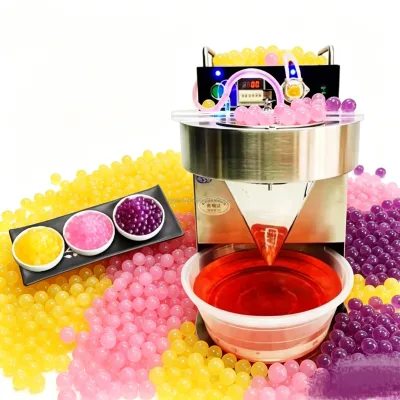
Find 29 Semi-Automatic Popping Boba Machine listings from verified suppliers in China. Compare models like SU-BZD and ORME-PBM-14 based on material, power, and output capacity for manufacturing or food and beverage applications.
Key considerations
Products List


Popping Boba Production Line Boba Ball Make Machine Semi Automatic Popping Boba Form Machine
$5900.00 - $6300.00
MOQ: 1 Pieces

Semi Automatic Popping Boba Equipment Automatic Jelly Ball Pearl Boba Make Machine
$5900.00 - $6300.00
MOQ: 1 Pieces


Brown Sugar Popping Boba Production Line Tapioca Pearl Popping Boba Making Machine for Sale
$11000.00 - $12000.00
MOQ: 1 Pieces


Fully Automatic Popping Boba Production Equipment Popping Boba Machine
$20000.00 - $50000.00
MOQ: 1 Sets


Semi-Automatic High Efficiency Popping Boba Fruit Balls Production Machine
$3000.00 - $3500.00
MOQ: 1 Sets

Fully Automated Popping Boba and Bursting Boba Machine Customizable Setup
$6999.00 - $9999.00
MOQ: 1 Pieces

Touchscreen Controlled Fully Automated Bursting Boba and Popping Boba Equipment
$6999.00 - $9999.00
MOQ: 1 Pieces


Comprehensive Sourcing Guide
Strategic Sourcing Guide for Semi-Automatic Popping Boba Machines
Understanding the Technical Architecture and Operational Specifications
When evaluating a semi-automatic popping boba machine, buyers must first distinguish between the operational modes and the physical constraints of the equipment. The market offers machines categorized by their level of automation, with a significant segment dedicated to semi-automatic units. These machines are designed to bridge the gap between fully manual preparation and high-speed industrial automation, offering a balance of control and efficiency. The core operational characteristic of these units is their reliance on electric power sources, typically operating at standard industrial voltages such as 380V or 220V. This dual-voltage capability is a critical technical specification that buyers must verify against their local power infrastructure to ensure immediate operational readiness without requiring expensive transformer upgrades.
The physical construction of these machines is paramount for food safety and longevity. The primary material used in the construction of the machine's contact surfaces and structural frame is Stainless Steel, specifically grades SS304 and 316L. This material selection is not merely aesthetic; it provides the necessary corrosion resistance required in wet food processing environments and ensures compliance with general food hygiene standards. The footprint of these units varies significantly based on the model and intended capacity. Some models are designed with a compact footprint to suit smaller production floors, while others, such as those with standard dimensions around 500015002700mm, are built for larger manufacturing plants. Conversely, smaller units may have dimensions closer to 26007501880mm or 285022001500mm. Buyers should carefully map these dimensions against their available floor space, as the "Small" footprint attribute is not universal across all semi-automatic models.
The production process for these machines often involves thermal processing, which is essential for the formation and setting of the boba pearls. The connection method for the machinery components is typically welding, ensuring a robust and leak-proof structure. The output capacity of these semi-automatic units is generally classified as "Low" relative to fully automatic high-speed lines, which aligns with their intended use in smaller batch productions or pilot facilities. Despite the lower output classification, these machines often feature high productivity attributes due to their optimized design, allowing for efficient processing within their specific capacity limits. The power consumption is a key operational metric, with specific models rated at 2kw, indicating a moderate energy requirement that must be factored into the total cost of ownership calculations.
Compliance Verification and Certification Standards
Navigating the compliance landscape for food processing machinery requires a rigorous verification of certifications. In the context of semi-automatic popping boba machines, the certification status varies by manufacturer and region. Common certifications observed in the market include CE, which indicates conformity with health, safety, and environmental protection standards for products sold within the European Economic Area. Additionally, some suppliers provide ISO certifications, though the specific standard (such as ISO 22000) should be verified on a case-by-case basis rather than assumed. It is crucial for buyers to request the actual certification documents rather than relying on marketing claims, as the presence of "ISO" in a product description does not automatically imply a specific food safety standard compliance without explicit documentation.
The "Low Risk" attribute is often highlighted in product listings, suggesting that the machine design minimizes potential hazards during operation. However, this should be treated as an observation of the design intent rather than a guaranteed safety rating. Buyers must verify that the machine meets the specific safety regulations of their target market. For instance, while some units are marked as "New" and come with a "Machinery Test Report," the scope and validity of these reports must be confirmed. The test report serves as evidence that the machine has undergone functional and safety checks, but the specific parameters tested and the results achieved are not universally standardized across all suppliers.
Customization is a significant factor in compliance and specification. Many semi-automatic machines are offered as "Customized" units, allowing buyers to tailor the machine to specific production needs or regulatory requirements. This includes adjustments to the voltage, dimensions, and even the connection methods. The "Customized" nature of these products means that the standard certification status of a base model may change when modifications are made. Therefore, buyers should ensure that any customizations do not void existing certifications or require new compliance testing. The "After-Sales Service Provided" often includes online support, which is vital for troubleshooting compliance-related issues or operational adjustments post-installation.
Cost Drivers and Pricing Structure Analysis
The pricing for semi-automatic popping boba machines exhibits a wide range, observed in the market from $1 to $70,000. This vast disparity is not indicative of a single product category but rather reflects the diversity in specifications, materials, and customization levels. The primary cost drivers include the grade of stainless steel used (SS304 vs. 316L), the complexity of the thermal processing system, and the level of automation integrated into the semi-automatic design. Machines with a "High Productivity" claim or those designed for "Manufacturing Plant" applications typically command higher prices due to the increased engineering complexity and durability required.
The Minimum Order Quantity (MOQ) for these machines is frequently observed as 1 unit, which facilitates entry for small businesses and pilot projects. However, the price per unit can fluctuate based on the volume of customization. Standard models with a "Wooden Box Packaging" or "Standard Wooden Case Packaging" may be more cost-effective, while units requiring "Standard Export Wooden Case" packaging for international shipping might incur additional logistics costs. The "Gross Weight" of the machine, which can be as high as 1500kg for larger models, is another significant cost driver, as it directly impacts shipping and handling expenses.
Buyers should also consider the "Low Consumption High Efficiency" attribute as a long-term cost factor. While a machine with lower upfront costs might have higher energy consumption, a unit rated at 2kw with high efficiency could offer better operational savings over time. The "Marketing Type" of the product, such as "New Product 2024," can also influence pricing, as newer models may carry a premium for the latest technology. It is essential for buyers to analyze the total cost of ownership, including energy costs, maintenance, and potential downtime, rather than focusing solely on the initial purchase price. The "Advantage" of "Easy Operation High Performance" suggests that labor costs may be reduced, which is a critical component of the overall economic equation.
Typical Applications and Industry Suitability
Semi-automatic popping boba machines are designed for a variety of applications, primarily within the food and beverage sector. The "Applicable Industries" listed for these machines include Manufacturing Plants, Food & Beverage Factories, and even Farms, indicating their versatility in different production environments. In a Manufacturing Plant setting, these machines serve as a cost-effective solution for producing boba pearls in medium volumes, allowing for flexibility in production schedules. For Food & Beverage Factories, the "Multifunctional" nature of these machines allows for the production of various types of boba or similar food products, adapting to changing market demands.
The "Type" of machine, specifically "Semi-Automatic," makes it particularly suitable for businesses that require a balance between manual oversight and automated efficiency. This is ideal for startups or small to medium-sized enterprises (SMEs) that may not have the capital for fully automatic high-speed lines but need to scale beyond manual production. The "Product Name" often explicitly states "Semi-Automatic Popping Boba Machine," which helps buyers identify the correct equipment for their specific production needs. The "Keywords" associated with these machines, such as "Popping Boba Machine," reinforce their specialized function in creating the specific texture and consistency required for popping boba.
The "Condition" of the machine, typically listed as "New," ensures that buyers receive equipment that has not been subjected to wear and tear, which is crucial for maintaining food safety standards. The "Brand Name" associated with these machines, such as "Tgmachine," can be a factor in buyer confidence, though the specific brand should not be the sole determinant of quality. The "After-Sales Service Provided" is particularly relevant for these applications, as the "Engineers Available to Service Machinery Overseas" ensures that technical support is accessible regardless of the buyer's location. This support is vital for maintaining production continuity in industries where downtime can lead to significant financial losses.
Supplier Evaluation and Quality Control Protocols
Evaluating suppliers for semi-automatic popping boba machines requires a multi-faceted approach that goes beyond the basic product listing. The "Place of Origin" is a critical factor, with many suppliers located in China, specifically in regions like Henan. While this location is a common hub for machinery manufacturing, buyers must verify the specific capabilities and reputation of the supplier within that region. The "Certification" status, such as "ISOCE" or "CE," should be cross-referenced with official databases to ensure authenticity. The "Machinery Test Report" provided by the supplier is another key document that should be reviewed to assess the machine's performance under controlled conditions.
Quality control should be integrated into the procurement process from the initial inquiry stage. Buyers should request detailed specifications regarding the "Material" used, ensuring that the SS304/316L stainless steel meets the required grade and thickness. The "Connection Method" of welding should be inspected for quality, as poor welding can lead to leaks or structural failures. The "prod_packing" method, whether "Wooden Box" or "Standard Export Wooden Case," is also a quality indicator, as proper packaging protects the machine during transit and prevents damage. The "Standard" dimensions provided in the listing should be verified against the actual machine to ensure it fits the intended production space.
The "Low Risk" attribute mentioned in product descriptions should be treated as a claim that requires validation. Buyers should ask for specific risk assessments or safety data sheets that support this claim. The "After-Sales Service Provided" is a critical component of supplier evaluation, as the availability of "Online Support" or "Engineers Available to Service Machinery Overseas" indicates a commitment to long-term customer satisfaction. The "Advantage" of "Easy Operation High Performance" should be demonstrated through video evidence or user testimonials, as these claims can be subjective. Finally, the "Customization" options should be clearly defined, with a clear understanding of the lead times and costs associated with any modifications.
Long-Term Procurement and Operational Sustainability
Sourcing a semi-automatic popping boba machine is not just a one-time transaction but the beginning of a long-term operational relationship. The "Customized" nature of these machines means that future upgrades or modifications may be necessary to adapt to changing production needs or regulatory requirements. Buyers should ensure that the supplier has the capacity to support these future changes, including the availability of spare parts and technical expertise. The "Power Source" and "Voltage" specifications should be considered in the context of future energy costs and potential changes in local power infrastructure.
The "Footprint" of the machine is a long-term consideration, as it affects the layout of the production facility. A "Small" footprint may offer flexibility for future expansion, while a larger machine might limit future growth. The "Output" capacity, classified as "Low," should be evaluated against projected production volumes to ensure the machine remains relevant as the business scales. The "Condition" of the machine, typically "New," will degrade over time, and the availability of maintenance services is crucial for extending the machine's lifespan. The "After-Sales Service Provided" should include a clear maintenance schedule and support plan to ensure the machine continues to operate efficiently.
The "Marketing Type" of the product, such as "New Product 2024," indicates that the technology is current, but buyers should consider the obsolescence risk. As technology evolves, the "Key Selling Points" of "High Productivity" and "Low Consumption High Efficiency" may become standard, requiring buyers to stay informed about new developments. The "Brand Name" and "Supplier Reputation" play a significant role in long-term sustainability, as a reputable supplier is more likely to provide consistent support and quality. The "Location" of the supplier, particularly in China, should be evaluated for logistical stability and the ability to handle international shipping and customs requirements.
Comparative Analysis of Machine Models
To facilitate a clear comparison of the available semi-automatic popping boba machines, the following table summarizes the key specifications observed in the market. This comparison highlights the variations in model numbers, dimensions, and certifications, providing a structured overview for buyers.
| Product Model | Material | Voltage | Dimensions (mm) | Certification | Packaging | Output |
|---|---|---|---|---|---|---|
| SU-BZD | SS304/316L | 380V/220V | 285022001500 | ISOCustomized | Wooden Box | Low |
| MBD-100 | 304 Stainless Steel | 380V/220V | 500015002700 | CE | Wooden Box | Low |
| ORME-PBM-14 | 304 Stainless Steel | 380V/220V | 26007501880 | ISOCE | Standard Wooden Case | Low |
| ORME-PBM-06 | 304 Stainless Steel | 380V/220V | 26007501880 | ISOCE | Standard Wooden Case | Low |
| MTN-PBM-07A | 304 Stainless Steel | 380V/220V | N/A | ISOCE | Standard Export Wooden Case | Low |
| MTN-PBM-06A | 304 Stainless Steel | 380V/220V | N/A | ISOCE | Standard Export Wooden Case | Low |
| MTN-PBM-10A | 304 Stainless Steel | 380V/220V | N/A | ISOCE | Standard Export Wooden Case | Low |
| MTN-PBM-14A | 304 Stainless Steel | 380V/220V | N/A | ISOCE | Standard Export Wooden Case | Low |
This table illustrates the diversity in model offerings, with variations in dimensions and packaging types. The "Output" is consistently listed as "Low" across these models, reflecting the semi-automatic nature of the machines. The "Certification" varies, with some models listing "ISOCustomized" or "ISOCE," while others list "CE." Buyers should use this table as a starting point for further investigation, verifying the specific details of each model with the supplier. The "Material" is consistently stainless steel, ensuring food safety, while the "Voltage" options provide flexibility for different power grids. The "Packaging" types range from simple "Wooden Box" to "Standard Export Wooden Case," indicating different levels of protection for international shipping.
FAQs
What materials are used to construct the machine?
The machine is constructed using SS304 or 316L stainless steel for food safety and corrosion resistance. This material ensures durability in wet processing environments while meeting general hygiene standards for food production equipment.
Can the machine operate on different voltage standards?
Yes, the machine supports dual voltage operation at 380V or 220V to match local power infrastructure. Buyers must verify their specific site voltage before installation to avoid requiring expensive transformer upgrades for immediate readiness.
Which certifications are available for this equipment?
Common certifications include CE and ISO, with some models offering customized certification options. Buyers should request actual certification documents rather than relying on marketing claims to ensure compliance with specific regional safety regulations.
How is the machine packaged for shipping?
The machine is typically packed in a wooden box or standard export wooden case for protection. This packaging method safeguards the equipment during transit and prevents damage, though specific packing types may vary by model.
What is the typical output capacity of these units?
The output capacity is generally classified as low relative to fully automatic high-speed lines. This makes the machine suitable for smaller batch productions or pilot facilities rather than large-scale industrial manufacturing environments.
Where are these machines typically manufactured?
These machines are primarily manufactured in China, with specific origins noted in regions like Henan. Buyers should verify the specific supplier location to assess logistics costs and potential lead times for international delivery.
Can the machine be customized for specific needs?
Yes, customization is available for voltage, dimensions, and connection methods to meet specific requirements. Buyers must ensure that any customizations do not void existing certifications or require new compliance testing before finalizing the order.