Source Shisha Hookah Bowl for Tobacco Tools, Retro Style, and Creative Design
Compare 30 Shisha Hookah Bowl options from China suppliers featuring materials like crystal and glass. Buyers can review specifications including sizes from 11.5cm to 55cm, weights, and packaging details for wholesale needs.
Key considerations
Products List

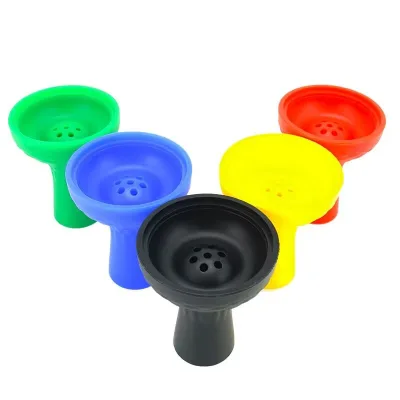
New Shisha Hookah Carbon Box with Bowl Shisha Accessories Chicha Silicone Bowl
$5.00 - $5.99
MOQ: 200 pieces

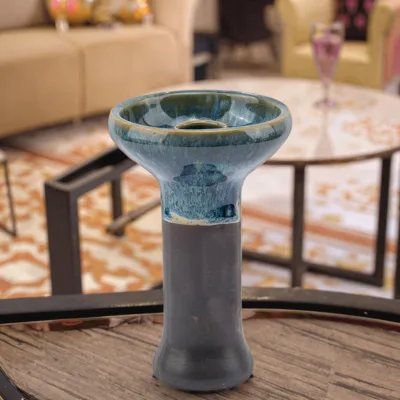
Compact and Exquisite Factory New Design Ceramic Accessories Shisha Hookah Bowl
$1.85 - $2.95
MOQ: 60 pieces

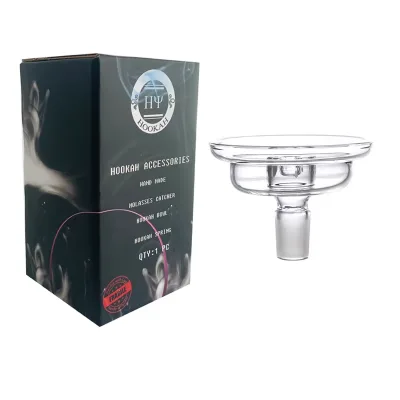
Modern Style Design Great Quality Durable and Simple Crystal Shisha Hookah Bowl
$5.67 - $8.45
MOQ: 100 pieces

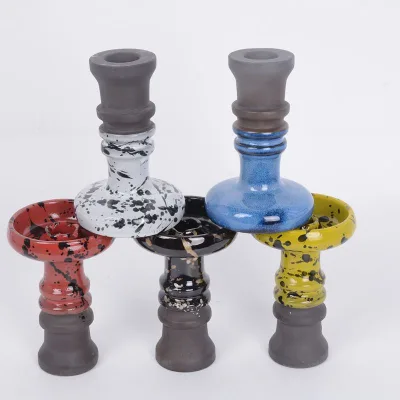
Factory New Retro Style Durable and Portable Ceramic Shisha Hookah Bowl
$11.23 - $12.45
MOQ: 72 pieces


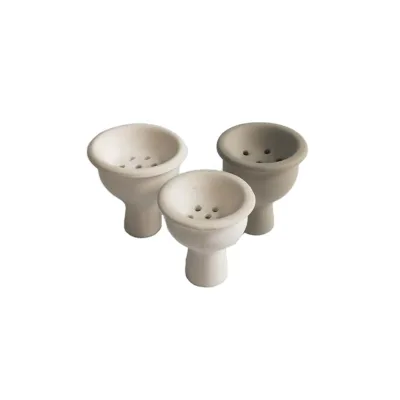
Wholesale Ceramic Smoking Accessories Multi Colors Frosted Clay Shisha Hookah Bowl
$1.60 - $2.00
MOQ: 200 pieces





Comprehensive Sourcing Guide
Strategic Sourcing Guide for Shisha Hookah Bowls
The global market for shisha hookah bowls presents a complex landscape for B2B procurement professionals, characterized by diverse material compositions, varying customization capabilities, and distinct packaging requirements. For buyers entering this sector, the primary objective is to align product specifications with operational needs while mitigating supply chain risks. This guide synthesizes observed market data and technical attributes to provide a disciplined framework for sourcing high-quality hookah bowls. The analysis focuses on material integrity, dimensional consistency, and supplier reliability, ensuring that procurement decisions are grounded in verifiable facts rather than marketing assertions.
Material Composition and Technical Specifications
The foundational decision in sourcing hookah bowls revolves around material selection, as this dictates heat retention, flavor purity, and durability. The observed market data indicates a prevalence of two primary materials: Crystal and Glass. Crystal bowls are often associated with a premium aesthetic and specific thermal properties, while Glass bowls offer transparency and a range of finishes. The distinction is critical; a supplier listing "Crystal" as a standard attribute may be referring to a specific type of lead-free glass or a crystalline ceramic composite, requiring explicit verification.
Dimensional specifications vary significantly across product models, influencing the smoking experience and compatibility with different hookah stems. Observed models such as XL-2031 and PJ-B-1203 demonstrate that size is not uniform. Buyers must verify specific dimensions against their inventory requirements. For instance, some units are specified by length, such as a 15cm model, while others are defined by diameter, like a 4-inch variant. Height is another critical metric, with some products reaching 55cm or 11.36 inches, suggesting a wide range from compact table-top units to larger, floor-standing configurations.
Weight is a frequently cited attribute that correlates with material density and heat capacity. The observed weight range spans from lightweight options at 50g to heavier units at 65g-400g, with some specific models reaching 600g or even 3.5kg. This variance suggests that a single supplier may offer a portfolio catering to different market segments, from disposable or travel-friendly bowls to heavy-duty, heat-retentive ceramic or crystal pieces. The "Retro Style" attribute further complicates the specification matrix, indicating that aesthetic design often overrides standard geometric uniformity.
Customization and Production Capabilities
A significant advantage in the current sourcing environment is the widespread availability of customization services. The data confirms that "Customization" is an available attribute for a substantial portion of the market, alongside explicit "OEM/ODM Available" status. This implies that buyers can request modifications to product models, such as HM-PJ0391 or HK-007, to align with brand identity or specific functional requirements.
However, the extent of customization must be carefully defined. While "Customized" is listed as a standard attribute for some items, this often refers to packaging or minor design tweaks rather than a complete overhaul of the core product engineering. Buyers should verify the minimum order quantities (MOQ) associated with custom runs. The observed MOQ range in the market is broad, spanning from 2 to 500 units, with specific product lines requiring 24PCS or higher. This flexibility allows for both small-batch testing and large-scale production, but the cost implications of low-volume customization must be weighed against the benefits of branding.
The "Creative Design" attribute suggests that suppliers are actively developing unique shapes and patterns. When engaging with suppliers for custom designs, buyers should request digital proofs or physical samples to ensure that the "Creative Design" translates accurately to the final manufactured product. The "Joint" specification, noting 14mm and 18mm options, is a crucial technical detail for compatibility. Any custom design must maintain these standard joint sizes to ensure the bowl fits existing hookah stems, a common point of failure in poorly sourced products.
Packaging Standards and Logistics Considerations
Packaging plays a pivotal role in protecting fragile hookah bowls during transit and influencing the final retail presentation. The observed data reveals a diverse array of packaging methods, ranging from simple "Carton Packing" to more elaborate "Carton/Wooden Case" solutions. The frequency of packing is also variable, with some cartons holding 40PCS, others 100PCS, and specialized configurations like 4pcs/carton or 500pcs/carton.
For high-value items like Crystal or heavy Glass bowls, the packaging must be robust. The "Bubble Sheet/Paper, Inner Box, Cartonn" specification indicates a multi-layered protection strategy designed to prevent breakage. Similarly, "Bubble/Paper Plus Carton" suggests a focus on cushioning. Buyers must evaluate the "Packing" attribute not just as a logistical detail but as a quality indicator. A supplier offering "120 pcs/carton" for a fragile item without specifying internal cushioning may pose a higher risk of damage.
The "Mixed Color" attribute implies that some orders may require a variety of SKUs within a single shipment. This necessitates clear labeling and segregation protocols in the packaging. Furthermore, the inclusion of "Accessories" with certain models adds complexity to the packing process. The "Box" packaging for items like PJ1012, with a density of 240pcs/box, suggests a different logistical approach compared to the "Carton" methods used for other models. Procurement teams must calculate the total cubic volume and weight per container to optimize shipping costs, as the weight of the product itself (up to 3.5kg per unit) significantly impacts freight charges.
Compliance, Certification, and Quality Verification
While the market data does not explicitly confirm universal certification status, the mention of ISO 9001:2015 in the background context serves as a benchmark for quality management systems. Buyers should treat this as a verification target rather than an automatic guarantee. The presence of "Wholesale" and "OEM/ODM" capabilities suggests a mature supply chain, but it does not inherently validate compliance with food safety or material standards.
For products intended for direct consumer use, verifying the material safety is paramount. The distinction between "Crystal" and "Glass" must be backed by material safety data sheets (MSDS) to ensure the absence of lead or other harmful substances. The "Ceramic" standard mentioned in the data also requires verification of glaze safety, particularly for items that come into contact with heat and smoke.
Quality control should be a continuous process rather than a final inspection step. Buyers should implement a sampling plan based on the observed weight and dimension variances. For instance, checking the weight of a sample batch against the 65g-400g range can identify production inconsistencies. Similarly, verifying the "Joint" dimensions (14mm/18mm) ensures that the product meets functional specifications. The "Function: Tobacco Tools" classification reinforces the need for products to be tested for thermal shock resistance, ensuring they do not crack under the heat of burning charcoal.
Supplier Evaluation and Market Dynamics
Evaluating suppliers requires a holistic approach that goes beyond price. The observed price range of 0.3 to 20 USD indicates a highly segmented market, where the lowest price point likely corresponds to basic, mass-produced glass items, while the upper end reflects premium crystal or intricately designed pieces. Buyers must be wary of the "0.3" price point, as it may indicate compromised quality or the inclusion of hidden costs in shipping or packaging.
The origin of the products is consistently listed as "China," which is a major manufacturing hub for this category. However, the specific location within China can influence lead times and logistics. The "MOQ" of 24PCS for some models suggests that smaller suppliers may be more flexible, while larger factories might require higher volumes. Buyers should assess the supplier's capacity to handle "Wholesale" orders without compromising on the "Customization" lead times.
When comparing suppliers, a structured evaluation matrix is recommended. The following table outlines key comparison criteria based on the observed data:
| Evaluation Criterion | Key Observation | Verification Action |
|---|---|---|
| Material Type | Crystal, Glass, Ceramic | Request material composition reports |
| Dimensions | 11.5cm, 12cm, 15cm, 4in, 55cm | Measure physical samples against specs |
| Weight Range | 50g to 3.5kg | Weigh random samples from production batch |
| Packaging | Carton, Box, Wooden Case, Bubble Sheet | Inspect packaging integrity and cushioning |
| Customization | OEM/ODM Available, Retro Style | Review design proof and MOQ for custom runs |
| Joint Size | 14mm, 18mm | Test fit with standard hookah stems |
| MOQ | 2 to 500 units | Confirm minimum order for target price tier |
Long-Term Procurement and Risk Management
Sourcing hookah bowls is not merely a transactional activity but a strategic partnership that requires long-term planning. The "Retro Style" and "Creative Design" trends suggest that consumer preferences evolve, necessitating a supplier capable of rapid design iteration. Buyers should prioritize suppliers who demonstrate a track record of updating their model lines, such as the variety of models observed (XL-2031, XM-2012, PJ-B-1219, etc.).
Risk management involves diversifying the supplier base to mitigate the impact of production delays or quality issues. Given the "Carton Packing" and "Bubble Sheet" variations, a single supplier may not be able to meet all packaging requirements for different product tiers. Establishing relationships with multiple suppliers, each specializing in a specific material or style, can provide greater flexibility.
Furthermore, the "Accessories" component of the product line should be managed carefully. Ensuring that accessories are compatible with the main bowl and that they do not introduce additional points of failure is essential. The "Wholesale" nature of the market implies that volume discounts are available, but buyers must balance these savings against the potential for overstocking if trends shift.
In conclusion, successful procurement of shisha hookah bowls requires a meticulous approach to technical specifications, material verification, and supplier evaluation. By leveraging the observed data on models, dimensions, and packaging, buyers can construct a robust sourcing strategy that minimizes risk and maximizes product quality. The focus must remain on verifying claims against physical evidence, ensuring that the final product meets the rigorous demands of the tobacco tools market.
FAQs
What materials are used for shisha hookah bowls?
The available materials include Crystal, Glass, and Ceramic. Buyers should verify material composition reports to ensure safety and heat retention properties match their specific product requirements.
Which customization options are available for these bowls?
Customization and OEM/ODM services are available for many models. Buyers can request modifications to design or packaging, but they must confirm the minimum order quantity required for custom runs.
How are the shisha hookah bowls packed for shipping?
Packing methods vary from simple Carton Packing to Bubble Sheet and Inner Box configurations. Some heavy items use Carton/Wooden Case solutions to prevent breakage during transit.
Can I find bowls with specific joint sizes?
Yes, bowls are available with 14mm and 18mm joint specifications. Ensuring the correct joint size is critical for compatibility with existing hookah stems and functional performance.
What is the typical weight range for these products?
Weights range from 50g to 3.5kg depending on the model and material. Buyers should weigh random samples to verify production consistency against the specified weight range.
Where are these shisha hookah bowls manufactured?
The products originate from China. Buyers should verify specific factory locations to assess lead times and logistics capabilities for their wholesale orders.
What are the minimum order quantities for suppliers?
MOQs vary from 2 to 500 units depending on the supplier and product model. Some specific lines require a minimum of 24 pieces for standard orders.