Source Silicone End Cap for Electric, Industrial, and Household Uses
Compare 30 verified listings for Silicone End Cap products featuring high voltage, anti-corrosion, and oil resistance properties. Buyers can evaluate custom models, certifications like ISO and CE, and flexible packaging options from Chinese manufacturers.
Key considerations
Products List


Special Shapes and Colors Silicone Caps
$0.08 - $0.09
MOQ: 1000 Pieces
Ningbo Beilun Hengnai Fluorine & Plastic Production Co., Ltd.

Standard Molded Silicone Rubber Cap
$0.01 - $0.01
MOQ: 10000 Pieces
Ningbo Beilun Hengnai Fluorine & Plastic Production Co., Ltd.

Silicone Rubber Caps with High Quality
$0.07 - $0.10
MOQ: 1000 Pieces
Ningbo Beilun Hengnai Fluorine & Plastic Production Co., Ltd.

Silicone Rubber Caps with Many Colors
$0.07 - $0.07
MOQ: 1000 Pieces
Ningbo Beilun Hengnai Fluorine & Plastic Production Co., Ltd.

High Quality of Small Silicone Rubber Cap
$0.03 - $0.03
MOQ: 10000 Pieces
Ningbo Beilun Hengnai Fluorine & Plastic Production Co., Ltd.

Higher Quality of Silicone Caps
$0.01 - $0.01
MOQ: 10000 Pieces
Ningbo Beilun Hengnai Fluorine & Plastic Production Co., Ltd.


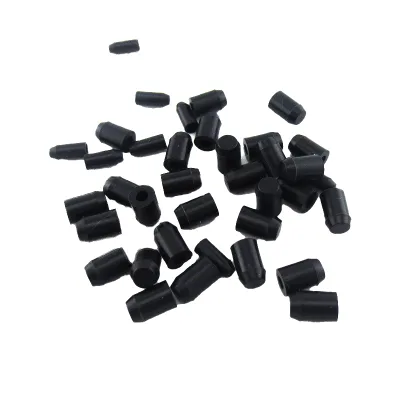


$0.45 - $0.50
MOQ: 200 Pieces


Comprehensive Sourcing Guide
Strategic Sourcing Guide for Silicone End Caps in B2B Procurement
Understanding Technical Specifications and Material Integrity
When sourcing silicone end caps, the primary objective is to align the component's physical properties with the operational demands of the final assembly. The market offers a diverse array of configurations, ranging from standard O-Ring shapes to specialized cartridge seal caps. A critical observation in current listings indicates that materials are not limited to silicone; suppliers frequently offer Plastic, PE (Polyethylene), and SIL (Silicone) options. For applications requiring high elasticity and oil resistance, Silicone Rubber is the preferred material, often cited for its durability in industrial components and electronic products.
The geometry of the end cap is equally vital. Buyers must verify the cross-section shape, with O-Rings being a common specification for sealing applications. The head code often defaults to a Round configuration, but the shape can vary based on the specific drawing requirements. In terms of connection types, the supply chain presents a mix of Male, Female, and Welding connections. This variability suggests that a "one-size-fits-all" approach is insufficient. Procurement teams must cross-reference the required connection type with the specific product model, such as the SD95554812el or SC312-1500, to ensure mechanical compatibility.
Furthermore, the manufacturing technique plays a significant role in the final product's quality. Casting is a documented production method for these components, which influences the surface finish and dimensional accuracy. For custom orders, the production standard is often "as per drawings" or "according to customer design," allowing for tailored solutions that meet unique engineering constraints. The availability of customization is a high-confidence attribute, meaning buyers can request specific modifications to the product model, such as the "Customized rubber end cap" or specific cartridge seal variations like CARTRIDGE SEAL CAP001.
Compliance, Certification, and Regulatory Standards
Navigating the compliance landscape for silicone end caps requires a rigorous verification of certifications and adherence to international standards. The observed data confirms that products often carry ISO and CE certifications, which are essential for market access in Europe and other regulated regions. Additionally, some listings indicate compliance with GB (Guobiao) standards alongside ISO and CE, reflecting the manufacturing origin in China and the specific domestic regulatory environment.
Standards compliance extends beyond general certifications to specific technical benchmarks. The supply chain references a mix of GB, DIN, and ANSI standards, indicating that suppliers are capable of meeting diverse international requirements. For specialized applications, such as those involving C3 or C4 cartridge threads, specific standards for thread usage are applied. It is crucial for buyers to verify that the supplier can provide documentation proving adherence to these standards, particularly when the product is intended for high-voltage or anti-corrosion environments.
The "High Voltage" special function is a notable attribute observed in the market, necessitating strict adherence to electrical safety standards. Products designed for electric applications must demonstrate reliability under high-voltage stress. Similarly, the "Anti Corrosion" attribute implies that the material formulation must withstand harsh chemical environments. Buyers should not assume that all listed products possess these attributes; instead, they must request specific test reports or material safety data sheets (MSDS) to confirm that the silicone rubber or other materials used meet the required performance thresholds for the intended application.
Cost Drivers and Pricing Dynamics
The pricing structure for silicone end caps is influenced by several variables, including material type, customization level, and order volume. The observed price range in the market spans from $0.01 to $9.00 USD, a wide spectrum that reflects the diversity of product complexity. Low-cost items typically represent standard, non-customized parts with minimal material usage, while higher-priced units likely involve complex geometries, specialized materials like high-grade silicone rubber, or custom tooling.
Order quantity is a primary driver of unit cost. The minimum order quantity (MOQ) observed ranges from 100 to 10,000 units. Suppliers often employ tiered pricing models where the unit cost decreases significantly as the order volume increases. For buyers with lower volume requirements, the MOQ of 100 units may be the entry point, but this often comes with a higher per-unit price. Conversely, large-scale procurement can leverage the upper end of the MOQ range to achieve more competitive pricing.
Customization is another significant cost factor. While "Customization: Available" is a standard offering, the extent of the customization impacts the final price. Requests for specific drawing formats (PDF, IGS, STEP, CAD, JPG) and tailored production standards ("Your Bases") require additional engineering time and potentially new tooling, which adds to the overall cost. Buyers should anticipate that custom models like SC625-2500 or SC1125-1500 may carry a premium over standard off-the-shelf items. Additionally, packaging requirements, such as "Carton Case," "Bag," or "Polybag Then Into Cartons," can influence the final landed cost, especially if special packaging is requested to protect the product during transit.
Typical Applications and Functional Requirements
Silicone end caps serve a broad spectrum of industries, driven by their unique material properties and functional capabilities. The observed applications include Household Appliances, Electronic Products, Machinery, and Industrial Components. In the context of electric applications, the "High Voltage" attribute is critical, suggesting use in electrical connectors or insulation systems where dielectric strength is paramount. The "Hole with Seal" effect indicates that these components are often used to seal openings, preventing the ingress of dust, moisture, or other contaminants.
The functional requirements also extend to environmental resistance. The "Anti Corrosion" and "Good Elasticity" attributes highlight the suitability of silicone end caps for harsh environments where chemical exposure or mechanical stress is common. For instance, in machinery and industrial components, the "Oil Resistance" and "Durable" characteristics ensure longevity even when exposed to lubricants or abrasive conditions. The "Low Value Steel" mention in some contexts may refer to specific alloy combinations or cost-effective structural supports integrated with the silicone component, though this requires further clarification from the supplier.
Specific product models demonstrate niche applications. The "CARTRIDGE SEAL CAP001" suggests use in fluid or gas handling systems where a secure seal is necessary. Similarly, the "SD95554812el" and various "SC" series models (SC312-1500, SC0312-1000, SC625-2500, SC1125-1500) likely correspond to specific industry standards or equipment types. Buyers should map these model numbers to their specific assembly requirements to ensure compatibility. The "Equal" shape attribute implies uniform dimensions, which is beneficial for applications requiring consistent sealing pressure around a circular opening.
Supplier Evaluation and Geographic Considerations
Evaluating suppliers for silicone end caps requires a focus on geographic origin, production capabilities, and logistical reliability. The majority of the observed supply originates from China, with specific hubs identified in Fujian and Ningbo. These regions are known for their robust manufacturing ecosystems, particularly in plastics and rubber products. However, buyers must verify the specific factory location to assess the supply chain's resilience and the supplier's proximity to ports for efficient shipping.
The capability for OEM/ODM (Original Equipment Manufacturer/Original Design Manufacturer) is a key differentiator. The presence of "OEM/ODM: Yes" indicates that suppliers can produce parts based on the buyer's designs or develop new solutions in partnership. This is essential for companies requiring proprietary components or those looking to differentiate their products. Buyers should evaluate the supplier's engineering support, including their ability to handle various drawing formats like PDF, IGS, STEP, CAD, and JPG.
Logistical factors are equally important. The observed lead time ranges from 5 to 30 days, depending on the order quantity. This variability suggests that production schedules are flexible but can be impacted by volume. Shipment methods include Sea, Air, and Express, offering flexibility based on urgency and budget. Payment terms are described as "Negotiated," indicating that buyers have room to discuss favorable conditions. When selecting a supplier, buyers should prioritize those who can provide clear communication regarding lead times, shipping methods, and payment flexibility to ensure a smooth procurement process.
Quality Control and Long-Term Procurement Strategy
Ensuring consistent quality in Silicone End Cap procurement requires a robust quality control (QC) framework. Given the "Casting" production technique and the variety of materials, buyers must implement strict incoming inspection protocols. Key quality checks should include dimensional accuracy, material composition verification, and functional testing for sealing integrity. The "Part Advantage" of being "Durable" and "Oil Resistant" should be validated through sample testing before full-scale production.
Long-term procurement strategies should focus on building a reliable supplier relationship rather than transactional purchasing. The ability to customize products according to "Customer Requirements" and "Your Bases" suggests that suppliers are willing to adapt to evolving needs. Buyers should establish clear specifications for standard and non-standard products, ensuring that the supplier understands the critical tolerances and performance requirements. Regular audits of the supplier's production facilities and quality management systems can help maintain consistency.
Furthermore, buyers should consider the scalability of the supply chain. With MOQs ranging from 100 to 10,000 units, suppliers must be capable of scaling production up or down based on demand fluctuations. The "Standard or According to Customers Requirement" packing options allow for flexibility in logistics, but buyers should standardize packaging to minimize damage during transit. By maintaining open communication and setting clear expectations for quality, lead times, and customization, buyers can secure a stable supply of high-performance silicone end caps that meet their operational needs.
Comparative Analysis of Product Attributes
To facilitate decision-making, the following table summarizes the key attributes observed in the market for silicone end caps. This comparison highlights the diversity of options available and assists buyers in identifying the most suitable product for their specific requirements.
| Attribute Category | Observed Options | Relevance to Procurement |
|---|---|---|
| Material | Plastic, PE, SIL, Silicone Rubber | Determines chemical resistance, temperature tolerance, and elasticity. |
| Shape | Equal, O-Ring, Round Head | Dictates sealing surface area and fitment geometry. |
| Connection | Male, Female, Welding | Critical for mechanical integration with existing assemblies. |
| Certification | ISO, CE, GB | Ensures compliance with international and regional safety standards. |
| Standard | GB, DIN, ANSI, Custom/Drawings | Defines dimensional tolerances and manufacturing specifications. |
| Special Function | High Voltage, Anti Corrosion, Oil Resistance | Indicates suitability for harsh or specialized environments. |
| Origin | China (Fujian, Ningbo) | Influences lead times, shipping costs, and supply chain stability. |
| Lead Time | 5-30 Days | Impacts inventory planning and production scheduling. |
| MOQ | 100-10,000 Units | Affects initial capital outlay and inventory holding costs. |
This structured approach to evaluating product attributes ensures that buyers can make informed decisions based on verified data rather than assumptions. By focusing on these core elements, procurement teams can optimize their sourcing strategies for silicone end caps, balancing cost, quality, and performance to meet their specific business objectives.
FAQs
What certifications do Silicone End Cap suppliers typically hold?
Suppliers typically hold ISO, CE, and GB certifications for these products. Some listings also confirm compliance with DIN and ANSI standards to meet international requirements.
Can I request custom dimensions for silicone end caps?
Yes, customization is available for most Silicone End Cap orders. Buyers can provide drawings in formats like PDF, CAD, or STEP for production based on specific design requirements.
What is the minimum order quantity for silicone end caps?
The minimum order quantity ranges from 100 to 10,000 units depending on the supplier and product complexity. Lower volumes may incur higher per-unit costs compared to bulk orders.
How long does it take to receive Silicone End Cap orders?
Lead times typically range from 5 to 30 days based on the order quantity. Production schedules are flexible but depend on the specific volume and customization level requested.
Which materials are used to manufacture silicone end caps?
Manufacturers use materials such as Silicone Rubber, Plastic, PE, and SIL. Silicone Rubber is preferred for applications requiring high elasticity, oil resistance, and durability in industrial settings.
Where are Silicone End Cap manufacturers located?
Most manufacturers are located in China, with specific hubs in Fujian and Ningbo. These regions offer robust ecosystems for producing plastic and rubber components for global markets.