Source Silicone Eco Friendly Tea Infuser for Brewing, Steeping, and Serving
Compare 30 listings for the Silicone Eco Friendly Tea Infuser to find options with custom shapes, eco-friendly features, and certifications like FDA and CE. Buyers can review specifications including temperature ranges from -40 to 230 degrees Celsius and various packing details from verified manufacturers in China.
Key considerations
Products List


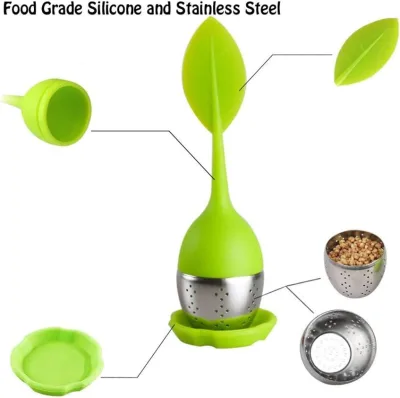


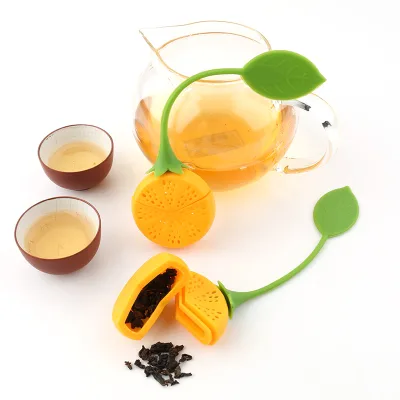
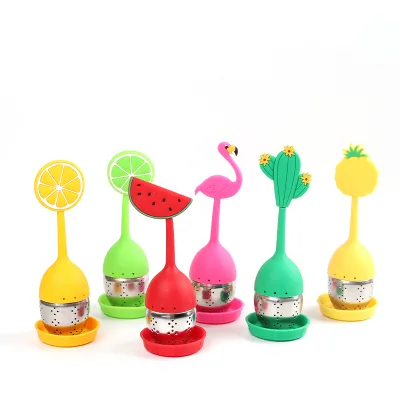


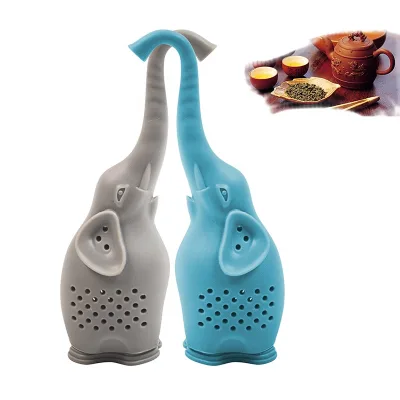

Premium Silicone Loose Leaf Tea Infuser and Strainer for Perfect Brews
$14.50 - $16.50
MOQ: 500 Pieces



Comprehensive Sourcing Guide
Strategic Sourcing Guide for Silicone Eco-Friendly Tea Infusers
Understanding Product Specifications and Variability
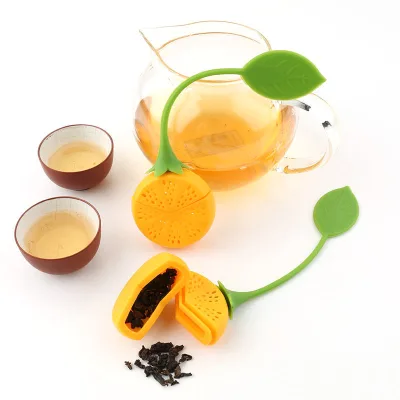
When sourcing silicone eco-friendly tea infusers, buyers must first navigate a landscape of diverse technical specifications that define the final utility of the product. The core keyword implies a focus on sustainability and material safety, yet the physical attributes of these infusers vary significantly based on the intended brewing method and design philosophy. Based on available market data, the product model designations range from general infusers to specific shapes like the "Lemon" or custom cut shapes, indicating that the form factor is a primary differentiator.
The dimensional specifications are critical for inventory planning and logistics. Observed data indicates that individual unit weights can range from approximately 22 grams to 40 grams per piece. This variance directly impacts the total weight of a shipment and the number of units that can be packed into a standard carton. For instance, specific configurations show a net weight of 11.5 kg per carton containing 500 pieces, while others with heavier units (40g/pc) result in a net weight of 12.55 kg per carton containing only 300 pieces. The physical dimensions of the infusers themselves also vary; some are standardized at 15cm in length with a 4cm diameter, while others feature specific handle rope lengths of 22cm or bottom dimensions of 5cm by 1cm.
Packaging configurations further complicate the sourcing equation. While some suppliers offer single-piece packaging in OPP bags, bulk shipping often utilizes carton sizes of 452040cm or 533833cm. The gross weight of these cartons typically ranges between 12.5 kg and 13.55 kg. Buyers must verify these specific packing details for each supplier to ensure that their warehouse capacity and shipping costs align with the product's physical reality. The "Eco-Friendly" attribute is often paired with multicolor or unicolor options, and the "Customized" nature of the product allows for bespoke shapes, which requires precise communication of design files to the manufacturer.
Compliance and Certification Verification
In the realm of food contact materials, particularly for items used in hot water brewing, compliance is not merely a marketing claim but a regulatory necessity. The supply chain for silicone tea infusers is heavily regulated in major markets, requiring rigorous verification of certifications. The observed data highlights several key certifications that buyers should look for, including FDA, CE / EU, LFGB, EEC, and CIQ. These certifications indicate that the silicone material has been tested for safety regarding food contact, ensuring it does not leach harmful substances into hot water or tea.
The presence of multiple certifications, such as EEC, CIQ, FDA, and CE / EU, suggests a high level of regulatory adherence, but buyers must treat these as observations rather than universal guarantees for every listed product. It is essential to request current, valid certificates for the specific model being ordered. The standard of SGS is also mentioned in the context of product quality, serving as a third-party verification of the manufacturing process and material integrity.
Buyers should be aware that while some products list ISO 9001 or BSCI as background standards, these should be treated with caution unless explicitly confirmed for the specific production batch. The primary focus must remain on food safety certifications like FDA and LFGB, which are non-negotiable for products intended to hold loose-leaf tea. The temperature resistance of the silicone is another critical compliance factor; observed data confirms a temperature range of -40 to 230 degrees Celsius. This range ensures the infuser can withstand boiling water without degrading, releasing odors, or melting, which is a fundamental requirement for a functional tea infuser.
Cost Drivers and Pricing Dynamics
The pricing of silicone eco-friendly tea infusers is influenced by a complex interplay of material costs, customization levels, and order volume. The observed listed price range in the market spans from $0.20 to $16.50 USD. This wide disparity is not indicative of quality alone but rather reflects the degree of customization, the complexity of the mold, and the order quantity. A basic, uncustomized infuser in a standard shape will likely sit at the lower end of this spectrum, while a custom-shaped, multicolor, or branded infuser will command a higher price point.
Minimum Order Quantity (MOQ) is a significant driver of unit cost. The market data shows an MOQ range from 20 pieces to 3,000 pieces. Suppliers offering low MOQs, such as 50 or 20 pieces, often charge a premium per unit to cover the setup costs of smaller production runs. Conversely, larger orders of 3,000 pieces can leverage economies of scale to reduce the per-unit cost. Buyers must balance their initial capital outlay with their inventory turnover expectations.
Additional cost factors include the packaging requirements. While standard packaging involves OPP bags and cartons, custom packaging solutions or specific carton sizes (e.g., 452040cm vs. 533833cm) can affect the overall landed cost. Furthermore, the origin of the product, primarily China and specifically Guangdong, influences labor and material costs. The "Verified Factory" and "Manufacturer" business types suggest that direct sourcing from the production facility can eliminate middleman markups, potentially offering better pricing than trading companies. However, buyers must factor in the cost of international shipping, which can be calculated via Express, Sea, Air, or Train modes, with carriers like TNT, FedEx, DHL, and UPS available for express options.
Typical Applications and Functional Performance
The primary application of silicone eco-friendly tea infusers is the brewing of loose-leaf tea, a practice that requires the infuser to hold tea leaves securely while allowing water to circulate freely. The functional requirement is to hold loose-leaf tea without allowing particles to escape into the cup, a feature often described as "Good Sealing." The observed performance attributes highlight water resistance and effective sealing, which are crucial for maintaining the clarity and taste of the brewed tea.
Beyond simple tea brewing, the versatility of these infusers allows for broader applications. The temperature range of -40 to 230 degrees Celsius suggests that these infusers can be used in various thermal environments, from cold brewing to hot steeping. The "Eco-Friendly" attribute aligns with a growing consumer preference for sustainable kitchenware, making these products suitable for environmentally conscious households and cafes. The "Customized" nature of the product allows for branding opportunities, where the infuser can be shaped or colored to match a specific brand identity or promotional campaign.
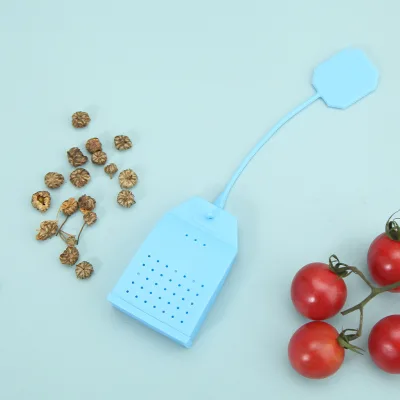
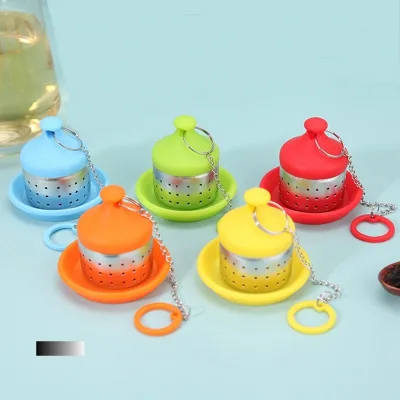
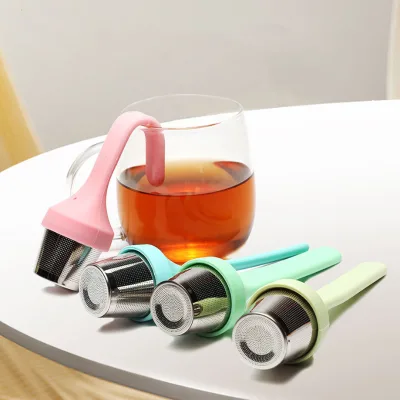
The shape of the infuser, whether "Lemon," "Cutom Shape," or standard cylindrical forms, impacts the surface area available for tea leaves and the ease of cleaning. A larger surface area facilitates better water flow and extraction, while a compact design may be preferred for single-cup servings. The "Single" piece attribute indicates that these are typically sold as individual units rather than sets, allowing for flexibility in purchasing based on specific brewing needs. The ability to customize the shape and color further enhances the product's appeal in the retail market, where visual differentiation is key to standing out on shelves.
Supplier Evaluation and Business Model Assessment
Evaluating suppliers for silicone tea infusers requires a deep dive into their business model and operational capabilities. The market data identifies "Verified Factory" and "Manufacturer" as the primary business types, suggesting that many suppliers are direct producers rather than intermediaries. This distinction is vital for buyers seeking transparency, quality control, and competitive pricing. A manufacturer is more likely to have direct control over the molding process, material sourcing, and quality assurance protocols.
When assessing a potential supplier, buyers should verify the "Mode of Payment" options, which typically include T/T, Paypal, and Western Union. These payment methods offer varying levels of security and flexibility. T/T (Telegraphic Transfer) is common for large orders, while Paypal and Western Union may be used for smaller transactions or sample orders. The "Mode of Shipment" is another critical factor; suppliers offering multiple options such as Express, Sea, Air, and Train provide flexibility in managing logistics based on urgency and budget.
The "Sample" availability is a crucial step in the supplier evaluation process. The data indicates that stock samples are often free, with a sample time of 4-5 days or 5-7 days depending on the specific product. This allows buyers to physically inspect the quality, weight, and functionality of the infuser before committing to a bulk order. The "Mass Order Time" and "Mass Produce Time" ranges of 10-13 days and 10-15 days respectively, highlight the production lead times. Buyers must account for these timelines in their supply chain planning to avoid stockouts.
Quality Control and Long-Term Procurement Considerations
Implementing a robust quality control (QC) strategy is essential for ensuring that every batch of silicone tea infusers meets the required standards. The "Standard" of SGS mentioned in the data suggests that third-party inspections are a viable option for verifying product quality. Buyers should consider conducting pre-shipment inspections to check for defects in sealing, color consistency, and dimensional accuracy. The weight variance between 21.4g and 40g per piece must be strictly controlled to ensure that the product specifications match the order requirements.
Long-term procurement considerations involve building a sustainable relationship with the supplier. The "Customization" availability indicates that suppliers are willing to adapt to specific buyer needs, which can be leveraged for long-term product development. However, buyers must maintain clear communication regarding design changes and material specifications to avoid production errors. The "Carton Size" and "Packing" details must be consistently maintained to ensure efficient logistics and storage.
Buyers should also monitor the "Temperature Range" and "Performance" attributes over time to ensure that the silicone material does not degrade with repeated use. The "Eco-Friendly" claim should be backed by verifiable data regarding the recyclability or biodegradability of the silicone, if applicable. Finally, the "Internation Express" options provided by suppliers like TNT, FedEx, DHL, and UPS offer reliable shipping channels, but buyers should compare costs and delivery times to optimize their logistics strategy. By focusing on these key areas, buyers can secure a reliable supply of high-quality silicone eco-friendly tea infusers that meet both functional and regulatory requirements.
FAQs
What certifications are available for silicone tea infusers?
Products typically hold FDA, CE / EU, LFGB, EEC, and CIQ certifications. These verify food safety and material integrity for hot water use, though specific models may vary in their exact compliance list.
Can I customize the shape and color of the infuser?
Yes, customization is available for both shape and color. Buyers can request custom cut shapes or specific colors like multicolor or unicolor options to match their branding needs.
What is the minimum order quantity for these infusers?
The minimum order quantity ranges from 20 to 3,000 pieces depending on the supplier. Lower MOQs like 50 pieces are available for specific models, while bulk orders often start higher.
How long does it take to produce a mass order?
Mass production time generally takes between 10 to 15 days. Sample times are shorter, usually ranging from 4 to 7 days for stock or custom samples before bulk manufacturing begins.
What temperature range can the silicone infuser withstand?
The silicone material withstands temperatures from -40 to 230 degrees Celsius. This range ensures safety for both cold brewing and boiling water without degrading or releasing harmful substances.
Where are these silicone infusers manufactured?
Products originate from China, with specific manufacturing hubs in Guangdong. Buyers should verify the exact origin for each supplier as locations may vary within the mainland region.
What packaging options are available for bulk orders?
Standard packaging includes 1 piece per OPP bag with 300 to 500 pieces per carton. Carton dimensions vary, typically around 45x20x40cm or 53x38x33cm, with net weights between 11.5 and 12.55 kg.