Source Silicone Folding Bowl for Travel, Camping, and Kitchen Use
Explore 30 listings for the Silicone Folding Bowl, featuring options with backwash filters, ceramic bowls, and rubber molding parts. Buyers can compare customization, certifications, and material properties to find the right supplier for home or industrial applications.
Key considerations
Products List


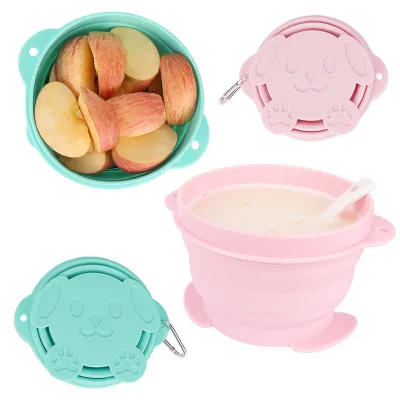


Customized Foldable Feeding Collapsible Bowls Silicon Cat Dog Folding Bowl
$1.80 - $2.00
MOQ: 500 Pieces


Folding Airtight Container Storage Box Set Collapsible Silicone Travel Bowl with Lid
$2.41 - $2.60
MOQ: 1000 Pieces


Comprehensive Sourcing Guide
Strategic Sourcing Guide for Silicone Folding Bowls
Understanding Product Variants and Technical Specifications
When initiating a procurement strategy for silicone folding bowls, buyers must first navigate the significant variance in technical specifications that exist within this product category. The market does not offer a monolithic product; rather, it presents a spectrum of designs ranging from simple travel utensils to complex industrial components. A critical observation from current market data indicates that while many products share the "silicone" material designation, the specific formulation varies. Some listings explicitly identify the material as "Organic Silicone," while others reference "Epdm" or generic "Silicone" without further chemical distinction. This distinction is vital for applications requiring specific chemical resistance or food-grade safety, as the base polymer affects the final product's performance under heat and stress.
Furthermore, the physical design parameters are highly customizable. The "Folding" mechanism is a defining feature, yet the engineering behind it differs. Some models are designed with a "Folding Steam Silicone Plate" architecture, suggesting a dual-purpose utility for cooking or steaming, while others are engineered strictly as "Folding Travel Camping Gargle Bowl" units. The dimensions also fluctuate significantly; observed specifications include a size of 18.5*9.5cm for rubber molding parts, whereas other units are listed as "as Photo," implying a lack of standardized sizing in certain custom batches. Buyers must verify if the product requires a specific hardness rating, with some industrial-grade options offering a range of 30-95 ShoreA, a metric that determines the flexibility and durability of the fold.
The application scope further dictates the necessary technical attributes. Products are categorized for "Home Application," "Agricultural," "Industrial," and "Medical" use. A bowl intended for medical sterilization requires different thermal stability and surface finish properties compared to a camping bowl intended for rough outdoor handling. The "Shape" attribute also varies, with some units designed in a "Hand Shape" for ergonomic grip, while others maintain a standard circular or bowl geometry. Understanding these divergent technical paths is the first step in defining a precise Request for Quotation (RFQ) to avoid receiving samples that do not meet the functional requirements of the intended use case.
Compliance, Certification, and Material Safety Verification
In the realm of food-contact and consumer goods, compliance is not merely a regulatory hurdle but a fundamental component of product value. The sourcing landscape for silicone folding bowls presents a mix of certifications that buyers must scrutinize. Current market data reveals a diverse certification portfolio, with some suppliers listing "CE/EU," "FDA," "CIQ," "LFGB," and "EEC" simultaneously. Others may only hold "ISO9001" for quality management or specific "CE/EU" marks. It is crucial to understand that the presence of a certification on a product listing does not guarantee that every unit in a production run adheres to that standard without verification.
Buyers must treat certifications as claims that require validation through third-party testing reports rather than accepting them as inherent product attributes. For instance, "FDA" compliance is essential for products intended for food service in the United States, while "LFGB" is the German standard often required for European markets. The "CIQ" (China Inspection and Quarantine) mark indicates compliance with Chinese export standards, which is a baseline for many manufacturers originating from China. However, the "FSC" certification, often associated with wood and paper products, appears in background data but is generally irrelevant for silicone products; buyers should not expect this for a silicone bowl and should instead focus on food-grade silicone specific standards.
The material composition directly impacts certification eligibility. While "Organic Silicone" is a common descriptor, the presence of fillers or the specific curing process can alter the material's safety profile. Suppliers claiming "Eco-Friendly" status must be able to substantiate this with material safety data sheets (MSDS) that confirm the absence of harmful plasticizers or heavy metals. When evaluating a supplier, the procurement team should request a copy of the specific test report corresponding to the claimed certification (e.g., FDA 21 CFR 177.2600) rather than relying on the supplier's self-declaration. This due diligence ensures that the product meets the legal requirements of the destination market and protects the brand from liability associated with non-compliant food-contact items.
Cost Drivers and Economic Factors in Procurement
The economic structure of sourcing silicone folding bowls is influenced by several dynamic factors, primarily driven by customization levels, material quality, and order volume. The observed market data indicates a wide price range, with unit costs fluctuating between $0.10 and $4.65 USD. This significant variance is not arbitrary; it is a direct reflection of the product's complexity and the supply chain requirements. A basic, unbranded travel bowl with a standard fold mechanism will naturally sit at the lower end of this spectrum, while a custom-designed, multi-stage filter component or a specialized medical-grade bowl will command a premium price.
Material costs are a primary driver of the final price. The shift from standard silicone to "Organic Silicone" or specialized formulations like "Epdm" increases the raw material cost. Additionally, the "Hardness" specification plays a role; achieving a specific ShoreA rating often requires precise control over the vulcanization process, which can add to manufacturing expenses. The "Design" attribute, particularly when marked as "Customized" or "as Your Requirment," introduces tooling costs. If a buyer requires a unique mold for a specific shape or folding mechanism, the upfront investment in mold creation will be factored into the unit price, especially for smaller order quantities.
Minimum Order Quantity (MOQ) is another critical economic variable. The data shows a broad MOQ range, from as low as 1 piece to as high as 10,000 pieces. Suppliers with an MOQ of 10,000 typically offer lower per-unit costs due to economies of scale but require significant capital commitment. Conversely, suppliers offering an MOQ of 200 or 1,000 pieces provide flexibility for startups or testing phases but at a higher unit cost. Buyers must balance their cash flow constraints with the need for inventory. The "Service" attribute, including "OEM ODM," also impacts cost; adding a custom logo or specific packaging (e.g., "Brown Box" vs. "Polybag") adds processing steps and material costs. Understanding these drivers allows buyers to negotiate effectively and forecast total landed costs accurately.
Typical Applications and Market Segmentation
The versatility of silicone folding bowls allows them to serve a wide array of market segments, each with distinct performance expectations. The "Usage" attribute in the market data highlights applications ranging from "Water Machine" and "Built-in Filter Tank" components to general "Home Application" and "Agricultural" uses. This breadth indicates that the product is not limited to consumer kitchenware but extends into industrial and specialized equipment.
In the consumer sector, the "Folding Travel Camping Gargle Bowl" and "Folding Steam Silicone Plate" cater to the outdoor and travel industry. These products prioritize portability, durability, and ease of cleaning. The "Disposable" attribute is listed as "Non-Disposable," emphasizing the reusable nature of these items, which aligns with the growing consumer preference for sustainable, eco-friendly alternatives to single-use plastics. The "Eco-Friendly" feature is a strong selling point in this segment, appealing to environmentally conscious buyers.
In the industrial and medical sectors, the application shifts toward functionality and safety. Products designated for "Medical" use must adhere to strict hygiene standards and often require specific certifications like "FDA" or "CE/EU." The "Rubber Strip" and "Moulding" processes mentioned in the data suggest that some "silicone folding" products may be components within larger assemblies, such as seals or gaskets for machinery, rather than standalone bowls. The "Agricultural" application might involve containers for transporting liquids or feed, where chemical resistance and robustness are paramount. Buyers must align their procurement strategy with the specific demands of their target market, ensuring that the product's technical specifications match the operational environment in which it will be used.
Supplier Evaluation and Operational Capabilities
Selecting the right supplier is a critical step that goes beyond price comparison. The data reveals that suppliers vary significantly in their operational capabilities, particularly regarding customization and service models. A key differentiator is the "Customization" attribute, which is marked as "Available" across many listings. However, the depth of this customization varies. Some suppliers offer "Design: Customized" and "Design: as Your Requirment," indicating a high level of flexibility in product development. Others may be limited to standard models with minor branding changes.
The "OEM" (Original Equipment Manufacturer) and "ODM" (Original Design Manufacturer) capabilities are essential for buyers looking to build a private label. The data confirms that "OEM: Yes" and "Service: OEM ODM" are common offerings. Buyers should evaluate a supplier's ability to handle the entire product lifecycle, from mold design to final packaging. The "Processing Service: Moulding" indicates that the supplier has in-house manufacturing capabilities, which is preferable to trading companies that outsource production. This in-house control often leads to better quality consistency and faster turnaround times.
Geographic origin is another factor to consider. The "Place of Origin" is consistently listed as "China," specifically mentioning "Shandong" in some cases. This concentration suggests a mature supply chain ecosystem with established logistics networks. However, buyers should verify the specific factory location to ensure it aligns with their risk management strategies. The "Single package size" and "Single gross weight" data provide insight into the supplier's packaging efficiency, which directly impacts shipping costs. A supplier that optimizes packaging to reduce volume (e.g., 37X37X21 cm) can offer significant savings on freight, especially for large orders.
Quality Control and Long-Term Procurement Strategy
Maintaining product quality over time requires a robust quality control (QC) framework. Given the "Non-Disposable" nature of silicone folding bowls, durability is a primary concern. The "Hardness" range of 30-95 ShoreA suggests that buyers should establish clear acceptance criteria for flexibility and resilience. Repeated folding and unfolding can lead to fatigue failure if the material quality is subpar. Therefore, buyers should implement a QC protocol that includes physical stress testing, such as folding the product a set number of times to check for cracks or permanent deformation.
Packaging integrity is also crucial for long-term procurement. The data shows variations in packaging, from "Each Packed in a Polybag" to "Brown Box." The choice of packaging affects the product's protection during transit and its presentation to the end consumer. For premium markets, a "Brown Box" or custom branded packaging may be necessary, while for bulk industrial use, a simple polybag may suffice. Buyers should ensure that the packaging standard is clearly defined in the contract to prevent damage during shipping.
Long-term procurement considerations involve building a strategic partnership with the supplier. The "Lead time" and "MOQ" flexibility are key indicators of a supplier's ability to scale with the buyer's growth. A supplier with a high MOQ of 10,000 may be suitable for established brands but less ideal for new market entrants. Conversely, a supplier with a low MOQ of 200 pieces offers agility but may lack the capacity for rapid scaling. Buyers should aim for a supplier who can transition from low-volume prototyping to high-volume production without compromising quality. Regular audits, clear communication channels, and a shared commitment to continuous improvement will ensure a stable supply chain for silicone folding bowls in the long run.
Comparative Analysis of Product Attributes
To facilitate decision-making, the following table summarizes the key attributes observed in the market, highlighting the diversity of options available to buyers. This comparison aids in identifying the specific product configuration that aligns with procurement goals.
| Attribute Category | Observation A | Observation B | Observation C |
|---|---|---|---|
| Material | Silicone | Epdm | Organic Silicone |
| Certification | CE/EU, FDA, CIQ, LFGB | ISO9001 | FDA |
| MOQ | 10,000 | 200 Pieces | 1-1000 (Range) |
| Design | Customized | As Your Requirment | Standard |
| Application | Home, Medical, Industrial | Agricultural, Household | Water Machine, Filter Tank |
| Hardness | 30-95 ShoreA | Not Specified | Not Specified |
| Packaging | Polybag | Brown Box | Customized |
| Origin | China (Shandong) | China | China |
This table illustrates that no single product fits all needs. A buyer seeking medical-grade equipment must prioritize "FDA" certification and "Organic Silicone" material, while a buyer for a camping gear retailer might focus on "Eco-Friendly" claims and "Polybag" packaging. The "Hardness" specification is a critical differentiator for industrial applications, whereas it may be less relevant for simple travel bowls. By cross-referencing these attributes, buyers can narrow down their supplier list to those capable of meeting their specific technical and commercial requirements.
Final Procurement Recommendations
In conclusion, sourcing silicone folding bowls requires a meticulous approach that balances technical specifications, compliance requirements, and economic factors. The market offers a wide array of options, from basic travel bowls to complex industrial components, each with unique material and certification profiles. Buyers must verify all claims, particularly regarding certifications and material safety, through third-party testing. Understanding the cost drivers, such as customization and MOQ, will enable effective negotiation and budget planning. By selecting suppliers with robust OEM/ODM capabilities and a proven track record in quality control, buyers can secure a reliable supply chain that supports their long-term business objectives. The diversity of the market demands a tailored strategy, ensuring that the final product meets the exact needs of the end-user while maintaining the highest standards of safety and performance.
FAQs
What certifications are available for silicone folding bowls?
Available certifications include CE/EU, FDA, CIQ, LFGB, and EEC for food safety compliance. Some products also carry ISO9001 for quality management. Buyers must verify specific test reports to confirm these claims match the actual production batch.
Can I customize the design and logo of the bowl?
Yes, customization is available with options for design as your requirement and customized logos. The product model and shape can be tailored, such as hand shapes or specific folding mechanisms. This service supports OEM and ODM requirements for private labeling.
What is the minimum order quantity for these bowls?
The minimum order quantity ranges from 1 piece to 10,000 pieces depending on the supplier and customization level. Some listings specify an MOQ of 200 pieces or 1,000 pieces, while others require 10,000 for lower unit costs. Buyers should check specific supplier terms.
Which materials are used to manufacture these folding bowls?
Materials include silicone, organic silicone, EPDM, and in some cases ceramic or porcelain. The hardness can range from 30 to 95 ShoreA for specific durability needs. Buyers should select the material based on the intended application, such as medical or industrial use.
How are the products packaged for shipping?
Packaging options include individual polybags or brown boxes depending on the supplier. The single package size is typically around 37x37x21 cm with a gross weight of 0.050 kg per item. Custom packaging solutions may be available upon request for specific branding needs.
Where are these silicone folding bowls manufactured?
The products originate from China, with specific mentions of the Shandong province as a production hub. Suppliers are located in this region, which supports a mature supply chain for silicone molding and processing services. Buyers should verify the exact factory location for logistics planning.