Source Single Component Firestop Acrylic Sealant for HVAC, Construction, and Joints
Compare 30 listings for Single Component Firestop Acrylic Sealant suitable for HVAC ducts, construction joints, and blank openings. Buyers can evaluate specifications like fire ratings, shelf life, and packaging options from verified suppliers in China and the U.S.
Key considerations
Products List
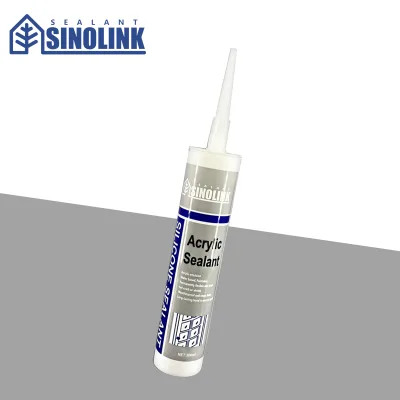


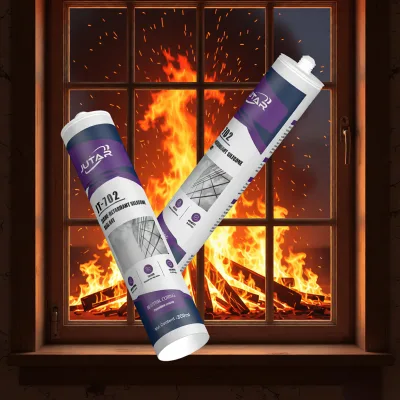


Comprehensive Sourcing Guide
Strategic Sourcing Guide for Single Component Firestop Acrylic Sealant
Procuring single-component firestop acrylic sealant requires a rigorous approach that balances technical performance with regulatory compliance. In the global B2B market, buyers often encounter a fragmented landscape where product attributes vary significantly between listings. The core keyword "Single Component Firestop Acrylic Sealant" points to a specific class of construction materials designed to seal penetrations and joints while maintaining fire ratings. However, the market data reveals a complex mix of product descriptions, ranging from general-purpose acrylic sealants to specialized fire-rated systems with distinct certifications. A successful sourcing strategy must navigate these variations by prioritizing verified technical specifications and adhering to strict quality control protocols.
Technical Specifications and Material Composition
The fundamental distinction in sourcing firestop sealants lies in the material composition and curing mechanism. The available product data indicates a divergence in raw materials, with listings citing both "Silicone" and "Acrylic" as the primary components. For a buyer specifically seeking a single-component firestop acrylic sealant, the material profile is critical. The data confirms the existence of products classified as "Acrylic Fireproof Sealant" and "Water based acrylic sealant," which aligns with the core keyword. These products are typically characterized as "Room Curing" agents, meaning they do not require external heat or moisture to initiate the hardening process, making them suitable for diverse construction environments.
The physical form of the product is another essential specification. The observed data describes the morphology as "Solid-State" in some contexts, yet the application method is listed as "Hand-Applied Fire Sealant," suggesting a paste or gel consistency rather than a rigid solid. The packaging data further clarifies the physical dimensions, with single package sizes recorded at 24x4.5x4.5 cm and individual volumes around 300ml. Buyers must verify the exact viscosity and flow characteristics, as these determine the sealant's ability to fill gaps in curtain walls, HVAC ducts, and construction joints without sagging. The color options observed in the market include white and black, which allows for aesthetic integration into finished surfaces. Additionally, the "One component" attribute is a key differentiator from two-part systems, simplifying the application process by eliminating the need for mixing ratios on-site.
Compliance, Certification, and Regulatory Verification
One of the most critical aspects of sourcing firestop products is verifying compliance with recognized safety standards. The market data presents a mixed picture regarding certifications. Some listings explicitly mention "FM Approved" and "UL Listed" as standards, while others reference an "EINECS No." of 224-221-9 and a "CAS No." of 4253-34-3. These chemical identifiers are vital for regulatory compliance in international trade, particularly within the European Union and North America. However, the presence of a CAS number does not automatically guarantee a fire rating; it merely identifies the chemical substance.
Buyers must exercise extreme caution when interpreting certification claims. The data notes a "Fire Rating" of up to 4 Hours for certain products, but this claim must be substantiated by independent laboratory testing reports. The "Smoke Seal" attribute is also highlighted in the specifications, indicating that the product is designed to restrict smoke migration in addition to fire spread. When evaluating a supplier, procurement teams should request the specific test reports that validate the fire rating and smoke seal performance. It is essential to confirm whether the certification applies to the specific model number being purchased, as fire ratings can vary based on the thickness of application and the substrate used. The absence of a specific standard in a product listing should not be assumed to mean non-compliance, but rather a need for further verification before procurement.
Cost Drivers and Pricing Dynamics
The pricing structure for single-component firestop acrylic sealants is influenced by several variables, including material costs, certification fees, and order volume. The observed price range in the market spans from $0.32 to $13.50 USD, a significant variance that reflects differences in product quality, packaging, and certification status. The lower end of the spectrum likely corresponds to general-purpose acrylic sealants with minimal fire ratings or basic packaging, while the higher end may represent specialized, certified firestop systems with extensive testing documentation.
Order volume plays a substantial role in the final cost per unit. The Minimum Order Quantity (MOQ) data shows a wide range, from as low as 1 unit to as high as 4800 pieces. Suppliers offering an MOQ of 100 cartons may provide a more competitive unit price for large-scale construction projects, whereas buyers with smaller requirements may face higher per-unit costs. The packaging configuration also impacts logistics costs; data indicates a standard of 12 to 24 pieces per carton, with some products shipped on pallets. Buyers should calculate the total landed cost, including freight and handling, rather than focusing solely on the unit price. The "Customization" attribute available in some listings suggests that tailored packaging or formulations could incur additional costs, which should be factored into the budget.
Typical Applications and Performance Requirements
The versatility of single-component firestop acrylic sealant makes it suitable for a wide array of construction and industrial applications. The product data lists usage in "Construction, Fiber & Garment, Footwear & Leather, Packing, Transportation, and Woodworking." However, for firestop-specific applications, the focus narrows to critical building systems. The data explicitly mentions "HVAC Ducts and Vents," "Blank Openings," "Busways," "Construction Joints," and "Curtain Wall Joints." These are high-risk areas where fire and smoke can spread rapidly if not properly sealed.
The "Indoor and outdoor sealing and gaping" capability indicates that the sealant must withstand environmental stressors such as UV exposure, temperature fluctuations, and moisture. The "Water Activated: No" attribute confirms that the product does not rely on ambient humidity to cure, which is advantageous in controlled indoor environments or during cold weather construction. The "Strong Hydrogen Bonding" advantage noted in the data suggests a robust adhesion to various substrates, which is essential for maintaining the integrity of the firestop seal over time. Buyers should ensure that the selected product is rated for the specific joint width and depth of the application, as the fire rating is often dependent on the correct installation thickness.
Supplier Evaluation and Geographic Considerations
Evaluating suppliers requires a careful analysis of their origin, production capabilities, and product consistency. The market data indicates a concentration of products originating from "Shandong, China," with some listings specifying "U. S. a." as the place of origin. The geographic origin can influence shipping times, import duties, and supply chain reliability. Chinese manufacturers often offer competitive pricing and high production volumes, as evidenced by the high MOQs observed. However, buyers must verify that the "Brand Name" and "Model Number" (such as "Acrylic sealant" or "3M CP 25WB+") correspond to legitimate, verifiable products rather than generic descriptions.
When assessing a supplier, procurement teams should look for evidence of consistent quality control. The "Shelf life" of 9-12 months or 12 months is a standard metric, but buyers should confirm the production date on the packaging to ensure the product has not degraded. The "Single gross weight" of 0.500 kg provides a baseline for logistics planning. Suppliers offering "Customization" services may be better equipped to meet specific project requirements, but this requires a higher level of communication and quality assurance. It is crucial to avoid suppliers who cannot provide clear documentation regarding their manufacturing processes or who make unverifiable claims about performance.
Quality Control and Long-Term Procurement Strategy
Implementing a robust quality control (QC) process is essential for mitigating risks associated with firestop sealant procurement. Buyers should establish a protocol for sampling and testing upon receipt of goods. This includes verifying the "Single package size," "Volume," and "Colors" against the purchase order. For fire-rated products, third-party testing of the batch may be necessary to confirm the "Fire Rating" and "Smoke Seal" capabilities. The "Classification" as "Other Adhesives" or "Room Curing" should be cross-referenced with the technical data sheet to ensure the product meets the project's specific performance criteria.
Long-term procurement considerations involve building a relationship with reliable suppliers who can provide consistent supply and technical support. The "Advantage" of strong bonding and the "Composition" of organic materials suggest that the product's longevity depends on proper application and environmental conditions. Buyers should plan for inventory management based on the "Shelf life" to prevent waste. Additionally, the "Standard" of 10.1oz per piece or similar specifications should be maintained across all orders to ensure compatibility with existing firestop systems. By focusing on verified data and avoiding unverified claims, buyers can secure a supply chain that ensures safety, compliance, and operational efficiency for their construction projects.
FAQs
What is the shelf life of Single Component Firestop Acrylic Sealant?
The shelf life typically ranges from 9 to 12 months depending on the specific product listing. Buyers should verify the production date on the packaging to ensure the material has not degraded before application.
Which certifications are available for fire-rated acrylic sealants?
Some products in the market hold FM Approved and UL Listed certifications for fire safety. Buyers must request specific test reports to validate these ratings for their particular application and substrate requirements.
How is the Single Component Firestop Acrylic Sealant applied?
The product is designed for hand-applied installation as a one-component system requiring no mixing. It is suitable for indoor and outdoor sealing in construction joints, curtain walls, and HVAC ducts.
Can I find suppliers with a low minimum order quantity?
Yes, suppliers offer minimum order quantities ranging from 1 unit up to 4800 pieces. Lower MOQs are available for smaller projects, while larger orders may require purchasing 100 cartons or more.
What are the standard packaging dimensions for this sealant?
Single packages typically measure 24x4.5x4.5 cm with a volume of approximately 300ml per unit. Cartons usually contain 12 to 24 pieces, and some shipments are palletized for logistics efficiency.
Where are the primary manufacturing locations for these sealants?
Products originate from locations such as Shandong, China, and the United States. Buyers should confirm the place of origin to assess shipping times and potential import duties for their specific project.
What fire rating can be expected from these acrylic sealants?
Certain listings specify a fire rating of up to 4 hours for approved models. This rating depends on the correct application thickness and the specific substrate used during installation.