Source Single Color Membrane Switch for Medical, Home Appliance, and Electronic Product
Find 30 listings for Single Color Membrane Switch designed for medical, home appliance, and electronic product applications. Buyers can compare customization options, certifications, and pricing from verified suppliers in Guangdong and Dongguan.
Key considerations
Products List


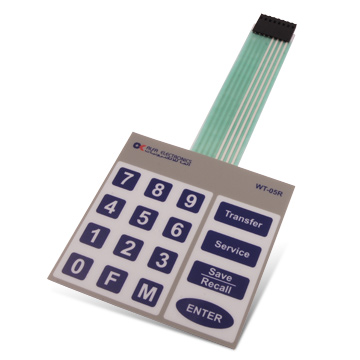


Comprehensive Sourcing Guide
Strategic Sourcing Guide for Single Color Membrane Switches
Navigating the global market for single color membrane switches requires a disciplined approach that balances technical precision with rigorous supplier verification. These components, often defined by their flat, flexible structure and specific application in electronic products, serve as critical interfaces for user interaction. The procurement process involves more than selecting a visual design; it demands a deep understanding of material properties, manufacturing capabilities, and compliance frameworks. Buyers must rely on observed product attributes and verified facts rather than unverified marketing claims to ensure supply chain stability and product reliability.
Technical Specifications and Material Composition
The foundation of a reliable Single Color Membrane Switch lies in its material composition and physical specifications. Based on observed market data, the primary substrate material for these components is frequently Polyethylene Terephthalate (PET). This material choice is critical for its durability, chemical resistance, and ability to maintain structural integrity under repeated actuation. The switches are characterized by a "Flat" or "Flexible" type structure, which allows them to conform to various housing designs while maintaining a low profile.
Thickness is a variable specification that is often customized to meet specific application requirements. Buyers should verify that the supplier offers "Customized" thickness options, as a one-size-fits-all approach rarely satisfies the diverse needs of electronic and medical devices. The surface finish is another critical technical parameter. Observed data indicates that "Film Lamination" is a common process used to protect the switch layers and enhance the tactile feel. Additionally, "UV" coating processes are frequently applied to ensure resistance against environmental degradation, particularly for products exposed to sunlight or harsh lighting conditions.
The electrical and functional architecture varies significantly depending on the intended use. Some units feature a "Multi Control Switch" configuration, while others are designed as "Change-over Switches," "Disconnectors," or "Playback Switches." The contact type is often specified as "Type c Contact," and the detection method may utilize "Retro-reflective Mode" for enhanced sensitivity. For applications requiring robustness, the structure may be "Power Built-in Type," integrating the switch directly into the power system of the device.
Compliance and Certification Verification
In the B2B procurement of membrane switches, compliance is not merely a formality but a prerequisite for market access, particularly in regulated industries like medical and telecommunications. Buyers must rigorously verify that suppliers possess valid certifications. Observed product data confirms that reputable manufacturers often hold "CE," "ISO," and "RoHS" certifications. Specific product listings have also indicated "CCC" (China Compulsory Certification) and "ISO" standards, which are essential for products entering the Chinese market or those requiring strict safety compliance.
While background knowledge suggests standards like ISO 9001 and ISO 13485 are relevant for quality management and medical device manufacturing, buyers should not assume these are automatically held by every supplier without explicit verification. Instead, procurement teams must request current certification documents to confirm that the specific production facility meets the required standards. The presence of "ISORoHS" or "ISO" in product attributes serves as a strong indicator of compliance, but direct confirmation from the supplier is necessary to avoid liability risks.
Furthermore, the material safety profile is paramount. The use of PET and the application of UV coatings must align with RoHS directives to ensure the absence of hazardous substances. For medical applications, the "Recyclable" feature observed in some product lines adds value, but the primary focus must remain on biocompatibility and safety certifications. Buyers should also check for "Customized" standard compliance, as some projects may require adherence to specific industry standards beyond the general CE or ISO markers.
Cost Drivers and Pricing Dynamics
Understanding the cost structure of single color membrane switches is essential for budgeting and negotiation. The observed price range in the market spans from $0.10 to $10.00 USD, a wide variance that reflects differences in complexity, volume, and customization. Several key factors drive these costs. First, the level of customization is a primary cost driver. Products labeled as "Custom Made," "ODM/Customize," or with "Customized" patterns and dimensions will inherently cost more than off-the-shelf standard items.
Material selection also influences pricing. While PET is a standard material, the inclusion of specialized coatings like UV protection or specific surface finishes such as film lamination can increase the unit cost. The complexity of the electrical design, such as the number of switches (Multi Control Switch vs. single switch) and the type of contact (Type c), further impacts the manufacturing process and final price.
Volume is another critical determinant. The observed Minimum Order Quantity (MOQ) ranges from 1 to 500 units. Suppliers often offer tiered pricing, where higher volumes result in lower per-unit costs. However, buyers must balance the desire for lower unit prices against the need for inventory flexibility. For prototype runs or low-volume production, an MOQ of 1 may be necessary, even if the unit price is higher. Conversely, for mass production, negotiating an MOQ closer to 500 or higher can yield significant cost savings.
Typical Applications and Industry Usage
Single color membrane switches are versatile components deployed across a wide array of industries. The observed data highlights their primary usage in "Electronic Product," "Home Appliance," "Telecommunication Equipment," and "Medical" sectors. In the home appliance sector, these switches are utilized for control interfaces, change-over functions, and playback controls, often requiring durability against dust and water.
The medical field represents a high-value application area where reliability is non-negotiable. Membrane switches in this sector must withstand rigorous cleaning protocols and frequent use. The "Medical" usage tag, combined with certifications like CE and ISO, indicates that these switches are suitable for diagnostic equipment and patient monitoring devices. Additionally, the "Industrial" and "Measurement" applications suggest use in control panels and testing equipment where environmental resistance is crucial.
Other notable applications include "Calculator," "Camera," and devices "With Remote Control." In these contexts, the switches often require specific features such as "Waterproof," "Dustproof," and "UV Resistant" properties to ensure longevity. The "Retro-reflective Mode" detection method is particularly relevant for optical applications, ensuring accurate signal transmission even in varying light conditions. The "Flat" and "Flexible" nature of the switches allows them to be integrated into compact devices where space is at a premium.
Supplier Evaluation and Geographic Considerations
Selecting the right supplier is as important as selecting the right product. Geographic location plays a significant role in logistics, lead times, and communication. Observed product origins include "Guangdong Shenzhen Baoan District," "China," "China Mainland," and "Dongguan." These regions are established manufacturing hubs known for their expertise in electronic components and flexible circuitry.
When evaluating suppliers, buyers should verify their production capabilities against the required specifications. Key attributes to confirm include the ability to provide "Customized" solutions, the availability of "ODM/Customize" services, and the flexibility to meet specific "prod_standard" requirements. The "prod_packing" options, ranging from "Polybag/Cartoon Box" to "Protective Package" or "Carton," should be assessed to ensure the product arrives in optimal condition.
Payment terms are another critical factor in supplier evaluation. The observed "Pattern of Payment" includes "T/T," "Western Union," "Paypal," and "Money Gram." Buyers should negotiate terms that protect their interests, such as using T/T with a deposit and balance upon shipment, rather than relying solely on less secure methods. Transportation options, including "by Ship," "by Air," and "by Land," should be aligned with the project timeline and budget.
Quality Control and Long-Term Procurement
Ensuring consistent quality in membrane switch procurement requires a robust quality control strategy. Buyers must verify that the supplier adheres to strict production standards, particularly for applications in medical and industrial sectors. The "Function" attributes observed, such as "Durable," "Waterproof," and "Dustproof," must be validated through testing. While specific test results are not provided in the general data, buyers should request sample testing reports to confirm these claims.
Color consistency is another quality metric. The observed "Color" options include "Pantone," "Ral," and "Cmyk," indicating that suppliers should be able to match specific brand colors. Buyers should request color proofs before mass production to ensure the final product meets the visual specifications. The "Dimension/Shape" is often an "OEM Service," meaning the supplier must be capable of precise molding and cutting to exact dimensions.
Long-term procurement considerations involve building a sustainable relationship with the supplier. The ability to handle "Customized" orders over time, maintain consistent quality, and adapt to changing market demands is essential. Buyers should also consider the "Recyclable" nature of the product as part of their sustainability goals. By focusing on suppliers who offer "Customized" standards and maintain high certification levels, buyers can ensure a stable supply chain that supports their long-term business objectives.
Comparative Analysis of Product Attributes
To facilitate decision-making, the following table summarizes key attributes observed in the market for single color membrane switches. This comparison helps buyers quickly identify which products align with their specific technical and compliance needs.
| Attribute Category | Common Observations | Verification Requirement |
|---|---|---|
| Material | PET | Confirm material grade and thickness |
| Certification | CE, ISO, RoHS, CCC | Request valid certificates for current batch |
| Customization | Available, ODM, Custom Made | Define specific requirements early |
| Surface Finish | Film Lamination, UV Coating | Verify coating durability and adhesion |
| Application | Electronic, Medical, Home Appliance | Ensure compliance with industry standards |
| Packing | Polybag, Carton, Protective | Confirm packaging meets shipping needs |
| Origin | Guangdong, Dongguan, China | Assess logistics and lead time implications |
| Payment | T/T, Western Union, Paypal | Negotiate secure payment terms |
This structured approach to sourcing ensures that buyers can navigate the complexities of the membrane switch market with confidence. By focusing on verified facts, rigorous compliance checks, and clear technical specifications, procurement teams can secure high-quality components that meet the demands of modern electronic and medical applications.
FAQs
What materials are used for single color membrane switches?
The primary material is PET, which offers durability and chemical resistance. This substrate is often combined with UV coating and film lamination to enhance structural integrity and environmental protection for various applications.
Which certifications do these switches typically hold?
Common certifications include CE, ISO, RoHS, and CCC. These marks indicate compliance with safety and environmental standards, which are essential for products used in medical, electronic, and home appliance sectors.
Can I get custom thickness and dimensions for these switches?
Yes, customization is available for thickness, dimensions, and shape. Suppliers offer ODM services to meet specific requirements, allowing buyers to tailor the product to their unique design and functional needs.
How much does a Single Color Membrane Switch cost?
The price range observed in the market is between 0.1 and 10 USD per unit. Costs vary based on customization levels, material specifications, and the minimum order quantity required by the manufacturer.
What are the typical applications for these membrane switches?
They are widely used in electronic products, home appliances, medical devices, and telecommunication equipment. Specific functions include control switches, change-over switches, and playback switches for various industrial and consumer applications.
Where are these switches manufactured?
Manufacturing origins include Guangdong Shenzhen Baoan District, Dongguan, and other parts of China Mainland. These regions are established hubs for producing flexible circuitry and electronic components with high volume capacity.
What payment methods are accepted for these orders?
Accepted payment patterns include T/T, Western Union, Paypal, and Money Gram. Buyers should verify specific terms with the supplier to ensure secure transactions aligned with their procurement policies.