Source Single-Chip Microcontroller for Refrigerator, Industrial, and Medical Devices
Find and compare 30 Single-Chip Microcontroller options from global suppliers. Buyers can evaluate models like BF6912AS and STM32F722RET6 based on integration levels, packaging types, and lead times for diverse applications.
Key considerations
Products List


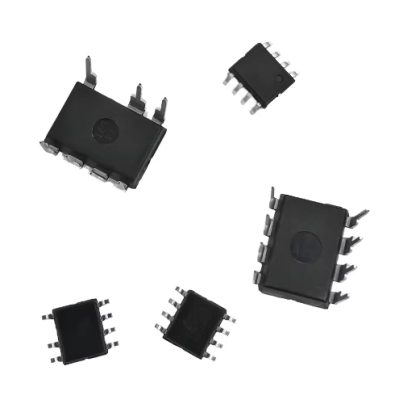
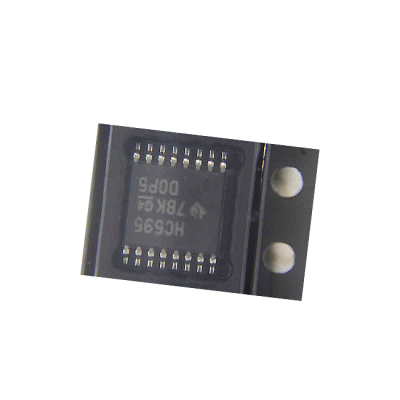


2n2222A Electronic Components IC MCU Microcontroller Integrated Circuits
$0.01 - $0.01
MOQ: 500 Pieces


Comprehensive Sourcing Guide
Strategic Sourcing Guide for Single Chip Microcontrollers
The procurement of single chip microcontrollers (MCUs) represents a critical decision point in the supply chain for electronics manufacturing. These components serve as the central processing units for a vast array of devices, from simple household appliances to complex industrial automation systems. For buyers navigating this market, the primary challenge lies not in the scarcity of options, but in the fragmentation of specifications, the variability of supply chain integrity, and the necessity of aligning technical requirements with rigorous quality standards. This guide outlines the essential factors for sourcing these components effectively, relying on observed market data and established industry practices to ensure a robust procurement strategy.
Technical Specifications and Architecture Diversity
When evaluating single chip microcontrollers, the first step is a deep dive into the technical architecture. The market offers a wide spectrum of options defined by their conductive type, integration level, and signal processing capabilities. Buyers must distinguish between Unipolar Integrated Circuits and Bipolar Integrated Circuits, as these fundamental differences dictate the power consumption, switching speed, and noise immunity of the final product. For instance, specific product observations indicate the availability of Unipolar Integrated Circuits with GSI (Giga-scale Integration) capabilities, which are suitable for high-density applications requiring complex logic within a compact footprint. Conversely, Bipolar Integrated Circuits with VLSI (Very Large Scale Integration) are often preferred for applications demanding robust analog signal handling and high current drive.
The manufacturing technology also plays a pivotal role in performance. The industry utilizes Optoelectronic Semiconductor processes alongside traditional Element Semiconductor materials. This distinction is crucial for applications involving light sensing or specific environmental conditions. Furthermore, the signal processing architecture determines the MCU's ability to handle tasks. Modern sourcing requirements often demand Analog Digital Composite and Function capabilities, allowing the microcontroller to interface seamlessly with both analog sensors and digital communication protocols. The physical form factor is equally important; while SMD (Surface Mount Device) packages are the industry standard for high-volume production due to their space efficiency, DIP (Dual In-line Package) options remain relevant for prototyping and specific legacy systems. Buyers should verify the specific shape and size, noting that "Standard" dimensions are common, but custom or specific packing configurations like Reel, Tube, Tray, or Box may be required for automated assembly lines.
Compliance, Certification, and Quality Assurance
In the global electronics market, compliance is not merely a regulatory formality but a prerequisite for market access and product reliability. A comprehensive sourcing strategy must verify that suppliers adhere to a robust suite of international standards. Observed data suggests that high-quality suppliers often hold certifications including ISO9001 for quality management, RoHS for restriction of hazardous substances, ISO14001 for environmental management, ISO13485 for medical device quality systems, and Ts16949 for automotive industry quality management. These certifications indicate a supplier's commitment to maintaining consistent quality and adhering to strict environmental and safety protocols.
Beyond certifications, the physical condition of the components is a non-negotiable metric. Buyers must insist on documentation confirming that products are "100% New and Original." The market contains risks associated with refurbished or counterfeit components, which can lead to catastrophic field failures. Verification of the Date Code (D/C) is essential for inventory management and shelf-life assessment. For example, recent observations show components with a D/C of 23+, indicating recent manufacturing batches, which is preferable for ensuring the longevity of the supply chain. Additionally, the warranty period is a critical indicator of supplier confidence. While some suppliers offer a standard 1-year warranty, others provide extended coverage up to 2 years, reflecting their confidence in the product's durability and their commitment to after-sales support.
Cost Drivers and Pricing Dynamics
Understanding the cost structure of single chip microcontrollers requires analyzing several variables beyond the unit price. The observed price range in the market spans from 0 to 9999 USD, a broad spectrum that reflects the diversity of components from basic logic controllers to high-performance industrial MCUs. However, the unit price is only one component of the total cost of ownership. The Minimum Order Quantity (MOQ) significantly impacts cash flow and inventory carrying costs. Data indicates an MOQ range from 1 piece to 1000 pieces, offering flexibility for prototyping or small-batch production while accommodating large-scale manufacturing needs.
Lead time is another major cost driver. While some suppliers offer rapid turnaround times of 2-4 working days, others operate on a standard 7-10 day cycle. These variations affect production scheduling and the ability to respond to market demand spikes. Buyers must balance the urgency of their needs against the potential cost savings of longer lead times. Payment terms, such as T/T (Telegraphic Transfer), are standard but require careful financial planning. Furthermore, the packaging method—whether in Carton Boxes, Reels, or Trays—can influence handling costs and compatibility with automated pick-and-place machinery. Customization services are also available, which can add value but may introduce additional costs and lead time extensions. Buyers should request detailed breakdowns of these factors to avoid hidden expenses that erode profit margins.
Typical Applications and Industry Alignment
Single chip microcontrollers are ubiquitous, but their application dictates the specific selection criteria. The observed data highlights applications in the refrigeration sector, where reliability and precise temperature control are paramount. In these environments, the microcontroller must withstand thermal cycling and maintain stable operation over long periods. The integration of analog and digital functions allows for sophisticated control loops that manage compressors, fans, and user interfaces.
Beyond refrigeration, the versatility of these components extends to various industrial and consumer electronics. The "Standard" shape and "Semiconductor IC" technics suggest broad applicability across general-purpose electronics. For OEM services, the ability to provide custom solutions is a key differentiator. Suppliers offering Electronic Component and OEM services can tailor the MCU to specific board layouts or functional requirements. The choice between SMD, SMT, and DIP installation methods often depends on the end-product's design constraints. High-volume consumer goods typically favor SMD/SMT for compactness and automated assembly, while industrial equipment or testing rigs might utilize DIP for ease of replacement and debugging. Buyers must align the MCU's technical profile with the specific environmental and functional demands of their target application to ensure optimal performance.
Supplier Evaluation and Supply Chain Resilience
Selecting the right supplier is as critical as selecting the right component. A robust evaluation process should go beyond price comparisons to assess the supplier's operational capabilities. The origin of the product is a significant factor; observations indicate origins in China and the USA, each with distinct advantages regarding logistics, tariff implications, and quality perception. Guangdong, China, is a noted hub for electronics manufacturing, offering competitive pricing and high volume capacity. Conversely, products originating from the USA may offer specific advantages in terms of supply chain stability or specialized technical support.
The shipping method is another vital consideration. Options such as DHL, FedEx, UPS, air freight, and sea freight provide flexibility based on urgency and volume. For time-sensitive projects, air freight via major couriers ensures rapid delivery, while sea freight is more economical for bulk shipments. The supplier's ability to provide batch numbers, such as the observed 2019 batch, allows for traceability and quality tracking throughout the product lifecycle. Buyers should verify the supplier's capacity to handle the required volume and their track record in delivering on time. A supplier that offers a clear warranty and stands behind their "100% New and Original" claims demonstrates a higher level of reliability.
Quality Control and Long-Term Procurement Strategy
Effective quality control extends beyond the initial purchase. Buyers should implement a rigorous incoming inspection process to verify the physical condition, packaging integrity, and documentation of the received components. The presence of specific model numbers, such as BF6912AS, AUIRGDC0250, or STM32F722RET6, should be cross-referenced with the purchase order to prevent substitution errors. The standard packaging, whether Carton Box or Reel/Tube/Tray/Box, must be inspected to ensure the components have not been exposed to damaging conditions during transit.
For long-term procurement, establishing a strategic partnership with suppliers is essential. This involves negotiating favorable terms for payment, lead times, and warranty coverage. The availability of customization services allows for future-proofing the supply chain, ensuring that components can be adapted as product designs evolve. Buyers should also monitor the standard specifications, such as the 573548 dimensions noted in some contexts, to ensure compatibility with their manufacturing processes. By maintaining a focus on quality, compliance, and supplier reliability, buyers can mitigate risks and ensure a steady flow of high-quality single chip microcontrollers to support their production needs. The ultimate goal is to build a resilient supply chain that can adapt to market fluctuations while maintaining the highest standards of product quality and performance.
FAQs
What certifications do Single-Chip Microcontroller suppliers typically hold?
Suppliers often hold ISO9001, RoHS, ISO14001, ISO13485, and Ts16949 certifications. These standards ensure quality management, environmental compliance, and safety protocols for medical and automotive applications.
How long is the lead time for Single-Chip Microcontroller orders?
Lead times typically range from 2 to 10 working days depending on the supplier. Some vendors offer rapid 2-4 day delivery, while others operate on a standard 7-10 day cycle for production.
Which packaging types are available for single chip microcontrollers?
Available packaging includes Carton Boxes, Reels, Tubes, Trays, and standard Boxes. These options support both manual handling and automated SMT assembly lines for various production volumes.
Can I find single chip microcontrollers with customization options?
Yes, customization is available for specific requirements. Suppliers offer services to tailor components for unique applications while maintaining standard semiconductor manufacturing technologies and integration levels.
What is the minimum order quantity for single chip microcontrollers?
Minimum order quantities range from 1 piece to 1000 pieces. This flexibility allows buyers to procure small batches for prototyping or large volumes for mass production without excessive inventory costs.
Where are single chip microcontrollers typically manufactured?
Products originate from locations such as China and the USA. Specific manufacturing hubs like Guangdong in China are noted for high-volume capacity and competitive pricing in the electronics sector.
What warranty periods are offered for single chip microcontrollers?
Warranty periods vary from 1 year to 2 years depending on the supplier. Extended warranties indicate higher supplier confidence in the durability and reliability of the new and original components.