Source Single Layer Glass Reactor with Paddle Agitator for Labs
Find 30 Single Layer Glass Reactor with Paddle Agitator options for labs research, chemical synthesis, and mixture applications. Buyers can compare specifications including volume, heating methods, and agitator models to select the right equipment for their needs.
Key considerations
Products List

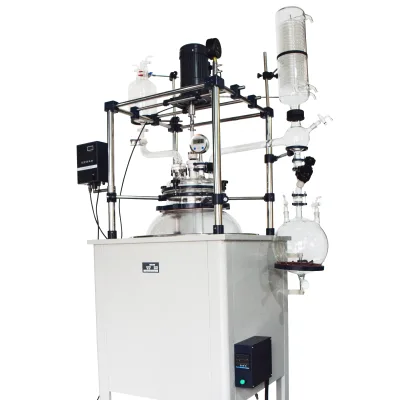


Glass Reactor Laboratory China Single Layer Agitator Glass Reflux Condenser Reactor
$1899.00 - $2399.00
MOQ: 1 Pieces


SUS316L Stainless Steel Paint Emulsion Alcohol Resin Mixing Equipment Reactor
$2550.00 - $3000.00
MOQ: 1 Pieces


High-Efficiency Single Layer Glass Reactor for Advanced Chemical Reactions
$5500.00 - $22000.00
MOQ: 1 Sets


Innovative Double-Layer Glass Reactor for Efficient Chemical Processes
$5500.00 - $6500.00
MOQ: 1 Pieces


Glass Lined Reactor with Agitator and Double Machenical Seal for Chemical Production
$10500.00 - $11000.00
MOQ: 1 Sets


Single-Layer Glass Reactor Compact Lab Reaction Vessel Glass Reactor for Lab Use
$573.00 - $716.00
MOQ: 1 Pieces

Ce Single Layer Stirred Glass Reactor Vessel and Kettle with Heating
$1000.00 - $4000.00
MOQ: 1 Pieces


High-Performance Durable Glass Lined Reactor for Chemical Applications
$5000.00 - $11000.00
MOQ: 1 Pieces


Comprehensive Sourcing Guide
Strategic Sourcing Guide for Single Layer Glass Reactors with Paddle Agitators
The procurement of a single layer glass reactor with a paddle agitator represents a critical decision for laboratories and pilot-scale production facilities engaged in chemical synthesis, pharmaceutical research, and materials science. These vessels serve as the primary interface for controlled reactions, offering the distinct advantage of visual monitoring while maintaining thermal and mechanical integrity. Sourcing this equipment requires a disciplined approach that balances technical specifications with supply chain reliability. Buyers must navigate a market where product attributes vary significantly, ranging from standard borosilicate glass configurations to specialized stainless steel variants. This guide outlines the essential factors for evaluating suppliers and selecting equipment that aligns with specific operational needs, ensuring that procurement decisions are grounded in verified data rather than marketing assertions.
Technical Specifications and Material Integrity
The core of any reactor system lies in its material composition and mechanical design. In the context of single layer glass reactors, the vessel body is predominantly constructed from high-grade borosilicate glass, specifically GG-17 (3.3) glass, which offers superior thermal shock resistance and chemical stability compared to standard glass types. This material choice is essential for applications involving corrosive reagents or rapid temperature fluctuations. The structural integrity of the reactor is further defined by the agitator mechanism. A paddle mixer is frequently specified for its ability to provide gentle yet effective mixing, suitable for low to medium viscosity fluids common in laboratory research.
When evaluating technical specifications, buyers must verify the rotational speed capabilities, which typically range from 0 to 450 rpm/min, with customizable options available to suit specific process requirements. The heating mechanism is another critical variable; while some units utilize electric heating elements directly integrated into the system, others employ an outer coil or jacketed structure to circulate heating or cooling media. The operating temperature range is a key performance indicator, with standard units often designed to function between -80°C and 250°C. However, these ranges must be confirmed against the specific model's datasheet, as performance can vary based on the sealing materials and the thickness of the glass wall.
The dimension and capacity of the reactor are equally important for spatial planning and process scaling. While some models are designed for 100L capacities, others may fall into the 501-1000L range, depending on the intended application scale. The physical footprint, often measured in dimensions such as 1727489 mm for smaller units or larger configurations for industrial models, dictates the laboratory layout requirements. Additionally, the pressure rating must be clearly understood; while atmospheric pressure is common for standard glass reactors, some units are rated for low-pressure environments (0.1MPa ≤ p < 1.6MPa), requiring robust flange designs and safety protocols.
Compliance, Certification, and Safety Standards
Navigating the regulatory landscape is a non-negotiable aspect of B2B procurement for laboratory equipment. Buyers must verify that the equipment meets relevant safety standards and that the supplier can provide documentation regarding machinery test reports. While specific certification statuses like REACH may be mentioned in broader market contexts, procurement teams should not assume compliance without explicit verification from the supplier. The absence of a specific certification claim in a product listing should trigger a request for proof of compliance rather than an assumption of adherence.
Safety standards for pressure vessels and reaction kettles often involve rigorous testing protocols. For units operating under pressure, the design life and pressure levels must align with international safety regulations. The presence of core components such as motors and the availability of machinery test reports are strong indicators of a supplier's commitment to quality assurance. Buyers should request detailed documentation that confirms the motor's performance under load and the reactor's ability to withstand the specified pressure levels without failure. Furthermore, the warranty period, often cited as 2 years for such equipment, serves as a baseline for supplier confidence, but it should be scrutinized alongside the terms of service and the availability of spare parts.
Cost Drivers and Pricing Variables
The pricing of single layer glass reactors is influenced by a complex array of factors, including material quality, customization options, and the complexity of the heating and agitation systems. The observed price range in the market spans from approximately $573 to $50,000, reflecting the vast difference between basic laboratory models and fully automated, high-capacity industrial units. Several key drivers contribute to these cost variations. First, the material grade of the glass and the type of metal used for the frame or shell (such as stainless steel or carbon steel) significantly impact the base cost. Corrosion-resistant metals and high-purity borosilicate glass command a premium.
Customization is another major cost driver. Products offering adjustable rotational speeds, specific voltage configurations (110v/220v), or tailored dimensions often carry higher price tags. The inclusion of advanced features, such as double receiving flasks or specific packing requirements like standard wooden cases, also adds to the overall expense. Additionally, the power consumption, indicated by wattage ratings such as 8kw, can influence the cost of the heating system and the associated electrical components. Buyers should be aware that while a lower initial price may be attractive, it often correlates with reduced durability or limited customization options. Conversely, higher-priced units typically offer better long-term value through enhanced reliability and extended design lives, often cited as 10 years for robust industrial models.
Typical Applications and Operational Scope
The versatility of single layer glass reactors with paddle agitators makes them suitable for a wide range of applications, primarily in labs research and mixture processing. These units are frequently employed in chemical synthesis where visual monitoring of the reaction is crucial. The ability to observe the mixing process, color changes, and phase transitions in real-time is a distinct advantage over opaque metal reactors. The application scope extends to the storage of moncombustible or nontoxic media, as well as separation and heat pressure vessel functions.
In pharmaceutical and biotechnology sectors, these reactors are used for the preparation of solutions, emulsions, and suspensions. The paddle mixer design is particularly effective for ensuring homogeneity in mixtures without introducing excessive shear forces that could damage sensitive biological materials. The operating type, whether continuous or batch, determines the suitability for specific production workflows. For continuous operating processes, the reactor must be integrated with automated feeding and discharge systems, while batch processes may rely on manual intervention. The storage medium compatibility is also a critical factor; the reactor must be chemically inert to the substances being processed to prevent contamination or degradation of the vessel.
Supplier Evaluation and Selection Criteria
Selecting the right supplier is as important as selecting the right equipment. Buyers should prioritize suppliers who provide transparent product information, including detailed specifications, material certifications, and machinery test reports. The origin of the product, often listed as China or specific regions like Henan, can influence logistics and lead times, but it should not be the sole determinant of quality. Instead, focus on the supplier's track record in providing OEM services and their ability to offer customization. A supplier that explicitly states "OEM: Yes" demonstrates flexibility in meeting unique client requirements.
When evaluating potential partners, consider the availability of after-sales support and the clarity of the warranty terms. The presence of a 2-year warranty is a positive indicator, but the scope of coverage—whether it includes labor, parts, or shipping—must be clearly defined. Additionally, the supplier's ability to provide a machinery test report is a strong signal of quality control. Buyers should also assess the packaging standards, such as the use of standard wooden cases, to ensure that the equipment arrives without damage. The brand name, such as Aibote, may be a factor in brand recognition, but the technical capabilities and support infrastructure of the supplier should take precedence.
Quality Control and Long-Term Procurement Considerations
Ensuring the long-term reliability of the reactor system requires a proactive approach to quality control. Buyers should verify that the supplier conducts rigorous testing on core components like the motor and the agitator assembly. The design life of the equipment, often estimated at 10 years for high-quality units, should be supported by a robust quality assurance program. Regular maintenance and the availability of spare parts are essential for extending the operational life of the reactor. The supplier's commitment to providing machinery test reports and adhering to safety standards is a prerequisite for long-term procurement success.
In the long term, buyers must consider the scalability of their operations. A reactor that meets current needs may become obsolete if the production volume increases or if the chemical processes evolve. Therefore, selecting a supplier that offers customizable options and modular designs is advantageous. The ability to adjust parameters such as rotational speed, voltage, and capacity ensures that the equipment can adapt to changing requirements. Furthermore, the environmental impact of the equipment, including energy efficiency and the disposal of materials, should be considered. By focusing on suppliers who prioritize quality, transparency, and adaptability, buyers can secure a reliable partnership that supports their research and production goals for years to come.
Comparative Analysis of Reactor Configurations
To aid in decision-making, buyers may find it helpful to compare different reactor configurations based on key attributes. The following table summarizes common variations found in the market, highlighting the distinctions in material, pressure, and application.
| Feature | Standard Glass Reactor | Stainless Steel Jacketed Reactor | Low-Pressure Vessel |
|---|---|---|---|
| Primary Material | Borosilicate Glass (GG-17) | Stainless Steel / Carbon Steel | Mixed (Glass/Steel) |
| Agitator Type | Paddle Mixer | Frame Agitator | Paddle or Frame |
| Pressure Rating | Atmospheric | Low Pressure (0.1-1.6MPa) | Low Pressure |
| Heating Method | Outer Coil / Electric | Jacketed | Electric / Coil |
| Typical Application | Labs Research | Industrial Mixture | Storage / Separation |
| Customization | Available | Available | Available |
This comparison illustrates that while the core function remains consistent, the choice of material and pressure rating significantly alters the reactor's suitability for specific tasks. Buyers must align these technical attributes with their specific process requirements to ensure optimal performance and safety.
FAQs
What material is used for the reactor vessel?
The vessel is constructed from GG-17 (3.3) Borosilicate Glass. This material offers superior thermal shock resistance and chemical stability for laboratory research applications involving corrosive reagents.
Can the rotational speed be customized?
Yes, the rotational speed is customizable. The standard range is 0-450rpm/min, allowing buyers to adjust the paddle mixer speed to suit specific process requirements and fluid viscosities.
What is the operating temperature range?
The operating temperature range is -80 to 250 degrees Celsius. This wide range supports various chemical synthesis and mixing processes while maintaining structural integrity under thermal stress.
How is the reactor heated?
The reactor utilizes electric heating via an outer coil structure. This method ensures efficient heat transfer while maintaining the safety and visibility provided by the glass vessel design.
What is the warranty period for this equipment?
The equipment comes with a 2-year warranty. This coverage provides assurance of quality for core components like the motor and the agitator assembly during normal operation.
Which capacity options are available?
Available capacities include 100L and ranges up to 1000L. Buyers can select the appropriate volume based on their specific laboratory research needs or pilot-scale production requirements.
Is OEM service available for this reactor?
Yes, OEM service is available for this reactor. Suppliers can accommodate specific customization requests regarding dimensions, voltage, or other technical specifications to meet unique client needs.