Source Single Layer Microfiber Filter Bag for Dust Control
Find and compare 30 Single Layer Microfiber Filter Bag options for industrial dust collection, air filtration, and liquid treatment applications. Evaluate specifications like material, micron rating, and customization to select the right filter for your operational needs; compare the available evidence and request quotations based on your requirements.
Key considerations
Products List


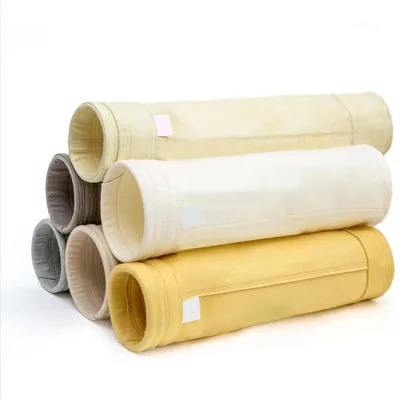


Comprehensive Sourcing Guide
Single Layer Microfiber Filter Bag Sourcing Guide
Buyers must first distinguish between single-layer microfiber constructions and multi-layer composite bags, as the supplied data indicates a mix of fabric types including polyester, acrylic, and non-woven options. While some listings specify a "Medium Filter" grade suitable for general dust collection, others describe "High-Temperature" environments or "Liquid Filter" applications, requiring precise alignment between the bag's material composition and the intended process.
Procurement teams should verify whether the observed "Vertical" installation method and "Dry" dust collecting approach match the specific plant layout and airflow requirements. The presence of "Customization" options for gram weight and size suggests that off-the-shelf solutions may not suffice for specialized micron ratings, necessitating a clear definition of the filtration grade before engaging with potential manufacturers.
Product Scope and Observed Listing Signals
The market data reveals a diverse range of product attributes, from "Fabric Dust Collector" units to "Mesh Filter Bag" types used in water treatment, indicating that the term "microfiber" often encompasses various structural forms like "Round Bag" or "Pocket Filter" configurations. Buyers should note that while some products are described as "Nonwoven" with a "Plain" pattern, others utilize a "PTFE Membrane" special treatment, which significantly alters the filtration mechanism and operational lifespan.
Listing signals such as "Shanghai" and "Taizhou" origins suggest a concentration of manufacturing hubs in eastern China, where "Carton Packaging" and "Standard Export Packing" are common. However, the variation in "Gram Weight" ranging from 20 to 260GSM and the availability of "Synthetic Fiber" or "Glassfiber" materials mean that a single keyword search will yield products with vastly different physical properties and durability profiles.
Technical Specifications to Verify
Verification of the "Micron Rating" is critical, as observed ranges span from 0.3 to 300 microns, directly impacting the efficiency of particulate capture for specific industrial needs. Buyers must confirm if the "Filter Bag Filter" type is designed for "Outside the Filter Type" or internal configurations, as this dictates the mechanical stress on the bag and the required support cage structure for the "Vertical Lifting" installation method.
The "Structure" of the bag, whether "Fabric Form" or a specific "Cartridge" design, must align with the "Operation Type" of the system, which is often manual in the observed listings. Additionally, the "Width" specifications, observed at 2.1m or 57/58 inches, require precise measurement against the housing dimensions to ensure a proper seal, while the "Medium Material" composition must withstand the specific chemical and thermal conditions of the application.
Compliance and Safety Documentation
While "ISO" certification is listed as a high-confidence fact for some suppliers, buyers should not assume this applies universally across all product variations without requesting specific audit reports. The distinction between "Regular size" and "Customizable" standards implies that compliance with international safety norms may vary depending on the bespoke nature of the order, requiring explicit confirmation of the applicable "prod_standard" for each batch.
Safety documentation must address the "High-Temperature" environment capabilities, ensuring that the "Polyester" or "Acrylic" materials do not degrade under operational heat loads. Procurement teams should also verify that the "Special Treatment" processes, such as PTFE membrane application, are documented to meet relevant fire resistance and chemical safety standards, particularly when the bags are used in "Filtration Textiles" for sensitive applications.
Cost Drivers and Commercial Terms
The observed price range of 1 to 199.9 USD reflects significant variability driven by material complexity, such as the inclusion of "PP PE Nylon" blends or advanced "PTFE Membrane" treatments. Buyers should anticipate that "Customizable" gram weights and non-standard "prod_model" numbers like SFF-L0263 or 002 will incur higher unit costs compared to standard "50/100" specification items, necessitating a clear cost-benefit analysis for each specification.
Commercial terms must account for the "MOQ" range of 1 to 1000 units, which allows for flexibility but may impact unit pricing for smaller orders. The "prod_packing" method, whether "Carton," "Wooden Case," or "Standard Export Packing," adds to the logistics cost, and buyers should clarify if these costs are included in the quoted price or billed separately to avoid unexpected expenses during the final shipment.
Supplier Qualification and Quality Control
Suppliers originating from "Shanghai" and "Taizhou" should be evaluated based on their ability to maintain consistent "Gram Weight" and "Width" tolerances across large production runs. The presence of "Customization" capabilities suggests a flexible manufacturing process, but buyers must implement strict quality control checks to ensure that the "Filter Bag Environment" ratings, such as temperature resistance, are consistently met across all delivered units.
Quality assurance protocols should include testing for the "Application" suitability, whether for "Dust Filter," "Air Filter," or "Liquid Filter" use, to prevent premature failure. Buyers should request sample batches to verify the "Structure" integrity and the effectiveness of the "Special Treatment" processes, ensuring that the "Non-Woven Polyester Fiber" or other materials perform as advertised under actual operating conditions.
Long-Term Procurement Checks
Establishing a long-term partnership requires monitoring the consistency of "Material Available" options, such as the transition between "Polyester" and "Acrylic" or "Glassfiber" blends, to ensure supply chain stability. Buyers should track the performance of the "Filter Bag Sectional Shape" and "Pattern" over time, as wear and tear in "High-Temperature" or "Liquid" environments can reveal design flaws not apparent during initial sampling.
Regular audits of the supplier's "Installation Method" compatibility and "Operation Type" support are essential for maintaining operational efficiency. Procurement teams should also review the "prod_standard" adherence and "Certification" status periodically, ensuring that the supplier continues to meet evolving industry requirements and that the "Standard Export Packing" remains sufficient to protect the product during extended shipping cycles.
FAQs
What materials are used for single layer microfiber filter bags?
These filter bags are typically constructed from polyester, glassfiber, or acrylic materials. Some variants utilize synthetic fiber or non-woven structures for enhanced durability. The choice of material depends on the specific filtration grade and environmental conditions, ensuring optimal performance for dust or air filtration applications in industrial settings.
Can single layer microfiber filter bags be customized?
Yes, customization is available for these filter bags. Buyers can request specific gram weights ranging from 20 to 260 GSM or adjust the width to 2.1 meters. Standard export packing or carton packaging is used, and the products can be tailored to meet specific size requirements or application needs for dust collectors.
What certifications do single layer microfiber filter bags have?
These products often carry ISO certification, indicating adherence to quality management standards. This certification ensures that the manufacturing processes for polyester or acrylic filter bags meet international benchmarks. Buyers can rely on this standard for consistent quality in industrial filtration applications, particularly for high-temperature or general dust collection environments.
How are single layer microfiber filter bags installed?
Installation is typically performed vertically, either as a manual operation or via vertical lifting mechanisms for cartridges. The fabric form and round bag sectional shape facilitate straightforward mounting in dust collectors. This method ensures secure placement and efficient airflow management within the filtration system for optimal dust collection performance.
Where are single layer microfiber filter bags manufactured?
These filter bags are primarily manufactured in Shanghai, China, with some origins noted in Taizhou. The production facilities utilize advanced techniques like PTFE membrane treatment for special filtration needs. Buyers sourcing from these regions benefit from established supply chains and standardized export packing methods for reliable delivery and quality assurance.
What is the MOQ for single layer microfiber filter bags?
The minimum order quantity ranges from 1 to 1000 units, offering flexibility for various buyer needs. This wide range accommodates both small-scale testing and large industrial procurement. Buyers can select quantities that fit their budget and operational requirements, ensuring efficient inventory management while maintaining access to high-quality filtration materials.