Source Single Nut Ball Screw for Automation, CNC, and Robotics
Explore 30 listings for Single Nut Ball Screw options suitable for automation, CNC machinery, and robotics. Buyers can compare specifications like precision classes C5 and C7, screw diameters, and customization availability from manufacturers in China; compare the available evidence and request quotations based on your requirements.
Key considerations
Products List


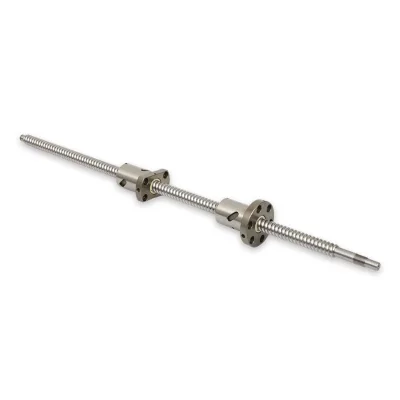
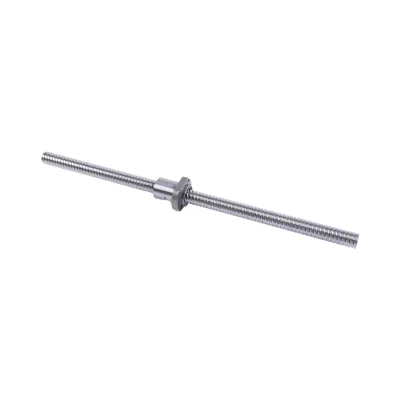


High Temperature Resistant Highly Stable Long Life Precision Ball Screw Lock Nut
$15.50 - $117.00
MOQ: 100 Pieces


Comprehensive Sourcing Guide
Single Nut Ball Screw Sourcing Guide
Buyers evaluating Single Nut Ball Screw assemblies must first distinguish between double-nut configurations and the specific single-nut variants observed in current listings. The available data indicates a mix of product types, including "Inner Loop" designs and models with "Double" or "Single" nut counts, requiring careful verification of the exact mechanical configuration before ordering. This distinction is critical because single-nut units often serve different load and precision requirements compared to preloaded double-nut systems, directly impacting the suitability for specific automation machinery applications.
Procurement teams should also scrutinize the listed product models, such as FF, DKF, JF, and SFA3232, to ensure they align with the intended mechanical load and speed profiles. The observed listings reveal a wide range of screw diameters, from 8mm up to 40mm, with specific mentions of 32mm shafts and 11-20mm diameters, suggesting that a single supplier may offer diverse catalog items rather than a specialized single-nut line. Buyers must confirm that the specific model number corresponds to a single-nut architecture to avoid receiving a double-nut assembly that does not meet the spatial or functional constraints of the design.
Product Scope and Observed Listing Signals
The current market signals for single nut ball screws indicate a broad spectrum of customization options, with many suppliers offering tailored end machining and packing solutions for overseas shipment. Listings frequently mention "Customized or Bk/Bf25" end supports and specific nut housings like DSG32, alongside coupling options such as Jm2-65, which suggests that the core product is often sold as a modular component requiring integration into a larger system. This modularity allows buyers to source the screw and nut separately or as a pre-assembled unit, depending on their assembly capabilities and inventory strategies.
Observations also highlight that packing standards vary significantly, with some items requiring rust protection and specific export packaging like PVC bags or wooden boxes, while others are simply described as suitable for overseas transport. The presence of "Very Plenty" stock levels for certain models implies that standard sizes are readily available, whereas custom specifications may involve longer lead times or minimum order quantities. Buyers should verify whether the "Single" nut designation applies to the specific stock item they are viewing, as the same supplier may simultaneously list double-nut variants under similar model prefixes.
Technical Specifications to Verify
When verifying technical specifications, the precision class is a primary decision point, with observed listings explicitly citing C5, C7, and C10 accuracy classes alongside specific row counts like 3-row or 4-row configurations. The data shows a mix of "Milled" and "Rolled Thread Ballscrew C7" processes, which directly influences the cost and performance characteristics of the final assembly. Buyers must confirm whether the single-nut unit requires the higher precision of milled threads or if the rolled process meets the operational tolerances of their specific automatic machinery application.
Diameter and length specifications also require strict validation, as the observed range spans from 8mm to 6000mm in length and includes specific diameters like 32mm, 11-20mm, and 31-40mm. The raw materials for the screw rod and nut are listed as S55c, S45c, Gcr15, and Scm420h, indicating that material selection varies by model and intended load capacity. Procurement teams should cross-reference the requested screw diameter and length against the supplier's specific model numbers, such as SFA3232 or the 12mm/16mm/20mm series, to ensure the physical dimensions match the machine's kinematic requirements.
Compliance and Safety Documentation
While the provided data does not list specific third-party certifications, the emphasis on "High Tolerance Quality" and "Interchanged Into Tbi Ball Screw Parts" suggests a focus on dimensional compatibility and performance consistency rather than formal safety compliance documents. Buyers should request material test reports or mill certificates to verify the claimed raw materials like Gcr15 steel or S45c, ensuring that the chemical composition and mechanical properties meet the safety and durability standards required for their industrial environment.
Documentation regarding the "End Machinized" features, such as Bk/Bf25 supports, is essential for ensuring the assembly integrates safely with existing machine frames and bearings. Since the listings mention "Smooth Operation" and "Smoothly" as key features, buyers should ask for performance data or test results that validate these claims under load, particularly for high-speed applications. Without explicit safety certifications in the source data, the burden of proof shifts to the buyer to verify that the single-nut assembly meets the specific safety regulations of their industry and region.
Cost Drivers and Commercial Terms
The cost of single nut ball screws is heavily influenced by the manufacturing process, with "Rolled Thread" options generally offering a more economical solution compared to "Milled" precision variants. The observed precision classes, ranging from C7 to C5, further drive pricing, as higher accuracy classes require tighter tolerances and more rigorous quality control during production. Buyers should anticipate that customizing the end machining or selecting specific raw materials like Scm420h for the nut will increase the unit price compared to standard off-the-shelf configurations.
Commercial terms are also affected by the observed MOQ ranges, which span from 1 to 10,000 units, and the specific packing requirements for overseas shipping. The need for rust protection and export-standard wooden boxes adds to the logistical cost, particularly for smaller orders where the packaging weight and volume are not optimized. Buyers must clarify whether the quoted price includes the coupling and end support components or if these are sold separately, as the listings mention specific couplings like Jm2-65 that may be priced independently.
Supplier Qualification and Quality Control
Supplier qualification should focus on their ability to provide "OEM ODM" services and their track record with "Interchanged Into Tbi Ball Screw Parts," which indicates a level of standardization and compatibility with established industry components. The presence of multiple production origins, including Nanjing, Zhejiang, and Shandong, suggests a competitive market with varying levels of manufacturing maturity. Buyers should verify the specific factory location and its quality management systems to ensure consistent production of single-nut assemblies that meet the required precision and material standards.
Quality control processes must be validated through the supplier's ability to maintain the "High Tolerance Quality" claims associated with C5 and C7 classes. The observation of "Very Plenty" stock for certain models implies a robust production capacity, but buyers should still request sample inspections to verify the "Smooth Operation" and structural integrity of the "Ball Screw+Nut+Steel Ball" assembly. Establishing a clear quality agreement that defines acceptable tolerances for the single-nut configuration is essential to prevent performance issues in the final automated machinery application.
Long-Term Procurement Checks
Long-term procurement success depends on verifying the supplier's ability to maintain consistent stock levels and provide reliable replacement parts for the single-nut ball screws. The observation of "Very Plenty" stock for some models is positive, but buyers should confirm the availability of specific single-nut variants over the product lifecycle, especially if the design requires custom end machining or specific raw materials. A stable supply chain is crucial for minimizing downtime in automatic machinery where the ball screw is a critical motion control component.
Buyers should also establish a protocol for monitoring the performance of the single-nut assemblies over time, particularly regarding wear and the maintenance of precision classes like C5 or C7. Since the listings mention "Customization" and "Service" options, suppliers should be willing to provide technical support and replacement parts as the machinery ages. Regular audits of the supplier's quality control records and material traceability will help ensure that the long-term performance of the single-nut ball screws remains consistent with the initial procurement specifications.
FAQs
What is the structure of a Single Nut Ball Screw?
The structure consists of a ball screw shaft, a single nut, and steel balls. This configuration ensures smooth operation and high precision. It is commonly used in automatic machinery. The design allows for efficient linear motion conversion. Customization is available to meet specific application requirements.
Can single nut ball screws be customized for specific applications?
Yes, customization is available for single nut ball screws. Buyers can specify screw diameter, length, and end machining options. The product supports OEM and ODM services. Various precision classes like C5 and C7 are offered. This flexibility ensures the component fits diverse industrial machinery needs.
What materials are used for Single Nut Ball Screw manufacturing?
Single nut ball screws are typically made from Gcr15 Steel or S45c Steel. The nut raw material may be Scm420h, while the rod uses S55c. These materials ensure durability and high tolerance quality. The choice of material supports smooth operation and long service life in demanding environments.
How are single nut ball screws packed for overseas shipping?
They are packed to be rust protected and suitable for overseas transport. Common methods include PVC bags, wooden boxes, and export standard packing. This ensures the components arrive in good condition. The packaging is designed to prevent damage during transit and storage.
What precision classes are available for single nut ball screws?
Available precision classes include C5, C7, and C10. These classes indicate the accuracy of the ball screw. Higher precision classes like C5 offer tighter tolerances. The selection depends on the specific requirements of the automatic machinery. High tolerance quality is maintained across all available classes.
Where are single nut ball screws typically manufactured?
Single nut ball screws are manufactured in China, including regions like Nanjing, Zhejiang, and Shandong. These locations are known for producing high-quality components. The products are interchanged into TBI ball screw parts. This widespread manufacturing base supports global supply chain needs.