Source Single-Phase Coreless Magnetic Alternator for Home, Farm, and Industrial Use
Compare 25 Single-Phase Coreless Magnetic Alternator options from verified Chinese manufacturers. Buyers can evaluate specifications like rated power, voltage, and efficiency to find suitable units for residential, agricultural, and backup power applications.
Key considerations
Products List


Compact Brushless Single Phase AC Alternator Synchronous Power Generator Price
$50.00 - $2000.00
MOQ: 10 Pieces
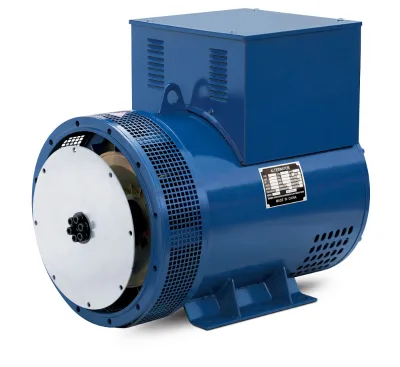


Coreless Magnetic Alternator 1kw 2kw 3kw 5kw Permanent Magnet Generator
$1040.00 - $1100.00
MOQ: 1 Pieces

Three Phase AC Brushless 200kw Permanent Magnet Alternator Generator
$9950.00 - $10000.00
MOQ: 1 Pieces

5kw Low Rpm Three Phase Coreless Alternator 220V Permanent Magnet Generator
$1240.00 - $1300.00
MOQ: 1 Pieces


500kw AC400V Low Speed 90rpm Three-Phase Permanent Magnet Alternator
$65000.00 - $70000.00
MOQ: 1 Pieces


Comprehensive Sourcing Guide
Sourcing Guide for Single Phase Coreless Magnetic Alternators
Understanding Coreless Permanent Magnet Alternator Architecture
When sourcing a Single-Phase Coreless Magnetic Alternator, buyers must first distinguish the fundamental architecture from traditional iron-core designs. The coreless construction eliminates the heavy iron stator core, which significantly reduces weight and mechanical inertia. This design choice is critical for applications requiring rapid response to wind speed changes or where minimizing the starting torque is a primary constraint. The supplied product data confirms that the observed generator type is a "3 Phase AC Coreless Permanent Magnet Generator," yet the specific search keyword targets single-phase variants. It is essential to verify that the specific unit under consideration matches the single-phase output requirement, as the general category often includes three-phase models with different winding configurations.
The magnetic material used in these units is typically Nd-Fe-B (Neodymium-Iron-Boron), a high-strength rare-earth magnet that provides a strong magnetic field without the need for an external excitation source. This aligns with the "Permanent Magnet Generator" classification found in the data. The structure is frequently described as an "Outer Rotor" or "Out Rotor" design, where the magnets rotate around a stationary stator. This configuration allows for a more compact assembly and often results in a lower rated speed, such as the observed 100-300 rpm range for larger units, or specific ratings like 120 rpm and 1800 rpm depending on the model. The absence of a core also means the unit relies on air for cooling, utilizing a "Wind Cooling" method, which simplifies the internal design but requires adequate airflow during operation.
Technical Specification Verification and Performance Metrics
Evaluating the technical specifications of a single phase coreless alternator requires a granular look at voltage, power, and speed parameters. The observed data indicates a broad rated power spectrum ranging from 300W to 10kW, with specific models listed at 2kW. Buyers must ensure the selected unit matches their load requirements precisely, as the "Rated Power" can vary significantly between 0.3kW and 10kW. The output voltage is another critical variable; the data shows a range of 12-400VAC, with specific instances of 48V and 48V~400V. This variability suggests that the alternator may be designed for direct battery charging at lower voltages or for grid-tied applications at higher voltages.
Frequency is a parameter that demands strict verification, as it is directly tied to the rotational speed and the number of pole pairs. One observed specification lists a frequency of 28.7Hz at 120rpm, while another lists a rotational speed of 1800rpm. This discrepancy highlights that the frequency is not fixed but is a function of the mechanical input speed. For a single-phase system, the wire running method is often configured in a "Y" (Wye) connection, which influences the voltage output and current handling capabilities. The rated current for a 2kW unit at 48V is observed at 41.67A, a figure that must be matched against the downstream wiring and inverter capacity. Efficiency is a key performance indicator, with observed data stating an efficiency greater than 90%, a benchmark that buyers should request confirmation for on a per-unit basis.
| Parameter | Observed Range/Value | Verification Requirement |
|---|---|---|
| Output Type | AC Single Phase / AC Three Phase | Confirm single-phase winding configuration |
| Rated Power | 300W to 10kW (e.g., 2kW) | Match specific kW requirement to load profile |
| Rated Voltage | 12-400VAC (e.g., 48V) | Verify compatibility with battery or grid voltage |
| Rated Speed | 100-300rpm / 120rpm / 1800rpm | Ensure mechanical coupling matches wind speed |
| Frequency | 28.7Hz (at 120rpm) | Calculate expected Hz based on operating RPM |
| Efficiency | >90% | Request specific test data for the model |
| Start Torque | < 1 N.M | Confirm low start-up torque for wind applications |
Compliance, Certification, and Regulatory Standards
Navigating the compliance landscape for electrical generators is essential for international procurement. The supplied data lists "CE," "ISO," and "RoHS" as observed certifications. While CE is a mandatory conformity mark for products sold within the European Economic Area, indicating compliance with health, safety, and environmental protection standards, buyers must verify that the specific single-phase model holds this certification. The presence of ISO certification suggests adherence to quality management systems, and RoHS compliance indicates the restriction of hazardous substances, which is crucial for environmental regulations in many markets.
However, the data also notes a "Medium" standard classification and a specific volume standard of "1 CBM" for packaging, alongside a physical dimension standard of "600600550 mm." These are logistical and packaging standards rather than electrical safety standards. Buyers should not assume that a "Medium" standard classification equates to a specific international electrical safety code (such as IEC or UL) without explicit documentation. The origin of the product is listed as "China," specifically "Fuzhou," which is a major manufacturing hub. While the location is a fact, it does not dictate the quality or certification status. Buyers must request the actual certificate documents for CE, ISO, and RoHS for the specific model number (e.g., JXAG-550-2kW) to ensure they are not purchasing a generic unit that lacks the necessary regulatory clearance for their target market.
Cost Drivers and Pricing Structure Analysis
The pricing for single phase coreless magnetic alternators is influenced by several dynamic factors, primarily the rated power, the quality of the Nd-Fe-B magnets, and the complexity of the winding configuration. The observed price range in the market is substantial, spanning from $50 to $70,000 USD. This wide variance suggests that the lower end of the spectrum likely represents small-scale, low-power units (e.g., 300W-1kW) intended for hobbyist or small off-grid applications, while the upper end reflects industrial-grade, high-power units (approaching 10kW) with robust aluminum alloy shells and advanced cooling systems.
The Minimum Order Quantity (MOQ) is another significant cost driver, with observed ranges from 1 to 50 units. For buyers seeking a single unit for prototyping or a small installation, an MOQ of 1 is favorable. However, for larger commercial projects, negotiating an MOQ closer to 50 may yield better unit economics. The material cost is heavily tied to the "Aluminum Alloy" shell and the "Carbon Steel" axis, which provide structural integrity while managing weight. The "Plywood Case" or "Foam + Plywood Wooden Box" packing adds to the logistical cost, especially for international shipping. Buyers should be aware that the "Customization" availability allows for tailored specifications, but this often incurs a premium or requires a higher MOQ to justify the setup costs.
Typical Applications and Operational Environments
The operational environment for these alternators is defined by their "Conditions of Use," which are listed as "Land Use." The "Landuse Type of Unit" is described as "Ordinary," suggesting suitability for standard terrestrial installations rather than extreme marine or aerospace environments. The "Stress Way of Blade" is identified as "Lift Force," indicating that these units are designed to work in conjunction with wind turbines where aerodynamic lift generates the rotational force. The "Number of Blade" is typically three, a standard configuration for balancing efficiency and structural stability in wind energy applications.
The "Excitation Mode" is "AC Rotating Exciter," which is a specific type of excitation system that may differ from standard permanent magnet direct excitation in some contexts, though the data also lists "Permanent Magnet Genenrator." This distinction requires clarification during the sourcing process. The "Usage" category includes "Common Units" and "Standby Unit," implying versatility in both primary power generation and backup scenarios. The "Installation Method" is noted as "Portable," which is a critical feature for mobile or temporary power setups. The "Lifetime" is observed to be up to 20 years, a figure that buyers should treat as a design target rather than a guaranteed warranty without reviewing the specific terms of service and maintenance requirements.
Supplier Evaluation and Quality Control Protocols
When evaluating suppliers for single phase coreless magnetic alternators, the focus should be on their ability to provide verifiable technical data and consistent manufacturing quality. The "Service" type is listed as "OEM," indicating that the supplier is capable of manufacturing products under the buyer's brand or specifications. This is a positive indicator for buyers looking to brand the equipment. However, the "prod_model" varies (e.g., GDG, JXAG-550-2kW), and buyers must ensure that the model number corresponds to the exact specifications they require, particularly regarding the single-phase output.
Quality control should begin with a review of the "Material of Axis" (Carbon Steel) and "Generator Shell Material" (Aluminum Alloy) to ensure they meet the mechanical stress requirements of the intended application. The "Structure" is consistently "Outer Rotor," which should be verified against the physical unit to ensure the magnets are securely mounted and the air gap is consistent. Buyers should request test results for the "Efficiency" (>90%) and "Start Torque" (< 1 N.M) to confirm that the unit performs as advertised. Since the "Frequancy(Hz)" can vary with speed, buyers should test the unit under load to ensure the output frequency remains stable within acceptable tolerances for their connected equipment.
Long-Term Procurement and Maintenance Considerations
Long-term procurement strategies for these alternators must account for the "Lifetime" of 20 years and the "Cooling Method" of wind cooling. Wind cooling implies that the unit relies on its own rotation to dissipate heat; therefore, any obstruction to airflow or a reduction in rotational speed could lead to overheating. Buyers should plan for regular inspections of the "Rotating Shaft" and the "Outer Rotor" assembly to ensure no mechanical wear or magnet degradation has occurred. The "Wire Running Method" (Y connection) should be checked for insulation integrity over time, as single-phase systems can be more susceptible to voltage spikes if not properly protected.
The "prod_packing" of "Plywood Case" or "Foam + Plywood Wooden Box" suggests that the units are designed for safe transport, but long-term storage requires protection from moisture and extreme temperatures. Buyers should verify the "Service" availability for spare parts, particularly the "Magnetic Material" (Nd-Fe-B), which can be sensitive to high temperatures and physical shock. The "Customization" option offers a pathway to extend the lifespan of the procurement cycle by allowing for upgrades or modifications as technology evolves. Finally, buyers should maintain a clear record of the "Certification" documents and "Standard" compliance to ensure that the units remain eligible for use in their specific jurisdiction throughout their operational life.
FAQs
What is the rated power range for single phase coreless magnetic alternators?
The rated power ranges from 300W to 10kW, with specific models available at 2kW. Buyers must verify the exact kW requirement matches their load profile before purchasing.
Which certifications are available for these permanent magnet generators?
Available certifications include CE, ISO, and RoHS for compliance with international standards. Buyers should request specific certificate documents for the model number to ensure regulatory clearance.
Can these units operate at low rotational speeds?
Yes, rated speeds range from 100 to 300rpm, with specific models operating at 120rpm. This low speed capability is essential for wind applications requiring minimal start torque.
How is the generator cooled during operation?
The unit utilizes wind cooling as the primary method, relying on its own rotation to dissipate heat. Adequate airflow must be maintained to prevent overheating during continuous operation.
What materials are used for the generator shell and axis?
The shell is constructed from aluminum alloy while the axis is made of carbon steel. These materials provide structural integrity and manage weight for portable or land-based installations.
What is the expected lifetime of this generator type?
The design target lifetime is up to 20 years under normal operating conditions. Buyers should review specific maintenance terms as this figure represents a design goal rather than a guaranteed warranty.
Is customization available for these permanent magnet generators?
Customization is available to tailor specifications for specific buyer requirements. However, this often incurs a premium or requires a higher minimum order quantity to justify the setup costs.