Source Single Phase Digital Current Transmitter for Power Grids, Industrial Automation, and Energy Monitoring
Explore 30 available options for the Single Phase Digital Current Transmitter designed for power grid monitoring, industrial automation, and energy management systems. Buyers can compare specifications including accuracy grades, output signals, and customization features to find the right component.
Key considerations
Products List


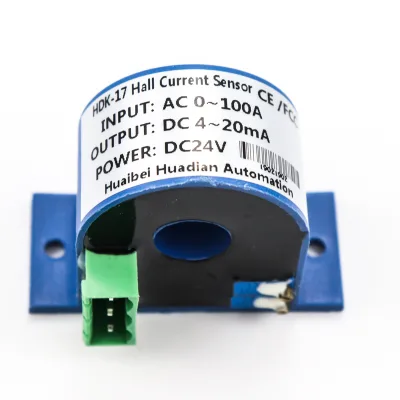
Hall Type DC Current Sensor 4 to 20mA Output DC and AC Current Transmitter
$9.54 - $15.60
MOQ: 5 Pieces


Comprehensive Sourcing Guide
Strategic Sourcing Guide for Single Phase Digital Current Transmitters
Understanding Technical Specifications and Performance Metrics
When evaluating single phase digital current transmitters for industrial procurement, the primary focus must remain on the precise alignment of technical specifications with operational requirements. The core functionality of these devices involves converting alternating current (AC) signals into standardized digital or analog outputs suitable for monitoring and control systems. Based on observed market data, these units frequently operate within a frequency range of 45 to 65 Hz, ensuring compatibility with standard global power grid frequencies. The accuracy of the signal conversion is a critical variable, with observed accuracy grades ranging from 0.1G to 0.5G, and specific accuracy tolerances cited as 0.1% Fs or 0.2%/0.5%. Buyers must verify that the selected unit's accuracy grade matches the precision needs of their specific application, as higher precision often correlates with more complex internal circuitry.
The input capabilities of these transmitters are equally vital. The observed product data indicates that input ranges can be customized, with specific examples showing support for AC/DC voltages up to 1000V and currents up to 1000A. This customization capability allows for tailored solutions where standard off-the-shelf ratings may not suffice. The output signal types are diverse, with analog outputs such as 4-20mA, 0-10V, 0-5V, and 1-5V being common configurations. The distinction between a "digital transmitter" and an "analog output" device is often a matter of the internal processing architecture; the device may process the signal digitally internally while outputting a standardized analog signal, or it may provide a digital interface. The power supply requirements also vary, with observed units supporting DC24V, DC12V, and in some cases, AC220V, which can be customized.
The physical construction and environmental resilience are defined by specific operating parameters. The operating temperature range typically spans from -40°C to 70°C, while storage temperatures can extend from -45°C to 85°C. This wide thermal tolerance suggests suitability for harsh industrial environments. Furthermore, the relative humidity tolerance is noted as less than or equal to 93% Rh, indicating robustness against moisture in non-condensing conditions. The physical form factor is also a consideration, with standard dimensions observed around 140*92mm for certain models, and weights varying significantly from 100g to over 5kg depending on the internal components and housing material.
Compliance and Certification Verification
In the realm of electrical instrumentation, compliance with international standards is not merely a formality but a prerequisite for safety and interoperability. When sourcing single phase digital current transmitters, buyers must rigorously verify the certification status of the product. The available data highlights several key certifications, including ISO and CE marks. These certifications indicate that the manufacturer adheres to specific quality management systems and safety standards, respectively. Additionally, some product listings reference compliance with IEC standards and ISO9001:2008, which are critical benchmarks for quality assurance in manufacturing processes.
The presence of these certifications should be validated against the specific regulatory requirements of the buyer's region. For instance, the CE mark is essential for products entering the European market, while ISO certifications are globally recognized for quality management. It is important to note that certification status can vary between different models from the same supplier. Therefore, procurement teams must request current certification documentation for the specific model number being considered, rather than assuming that all products from a supplier carry the same certifications. The standard production processes, such as "SemiConductor Integrated" methods, often contribute to the reliability required to maintain these certifications.
Furthermore, the product origin plays a role in compliance verification. Many of the observed units originate from China, with specific mentions of Beijing as a production hub. While the country of origin does not inherently dictate quality, it influences the supply chain logistics and the specific regulatory frameworks the manufacturer must navigate. Buyers should ensure that the manufacturer's declared origin matches the documentation provided for customs and regulatory clearance. The warranty period, observed as 2 years in some listings, also serves as an indicator of the manufacturer's confidence in their compliance and product durability.
Cost Drivers and Pricing Dynamics
The pricing structure for single phase digital current transmitters is influenced by a complex interplay of factors, including accuracy, customization, and production complexity. The observed price range in the market spans from $1 to $5,443, a variance that reflects the diversity of product configurations. At the lower end of the spectrum, basic models with standard accuracy and fixed input ranges are available. Conversely, the higher price points are associated with units featuring custom input ranges, higher accuracy grades (such as 0.1G), and specialized output configurations.
Customization is a significant cost driver. The availability of "Customized" options allows buyers to tailor the input voltage or current range to their specific needs, but this flexibility often incurs a premium. For example, a transmitter with a standard 0-1000V input may be priced differently than one with a custom 0-800V input. The production process, described as "SemiConductor Integrated," also impacts cost, as the integration of semiconductor components requires precise manufacturing techniques and quality control.
The Minimum Order Quantity (MOQ) is another critical factor in the total cost of ownership. The observed MOQ range is between 1 and 5 units, suggesting that these products are accessible for both small-scale projects and larger procurement initiatives. A lower MOQ reduces the initial financial barrier for buyers testing new suppliers or requiring small batches for pilot projects. However, for large-scale deployments, buyers should negotiate volume discounts, as the unit price may decrease with increased order quantities. The packaging, which can range from a single box with a manual to standard export cartons, also adds to the logistical costs, particularly for international shipping.
Typical Applications and Operational Context
Single phase digital current transmitters are integral to a wide array of industrial and commercial applications where precise current monitoring is essential. The primary usage, as indicated by the product data, is as a "Current Transducer" in systems requiring real-time data acquisition. These devices are commonly employed in power distribution networks, where they monitor the flow of electricity to ensure system stability and prevent overloads. The ability to handle high currents, up to 1000A in some configurations, makes them suitable for heavy industrial machinery and large-scale power plants.
In addition to power distribution, these transmitters are utilized in energy management systems. By converting the current signal into a standardized output like 4-20mA, they enable integration with Programmable Logic Controllers (PLCs) and Supervisory Control and Data Acquisition (SCADA) systems. This integration allows for automated control and data logging, which is crucial for optimizing energy consumption and maintaining operational efficiency. The "Split Core" design observed in some models, such as the Jxk-7, is particularly valuable for retrofitting existing electrical installations without the need to disconnect the conductor, making them ideal for maintenance and upgrade projects.
The versatility of these devices extends to various environments, from standard indoor control rooms to outdoor substations, thanks to their wide operating temperature and humidity ranges. The "Three-wire Transmitter" and "Two-wire Transmitter" configurations offer flexibility in wiring schemes, allowing engineers to design systems that best fit their existing infrastructure. Whether used for simple monitoring or complex control loops, the reliability of the Single Phase Digital Current Transmitter is paramount, as any failure in signal transmission can lead to significant operational disruptions.
Supplier Evaluation and Selection Criteria
Selecting the right supplier for single phase digital current transmitters requires a comprehensive evaluation of their capabilities, reliability, and track record. Buyers should prioritize suppliers who demonstrate transparency in their product specifications and certification status. The presence of detailed product attributes, such as the "Product Name," "Prod Model," and "Prod Standard," indicates a level of professionalism and attention to detail. Suppliers who provide clear information about the "Wire-Assembly Type" and "Output Signal Type" are more likely to deliver products that meet specific technical requirements.
The origin of the product is another factor to consider. Suppliers based in regions with established manufacturing hubs, such as Beijing, China, often have access to a robust supply chain and experienced workforce. However, buyers should verify the specific capabilities of the supplier rather than relying solely on the geographic location. The warranty period, observed as 2 years in some cases, is a strong indicator of the supplier's confidence in their product quality. A longer warranty period can provide buyers with greater peace of mind and protection against potential defects.
Furthermore, the supplier's ability to handle customization requests is a key differentiator. Suppliers that offer "Customized" options with flexible input ranges and output signals are better equipped to meet the unique needs of different projects. Buyers should also assess the supplier's quality control processes, looking for evidence of adherence to standards like ISO and IEC. The packaging standards, such as "Standard Export Carton" or "1 Box with Product Manual," reflect the supplier's commitment to protecting the product during transit and ensuring that the end-user receives a complete and well-documented package.
Quality Control and Long-Term Procurement Considerations
Ensuring the long-term reliability of single phase digital current transmitters requires a proactive approach to quality control and procurement planning. Buyers should implement a rigorous inspection process upon receipt of goods, verifying that the physical attributes, such as dimensions (e.g., 140*92mm) and weight (e.g., 5.61kg), match the specifications provided. The accuracy grade and tolerance levels should be tested against the claimed values to ensure that the device performs within the specified limits. This verification is crucial, as even minor deviations in accuracy can lead to significant errors in data logging and control systems.
Long-term procurement considerations also involve the availability of spare parts and technical support. Suppliers who offer a 2-year warranty and have a history of supporting their products are more likely to provide reliable after-sales service. Buyers should establish a relationship with the supplier to ensure access to technical assistance and replacement parts in the event of a failure. The standardization of the product models, such as JD194-BS4I, JXK-7, and BSA-U, facilitates easier maintenance and replacement, as these models are likely to be supported for extended periods.
Additionally, buyers should consider the scalability of their procurement strategy. As operational needs grow, the ability to source additional units with consistent specifications is essential. Suppliers who maintain a stable production process and adhere to consistent quality standards will be better positioned to support long-term growth. The observed MOQ range of 1 to 5 units allows for flexible ordering, enabling buyers to adjust their inventory levels based on demand without incurring excessive holding costs. By focusing on quality control and building strong supplier relationships, buyers can ensure the reliable operation of their Single Phase Digital Current Transmitter systems over the long term.
Comparative Analysis of Product Attributes
To facilitate informed decision-making, the following table summarizes the key attributes observed in the market for single phase digital current transmitters. This comparison highlights the diversity in specifications and helps buyers identify the most suitable options for their specific needs.
| Attribute Category | Observed Range/Options | Key Considerations for Buyers |
|---|---|---|
| Accuracy Grade | 0.1G, 0.2G, 0.5G | Higher grades (0.1G) offer better precision but may cost more. Verify if the application requires high precision. |
| Accuracy Tolerance | 0.1% Fs, 0.2%/0.5% | Ensure the tolerance aligns with the system's error budget. |
| Input Range | AC/DC 0-1000V, 0-1000A (Customizable) | Check if standard ranges suffice or if custom inputs are needed for specific loads. |
| Output Signal | 4-20mA, 0-10V, 0-5V, 1-5V | Match the output type to the receiving device (PLC, SCADA, meter). |
| Power Supply | DC24V, DC12V, AC220V (Customizable) | Verify compatibility with existing power infrastructure. |
| Operating Temp | -40°C to 70°C | Suitable for most industrial environments; check for extreme conditions. |
| Certifications | CE, ISO, ISO9001:2008, IEC | Mandatory for regulatory compliance; verify specific model certification. |
| MOQ | 1 to 5 Units | Low MOQ allows for flexible testing and small batch orders. |
| Warranty | 2 Years | Indicates manufacturer confidence; check terms and conditions. |
| Origin | China (e.g., Beijing) | Consider logistics and supply chain stability. |
This comparative overview underscores the importance of matching specific product attributes to project requirements. By carefully evaluating these factors, buyers can select single phase digital current transmitters that deliver optimal performance, reliability, and value for their applications.
FAQs
What certifications do single phase digital current transmitters have?
These devices typically hold ISO and CE certifications. Some models also comply with ISO9001:2008 and IEC standards. Buyers must verify specific certification documents for the exact model number before procurement.
Can the input voltage be customized for these transmitters?
Yes, the input voltage can be customized up to 1000V AC or DC. This flexibility allows for tailored solutions where standard ratings may not suffice for specific industrial applications or unique power requirements.
What is the operating temperature range for these units?
The operating temperature range spans from -40 to 70 degrees Celsius. Storage temperatures can extend further from -45 to 85 degrees Celsius, ensuring robustness in harsh industrial environments.
Which output signal types are available for these transmitters?
Common output signals include 4-20mA, 0-10V, 0-5V, and 1-5V. These analog outputs facilitate integration with PLCs and SCADA systems for real-time monitoring and automated control loops.
What is the minimum order quantity for these products?
The minimum order quantity ranges from 1 to 5 units. This low threshold allows buyers to test new suppliers or order small batches for pilot projects without significant financial commitment.
How long is the warranty period for these transmitters?
The standard warranty period is 2 years. This duration indicates the manufacturer's confidence in product durability and compliance with quality management systems like ISO.
Where are these single phase digital current transmitters manufactured?
Most units originate from China, with specific production hubs in Beijing. The country of origin influences supply chain logistics and regulatory frameworks for customs and clearance.