Source Small Capacity Organic Fertilizer Pellet machines for farms
Compare 30 listings for Small Capacity Organic Fertilizer Pellet machines featuring double roller and screw granulator types. Buyers can review specifications like 2-6mm granular size, 15-220kw power options, and customization availability from Jiangsu suppliers.
Key considerations
Products List


Fertilizer & chemical irregular granules roll press fertilizer pellet mill
$7000.00 - $100000.00
MOQ: 1 set

Fertilizer & chemical 2-4mm granules roll press fertilizer granulator
$7000.00 - $100000.00
MOQ: 1 set


$10000.00 - $26000.00
MOQ: 1 Pieces

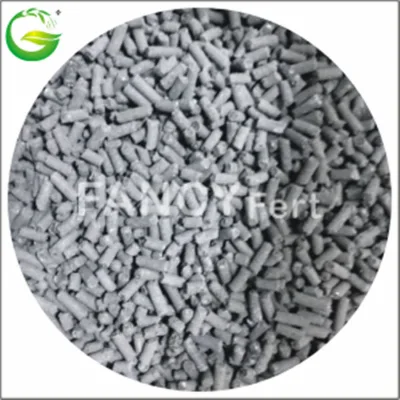
Comprehensive Sourcing Guide
Strategic Sourcing Guide for Small Capacity Organic Fertilizer Pellet Production
Procuring equipment for small-scale organic fertilizer production requires a nuanced understanding of granulation technologies, material compatibility, and supplier reliability. The market for Small Capacity Organic Fertilizer Pellet machines is characterized by a diverse range of granulators, from screw types to double roller presses, each offering distinct advantages for specific operational scales. Buyers must navigate a landscape where specifications vary significantly, from granular sizes ranging between 2mm and 6mm to power requirements that can span from 15kW to over 200kW depending on the machine configuration. This guide provides a structured approach to evaluating these assets, ensuring that procurement decisions are grounded in verified technical data and practical operational needs rather than speculative marketing claims.
Understanding Granulation Technologies and Technical Specifications
The core of any organic fertilizer production line is the granulator, which transforms raw materials into uniform pellets. In the context of small capacity operations, the choice of technology is paramount. The available market data indicates two primary mechanical approaches: the Screw Granulator and the Double Roller Press. The Double Roller Press, often associated with specific model series such as the DH series, utilizes a pressing method where raw material is forced between two rotating rollers. This method is particularly effective for materials requiring high density and specific hardness profiles, with some units boasting hardness values greater than 28N. Conversely, the Screw Granulator offers a different mechanical action, often suited for specific feedstock characteristics.
When evaluating technical specifications, buyers must scrutinize the granular size output. Observed data suggests that machines in this category can produce pellets within a range of 2-5mm or 2-6mm. This variation is critical for matching the end-product requirements of specific agricultural applications. Furthermore, the physical dimensions of the machinery are a significant constraint for small facilities. While some units are described as "Large" with dimensions around 1330mm by 930mm by 1400mm, others are categorized as "Small," necessitating a careful review of the footprint relative to available floor space. Power consumption is another variable, with observed ratings ranging from 15kW to 37-220kW. This wide disparity implies that the "small capacity" designation may refer to the output volume rather than the electrical load, requiring buyers to verify the specific power rating against their local electrical infrastructure capabilities.
Compliance, Certification, and Standard Verification
Navigating the regulatory landscape is essential for ensuring that purchased equipment meets international and local safety standards. The procurement process should prioritize verifying certifications such as ISO and CE, which are frequently cited in product listings. However, buyers must exercise caution, as the presence of a certification claim does not guarantee that every unit in a specific model line possesses it. For instance, while some documentation references the EAC standard or specific model standards like DH650, DG-200, or DG300, these often apply to specific configurations rather than the entire product family.
Buyers should explicitly request certification documentation for the specific serial number or batch of the machine being purchased. The distinction between a general "CE" mark and a specific model standard like "DH650" is significant. In the context of machinery originating from Jiangsu, China, the EAC certification is a notable standard that may be relevant for export to certain Eurasian markets. It is imperative to confirm whether the machine's design complies with the electrical voltage standards of the destination country, as observed data indicates voltage options ranging from 380V to 420V, often customizable. Relying on generic certification claims without verifying the specific model's compliance can lead to costly delays during customs clearance or operational shutdowns due to non-compliance with local safety regulations.
Cost Drivers and Financial Considerations
The financial landscape of sourcing fertilizer granulators is influenced by several dynamic factors. The observed price range in the market is exceptionally broad, spanning from $0.17 to $11,111.11. This extreme variance suggests that the lower end of the spectrum may represent components, accessories, or highly simplified units, while the upper end likely reflects fully automated, high-capacity systems with advanced features. Buyers should not assume that a low price point equates to a viable solution for organic fertilizer production; conversely, a high price does not automatically guarantee superior performance without a detailed breakdown of included features.
Minimum Order Quantity (MOQ) is another critical cost driver. The observed MOQ range extends from 1 to 1000 units. For a small capacity operation, an MOQ of 1000 is likely prohibitive, whereas an MOQ of 1 offers flexibility. However, buyers must investigate the unit price implications of ordering single units versus bulk orders. Additionally, the production time, which can extend up to three months, acts as a hidden cost driver. Extended lead times can disrupt project timelines, increase storage costs, and delay revenue generation. The customization of voltage and color, while offering operational flexibility, may also incur additional costs or extend the production timeline. Therefore, a comprehensive cost analysis must include the base machine price, customization fees, shipping logistics, and the opportunity cost of the production lead time.
Typical Applications and Material Compatibility
The versatility of organic fertilizer granulators is a key selling point, with many machines designed for the production of both organic and compound fertilizer granules. The raw material compatibility is a primary consideration; observed data confirms that these machines can process compound fertilizers and organic materials. The specific application often dictates the choice of granulator type. For instance, the Double Roller Press is frequently associated with the production of compound fertilizers, leveraging its ability to create dense, hard pellets. The hardness requirement of greater than 28N is particularly relevant for applications where the fertilizer pellets must withstand handling and transportation without breaking down prematurely.
The recyclability of the equipment is another factor for sustainable operations. Many units in this category are marked as recyclable, aligning with modern environmental standards. The "Nude" or "Wooden Case" packing options observed in the market suggest that the equipment is designed for robust shipping, which is essential for heavy machinery. However, the specific application also influences the choice of granular size. For small-scale organic farming, a granular size of 2-5mm might be preferred for ease of application, whereas larger agricultural operations might require the 2-6mm range for different spreading equipment compatibility. Buyers must align the machine's output specifications with the specific agronomic requirements of their target crop or soil type.
Supplier Evaluation and Operational Support
Selecting a reliable supplier is as critical as selecting the right machine. The market data indicates that suppliers are located primarily in Jiangsu, China, with specific origins noted in Changzhou. While the brand name "FUYI" appears in the listings, buyers should not rely on brand reputation alone. Instead, the evaluation should focus on the supplier's after-sales service capabilities. A critical observation is the provision of engineers available to service machinery overseas. This service is a significant value add for international buyers, as it mitigates the risk of prolonged downtime due to mechanical failures.
Buyers should verify the extent of this support. Does the supplier provide remote troubleshooting, or is on-site installation and training mandatory? The automation level of the machine, described as "Automatic" in some listings, implies a need for skilled operators or automated control systems. The condition of the machines is listed as "New," but buyers should confirm the warranty terms and the availability of spare parts. The "Big Machines Packed in Nude" or "in Nude or in Wooden Case" packing details suggest that the supplier has experience in shipping heavy industrial equipment, but the buyer must ensure that the packing method is sufficient to prevent damage during transit. A thorough supplier evaluation should include a review of their track record in handling similar orders, their response time to service requests, and their ability to provide technical documentation in the buyer's language.
Quality Control and Long-Term Procurement Considerations
Ensuring long-term operational success requires a robust quality control strategy. Buyers should establish clear acceptance criteria based on the observed specifications, such as the granular size consistency, the hardness of the resulting pellets, and the stability of the machine's voltage performance. The "Customized" nature of the voltage and color attributes suggests that the machine can be tailored to specific needs, but this customization must be rigorously tested before final acceptance. The production time of three months indicates a need for careful planning; buyers should factor in potential delays and ensure that their site is prepared for installation upon delivery.
Long-term procurement considerations also involve the scalability of the equipment. While the current focus is on small capacity, the modular nature of some granulators might allow for future expansion. The "DG series" and "DH series" model designations suggest a product line that may offer upgrades or compatible components. Buyers should inquire about the availability of future upgrades or the ability to integrate additional units into the production line. Furthermore, the "Recyclable" attribute of the machines points to a potential end-of-life strategy, which can be a factor in the total cost of ownership. By prioritizing suppliers who offer comprehensive support, clear specifications, and flexible customization options, buyers can secure a reliable foundation for their organic fertilizer production operations.
Summary of Key Technical Parameters
To facilitate quick reference during the evaluation process, the following table summarizes the key technical parameters observed in the market data. This summary is intended to guide the verification process rather than serve as a definitive specification for all units.
| Parameter Category | Observed Range / Options | Verification Requirement |
|---|---|---|
| Machine Type | Granulator, Double Roller Press, Screw Granulator | Confirm specific mechanism matches material needs. |
| Granular Size | 2-5mm, 2-6mm | Verify output consistency with target application. |
| Power Rating | 15kW, 30kW, 37-220kW | Match with local electrical supply capacity. |
| Voltage | 380/400/420V (Customized) | Confirm specific voltage for destination country. |
| Dimensions | 13309301400mm (Large), Small variants | Measure against available facility space. |
| Hardness | >28N | Test sample pellets for durability. |
| Certification | ISO, CE, EAC, DH650, DG-200 | Request specific certificates for the model. |
| Origin | Jiangsu, China (Mainland) | Verify logistics and shipping terms. |
| After-Sales | Engineers available overseas | Confirm scope of service and response time. |
By adhering to these guidelines and rigorously verifying the provided data against actual product capabilities, buyers can make informed decisions that balance technical performance, cost efficiency, and long-term operational reliability. The complexity of the organic fertilizer market demands a disciplined approach to sourcing, ensuring that every procurement decision is backed by evidence and aligned with specific production goals.
FAQs
What granular sizes can Small Capacity Organic Fertilizer Pellet machines produce?
These machines typically produce granular sizes between 2mm and 6mm. Specific models may output 2-5mm or 2-6mm pellets depending on the roller configuration and adjustment settings.
Which certifications are available for these fertilizer granulators?
Common certifications include ISO, CE, and EAC standards. Buyers should verify specific model compliance, as standards like DH650 or DG-200 may apply to particular configurations rather than the entire product line.
How long is the production time for these granulating machines?
The production time can extend up to three months. This lead time should be factored into project planning to avoid delays in installation and revenue generation.
Can the voltage be customized for different electrical infrastructures?
Yes, voltage is customizable to meet specific requirements. Options include 380V, 400V, or 420V, allowing adaptation to local power standards in various regions.
What is the minimum order quantity for purchasing these machines?
The minimum order quantity ranges from 1 to 1000 units. Small capacity operations can often source single units, while bulk orders may require higher quantities.
Which machine types are available for compound fertilizer granulation?
Available types include Double Roller Press and Screw Granulator models. These machines are designed to process compound fertilizers and organic materials into uniform granules.
Are engineers available for overseas service and maintenance?
Yes, engineers are available to service machinery overseas. This support helps mitigate downtime risks and ensures proper operation of the granulating equipment in international locations.