Source Smart Building Management System with Source Code for Fire Safety, Door Control, and Solar Applications
Compare 30 available options for a Smart Building Management System with Source Code tailored for fire alarms, door access, and solar controllers. These products support wired alarm signals, low-voltage switching, and customizable configurations for diverse industrial scenarios.
Key considerations
Products List


Advanced Building Stability Monitoring System with Smart Alarm Features
$9200.00 - $16800.00
MOQ: 1 Sets


Building Intercom System Lift Control with The Communication Way of RS485
$330.00 - $350.00
MOQ: 10 Pieces
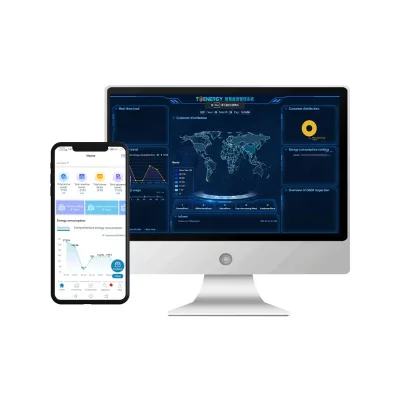

Building Mobile Management Platform with Blacklist and Whitelist Control
$300.00 - $100000.00
MOQ: 1 Pieces


Smart Environmental Monitoring System for Data Centers and Facilities
$2500.00 - $2600.00
MOQ: 1 Pieces


Digital Brick Factory Operations Management System Software for Smart Industry
$200000.00 - $800000.00
MOQ: 1 Pieces

Smart Digital Management System for Clay Brick Manufacturing Factory
$200000.00 - $800000.00
MOQ: 1 Pieces


Comprehensive Sourcing Guide
Strategic Sourcing Guide for Smart Building Management Systems with Source Code
The procurement of a smart building management system (SBMS) with source code represents a significant strategic decision for organizations seeking long-term operational autonomy and deep customization capabilities. Unlike off-the-shelf software solutions that operate within rigid vendor constraints, acquiring a system with full source code access allows buyers to modify underlying logic, integrate proprietary hardware, and ensure data sovereignty. This guide synthesizes available market observations and technical requirements to provide a disciplined framework for evaluating potential suppliers and products. The focus remains on verifying technical specifications, ensuring compliance, and understanding the cost drivers associated with licensed source code delivery.
Technical Architecture and Core Specifications
When sourcing a system with source code, the primary technical evaluation must center on the modularity of the software and its compatibility with existing hardware infrastructure. The supplied product data indicates a diverse range of components that may form the backbone of such a system, including input and output modules, battery management systems (BMS), and specialized controllers. For a comprehensive building management solution, the integration of these hardware elements with the software layer is critical.
Buyers should verify that the source code supports the specific signal transmission protocols required by the building's infrastructure. Observations from current market listings show that wired alarm systems with low current consumption (≤2mA) and monitoring currents (≤350ua) are common in industrial and building control contexts. A robust SBMS must be capable of interfacing with these low-power devices without compromising system stability. Furthermore, the system should support various application scenarios, ranging from electric bike integration to outdoor energy storage systems, indicating the need for flexible input handling.
The physical specifications of the hardware components also influence the software architecture. For instance, modules with specific dimensions such as 8540 mm or larger units like 100300mm require corresponding software drivers and configuration interfaces. The source code must be able to manage the discharge currents of connected batteries, which can reach up to 200A in heavy-duty applications, while maintaining temperature protection thresholds. Buyers must ensure the provided code includes the necessary logic to handle cell series configurations, typically ranging from 8 to 16s, and to manage balance currents within the 50-100mA range.
| Component Category | Key Technical Attribute | Verification Requirement |
|---|---|---|
| Input/Output Modules | Signal Transmission: Wired Alarm | Verify compatibility with ≤2mA alarm current thresholds. |
| Battery Management | Discharge Current | Confirm support for up to 200A with temperature protection logic. |
| Control Units | Application Scenarios | Ensure code supports E Bike, Outdoor ESS, and E Motor contexts. |
| Display Interfaces | Screen Size | Validate integration with 1.8-inch display units and 360° angle measurement. |
Compliance and Certification Verification
In the realm of building management, regulatory compliance is non-negotiable. The source code must be developed and delivered in a manner that ensures the final system meets international safety and quality standards. The supplied data highlights the prevalence of CE and ISO certifications among relevant hardware components. A responsible supplier must provide documentation proving that the software architecture adheres to these standards, particularly when the system controls critical infrastructure like fire alarms or power distribution.
The "Smoke, Fire, Door" usage attributes observed in product listings underscore the safety-critical nature of many building management functions. The source code must contain validated logic for these specific alarm forms, which often include sound and light alarms with volume levels exceeding 120dB. Buyers should demand evidence that the code has been tested against relevant safety protocols. While specific standards like IEC 62386 or ISO 50001:2018 are mentioned in broader industry contexts, the immediate verification should focus on the CE and ISO marks explicitly listed in the product specifications. The supplier must demonstrate that the code does not introduce vulnerabilities that would void these certifications.
Additionally, the customization capabilities of the system play a role in compliance. The ability to customize the product is a key attribute, allowing the system to be tailored to local building codes and specific safety requirements. However, this customization must not compromise the integrity of the original certifications. Buyers should require a change management process within the source code delivery, ensuring that any modifications made by the buyer or the supplier are traceable and do not invalidate the CE or ISO status of the hardware-software integration.
Cost Drivers and Financial Considerations
The acquisition of a Smart Building Management System with Source Code involves a complex pricing structure that differs significantly from standard software licensing. The observed price range in the market spans from $3 to $800,000, reflecting the vast difference between simple modules and comprehensive, fully integrated systems. The cost drivers for a system with source code include the complexity of the codebase, the level of documentation provided, and the extent of the intellectual property transfer.
Buyers should anticipate that the price is heavily influenced by the scope of customization. Products listed with "Customized" or "Customized" attributes often command higher prices due to the engineering effort required to adapt the code to specific needs. The Minimum Order Quantity (MOQ) also varies, ranging from 1 to 800 units, which impacts the per-unit cost for hardware components. For a large-scale building project, the ability to scale from a single unit to hundreds of modules without a prohibitive cost increase is a crucial financial factor.
Furthermore, the total cost of ownership (TCO) must account for the maintenance and support of the source code. Unlike proprietary systems where the vendor handles all updates, a system with source code places the burden of maintenance on the buyer or their designated engineering team. This requires an investment in skilled personnel who can interpret and modify the code. The presence of features like "Low-Voltage Switch" support and specific "Sleep Mode" currents (50-100ua) adds layers of complexity that can increase development and testing costs. Buyers should budget for ongoing technical support and potential third-party audits to ensure the code remains secure and up-to-date.
Typical Applications and Integration Scenarios
The versatility of the available hardware components suggests that smart building management systems with source code are applicable across a wide spectrum of environments. The observed application scenarios include electric vehicles (E Bike), outdoor energy storage systems (Outdoor ESS), and electric motors. This indicates that the same underlying technology can be adapted for both traditional building infrastructure and emerging green energy solutions.
In a traditional building context, the system can manage fire detection, door access control, and environmental monitoring. The "Smoke, Fire, Door" usage attributes highlight the system's capability to handle safety-critical alarms. The integration of 1.8-inch display screens and 360-degree angle measurement capabilities allows for advanced monitoring of building assets and personnel. For example, the system can track the movement of maintenance crews or monitor the status of critical equipment in real-time.
In the context of green energy, the system's ability to manage battery management systems (BMS) with discharge currents up to 200A makes it suitable for solar system controllers and energy storage facilities. The "Solar System Controller" application attribute confirms this capability. The source code must be flexible enough to handle the dynamic nature of solar power generation, adjusting to changes in light intensity and battery charge levels. The "Balance Current" and "Sleep Mode" specifications are particularly relevant here, ensuring efficient energy management and extended operational life for the storage systems.
Supplier Evaluation and Due Diligence
Selecting a supplier for a system with source code requires a rigorous due diligence process. Buyers must verify the supplier's ability to deliver not just the code, but the necessary documentation, including architecture diagrams, API references, and testing protocols. The "Customization" attribute suggests that the supplier should have a proven track record of adapting their products to specific client needs.
When evaluating suppliers, buyers should look for evidence of their experience with the specific hardware components listed in the product data. A supplier who can demonstrate expertise in integrating input/output modules with BMS and solar controllers is more likely to deliver a cohesive system. The origin of the products, such as "Zhongshan, China" or general "China" origin, should be transparently disclosed, as this can impact logistics, lead times, and intellectual property rights.
Buyers should also assess the supplier's commitment to quality control. The "Condition: New" attribute is a basic requirement, but deeper verification is needed. This includes checking for ISO certifications and ensuring that the production processes meet the specified standards. The supplier should be able to provide samples or prototypes that match the technical specifications, such as the 100*300mm product size or the 16 key positions for control interfaces.
Quality Control and Long-Term Procurement
Quality control is paramount when dealing with systems that control critical building functions. The "Accuracy" attribute of ±0.1mm and the "Alarm Threshold" of 0.1° - 10° indicate the precision required for these systems. Buyers must establish a quality assurance framework that includes regular testing of the software and hardware integration. This should involve stress testing the system under various conditions, such as high discharge currents or extreme temperature variations.
Long-term procurement considerations also include the sustainability of the supply chain. The "Weight All" attribute of ≤15kg and the "Packing" methods (Carton, Box, Plastic Case with a Handle) provide insight into the logistics of the products. Buyers should ensure that the packaging is robust enough to protect the sensitive electronics during shipping and storage. Additionally, the "Working Time" of ≥10h for battery-powered components suggests that the system must be reliable over extended periods without external power.
Finally, the long-term viability of the source code depends on the supplier's ability to provide updates and support. The "Customized" nature of the product means that the code may need to evolve as the building's needs change. Buyers should negotiate contracts that include provisions for future updates, bug fixes, and technical support. This ensures that the investment in the source code remains valuable over the lifespan of the building management system. By adhering to these guidelines, buyers can secure a robust, compliant, and customizable smart building management solution that meets their specific operational requirements.
FAQs
What certifications are available for Smart Building Management System with Source Code?
Available certifications include CE and ISO marks found on specific hardware components like input modules and controllers. These certifications verify compliance with safety standards for fire and smoke detection applications within the system.
How does the signal transmission work for these management systems?
The systems utilize wired alarm signal transmission with low current consumption of 2mA or less for alarms. Monitoring currents are kept at 350uA or lower to ensure efficient power usage across connected building sensors.
Can the system be customized for specific building requirements?
Yes, customization is available for various product attributes and software configurations. Buyers can request tailored solutions for specific application scenarios like solar system controllers or electric vehicle integration within the building infrastructure.
What is the typical discharge current capacity for battery management units?
Battery management units support discharge currents up to 200A for heavy-duty applications. These units also feature temperature protection and balance current capabilities ranging from 50 to 100mA for safe operation.
Where are these smart building management components manufactured?
Products originate from China, with specific manufacturing locations including Zhongshan. This origin information helps buyers assess logistics and supply chain reliability for large-scale procurement projects.
What packaging methods are used for these building management products?
Packaging options include cartons, boxes, and plastic cases with handles depending on the specific component. These methods ensure safe transport of sensitive electronics like input/output modules and battery management systems.