Source Snap Action Micro Switch for Appliances, Automotive, and Industrial Use
Explore 30 verified options for Snap Action Micro Switch components with varying ratings and certifications. Buyers can compare models like HK-04GL and WK-151 across different operating forces, current capacities, and terminal types to find the right fit.
Key considerations
Products List


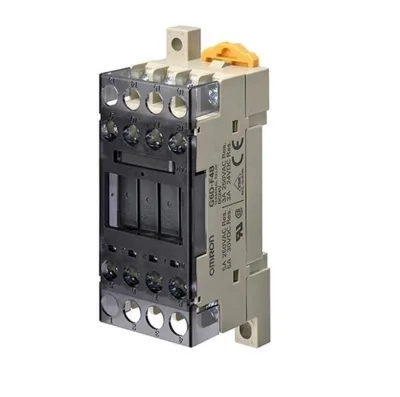


IP67 Waterproof Sealed Lever Miniature Switch Limit Snap Action Microswitch with Wire
$0.48 - $0.53
MOQ: 2000 Pieces
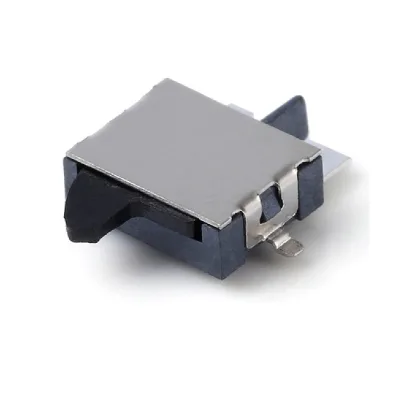
Micro Switch Mount Snap Action Switch 5V 10mA for Heater AC Home Application
$0.05 - $0.08
MOQ: 2000 pieces
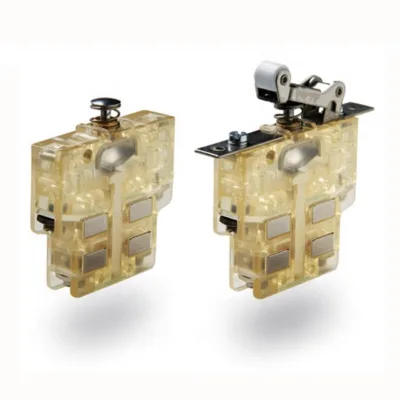
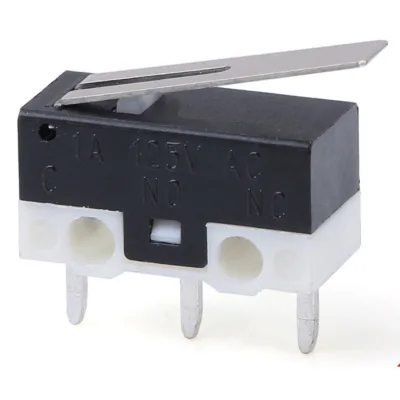
Comprehensive Sourcing Guide
Strategic Sourcing Guide for Snap Action Micro Switches
Understanding Technical Specifications and Operational Parameters
When sourcing snap action micro switches, the primary objective is to align the component's mechanical and electrical characteristics with the specific demands of the end application. The market offers a diverse array of configurations, and buyers must scrutinize the "Pressing Type" and "Function" to ensure compatibility. Data indicates that suppliers offer distinct actuation mechanisms, including "Lever Roller" and "Push-Button" variants. The choice between these forms dictates how the switch interacts with the external mechanism; for instance, a lever roller might be preferred for applications requiring a specific travel path, while a push-button is standard for direct manual actuation.
Electrical ratings are equally critical. The "Rate Current" for these components varies significantly across the supply base, with observed values ranging from 0.1A up to 21A. Specific models are rated for currents such as 0.1A, 1A, 3A, 5A, 10A, 16A, and 21A. Similarly, voltage ratings typically span 125VAC and 250VAC, with some high-rating models specifically noted for 16A at 250VAC. Buyers must verify that the selected switch can handle the peak load of the circuit without exceeding these limits. The "Function" attribute further refines selection, with options including Single Pole Double Throw (SPDT), Normal Closed (NC), and Normal Open (NO) configurations. The "Breaking Capacity" is another vital metric, distinguishing between "High-Current" and "General Type" capabilities, which directly influences the switch's ability to interrupt a circuit safely under load.
Mechanical attributes such as "Operating Force" and "Operating Travel" define the tactile feel and the physical displacement required to trigger the switch. Observed specifications show operating forces as low as less than 2.0N or up to 5.0N, though these values are often noted as being for units "Without Levers" and subject to customization. The travel distance, or the distance the actuator moves before the switch snaps, is typically observed in ranges like 0.4-0.7mm or 0.6-1.5mm. These parameters are not static; the "Customization" attribute is frequently available, allowing buyers to tailor the force and travel to precise engineering requirements. Additionally, the "Size" of the switch, categorized as "Small-Sized" or "Normal Size," must be verified against the available space in the target assembly.
Compliance, Certification, and Safety Standards
In the B2B procurement of electronic components, compliance with international safety and environmental standards is non-negotiable. The supply chain for snap action micro switches demonstrates a strong adherence to rigorous certification protocols. Common certifications observed in the market include CCC (China Compulsory Certification), CE (Conformité Européenne), and UL (Underwriters Laboratories). These marks indicate that the product has undergone testing for electrical safety and compliance with regional regulations. Furthermore, environmental compliance is often addressed through ISO standards, with specific references to operating environments where temperatures remain below 250℃.
Beyond safety, environmental regulations such as ROHS (Restriction of Hazardous Substances) and SGS (Société Générale de Surveillance) are frequently cited as product standards. These certifications ensure that the manufacturing process and the final product do not contain restricted hazardous materials, which is a prerequisite for exporting to many global markets. The "Standard" attribute for packaging often aligns with these certifications, with "Carton" and "CE, ROHS, SGS" listed as standard packaging and compliance markers. Buyers should explicitly request certification documentation for any lot of switches to verify that the specific batch meets the claimed standards, as certification status can vary between production runs or specific model lines.
The "Protection" attribute also plays a role in compliance, particularly for applications in harsh environments. Some models are specified as "Waterproof," which is essential for outdoor or industrial applications where moisture ingress could lead to failure. When sourcing, procurement teams must ensure that the "Certification" list matches the regulatory requirements of the destination country. For example, a product intended for the European market must possess the CE mark, while those for the North American market require UL listing. The presence of these certifications should be verified against the specific model number, as different models like the HK-04GL or WK-151 may carry different certification profiles.
Cost Drivers and Pricing Dynamics
The pricing of snap action micro switches is influenced by a complex interplay of technical specifications, customization levels, and order volume. The observed price range in the market spans from $0.05 to $19.50 USD, a wide disparity that reflects the diversity of the product offerings. The lower end of this spectrum typically corresponds to standard, non-customized units with basic electrical ratings and simple actuation types. Conversely, the higher price points are associated with specialized models featuring high breaking capacities, waterproof protection, or specific certifications like UL and CCC.
Order Volume, or Minimum Order Quantity (MOQ), is a significant driver of unit cost. The observed MOQ range is extensive, spanning from 1 unit to 3,000 units. Buyers purchasing small quantities, such as for prototyping or low-volume production, will likely face a higher per-unit cost. In contrast, bulk procurement allows for significant economies of scale, potentially bringing the unit price closer to the lower end of the observed range. The "Customization" attribute is another critical cost factor. While standard models are readily available, requests for customized operating force, travel distance, or specific lever types will incur additional tooling or setup costs, pushing the price upward.
The "Packing" and "Standard" attributes also impact the final landed cost. Units packaged in individual "Boxes" or "Plastic Bags" may have different handling and logistics costs compared to those packed in standard "Cartons." Furthermore, the origin of the product, such as "Zhejiang, Wenzhou" or general "China" origin, can influence pricing due to regional labor costs and supply chain efficiencies. Buyers should evaluate the total cost of ownership, which includes not just the unit price but also the cost of customization, packaging, and logistics. It is essential to request detailed quotes that break down these variables to understand the true cost drivers for a specific procurement scenario.
Typical Applications and Industry Use Cases
Snap action micro switches are ubiquitous in a wide range of industries due to their reliability and compact design. The "Application" attribute highlights specific use cases, with "Military Products" being a notable sector. In military applications, the switches must often meet stringent requirements for durability, environmental resistance, and precise actuation. The "Waterproof" protection feature is particularly relevant here, ensuring functionality in adverse conditions. Additionally, the "Blue Color Micro Switch" is specifically noted for "Microwave Use," indicating a specialized application where visual identification or specific material properties are required for safety or operational reasons.
Beyond military and specialized uses, these switches are integral to consumer electronics, industrial machinery, and home appliances. The "Function" types, such as SPDT, NC, and NO, make them suitable for a variety of control circuits, from simple on/off switches to complex safety interlocks. The "Breaking Capacity" determines their suitability for different power levels; "High-Current" models are ideal for heavy-duty industrial equipment, while "General Type" switches suffice for low-power consumer devices. The "Size" of the switch, whether "Small-Sized" or "Normal Size," allows for integration into compact devices where space is at a premium.
The "Brand" of the switch can also indicate its intended application. Brands like "PIONEER" and "saipwell" are associated with specific product lines that may be optimized for particular industries. For instance, a brand known for high-reliability components might be preferred for automotive or medical applications, while another might focus on cost-effective solutions for general consumer goods. Buyers should analyze the specific model numbers, such as HK-04GL, WK-151, or MN4-010C, to determine their historical use cases and suitability for their own projects. Understanding these application contexts helps in selecting the right switch for the job, ensuring both performance and longevity.
Supplier Evaluation and Quality Control Protocols
Selecting a reliable supplier is paramount when sourcing snap action micro switches. The "prod_origin" data indicates that many suppliers are based in "Zhejiang, Wenzhou" or generally in "China," regions known for their manufacturing capabilities in electronic components. However, geographic origin alone does not guarantee quality. Buyers must evaluate suppliers based on their adherence to the "prod_standard" and "Certification" claims. A reputable supplier should be able to provide valid documentation for CCC, CE, UL, ISO, ROHS, and SGS certifications for the specific models being ordered.
Quality control protocols should be a central part of the supplier evaluation process. Buyers should inquire about the supplier's testing procedures, particularly regarding the "Operating Force" and "Operating Travel" consistency. Since these parameters are often customizable, the supplier must demonstrate the ability to maintain tight tolerances during the customization process. The "Pins" configuration, ranging from 2-pin to 6-pin, and the "Terminal" sizes, such as 2.8*0.5mm or 4.8mm, require precise manufacturing to ensure reliable electrical connections. Suppliers should have robust inspection processes to verify that the terminal dimensions and pin counts match the specifications exactly.
The "prod_packing" method, whether "Box," "Plastic Bag," or "Bag," also reflects the supplier's attention to detail. Proper packaging is essential to prevent damage during transit and to maintain the integrity of the switches. Buyers should request samples to physically inspect the build quality, checking for defects in the casing, the actuator mechanism, and the terminal connections. Additionally, verifying the "prod_model" consistency is crucial; the model number should match the physical product and the accompanying documentation. A supplier that can provide a clear traceability system, linking the batch number to the specific production run and quality test results, is highly desirable.
Long-Term Procurement and Supply Chain Considerations
Sourcing snap action micro switches is not merely a transactional activity but a strategic decision that impacts long-term product reliability and supply chain stability. The "Customization" availability suggests that buyers should plan for potential design iterations. A supplier that offers flexible customization options can adapt to design changes without requiring a complete switch to a new vendor. This flexibility is valuable for maintaining continuity in product development. However, buyers must also consider the "Lead Time" implications of customization, as custom orders may require longer production cycles than standard off-the-shelf items.
The "Rate Current" and "Rate Volt" specifications should be reviewed in the context of future product upgrades. A switch that meets current requirements might become obsolete if the product is upgraded to handle higher power loads. Therefore, it is advisable to select switches with a margin of safety in their electrical ratings to accommodate potential future changes. The "Breaking Capacity" should also be evaluated to ensure the switch can handle potential fault conditions that might arise in the future.
Supply chain resilience is another critical factor. Relying on a single supplier or a single model number can create vulnerabilities. Buyers should consider diversifying their supplier base or maintaining a portfolio of compatible models, such as the various WK and HK series, to mitigate the risk of supply disruptions. The "Standard" packaging and "prod_packing" methods should be consistent to streamline logistics and inventory management. Finally, maintaining open communication with suppliers regarding their "Certification" status and "prod_origin" ensures that the supply chain remains compliant with evolving international regulations, protecting the buyer from potential legal or market access issues.
FAQs
What certifications are available for snap action micro switches?
Common certifications include CCC, CE, UL, and ISO for environments below 250 degrees Celsius. Some models also meet ROHS and SGS standards to ensure compliance with environmental regulations and safety requirements for global markets.
Which pressing types are available for snap action micro switches?
The available pressing types are Lever Roller and Push-Button configurations. Buyers can select the actuation mechanism that best fits their mechanical design, with customization options available for specific lever requirements.
What is the operating force range for these micro switches?
Operating force can be less than 2.0 Newtons or up to 5.0 Newtons for units without levers. These values are subject to customization, allowing buyers to tailor the tactile feel to their specific application needs.
Can I find snap action micro switches with high current breaking capacity?
Yes, high-current breaking capacity models are available alongside general type options. Specific models support rate currents ranging from 0.1A up to 21A at voltage ratings of 125V or 250VAC for various load requirements.
Where are these micro switches manufactured?
Products originate from Zhejiang, Wenzhou in China or other general Chinese locations. Buyers should verify the specific origin for each model to ensure alignment with their supply chain preferences and logistics planning.
What is the minimum order quantity for these switches?
The minimum order quantity ranges from 1 unit to 3000 units depending on the supplier and model. Lower quantities are suitable for prototyping, while bulk orders often secure better pricing and availability for production runs.