Source Soccer Top for training, matches, and casual wear
Explore 30 verified listings for the Soccer Top, comparing features like breathable fabrics, custom logos, and various fits. Buyers can evaluate options ranging from cotton blends to performance materials with quick-dry properties for diverse athletic needs.
Key considerations
Products List


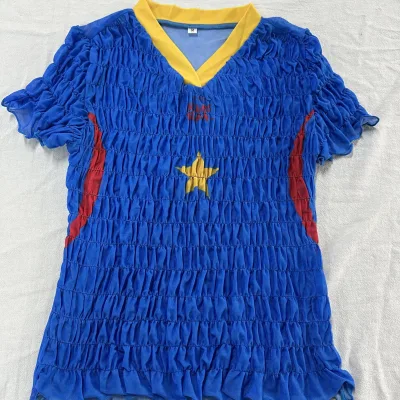


Comprehensive Sourcing Guide
Strategic Sourcing Guide for Soccer Tops
Defining Product Specifications and Material Composition
When sourcing soccer tops, the primary objective is to identify garments that balance performance with durability. The product landscape for this category is diverse, ranging from casual streetwear interpretations to high-performance athletic gear. A critical first step in the evaluation process is understanding the material composition, as this dictates the garment's functionality. In the current market, manufacturers frequently utilize blends of cotton, polyester, and spandex to achieve specific tactile and functional outcomes. For instance, some listings indicate a composition of 100% organic cotton, which offers a soft, cozy feel suitable for casual wear or post-match activities. However, for active play, the prevalence of synthetic blends such as 73% polyester and 27% spandex is significant. This specific ratio is engineered to provide elasticity and moisture management, essential for the dynamic movements required in soccer.
The fabric weight is another technical specification that buyers must scrutinize. Observations from available product data suggest weights around 220 grams, which typically indicates a mid-to-heavy weight fabric. This weight class is often preferred for training tops or hoodies that require structure and warmth, rather than lightweight match-day jerseys. The presence of features like "Four-Way Stretch" and "Sweat-Wicking" capabilities suggests that the fabric is designed to move with the athlete and manage perspiration effectively. Additionally, the inclusion of "Breathable" attributes confirms that the textile construction allows for air circulation, a non-negotiable factor for maintaining body temperature during intense physical exertion. Buyers should verify if the specific fabric listed meets the intended use case, distinguishing between a "Slouchy Fit" casual hoodie and a form-fitting performance top.
Technical Attributes and Functional Design Elements
Beyond raw materials, the technical design elements of a Soccer Top determine its suitability for the sport. The construction of the garment often includes specific features such as ribbed cuffs and hems, which help maintain the shape of the sleeves and the bottom of the shirt while providing a snug fit that prevents the fabric from riding up. The hood type is another variable; some products feature a "Drawstring Hood" or a "Fixed Hood," which can offer protection against the elements during outdoor training sessions. The closure type is predominantly elastic waist or standard pullover designs, ensuring ease of movement without the interference of zippers or buttons that could cause discomfort during contact.
Pocket configurations also play a role in the utility of the garment. While some athletic tops are designed with a minimalist profile, others include a "Kangaroo Pocket," which is common in hooded variations. This feature allows players to store small items like keys or energy gels during warm-ups. The sleeve length is a critical differentiator, with options ranging from full sleeves to "Sleeveless" designs. Sleeveless tops are often preferred for high-intensity training or summer matches to maximize cooling, whereas full sleeves may be selected for cooler weather or to provide a layer of protection against abrasions. Furthermore, the "Shoulder Pad" attribute is noted as "Natural and Smooth," indicating that the construction aims to avoid bulkiness while maintaining a streamlined silhouette that does not impede arm movement.
| Design Attribute | Common Variation | Functional Benefit |
|---|---|---|
| Sleeve Length | Sleeveless or Full | Temperature regulation and abrasion protection |
| Fit Style | Slouchy Fit or True to Size | Comfort for casual wear or performance precision |
| Closure Type | Elastic Waist or Pullover | Unrestricted movement and ease of wear |
| Pocket Type | Kangaroo Pocket or None | Storage utility for casual vs. streamlined performance |
| Hood Style | Drawstring or Fixed | Weather protection and adjustability |
Compliance, Certification, and Ethical Sourcing Standards
In the modern B2B procurement environment, compliance and ethical standards are as critical as product performance. Buyers must verify that their suppliers adhere to recognized responsible sourcing criteria. One specific standard observed in the market is the "Nordstrom Responsible Brands Criteria," which suggests that certain manufacturers align with rigorous environmental and labor standards. When evaluating potential suppliers, it is essential to confirm if their production processes meet similar benchmarks regarding organic materials and sustainable practices. For example, the presence of "100% Organic Cotton" in a product listing implies a commitment to sustainable agriculture, but buyers should request documentation to verify this claim rather than relying solely on marketing descriptions.
Certification checks should extend beyond material composition to include labor practices and environmental impact. While specific certification bodies are not universally mandated for all soccer tops, the "OEM" (Original Equipment Manufacturer) and "ODM" (Original Design Manufacturer) service models indicate a level of flexibility and compliance with client-specific requirements. Suppliers offering "Customized Logo Printing" and "Accept Customized Labels" demonstrate an ability to meet brand-specific compliance needs, such as adding care labels or safety warnings required by the destination market. Buyers should also investigate the "Business" origin, noting that many products are "Imported" from regions like "Guangdong, China." This geographic context is relevant for understanding supply chain transparency and the specific regulatory environment the supplier operates under.
Cost Drivers and Pricing Dynamics
The pricing of soccer tops is influenced by a complex interplay of factors, including material costs, customization levels, and order volume. The observed price range in the market is substantial, spanning from $1.10 to $1,560 USD. This wide variance indicates that the category encompasses everything from basic, unbranded bulk items to highly specialized, custom-engineered performance gear. The lower end of the spectrum likely corresponds to standard cotton blends or basic polyester tops with minimal customization. Conversely, the higher price points may reflect the use of premium organic materials, advanced fabric technologies like "Anti-Bacterial" or "Anti-Uv" treatments, and complex design features.
Minimum Order Quantity (MOQ) is a significant cost driver. Data indicates an MOQ range from 1 to 1,000 units, with a specific observation of 50 sets for certain product lines. A lower MOQ allows for smaller, more agile orders but often results in a higher unit cost due to the inefficiencies of small-batch production. Conversely, larger orders can leverage economies of scale to reduce the per-unit price. The "Supply Type" being "Oem Service" suggests that buyers can negotiate pricing based on the extent of customization required. Customization elements such as "Digital Print," "Plain Embroidery," and "Customized Logo Printing" add to the production cost. Additionally, the "Single package size" and "Single gross weight" (e.g., 0.500 kg) are critical for calculating shipping costs, which can significantly impact the total landed cost, especially for international procurement.
Supplier Evaluation and Operational Capabilities
Selecting the right supplier requires a thorough evaluation of their operational capabilities and flexibility. A key indicator of a supplier's readiness is their lead time for samples. The availability of "7 days sample order lead time" is a strong positive signal, suggesting that the supplier has efficient internal processes and can quickly validate product quality before committing to a large order. This agility is crucial for buyers who need to test market response or verify design specifications rapidly. Furthermore, the "Place of Origin" being "Guangdong, China" highlights a region known for a robust textile and apparel manufacturing ecosystem, which often translates to a wide selection of materials and skilled labor.
Suppliers should also be assessed on their ability to handle "Customization" requests. The market data shows that "Customization" is "Available" across various attributes, including "Label," "Logo," and "Design." A capable supplier will offer "OEM.ODM Designs," allowing buyers to either manufacture existing designs or create unique products from scratch. The "Packing" specifications, such as "1 Set / Opp Bag" or bulk packing like "865335=10 Sets," indicate the supplier's attention to logistics and readiness for shipment. Buyers should verify that the supplier's packaging standards align with their retail or distribution requirements to prevent damage during transit. Additionally, the "Wash Care Information" provided by the supplier, such as "Machine Wash, Tumble Dry," must be accurate and reliable, as this affects the product's longevity and customer satisfaction.
Quality Control and Long-Term Procurement Strategy
Quality control is paramount in the soccer apparel sector, where durability and performance are non-negotiable. Buyers should implement a rigorous inspection protocol that verifies the "Feature" claims, such as "Eco-Friendly," "Quick Dry," and "Anti-Odor." These attributes should not be taken at face value; instead, buyers should request test results or third-party verification to ensure the fabric actually performs as advertised. The "Technical" aspects, including "Printed" and "Plain Embroidery" methods, should be inspected for consistency and durability. For instance, "Digital Print" quality can vary, and buyers must ensure that the prints do not crack or fade after repeated washing.
For long-term procurement, establishing a strategic partnership with a supplier is more beneficial than transactional buying. The "Business" model of "Imported" goods from China requires careful management of logistics and inventory. Buyers should consider the "Size" range, which spans from "International XXS-XXXL" or specific US sizes like "Xs(2)," to ensure the supplier can meet diverse sizing requirements without excessive overstock. The "Number of Pieces" in a set, such as a "2 Piece Set" or "Yoga Pants+bra," indicates that the supplier can offer coordinated collections, which can streamline the procurement process. Finally, buyers should maintain open communication regarding "Design" changes and "Supply Type" adjustments to adapt to market trends. By focusing on these long-term considerations, buyers can build a resilient supply chain that delivers high-quality soccer tops consistently.
FAQs
What materials are used for soccer tops?
Soccer tops commonly use blends of cotton, polyester, and spandex. Some listings specify 100% organic cotton for a soft feel, while performance gear often features 73% polyester and 27% spandex for elasticity and moisture management.
Can I customize the logo and labels?
Yes, customization is available for logos and labels. Suppliers offer services like customized logo printing and accept customized labels, allowing buyers to meet specific brand requirements through OEM or ODM design models.
What is the typical minimum order quantity?
The minimum order quantity ranges from 1 to 1000 units. Specific product lines may require an MOQ of 50 sets, allowing flexibility for smaller agile orders or larger bulk purchases depending on the supplier.
How long does it take to get a sample?
Sample orders can be supported with a lead time of 7 days. This quick turnaround allows buyers to validate product quality and design specifications rapidly before committing to a larger production run.
Which features are common in these tops?
Common features include breathability, quick-dry capabilities, and four-way stretch. Additional attributes often cited are anti-bacterial, anti-UV, and sweat-wicking properties, ensuring comfort and performance during physical activity.
Where are these products typically manufactured?
Products are typically imported from Guangdong, China. This region is known for a robust textile ecosystem, providing a wide selection of materials and skilled labor for manufacturing various apparel items.