Source Solar Powered Smart Bus Shelter for Transit Hubs
Find 22 Solar Powered Smart Bus Shelter options featuring LED lighting, digital displays, and galvanized steel structures. Compare customization, power systems, and materials for outdoor advertising and transit applications.
Key considerations
Products List


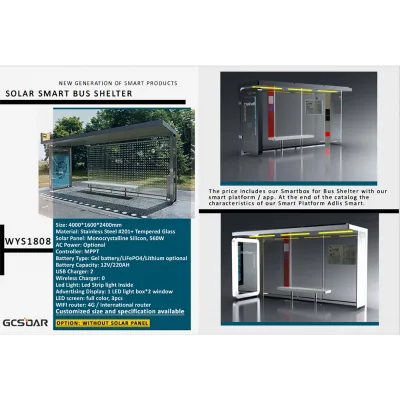


Smart Bus Shelter for Tourist Areas with Multi-Language Display Option
$5800.00 - $6000.00
MOQ: 1 Pieces


Comprehensive Sourcing Guide
Solar Powered Smart Bus Shelter Sourcing Guide
Sourcing solar-powered smart bus shelters requires a careful balance between robust infrastructure durability and advanced digital integration. These units serve as critical public infrastructure, providing weather protection while delivering real-time transit information, advertising content, and connectivity services. Buyers must navigate a complex supply chain that involves structural engineering, electrical systems, and software integration. The decision to procure these units often hinges on the ability to customize features to specific municipal requirements, such as local climate conditions, aesthetic guidelines, and digital display needs.
The market offers a wide variety of configurations, ranging from basic static shelters to fully interactive smart kiosks. Key differentiators include the type of solar power system, the quality of the display panels, and the structural materials used. Buyers should focus on verifying the technical specifications of each component, ensuring that the solar capacity matches the energy consumption of the digital displays and lighting systems. Additionally, the structural integrity of the shelter must withstand environmental stresses, including wind loads and temperature fluctuations, while maintaining a modern aesthetic that complements urban landscapes.
Product Scope and Observed Listing Signals
The observed product landscape includes a diverse range of models, such as the Zemso-HCT-0190, Zemso-DZZP-0006, and various HCT series units like 0316, 0138, 0146, and 0098. These models indicate a broad scope of offerings, from specialized digital displays to complete shelter structures. The presence of multiple model numbers suggests that suppliers offer modular solutions, allowing buyers to mix and match components based on specific project needs. This variety supports both small-scale deployments and large municipal contracts, providing flexibility in procurement strategies.
Listing signals reveal a strong emphasis on customization and adaptability. Attributes such as "Customized" for visual size, light source, and standard indicate that buyers are not limited to off-the-shelf products. The availability of options like "PC or Metal Plate" for roof materials and "Stainless Steel or Galvanized Steel" for structure materials allows for tailored solutions based on budget and durability requirements. Furthermore, the mention of "Outdoor, Advertising" applications highlights the dual purpose of these units, serving both passenger comfort and commercial revenue generation through digital advertising panels.
Technical Specifications to Verify
Verifying the technical specifications of the solar power system is paramount for ensuring reliable operation. Buyers should confirm the solar system capacity, which ranges from 100W to 800W lithium battery options, to ensure it can sustain the energy demands of LED lighting and digital displays during periods of low sunlight. The power supply requirements, typically AC110V-240V / DC 12V / 24V at 50-60Hz, must be compatible with local grid infrastructure if hybrid power options are considered. Understanding the energy balance between generation and consumption is crucial for minimizing maintenance and ensuring consistent service availability.
Display and connectivity features are equally critical for smart bus shelters. Specifications such as "IPS" type panels, "1500-5000nits" brightness, and "2560x12ms" resolution indicate high-quality visual performance suitable for outdoor visibility. Buyers should verify the interface types, such as HDMI, and network options including WiFi, LAN, 3G, and 4G, to ensure seamless content management and real-time data transmission. The inclusion of features like touch display, remote control, and multi-language menu support enhances user interaction and operational flexibility, making these shelters true smart city nodes.
Compliance and Safety Documentation
Compliance with local safety and construction standards is non-negotiable for public infrastructure projects. Buyers must request documentation that verifies the structural integrity of the shelter, including wind load ratings and seismic compliance where applicable. The use of materials like "Temper Glass" for light boxes panels and "Stainless Steel Sheet" for structural components should be backed by material safety data sheets and certification of durability. Ensuring that all electrical components meet relevant safety standards is essential to prevent hazards and ensure long-term reliability.
Environmental and operational safety standards also play a significant role in procurement. Buyers should verify that the solar systems and electrical installations comply with local electrical codes and environmental regulations. Documentation regarding the "Eco-Friendly" nature of the product, as mentioned in some listings, should be substantiated with relevant certifications or lifecycle assessments. Additionally, safety features such as emergency lighting, fire-resistant materials, and secure mounting systems must be documented to protect both passengers and maintenance personnel.
Cost Drivers and Commercial Terms
Several factors influence the total cost of ownership for solar-powered smart bus shelters. The choice of materials, such as stainless steel versus galvanized steel, and the complexity of the digital display system are primary cost drivers. Customization options, including specific visual sizes, colors, and design styles, can also impact pricing. Buyers should consider the long-term benefits of higher-quality materials and advanced features, which may reduce maintenance costs and increase the lifespan of the shelter.
Commercial terms, including minimum order quantities (MOQ) and payment conditions, vary across suppliers. Observed MOQ ranges from 1 to 1000 units, offering flexibility for both pilot projects and large-scale deployments. Buyers should negotiate terms that align with their project timeline and budget, considering factors such as lead times, shipping costs, and warranty provisions. The availability of "3 Years" warranty on some products provides a baseline for risk mitigation, but buyers should explore extended warranty options for critical components like solar panels and digital displays.
Supplier Qualification and Quality Control
Evaluating supplier qualifications is essential for ensuring the quality and reliability of solar-powered smart bus shelters. Buyers should assess the supplier's manufacturing capabilities, including processes like "Machining," "Assembly," and surface treatments such as "Painting," "Polished," and "Brushed." The origin of the products, primarily from Jiangsu and Guangzhou in China, indicates a concentration of manufacturing expertise in these regions. Buyers should verify the supplier's experience in producing similar products and their ability to meet specific customization requirements.
Quality control measures should be clearly defined and enforced throughout the production process. Buyers should request detailed quality assurance plans that include inspections at various stages of manufacturing, from raw material sourcing to final assembly. Testing procedures for electrical components, structural integrity, and display performance should be documented and verified. Additionally, buyers should consider third-party inspections or audits to ensure that the supplier adheres to agreed-upon quality standards and delivers products that meet the specified requirements.
Long-Term Procurement Checks
Long-term procurement success depends on establishing robust maintenance and support frameworks. Buyers should verify the availability of spare parts and technical support for the digital displays, solar systems, and structural components. The "Customized" nature of many products may complicate maintenance, so buyers should ensure that the supplier provides comprehensive documentation and training for local maintenance teams. Establishing a clear service level agreement (SLA) with the supplier can help mitigate risks associated with equipment failures and downtime.
Regular performance monitoring and periodic reviews of the installed shelters are also crucial for long-term success. Buyers should implement a system for tracking energy consumption, display performance, and structural condition to identify potential issues early. Feedback from passengers and maintenance personnel can provide valuable insights into the usability and reliability of the shelters. By continuously evaluating performance and maintaining open communication with suppliers, buyers can ensure that their solar-powered smart bus shelters continue to meet the evolving needs of the community and deliver value over their operational lifespan.
FAQs
Can solar powered smart bus shelters be customized?
Yes, customization is available for these shelters. Buyers can specify visual sizes, light sources, and structural materials like stainless steel or galvanized steel. The design style can be modern, and the roof material may be PC or metal plate. This allows the product to meet specific advertising display and outdoor furniture requirements.
What power supply options are available?
The shelters support AC110V-240V / DC 12V / 24V at 50-60Hz. An optional solar system with a 100W-800W lithium battery is also available. This flexibility ensures reliable operation for outdoor advertising and LED lighting, whether connected to the grid or operating independently in remote locations.
What is the warranty period for these units?
The warranty period is 3 years. This coverage applies to the overall structure and integrated systems, including the LED lighting and display panels. It ensures durability and reliability for outdoor use, providing buyers with confidence in the long-term performance of the smart bus shelter investment.
What display features are included in the shelter?
The shelter includes a touch display with LED backlight and TV function support. It features an IPS type screen with 1500-5000 nits brightness and a 16:9 aspect ratio. The system can be scrolling or static, with HDMI interface and optional WiFi, LAN, 3G, or 4G connectivity.
Where are these shelters manufactured?
These shelters are manufactured in China, specifically in Jiangsu and Guangzhou regions. The products are exported globally, indicating established supply chains and logistics capabilities. Buyers can expect standardized production processes including machining, assembly, and surface treatments like painting or hot dip galvanizing for durability.
What materials are used for the structure?
The structure material is typically stainless steel or galvanized steel. The roof material can be PC or metal plate. Surface finishes include painting, polishing, or brushing. These materials ensure the shelter is eco-friendly, durable, and suitable for general outdoor use, resisting weather conditions while maintaining aesthetic appeal.