Source Solar Powered Outdoor Rock Speaker for Garden, Park, and Home
Find 28 Solar Powered Outdoor Rock Speaker options from verified suppliers. Compare specifications like battery capacity, waterproof ratings, and power output to select the right unit for garden, park, or home audio needs.
Key considerations
Products List
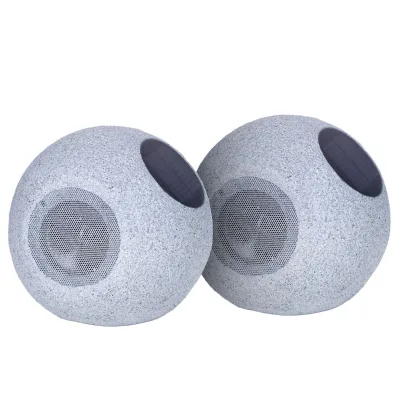


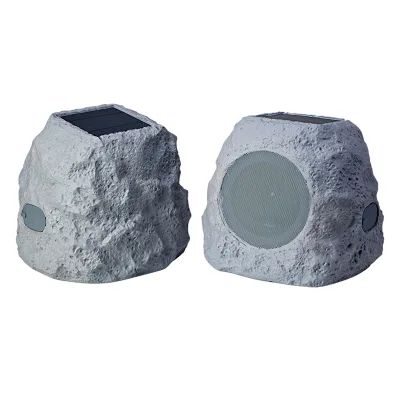
Wireless Solar-Powered Outdoor Bluetooth Speaker with LED Lighting Features
$5.51 - $5.81
MOQ: 1000 Pieces

Comprehensive Sourcing Guide
Strategic Sourcing Guide for Solar Powered Outdoor Rock Speakers
Procuring solar-powered outdoor rock speakers requires a nuanced understanding of the intersection between rugged environmental durability, renewable energy integration, and high-fidelity audio performance. For B2B buyers, the market presents a diverse array of products ranging from simple portable units to complex, permanently installed landscape audio solutions. The following guide analyzes the critical technical specifications, compliance requirements, and supply chain dynamics necessary to source reliable units that meet specific project demands without compromising on quality or regulatory adherence.
Technical Specifications and Audio Performance
When evaluating solar-powered rock speakers, the primary technical differentiator lies in the balance between power output, battery capacity, and acoustic fidelity. The observed market data indicates a significant variance in specifications, necessitating a rigorous review of the product datasheet. For instance, while some units in the current inventory list an output power of 10W, others may claim peak power (PMPO) ratings between 30W and 50W. Buyers must distinguish between RMS (Root Mean Square) power, which represents continuous output, and PMPO, which is often a marketing metric for peak bursts. A 10W RMS rating is generally sufficient for background music in residential landscapes, whereas higher wattage is required for commercial spaces or areas with high ambient noise.
Battery capacity is another critical specification. The data reveals a range of 2000mAh to 3000mAh, with an estimated battery life of 5 to 10 hours. This range suggests that the actual runtime is heavily dependent on the volume level and the efficiency of the solar charging system. A unit with a 2000mAh battery may struggle to maintain operation through a full night of usage if the solar panel is not optimized for low-light conditions. Furthermore, the charging time for these units is observed to be between 5 and 7 hours, which implies that the solar charging cycle must be factored into the installation design. If the installation site receives less than six hours of direct sunlight daily, the battery may not fully recharge, leading to premature power failure.
Audio quality is defined by the frequency response and driver configuration. Specifications such as a frequency range of 45Hz to 25kHz or 110Hz to 18kHz indicate the speaker's ability to reproduce bass and treble. A 45Hz lower limit suggests a more robust bass response, which is desirable for outdoor environments where low frequencies can be absorbed by foliage. The driver size also plays a pivotal role; observed specifications include 4-inch full-range drivers and 5.5-inch woofers. Larger drivers generally provide better sound dispersion and volume. Additionally, the impedance, typically listed as 4Ω or 4 Ohm, must match the amplifier's output to prevent damage or distortion. The signal-to-noise ratio (SNR) of 95dB and sound pressure level (SPL) of 89dB at 1W/1m are standard metrics for clarity, ensuring that the audio remains crisp even at higher volumes.
Environmental Durability and Construction Materials
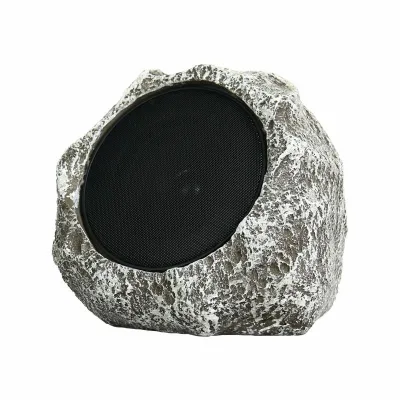
The "rock" designation implies a specific form factor designed to blend into natural landscapes, but it also dictates the material requirements for outdoor resilience. The housing materials observed in the market include ABS plastic, polyester, glass fiber, and iron grilles. ABS and polyester offer good impact resistance and are lightweight, making them suitable for portable units. However, for permanent outdoor installations, the inclusion of glass fiber and iron grilles suggests a higher emphasis on structural integrity and protection against vandalism or harsh weather.
Waterproofing is non-negotiable for outdoor equipment. The observed waterproof standard is IPX-5, which protects against water jets from any direction. While IPX-5 is sufficient for rain and splashing, buyers should verify if the specific unit meets higher standards like IPX-6 or IPX-7 if the installation area is prone to flooding or heavy monsoon rains. The cabinet material must also withstand UV radiation to prevent fading and brittleness over time. The color grey is commonly observed, likely chosen for its ability to camouflage with stone and concrete, but buyers should request samples to verify the UV stability of the paint or coating.
The physical dimensions and weight are crucial for logistics and installation. A single package size of 27.5 x 27.5 x 26.5 cm and a net weight of 1.7 kg to 3.3 kg indicate a substantial unit. The product size of 260 x 200 x 220 mm aligns with the dimensions of a large rock or boulder. Buyers must ensure that the weight of the unit does not exceed the load-bearing capacity of the mounting surface, especially if the speaker is to be embedded in a wall or placed on a delicate landscape feature. The single gross weight of 3.300 kg highlights the density of the internal components, including the battery and solar panel, which adds to the shipping cost and handling requirements.
Connectivity and Power Management Systems
Modern outdoor speakers rely heavily on wireless connectivity, with Bluetooth being the standard protocol. The observed Bluetooth standard is 5.4, which offers improved range, stability, and power efficiency compared to older versions. The wireless range is typically listed as less than 10 meters, which is adequate for controlling the speaker from a nearby patio or garden area. However, buyers should test the actual range in the specific environment, as obstacles like trees, walls, and metal structures can significantly attenuate the signal.
The power source is a hybrid system, utilizing a rechargeable battery supplemented by solar energy. The plug type compatibility is broad, covering AU, CN, EU, JP, UK, and US standards, which is essential for international procurement. However, the solar charging efficiency depends on the quality of the solar panel and the battery management system (BMS). The battery charging time of 5-7 hours suggests a moderate charging rate, but the actual time to full charge will vary based on solar irradiance. Buyers should inquire about the BMS features, such as overcharge protection, deep discharge prevention, and temperature compensation, to ensure the longevity of the battery.
Some units support MP3 audio codecs, which is standard for digital audio playback. The absence of a screen and the presence of a "Without Game Function" attribute indicate a focus on pure audio delivery rather than interactive features. The amplification type is listed as passive, which may refer to the speaker enclosure design or the internal amplifier configuration. Buyers need to clarify if the unit requires an external amplifier or if the amplification is integrated. If the unit is passive, it will require a separate power source or amplifier, which contradicts the "rechargeable battery" attribute unless the passive label refers to the driver configuration. This ambiguity requires direct verification with the supplier to ensure the system is self-contained.
Compliance, Certification, and Safety Standards
While the supplied data mentions a product standard of 260200220mm, this appears to be a dimensional specification rather than a safety standard. Buyers must independently verify compliance with international safety and electromagnetic compatibility (EMC) standards. For solar-powered devices, certifications such as CE, FCC, and RoHS are critical. The CE mark ensures compliance with European health, safety, and environmental protection standards, while FCC certification is mandatory for electronic devices sold in the United States. RoHS compliance ensures that the product does not contain hazardous substances like lead or mercury.
Battery safety is a particular concern for lithium-ion batteries used in these units. Buyers should request test reports for UN38.3, which covers the transportation safety of lithium batteries, and IEC 62133, which addresses the safety requirements for portable sealed secondary cells. The waterproof standard of IPX-5 must be verified through independent testing reports, as self-declared ratings can be unreliable. Additionally, the material safety data sheets (MSDS) for the ABS, polyester, and glass fiber components should be reviewed to ensure they meet local environmental regulations.
Cost Drivers and Procurement Economics
The cost of solar-powered rock speakers is influenced by several factors, including the battery capacity, solar panel efficiency, and build quality. The observed price range of 5.3 to 62.99 USD suggests a wide disparity in product tiers. The lower end of the spectrum likely corresponds to basic units with smaller batteries and lower power output, while the higher end includes premium models with larger drivers, better waterproofing, and advanced Bluetooth features. The MOQ (Minimum Order Quantity) ranges from 1 to 1000 units, offering flexibility for both small retailers and large distributors.
Customization is available for many of these units, which can impact the cost and lead time. Features such as private mold availability, custom branding, and specific color options allow buyers to differentiate their products. However, customization typically requires a higher MOQ and longer lead times. The single package size and weight also affect shipping costs, particularly for air freight. Buyers should calculate the total landed cost, including duties, taxes, and logistics, to determine the true profitability of the product.
Supplier Evaluation and Quality Control
Selecting a reliable supplier is paramount for long-term success. The observed brand name "OEM/ODM" indicates that many suppliers offer white-label solutions, allowing buyers to brand the products as their own. Buyers should evaluate suppliers based on their manufacturing capabilities, quality control processes, and after-sales support. Requesting samples is essential to verify the build quality, audio performance, and solar charging efficiency.
Quality control should be implemented at multiple stages, including incoming material inspection, in-process quality checks, and final product testing. Buyers should specify acceptance criteria for key attributes such as battery capacity, waterproofing, and audio output. Third-party inspection services can provide an additional layer of assurance, ensuring that the products meet the agreed-upon specifications before shipment. The supplier's ability to provide test reports and certifications is a strong indicator of their commitment to quality.
Long-Term Procurement and Maintenance Considerations
Long-term procurement strategies should focus on the durability and maintainability of the solar-powered rock speakers. The estimated battery life of 5-10 hours suggests that the battery may need replacement after a few years of use. Buyers should inquire about the availability of replacement batteries and the ease of access to the internal components. The use of standard plug types and widely supported Bluetooth standards ensures compatibility with future devices.
Maintenance requirements should be minimal, but regular cleaning of the solar panel and inspection of the waterproof seals are necessary to maintain performance. Buyers should also consider the warranty terms offered by the supplier, as a longer warranty period indicates confidence in the product's reliability. Finally, the scalability of the supply chain should be assessed to ensure that the supplier can meet increased demand as the market grows. By focusing on these long-term considerations, buyers can build a sustainable and profitable product line.
FAQs
What is the battery capacity of the Solar Powered Outdoor Rock Speaker?
The battery capacity ranges from 2000mAh to 3000mAh depending on the specific model configuration. This capacity supports an estimated battery life of 5 to 10 hours of continuous playback under normal usage conditions.
Which waterproof standard do these speakers meet for outdoor use?
These units meet the IPX-5 waterproof standard, which protects against water jets from any direction. This rating ensures durability against rain and splashing but may not suffice for submersion or heavy flooding scenarios.
Can the speaker connect wirelessly to mobile devices?
Yes, the speaker features wireless Bluetooth connectivity using the 5.4 standard. The effective wireless range is typically less than 10 meters, allowing control from nearby patios or garden areas without cables.
How much does the single package weigh for shipping?
The single gross weight of the package is 3.300 kg, while the net weight of the unit is approximately 1.7 kg. These dimensions and weights impact shipping costs and handling requirements for logistics planning.
What is the output power rating for this audio device?
The continuous output power is rated at 10W, though peak power (PMPO) ratings may reach between 30W and 50W. Buyers should distinguish between RMS and PMPO values to accurately assess audio performance for their specific environment.
Are customization options available for branding and design?
Customization is available for many units, including private mold options and custom branding. These features typically require a higher minimum order quantity and longer lead times compared to standard stock items.