Source Solvent Structural Adhesive Super Glue for Construction, Footwear & Leather, and Woodworking
Browse 30 listings for Solvent Structural Adhesive Super Glue and compare bonding functions, applications, curing classifications, shelf life, packaging, and MOQ ranges. SourcingX helps buyers evaluate instant and structural adhesive options for construction, footwear, woodworking, and related industrial uses.
Key considerations
Products List


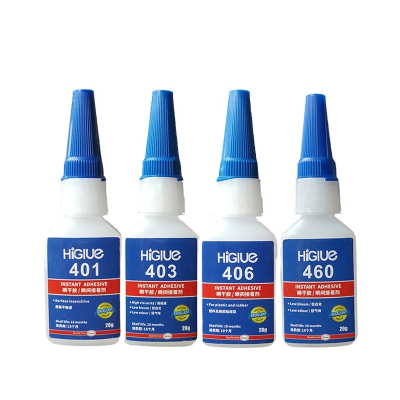


401 Cyanoacrylate Glue Instant Glue Super Glue
$0.70 - $0.80
MOQ: 3000 bottle
Xiangyang High-Temp Resistant New Material Technology Co., Ltd.

Cyanoacrylate Glue Instant Glue Super Glue 406
$0.70 - $0.80
MOQ: 3000 bottle
Xiangyang High-Temp Resistant New Material Technology Co., Ltd.


Comprehensive Sourcing Guide
Solvent Structural Adhesive Super Glue Sourcing Guide
Procuring solvent-based structural adhesives and super glues requires a nuanced understanding of chemical composition, curing mechanisms, and application-specific performance. These products, often categorized under cyanoacrylate or acrylic systems, are engineered for rapid bonding across diverse substrates including metal, plastic, rubber, and wood. Buyers must distinguish between instant adhesives designed for quick assembly and structural variants capable of withstanding significant mechanical stress. The presence of solvents in the formulation can influence viscosity, open time, and final bond strength, making it critical to align product specifications with the operational demands of the manufacturing or construction process.
The sourcing landscape for these adhesives is characterized by a wide variance in product models, packaging formats, and shelf-life expectations. Market listings indicate a broad range of product identifiers, such as K7-221012 series and PG01, suggesting multiple formulations tailored to specific industrial needs. Buyers should approach these listings with a verification mindset, recognizing that attributes like "high temperature resistance" or "waterproof" capabilities are specific to certain SKUs rather than universal traits of all solvent-based super glues. Establishing clear technical requirements before engaging with suppliers ensures that the selected adhesive meets the precise environmental and mechanical demands of the end-use application.
Product Scope and Observed Listing Signals
The observed market signals indicate a diverse array of product types, ranging from general-purpose super glues to specialized liquid nails and structural adhesives. Listings frequently highlight applications in construction, fiber and garment industries, footwear, leatherwork, and automotive assembly. This versatility suggests that suppliers offer a portfolio of solutions, where some products prioritize speed of curing, such as those with a full curing time of 0.1 hours, while others emphasize durability and weatherability. Buyers should carefully map these observed applications to their own production lines, noting that a single product may not satisfy all potential use cases, particularly when dealing with dissimilar materials like ceramic versus textile.
Packaging and unit specifications vary significantly, reflecting different logistical and operational needs. Common packaging formats include cartons containing 24 pieces, with specific dimensions such as 295mm x 203mm x 250mm noted for certain models. The material composition is often described as acrylic or organic, with main raw materials like ethyl cyanoacrylate (CAS No. 7085-85-0) being a key identifier for super glue variants. Buyers must verify the exact product model and composition for each order, as attributes like "clear color" or "room curing" classification are specific to individual listings and may not apply to the entire product category. Understanding these granular details is essential for accurate inventory planning and compatibility assessment.
Technical Specifications to Verify
Verifying the chemical classification and curing behavior is paramount when sourcing solvent structural adhesives. Products are often classified as "room curing" or "instant adhesives," with some formulations relying on promoters composed of solvents to accelerate the bonding process. The main agent composition may be listed as natural polymer or organic material, which directly impacts the adhesive's flexibility and resistance to environmental factors. Buyers should request detailed technical data sheets to confirm the promoter composition and ensure that the solvent content aligns with safety regulations and ventilation requirements in the application environment.
Shelf life and storage conditions are critical technical parameters that vary across different product models. Observed data indicates shelf lives ranging from 12 months to 24 months, with some products specifying "12 months from date of manufacture unopened." These variations necessitate strict inventory rotation and storage protocol adherence to prevent degradation of the adhesive properties. Additionally, product sizes and gross weights, such as a single gross weight of 0.500kg, must be accounted for in logistics planning. Buyers should verify the specific model number, such as K7-221012-3 or PG01, to ensure they are referencing the correct technical specifications for curing time, viscosity, and bond strength.
Compliance and Safety Documentation
Safety documentation for solvent-based adhesives must address the volatility and potential hazards associated with cyanoacrylate and solvent components. The presence of ethyl cyanoacrylate and solvent promoters requires clear labeling and handling instructions to mitigate risks of skin irritation, eye damage, or respiratory issues. Buyers should ensure that suppliers provide comprehensive Safety Data Sheets (SDS) that comply with international standards, detailing first-aid measures, fire-fighting procedures, and proper storage conditions. Given the flammable nature of many solvent-based products, verifying compliance with local transportation and storage regulations is essential for safe supply chain operations.
Environmental and regulatory compliance extends beyond immediate safety to include long-term environmental impact and disposal guidelines. While specific certifications are not universally listed, buyers should inquire about adherence to REACH, RoHS, or other regional chemical regulations depending on the destination market. The "customized" standard attribute suggests that suppliers may offer formulations tailored to meet specific regulatory requirements, but this must be explicitly confirmed in writing. Buyers must also consider the environmental impact of solvent emissions and ensure that their application processes include adequate ventilation or emission control systems to maintain a safe working environment.
Cost Drivers and Commercial Terms
Cost structures for solvent structural adhesives are influenced by raw material prices, packaging complexity, and order volume. The observed minimum order quantities (MOQ) range widely, from 10 units to over 31,800 units, indicating that pricing tiers are likely structured to accommodate both small-scale trials and large-volume industrial procurement. Buyers should negotiate based on their projected annual consumption, leveraging volume commitments to secure more favorable pricing. Additionally, the availability of OEM services and customization options may incur additional costs, which should be factored into the total cost of ownership analysis.
Commercial terms such as delivery time and payment conditions play a significant role in the overall procurement strategy. Lead times are observed to be around 10-15 days, which allows for moderate planning flexibility but requires accurate demand forecasting to avoid production delays. Buyers should clarify whether the quoted prices include packaging costs, such as the standard 24 pieces per carton, and whether sample availability is offered for quality verification. Understanding the full scope of commercial terms, including potential tariffs or shipping costs for international orders, is crucial for accurate budgeting and cost control.
Supplier Qualification and Quality Control
Supplier qualification should focus on their ability to maintain consistent product quality and provide reliable technical support. The "100% inspection" attribute observed in some listings highlights a commitment to quality control, but buyers should verify the specific testing protocols and quality assurance processes employed by the supplier. It is advisable to request samples for rigorous testing under actual application conditions to validate claims regarding bonding strength, curing time, and environmental resistance. Suppliers offering OEM and customization services should demonstrate a robust R&D capability to ensure that modified formulations meet the required performance standards.
Long-term supplier relationships are built on transparency and responsiveness. Buyers should assess the supplier's ability to provide timely updates on product changes, regulatory updates, or supply chain disruptions. The "available" sample attribute suggests a willingness to engage with potential buyers, which can be leveraged to establish a baseline for communication and service quality. Additionally, verifying the supplier's origin, such as Shandong or other specific regions, can provide insights into their logistical capabilities and regional market expertise. Establishing clear communication channels and performance metrics early in the partnership helps mitigate risks and ensures a smoother procurement process.
Long-Term Procurement Checks
Continuous monitoring of product performance and supplier reliability is essential for maintaining operational efficiency. Buyers should establish a feedback loop with their production teams to track any issues related to adhesive performance, such as inconsistent curing or bond failures, and communicate these findings to the supplier for corrective action. Regular audits of supplier quality control processes and compliance documentation help ensure that the products continue to meet the required standards over time. This proactive approach allows for early identification of potential issues and facilitates timely adjustments to the sourcing strategy.
Adapting to market changes and technological advancements is another critical aspect of long-term procurement. The adhesive industry is subject to ongoing innovations in formulation and sustainability, and buyers should stay informed about new products or regulations that may impact their operations. Engaging with suppliers who offer customized solutions and demonstrate a commitment to innovation can provide a competitive advantage. By maintaining a flexible and informed sourcing strategy, buyers can optimize their use of solvent structural adhesives and super glues, ensuring consistent quality and cost-effectiveness in their manufacturing or construction processes.
FAQs
What is the shelf life of this Solvent Structural Adhesive Super Glue?
The shelf life is typically 12 to 24 months from the date of manufacture when unopened. Proper storage conditions are essential to maintain adhesive performance. Always check the specific manufacturing date on the carton packaging before application to ensure optimal bonding strength and curing efficiency.
Can this super glue be customized for specific branding needs?
Yes, customization and OEM services are available for this product. Buyers can request specific packaging configurations, such as 24 pieces per carton, to suit their distribution requirements. This flexibility allows businesses to align the product presentation with their brand identity while maintaining the core adhesive performance characteristics.
Which materials can this structural adhesive bond effectively?
This adhesive bonds effectively to ceramic, glass, textile, leather, wood, rubber, metal, plastic, and paper. It is also suitable for woodworking, packing, footwear, construction, and automobile applications. The clear acrylic composition ensures strong structural bonding across diverse industrial and consumer material types without visible residue.
How long does it take for the glue to fully cure?
The full curing time is approximately 0.1 hours, allowing for rapid processing in manufacturing environments. This instant adhesive classification ensures quick handling and assembly. The room curing mechanism facilitates immediate structural integrity, making it ideal for high-volume production lines requiring fast turnaround times and efficient workflow management.
What is the minimum order quantity for bulk purchases?
The minimum order quantity ranges from 10 to 31,800 units depending on the specific product model and packaging configuration. Standard cartons contain 24 pieces, with origins in China or Shandong. Buyers should verify the exact MOQ for their selected model, such as K7-221012 series or PG01, to ensure accurate procurement planning.
Is this adhesive waterproof and temperature resistant?
Yes, the product is waterproof and offers high-temperature resistance. These characteristics make it suitable for outdoor construction, fiber, and garment applications where environmental exposure is a concern. The weatherability feature ensures durability, allowing the bond to withstand various climatic conditions without compromising structural integrity or adhesive performance over time.