Source Solvent PVC Shoe Glue for footwear, construction, and packing
Explore 30 listings for Solvent PVC Shoe Glue tailored to footwear, construction, and packing needs. Buyers can compare specifications like setting time, morphology, and bonding functions across various models to find the right adhesive for their projects.
Key considerations
Products List
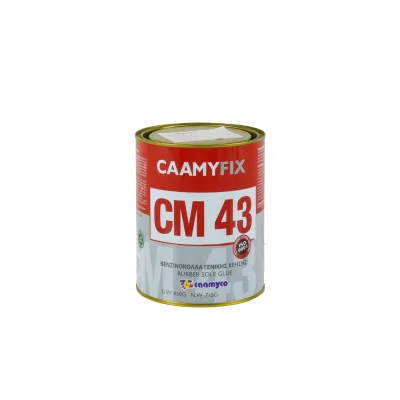


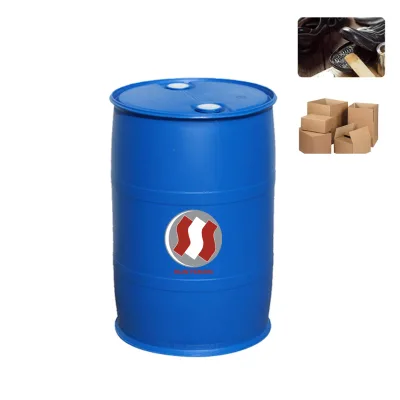
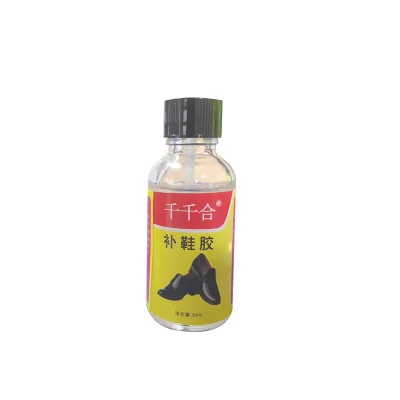
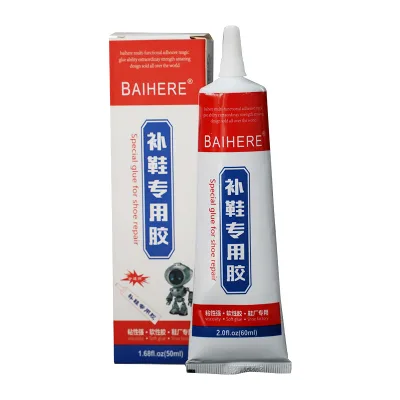
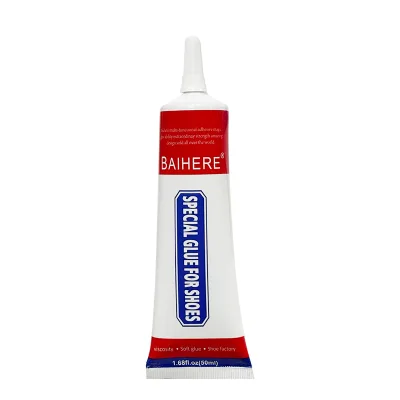
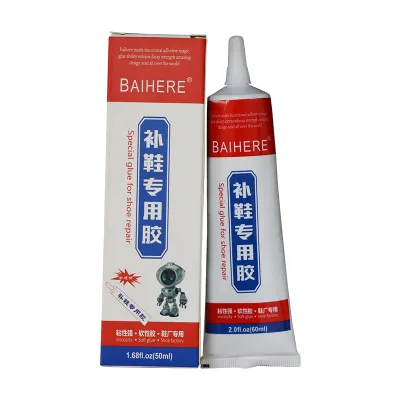
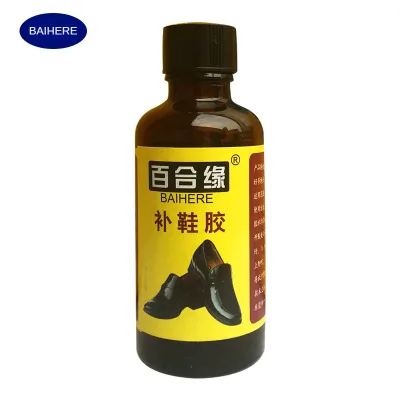


Comprehensive Sourcing Guide
Strategic Sourcing Guide for Solvent PVC Shoe Glue Procurement
Understanding the Technical Landscape of Solvent-Based Adhesives
When sourcing Solvent PVC Shoe Glue, buyers must first navigate a complex technical landscape where product attributes often vary significantly between listings. The core keyword implies a specific chemical mechanism—solvent-based adhesion—yet the available product data reveals a diverse array of formulations. A critical observation from the current market inventory is the presence of products explicitly categorized by morphology as "Solvent," distinguishing them from water emulsions or solid-state hot melts. However, buyers must exercise caution when generalizing these attributes. The provided data includes entries where the morphology is listed as "Water Emulsion" or "Solid-State," and the composition is noted as "Inorganic Material" or "Organic Material." This indicates that a single search term may yield products with fundamentally different chemical bases.
For a solvent-based PVC shoe glue, the primary expectation is a formulation where the adhesive carrier is an organic solvent that evaporates to leave the bonding agent behind. The data confirms the existence of "Solvent" morphology products, but it also lists "Thermoplastic Resin" as a main agent composition for other items, which often aligns with hot melt technologies rather than traditional solvent systems. Furthermore, the "Main Raw Material" for some entries is identified as "Neoprene," a synthetic rubber often used in contact adhesives, while others list "Polyester." These distinctions are vital because Neoprene-based solvent glues offer different flexibility and water resistance compared to polyester-based systems. Buyers should verify that the specific product listing explicitly states "Solvent" morphology and confirms compatibility with PVC materials before proceeding with a purchase order. The "Other Names" field in the data includes "all purpose adhesive," which is a generic descriptor that does not guarantee solvent-based performance or PVC compatibility.
Compliance Verification and Certification Standards
In the B2B procurement of industrial adhesives, compliance is not merely a formality but a critical risk management strategy. The sourcing guide must emphasize that while the product data mentions a standard reference of "EN 12568," this is flagged as low-confidence background information and should not be assumed as a verified certification for any specific batch. Buyers cannot rely on the mere presence of a standard code in a product description as proof of compliance. Instead, the procurement process must include a rigorous request for the actual Certificate of Analysis (CoA) and Safety Data Sheet (SDS) for the specific lot being purchased.
The data indicates that the "Place of Origin" for the majority of these products is "Zhejiang, China." While this is a major manufacturing hub, it necessitates a heightened focus on verifying that the supplier adheres to both local Chinese regulations and the import regulations of the destination country. For solvent-based adhesives, volatile organic compound (VOC) limits are often strictly regulated. Buyers must explicitly ask suppliers to confirm the VOC content of the "Solvent" morphology products against the specific environmental standards of their target market. The absence of a specific certification claim in the provided facts means that the buyer must treat all compliance assertions as unverified until documented proof is supplied. The "prod_standard" field lists packaging weights such as "20kgs, 10kgs, 5kgs," but this refers to packaging standards, not chemical or safety certifications. Therefore, the procurement team must establish a protocol where no shipment is accepted without a valid, recent SDS that details the chemical composition, including the specific solvents used and their concentrations.
Cost Drivers and Pricing Dynamics in the Adhesive Market
The pricing structure for Solvent PVC Shoe Glue is influenced by several volatile factors, including raw material costs, solvent volatility, and packaging specifications. The observed price range in the market data spans from $0.30 to $72.00 USD, a disparity that reflects the vast difference between small retail units and bulk industrial barrels. The "Selling Units" are listed as "Single item," which suggests that the lower end of the price range likely corresponds to small sample bottles or retail packs, while the higher end may represent specialized formulations or bulk orders with specific customization.
A significant cost driver is the "prod_packing" method. The data shows options ranging from "Plastic Barrel" to "Carton." Plastic barrels are typically used for larger volumes (e.g., 20kg or 10kg) and offer better protection against solvent evaporation, which is critical for maintaining the efficacy of solvent-based adhesives. However, they incur higher logistics costs compared to cartons. The "Standard" field lists customizable packaging, which implies that buyers can negotiate packaging to reduce costs, but this customization may introduce lead time delays. Additionally, the "Customization" attribute is marked as "Available," which can increase unit costs if the buyer requires specific solvent ratios, color modifications (though the data lists "light yellow" and "White" as observed colors), or specific branding. The "Shelf life" varies from 12 to 24 months, and products with longer shelf lives may command a premium due to the higher quality of stabilizers and antioxidants used in the formulation. Buyers should analyze the cost per kilogram rather than the per-unit price to ensure accurate budgeting, especially when comparing "Plastic Barrel" options against "Carton" options.
Typical Applications and Performance Expectations
The versatility of solvent-based adhesives is evident in the "Usage" field, which lists "Construction, Footwear & Leather, Packing, Woodworking, Fiber & Garment, Transportation." For the specific application of PVC shoe glue, the "Applicable Flooring" attributes provide valuable context, mentioning "Adhesive PVC Vinyl Flooring Glue" and "High-Strength Flooring Adhesive for PVC Flooring." While these entries focus on flooring, the chemical principles of bonding PVC are similar to those in footwear manufacturing. The "Bonding Function" is described as "Instant Adhesive" for some entries and "Pressure sensitive Adhesive" for others. This distinction is crucial for shoe manufacturing; instant adhesives cure rapidly, which is beneficial for high-speed assembly lines, whereas pressure-sensitive adhesives may require different application techniques.
The "Setting time" of 5 minutes is a specific data point that buyers should verify for their specific solvent products. In footwear assembly, a 5-minute setting time might be too slow for certain automated processes or too fast for manual assembly, depending on the ambient temperature. The "Allowable Temperature After Curing" is noted as a maximum of 50°C for some products, which is a critical constraint for shoes that may be exposed to hot environments or require heat treatment during the manufacturing process. The "Usage Temperature" for other entries ranges from 150-180°C, which suggests these are likely hot melt or high-temperature resistant formulations rather than standard solvent glues. Buyers must ensure that the "Solvent" morphology product they select matches the thermal requirements of their final shoe product. The "Morphology" of "Solvent" implies that the adhesive relies on solvent evaporation, which can be affected by humidity and airflow in the factory environment.
Supplier Evaluation and Origin Verification
Evaluating suppliers for Solvent PVC Shoe Glue requires a deep dive into their operational capabilities and origin verification. The "Place of Origin" is consistently listed as "Zhejiang, China," and the "prod_origin" is also "China." While this provides a geographical baseline, it does not guarantee quality or consistency. Buyers should verify the specific factory location within Zhejiang, as different industrial zones have varying levels of regulatory oversight. The "Brand Name" is listed as "MDB" for some entries, but the "Other Names" field includes generic terms like "all purpose adhesive," suggesting that many suppliers may be private label manufacturers or white-label producers.
The "Model Number" varies widely, from "MDB526468" to "M760," "M780," "8871," and "M-600." This variety indicates a fragmented market with many distinct product lines. Buyers should not assume that a specific model number implies a specific quality level; instead, they must request technical data sheets for each model to compare performance metrics. The "Customization" availability is a key differentiator; suppliers offering customization may have more flexible R&D departments but could also have longer lead times. The "Single package size" is listed as "XX cm," which is a placeholder indicating that specific dimensions are not standardized in the provided data. This lack of standardization means buyers must confirm packaging dimensions to ensure compatibility with their storage and handling equipment. When evaluating suppliers, buyers should prioritize those who can provide clear documentation on the "Main Agent Composition" and "Promoter Composition," as these determine the adhesive's long-term stability and bonding strength.
Quality Control Protocols and Long-Term Procurement Strategy
Implementing a robust quality control (QC) protocol is essential for mitigating the risks associated with solvent-based adhesives. The "Composition" is listed as both "Inorganic Material" and "Organic Material," and the "Morphology" includes "Water Emulsion," "Solid-State," and "Solvent." This inconsistency highlights the need for strict incoming inspection. Buyers should establish a QC checklist that verifies the "pH Value" (noted as 7-8 for some products), the "Storage Temperature" requirements (5°C - 35°C), and the "Shelf Life" (ranging from 12 to 24 months). The "Storage Temperature" range is particularly important for solvent-based products, as extreme temperatures can cause solvent separation or premature evaporation.
For long-term procurement, buyers should consider the "Allowable Temperature After Curing" and the "Softening Point" (noted as 60-90°C for some entries) to ensure the adhesive will perform under the expected service conditions of the footwear. The "Characteristic" of "Weatherability" is a key attribute for shoes that may be exposed to outdoor elements. Buyers should request test results specifically for weatherability and water resistance, as these are not guaranteed by the generic "Usage" descriptions. The "MOQ" range of 1 to 10,000 units offers flexibility, but buyers should negotiate based on their volume needs to optimize costs. Finally, the "Lead time" is not explicitly provided in the data, so buyers must treat this as a variable to be confirmed during the negotiation phase. Establishing a long-term partnership with a supplier who can consistently meet the "prod_standard" and "prod_packing" requirements will be crucial for maintaining supply chain stability.
FAQs
What is the shelf life of Solvent PVC Shoe Glue?
The shelf life varies between 12 and 24 months depending on the specific formulation. Products with longer stability often contain antioxidants, while standard versions typically last at least 12 months if stored between 5 and 35 degrees Celsius.
Which packaging options are available for bulk orders?
Bulk orders are commonly available in plastic barrels or cartons with customizable weights. Standard packaging sizes include 5kg, 10kg, and 20kg units, allowing buyers to select containers that best suit their storage and handling requirements.
Can buyers request customization for the adhesive formula?
Yes, customization is available for specific Solvent PVC Shoe Glue products. Buyers can negotiate modifications to the formula or branding, though this may impact lead times and unit costs compared to standard stock items.
What is the typical setting time for this adhesive?
The setting time is approximately 5 minutes for many instant adhesive formulations. This duration allows for efficient assembly in footwear production, though ambient temperature and humidity can influence the actual curing speed on the factory floor.
How does the product composition affect bonding strength?
Composition varies between organic and inorganic materials, with some using thermoplastic resins or neoprene. These differences determine whether the adhesive acts as an instant bond or a pressure-sensitive adhesive suitable for specific PVC applications.
What is the maximum allowable temperature after curing?
The allowable temperature after curing is a maximum of 50 degrees Celsius for certain flooring and shoe glues. This limit is critical for footwear that may be exposed to heat during manufacturing or in hot environmental conditions.
Which locations are the primary sources for these adhesives?
The primary place of origin for these products is Zhejiang, China. Buyers should verify specific factory locations within this region to ensure compliance with local regulations and to assess logistics costs for international shipping.