Source Space Capsule House for Apartments, Hotels, and Offices
Find 30 Space Capsule House options featuring steel structures, smart home systems, and fast installation. Buyers can compare specifications for apartments, hotels, and offices with customizable designs and eco-friendly materials.
Key considerations
Products List

Prefab House Space Capsule Capsule House Space Modular Space Capsule
$13400.00 - $35000.00
MOQ: 1 Sets


Mobile Capsule Houses Ready Made House Mobile Home Space Capsule Home
$15500.00 - $18500.00
MOQ: 1 Pieces


Portable Mobile Residence Space Capsule Modular House Detachable Space Capsule
$15190.00 - $36090.00
MOQ: 1 Pieces


Portable Home Modern Space Capsule Style Camping House Tiny House Outdoor Mobile Capsule House
$34900.00 - $35000.00
MOQ: 1 Sets


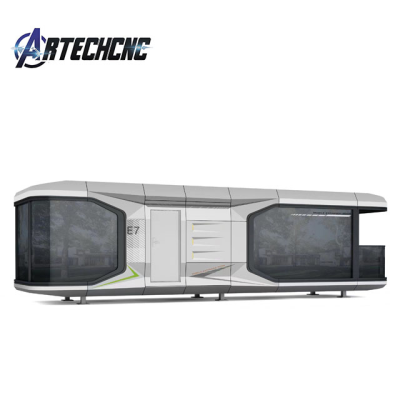

Easy Installation Space Capsule Home Tiny House Prefab House Mobile House
$18000.00 - $30000.00
MOQ: 1 Pieces
Comprehensive Sourcing Guide
Strategic Sourcing Guide for Space Capsule House Procurement
Understanding the Product Category and Core Specifications
The term "Space Capsule House" in the B2B procurement landscape refers to prefabricated, modular living units designed for rapid deployment and high mobility. These structures are distinct from traditional construction due to their compact, often capsule-shaped or square modular design, which prioritizes efficient transport and quick assembly. Based on current market observations, these units are frequently constructed using a galvanized steel structure frame, which serves as the primary load-bearing skeleton. The exterior cladding often utilizes a combination of metal carved boards or aluminum, while the wall assemblies may incorporate color steel panels filled with insulation materials such as EPS, rock wool, or graphite polystyrene.
A critical aspect of the product specification is the modular sizing. The market currently features standard configurations such as 20-foot and 40-foot units, with specific model identifiers like BIOGREEN-LUCAS appearing in listings. The physical dimensions of these units are standardized to facilitate container transport, with some specifications noting a standard footprint of approximately 8.5 meters by 3.3 meters by 3.2 meters. The interior finish is equally important for end-user satisfaction; typical materials include bamboo wood fiber integrated wall panels for a modern aesthetic and anti-slip floor leather or solid wood composite flooring for durability. The roof structure is designed with a dual purpose of insulation and protection, typically consisting of an insulation layer topped with a steel plate.
Technical Performance and Environmental Resistance
When evaluating space capsule houses for procurement, technical performance metrics regarding environmental resistance are paramount. These units are engineered to withstand diverse climatic conditions, making them suitable for a wide range of global locations. The structural integrity is often highlighted by specific resistance grades. For instance, wind resistance capabilities are rated up to Grade 12, ensuring stability in high-wind zones. Seismic resistance is a critical safety feature, with observed ratings reaching Grade 7, which is essential for deployment in earthquake-prone regions.
Thermal and moisture management are achieved through advanced material layering. The insulation layer typically utilizes polyurethane insulation boards, providing high thermal efficiency. For acoustic comfort, glass wool sound insulation layers are integrated into the wall or floor assemblies. The exterior shell is designed to be waterproof, with some units achieving an IPX7 rating, indicating a high level of protection against water immersion. Additionally, fire resistance is a non-negotiable safety standard, with observed classifications reaching Grade B1 for the materials used. The service life of these units is projected to range between 20 to 30 years, contingent upon proper maintenance and installation.
Compliance, Certification, and Regulatory Standards
Navigating the regulatory landscape is a fundamental step in the sourcing process. Reputable suppliers in this sector typically adhere to international quality and safety standards. The most commonly observed certifications for these products include ISO and CE marks. The ISO certification generally indicates that the manufacturer's quality management systems meet international standards, while the CE mark signifies compliance with health, safety, and environmental protection standards for products sold within the European Economic Area.
Buyers must verify that the specific units being procured carry valid certification documentation that matches the destination country's import requirements. The construction standards often reference specific dimensional tolerances and material specifications, such as the use of galvanized steel for the frame to prevent corrosion. It is essential to confirm that the "Customized Or Not" status of the product aligns with local building codes. While some units are standard, many offer customization options for logos, colors, and internal configurations. However, any deviation from standard specifications must be validated against local zoning and building regulations before finalizing a purchase order.
Cost Drivers and Pricing Variables
The pricing structure for space capsule houses is dynamic and influenced by several key variables. The observed market price range spans from approximately $300 to $38,000 USD. This significant variance is not indicative of quality differences alone but rather reflects the scale, configuration, and level of customization required. The primary cost driver is the unit size; a 20-foot unit will naturally cost less than a 40-foot unit due to material usage and manufacturing time.
Additional cost factors include the choice of insulation materials. Units featuring rock wool or polyurethane insulation may command a higher price point compared to those using EPS, due to the superior thermal and fire-resistant properties of the former. The interior finish also plays a role; options like bamboo wood fiber panels or solid wood composite flooring are premium choices compared to standard finishes. Furthermore, the inclusion of advanced features, such as a smart home system, will increase the base cost. Logistics and packaging are also significant considerations. While some units are packed in wooden boxes, others are shipped as a complete set via container transport, and the associated freight costs can vary based on the origin location, which is often reported as China or specifically Shandong China.
Typical Applications and Deployment Scenarios
Space capsule houses are highly versatile and are deployed across a broad spectrum of applications. Their primary use case is in the hospitality and tourism sector, where they serve as unique accommodations for homestays and vacation rentals in scenic areas. The "Space Capsule" keyword is strongly associated with these high-end, experiential lodging solutions. Beyond tourism, these units are increasingly utilized as temporary office spaces, providing a rapid solution for corporate needs in remote or developing locations.
In the realm of emergency management, these structures are vital for emergency resettlement projects, offering immediate, safe, and weather-resistant shelter. They are also employed as camp supporting facilities for large-scale events or construction sites. The "Fast Installation" attribute makes them ideal for projects with tight deadlines. The design style is typically modern, fitting seamlessly into cultural tourism projects or serving as service points in scenic areas. The ability to be easily moved and flexibly combined allows for scalable deployment, whether for a single unit or a large community of capsules.
Supplier Evaluation and Quality Control Protocols
Selecting the right supplier requires a rigorous evaluation process that goes beyond price comparison. Buyers should prioritize suppliers who demonstrate transparency regarding their manufacturing capabilities and material sourcing. Key indicators of a reliable supplier include the availability of detailed technical drawings, clear specifications on the steel structure frame, and evidence of past projects in similar climates. The "After-Sale Service" provided, such as online technical support, is a critical differentiator that ensures long-term operational stability.
Quality control should be verified through the supplier's adherence to their stated standards. Buyers must request documentation confirming the material composition, specifically the type of sandwich panel used (e.g., Rock Wool, Glass Fiber, PU, XPS) and the fire resistance grade. Inspection of the "prod_packing" method is also necessary to ensure the units arrive without damage; options range from wooden box packaging to complete set packaging for container transport. It is advisable to conduct factory audits or request third-party inspection reports to validate the production process. The supplier's location, such as Shandong China, may influence lead times and logistics costs, which should be factored into the overall procurement strategy.
Long-Term Procurement and Lifecycle Management
Procuring space capsule houses is a long-term investment that requires consideration of the total cost of ownership. The "Service Life" of 20 to 30 years suggests that these units are durable assets, but their longevity depends on the quality of the initial build and the maintenance regimen. Buyers should evaluate the "Advantage" of the product, which often includes environmental protection, low cost, and recyclability. The use of eco-friendly materials and the ability to recycle the steel structure at the end of the unit's life are significant factors for sustainability-focused organizations.
Customization is a key feature that allows buyers to tailor the units to specific needs, including logo branding and color schemes. However, buyers must ensure that any customizations do not compromise the structural integrity or safety ratings, such as the IPX7 waterproof rating or the Grade 12 wind resistance. The "Fast Installation" feature reduces on-site labor costs and time, but proper site preparation is still required to ensure the foundation supports the galvanized steel structure correctly. Finally, the availability of spare parts and the responsiveness of the supplier's technical support team are crucial for maintaining the unit's performance over its decades-long service life. By focusing on these long-term factors, buyers can secure a reliable and sustainable housing solution that meets both immediate and future operational needs.
FAQs
What certifications do space capsule houses typically have?
Space capsule houses typically hold ISO and CE certifications to ensure quality and safety standards. These marks indicate compliance with international management systems and European health, safety, and environmental requirements for products sold globally.
How fast can these units be installed on site?
These units are designed for fast installation to minimize on-site labor time and accelerate project deployment. The modular nature allows for quick assembly, making them ideal for temporary offices or emergency resettlement scenarios requiring immediate shelter.
Which materials are used for the insulation layers?
The insulation layers commonly utilize polyurethane boards for thermal efficiency and glass wool for sound insulation. Additional wall assemblies may include EPS, rock wool, or graphite polystyrene to enhance thermal performance and fire resistance capabilities.
Can the units be customized with specific logos or colors?
Yes, the units support customization for logos and offer a wide range of color options including white, red, blue, and yellow. Buyers can also request specific configurations for interior finishes like bamboo wood fiber panels to match their brand identity.
What is the expected service life of these structures?
The expected service life of these structures ranges between 20 to 30 years with proper maintenance. This longevity is supported by the galvanized steel structure frame and durable exterior cladding designed to withstand various environmental conditions.
How much does a Space Capsule House cost?
The cost of a Space Capsule House ranges from 300 to 38000 USD depending on size and features. Pricing varies significantly based on whether the unit is a 20-foot or 40-foot model and the level of customization or smart home integration included.
What is the minimum order quantity for purchasing these units?
The minimum order quantity for purchasing these units ranges from 1 to 26 pieces per order. This flexibility allows buyers to procure single units for testing or larger batches for developing a complete hospitality or office facility.