Source Smart Radio Alarm Clock for Home Travel and Office
Explore 30 Smart Radio Alarm Clock options featuring multifunctional designs, nightlights, and calendar displays. Buyers can compare models like T-2207 and S5 based on power consumption, weight, and sound features to find the best fit for home, travel, or office use.
Key considerations
Products List


FM Radio Clock Time Birthday Reminder Temperature Alarm Clock Flashlight Clock
$2.54 - $2.72
MOQ: 3000 Pieces


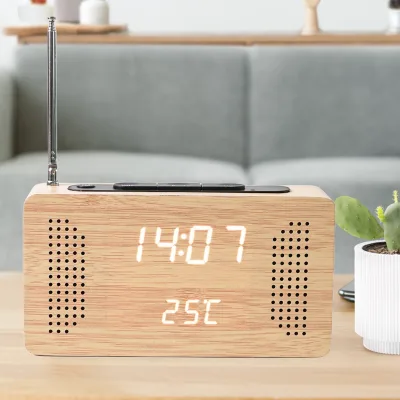


Multi Function Bluetooth Alarm Clock with FM Radio and Wireless Charging
$30.00 - $56.00
MOQ: 2 Pieces


Comprehensive Sourcing Guide
Strategic Sourcing Guide for Smart Radio Alarm Clocks
Understanding Product Categories and Technical Specifications
When sourcing a Smart Radio Alarm Clock, buyers must first distinguish between the various functional categories available in the current market. The product landscape often blends traditional timekeeping with modern connectivity and auxiliary features. Based on observed market data, the core product line includes digital alarm clocks with multifunctional capabilities, often featuring nightlights and calendar displays. These devices are typically designed for home use, though some variants are explicitly engineered for travel use, indicating a need for compactness and durability.
A critical technical distinction lies in the movement structure and power consumption. Many units utilize an alarm system as their primary movement structure, driven by specific battery configurations. For instance, some models operate on a combination of three AAA batteries and one cell battery, while others may require three AA batteries paired with two cell batteries. A third category of devices in this sector may rely solely on two AA batteries. Buyers must verify the exact power requirements for their target market, as battery availability and cost can significantly impact the total cost of ownership for the end-user.
The physical specifications of these devices vary widely, influencing both shipping costs and retail presentation. Observed dimensions range from compact units measuring approximately 140mm by 60mm by 55mm to larger models reaching 220mm in length. Weight is another differentiator, with observed product weights ranging from 134 grams to 276 grams. The display methods are predominantly digital, offering clear visibility of time and date information. However, a subset of the market includes devices without a display, which may serve as portable players or specialized audio devices rather than traditional alarm clocks.
Audio Performance and Connectivity Features
The integration of audio capabilities has become a defining characteristic of modern alarm clocks. While the primary function remains timekeeping, many units now incorporate speaker systems to deliver sound. The sound type is often a single ring, which is standard for alarm notifications, but the audio subsystem can be more complex. Some models feature active amplification types with a signal-to-noise ratio (SNR) between 70 and 80 decibels, ensuring clear audio output. The power output for these integrated speakers can be as low as 3 watts, which is sufficient for bedside environments but may require verification for larger rooms.
Connectivity and special functions further differentiate these products. A notable segment of the market includes devices with memory card support, allowing users to play digital audio files directly from storage media. The frequency response for these audio-enabled units typically spans from 100Hz to 20kHz, covering the audible spectrum for most music and voice content. The material construction of the speaker components is often plastic, specifically ABS and PP (polypropylene) composites, which offer a balance of acoustic performance and cost-effectiveness.
Color options are another significant variable in the product specification. Available finishes frequently include white, pink, and black, allowing buyers to match specific interior design trends or target demographic preferences. The style of these devices is generally simple, focusing on functionality over ornate design. This simplicity extends to the product packing, which can vary from individual boxes to bulk cartons depending on the order volume and shipping requirements.
Cost Drivers and Pricing Dynamics
The pricing structure for smart radio alarm clocks is influenced by a complex interplay of features, materials, and order volume. Observed price ranges in the market span from $1.69 to $56.00 USD. This wide disparity is not merely a function of brand prestige but is heavily driven by the technical specifications and component quality. Lower-priced units typically correspond to basic models with simple alarm systems, single-ring sound types, and minimal features like a calendar or nightlight. These units often rely on standard battery configurations and basic plastic housings.
Conversely, the higher end of the price spectrum reflects devices with advanced multifunctional capabilities, superior audio performance, and more robust construction. The inclusion of features such as memory card support, active amplification, and specific connectivity options drives up the manufacturing cost. Additionally, the choice of materials plays a role; while plastic is common, the quality of the ABS and PP blend can affect durability and acoustic properties.
Order volume is a primary determinant of the final unit cost. The Minimum Order Quantity (MOQ) observed in the market ranges from 1 to 3,000 units. Buyers purchasing at the lower end of the MOQ spectrum may face higher per-unit costs, whereas those committing to larger volumes can negotiate more favorable pricing tiers. The packaging method also impacts costs; units packed in individual boxes generally incur higher material and labor costs compared to those shipped in bulk cartons. Buyers must weigh the cost of packaging against the retail presentation requirements of their target market.
Compliance, Certification, and Safety Standards
Ensuring that sourced products meet regulatory requirements is a critical step in the procurement process. While specific certification statuses for every model cannot be universally asserted without direct verification, buyers should be aware of the general compliance landscape. The market data indicates the presence of CE certification as a relevant standard, which is often required for products entering the European Economic Area. This certification verifies that the product meets health, safety, and environmental protection standards.
Buyers must verify that the specific models they intend to purchase have undergone the necessary testing for electromagnetic compatibility (EMC) and low voltage directives. The power consumption specifications, such as the use of AAA, AA, or cell batteries, must align with safety standards regarding battery compartment design and electrical isolation. For devices with audio components, the sound pressure levels and frequency responses should be evaluated to ensure they do not pose a risk of hearing damage, particularly in a home environment where users may be in close proximity to the device.
Furthermore, the material composition, specifically the use of ABS and PP plastics, should be checked for compliance with restricted substance regulations. These materials must be free from harmful levels of heavy metals and other toxic substances. The origin of the products, typically China, implies that buyers should be vigilant about the supply chain's ability to provide consistent documentation of compliance. It is advisable to request test reports from the supplier to confirm that the specific batch of goods meets the required standards for the destination market.
Supplier Evaluation and Customization Capabilities
Selecting the right supplier requires a thorough evaluation of their manufacturing capabilities and flexibility. A key factor in supplier selection is the availability of OEM (Original Equipment Manufacturer) and ODM (Original Design Manufacturer) services. The market data confirms that many suppliers offer these services, allowing buyers to customize product attributes such as branding, color, and specific feature sets. This customization capability is essential for buyers looking to differentiate their offerings in a competitive market.
The compatibility of the products is another consideration. Many units are designed to be universal, meaning they can be used with a wide range of audio sources and power configurations. This universality simplifies the sourcing process but requires buyers to ensure that the specific models they select meet the technical requirements of their intended application. The ability to customize the product, including the addition of specific logos or packaging, is a strong indicator of a supplier's maturity and capacity to handle bespoke orders.
Buyers should also assess the supplier's production capacity and lead times. While specific lead times are not provided in the general data, the range of MOQs suggests that suppliers are equipped to handle both small trial orders and large-scale production runs. The product origin being China indicates a mature manufacturing ecosystem, but buyers must verify the supplier's ability to maintain consistent quality across different production batches. Requesting samples and conducting a factory audit are recommended steps to validate the supplier's claims regarding their customization capabilities and production standards.
Quality Control and Long-Term Procurement Considerations
Implementing a robust quality control (QC) strategy is vital for maintaining product integrity and customer satisfaction. Given the variation in product weights, dimensions, and power consumption, buyers should establish clear acceptance criteria for incoming goods. For example, the weight of the product should fall within the specified range, and the dimensions must match the provided standards to ensure compatibility with retail packaging and shelf displays.
Long-term procurement considerations involve building a sustainable relationship with the supplier. This includes ensuring a consistent supply of high-quality components, such as the specific battery types and speaker materials. Buyers should also consider the lifecycle of the product; devices with rechargeable capabilities or those designed for long-term use may require different QC protocols than disposable battery models. The feature set, including nightlights and multifunctional capabilities, should be tested for durability and reliability over time.
Finally, buyers must plan for the end-of-life management of the products. The use of batteries and electronic components necessitates compliance with waste disposal regulations in the destination market. By selecting suppliers who adhere to strict environmental standards and provide clear information on material composition, buyers can mitigate the risks associated with regulatory changes and consumer expectations regarding sustainability. The ability to customize the product and packaging also allows buyers to adapt to changing market trends and regulatory requirements without the need for a complete product overhaul.
FAQs
What power consumption do these smart radio alarm clocks use?
These devices typically use 3 AAA batteries plus 1 cell battery, though some models require 3 AA batteries with 2 cell batteries. Other variants operate on 2 AA batteries alone, so verify the specific model requirements before purchasing.
Which dimensions are available for these digital alarm clocks?
Product dimensions vary significantly, ranging from compact units measuring 140 by 60 by 55 millimeters to larger models reaching 220 by 55 by 55 millimeters. Buyers should check the specific standard for each model to ensure it fits their space.
Can buyers customize these alarm clocks with their own branding?
Yes, OEM and ODM services are available for customization of branding and features. Buyers can request specific modifications, but they must confirm the customization options and minimum order quantities with the supplier before placing an order.
What is the price range for sourcing these digital alarm clocks?
The observed price range spans from 1.69 to 56 US dollars depending on features and order volume. Lower prices typically correspond to basic models, while higher prices reflect advanced multifunctional capabilities and superior audio performance.
How do the audio features differ across these alarm clock models?
Some models feature active amplification with a signal-to-noise ratio between 70 and 80 decibels and support memory cards. Others may lack a display or backlight, serving primarily as portable players or simple timekeeping devices with single-ring sounds.
What materials are used to construct the speaker components?
The speaker components are typically made from plastic, specifically a blend of ABS and PP materials. This combination offers a balance of acoustic performance and cost-effectiveness suitable for home and travel use environments.